Understanding What Each Ground Cover Does
Ground cover serves several practical functions: it suppresses weeds, regulates soil temperature, manages moisture, and shapes the visual character of a landscape. Mulch and gravel both accomplish those goals, but through different mechanisms and with different trade-offs.
Organic mulch - typically shredded bark, wood chips, straw, or compost - works as a biological layer. It intercepts rainfall gently, reduces evaporation from the soil surface, and decomposes over time to add organic matter. That decomposition improves soil structure and feeds soil microbes, which benefits most ornamental plantings and vegetable beds. The downside: because it breaks down, it must be replenished. Most mulched beds benefit from a fresh 2-3 inch layer each year.
Decorative gravel - which includes pea gravel, crushed stone, river rock, and decomposed granite - is an inorganic material that does not decompose. It drains freely, tolerates foot traffic, and holds its appearance season after season. However, it does not improve soil and can actually suppress beneficial soil biology when laid over plant roots long-term. It also absorbs and radiates heat, which can stress moisture-sensitive plants in summer. For more on integrating gravel into a broader design, see how hardscaping and softscaping work together.
| Criterion | Organic Mulch | Decorative Gravel |
|---|---|---|
| Moisture retention | High - slows evaporation | Low - drains rapidly |
| Soil health benefit | Improves soil as it decomposes | None - inorganic material |
| Lifespan | 1-3 years before replenishment | 5-10+ years with minimal upkeep |
| Upfront cost | Generally lower per cubic yard | Higher, especially for stone types |
| Weed suppression | Good with adequate depth | Good with landscape fabric underlayer |
| Heat absorption | Moderate - insulates roots | Higher - can stress heat-sensitive plants |
| Slope suitability | Good - shredded types bind well | Poor - can migrate in rain |
| Foot traffic tolerance | Low - compresses and shifts | High - structurally stable |
Cost, Installation, and Long-Term Maintenance
Mulch is generally less expensive to purchase per cubic yard, and installation requires no specialized tools - a wheelbarrow, rake, and basic edging are sufficient for most homeowners. The recurring cost, however, adds up. Depending on bed size, homeowners may budget for replenishment annually or every other year.
Gravel carries a higher upfront material and delivery cost, particularly for heavier stone types, and installation often benefits from a layer of landscape fabric underneath to prevent migration and weed intrusion. Once in place, though, gravel requires little beyond occasional raking and periodic removal of wind-blown debris. Over a 5- to 10-year horizon, gravel frequently becomes the more cost-efficient option for large areas.
2-3 inches
Recommended mulch depth for weed suppression
University cooperative extension programs consistently recommend this depth range to balance weed control with avoiding crown rot around plants.
~50%
Soil moisture evaporation reduction with mulch
Research from land-grant university extension services suggests mulched soil can lose roughly half as much moisture to evaporation as bare soil under similar conditions.
10+ years
Typical gravel ground cover lifespan
When installed over landscape fabric on a level surface, decorative gravel generally remains serviceable for a decade or more before requiring significant intervention.
One commonly overlooked factor is weed pressure. Both materials suppress weeds, but neither eliminates them entirely. Weed seeds blown in from outside will still germinate on the surface of gravel or on top of aged mulch. Landscape fabric beneath gravel adds a barrier layer, though it can degrade over time. For more perspective on what actually works versus common assumptions, see our article on landscaping myths that cost homeowners time and money.
Climate, Plants, and Site Conditions
Climate is often the deciding factor. In humid regions with moderate rainfall, organic mulch supports plant health by moderating soil temperature and maintaining consistent moisture. In arid or drought-prone areas, gravel is frequently the more practical choice: it drains fast, doesn't retain standing water, and pairs naturally with drought-tolerant plantings. For guidance on plant selection to complement your ground cover, explore native plants versus ornamental cultivars for your region.
Slope is another important variable. On inclines, loose gravel can migrate with heavy rain, block downhill drainage, or become a slip hazard on walking surfaces. Shredded mulch binds more readily and is generally recommended for sloped beds. The landscaping on a slope guide covers complementary erosion-control strategies in detail.
If irrigation is part of your landscape plan, note that mulch pairs especially well with drip systems: the mulch layer keeps emitters from clogging with splashed soil and slows surface evaporation. See how drip irrigation compares to sprinkler systems to choose the best pairing. Gravel is more compatible with areas that receive little supplemental irrigation or rely on rainwater alone.
Avoid Volcano Mulching Around Trees
Piling mulch directly against a tree trunk - a practice sometimes called 'volcano mulching' - traps moisture against the bark and can promote rot, disease, and pest damage over time. Always leave a clear gap of several inches between mulch and the base of any tree or woody shrub. This applies to fresh mulch applications as well as top-dressing existing beds.
Aesthetic Considerations and Combining Both
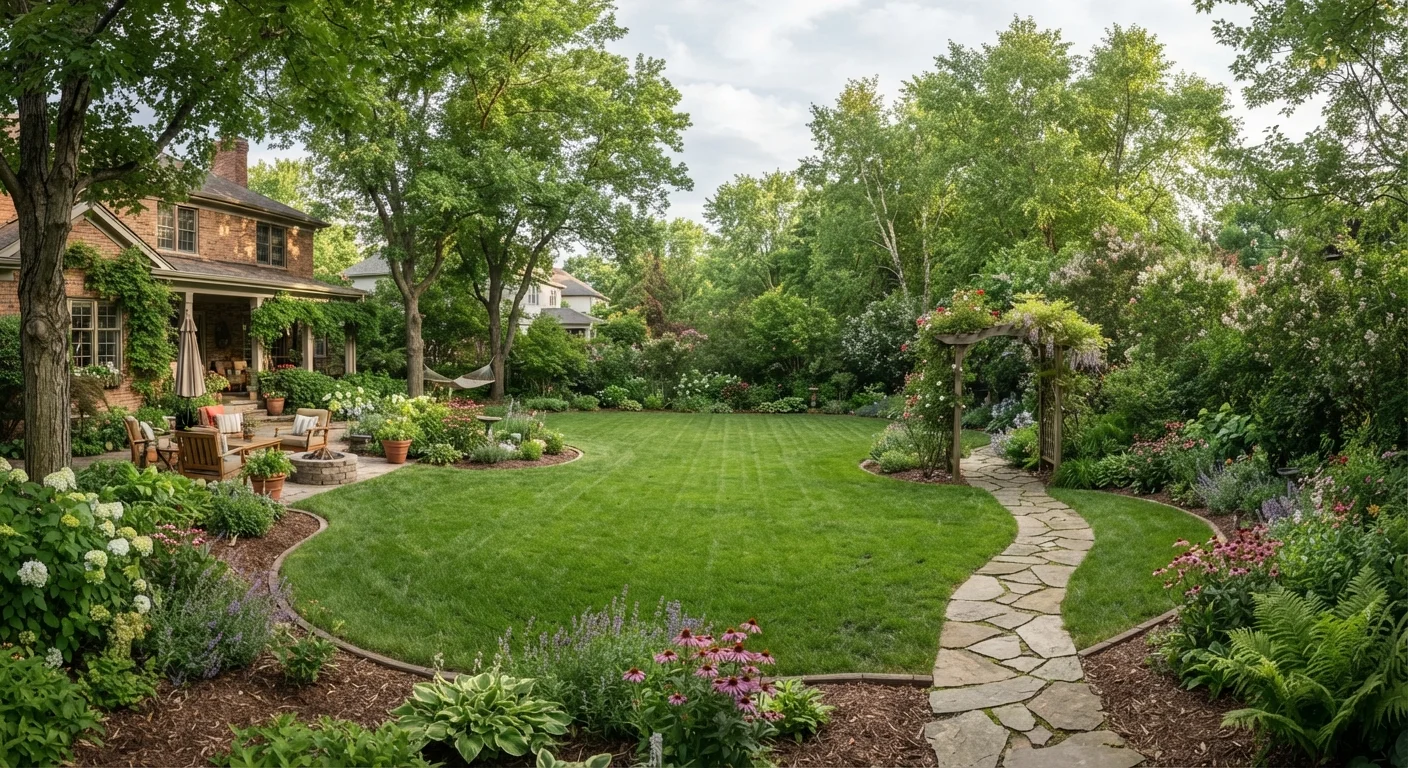
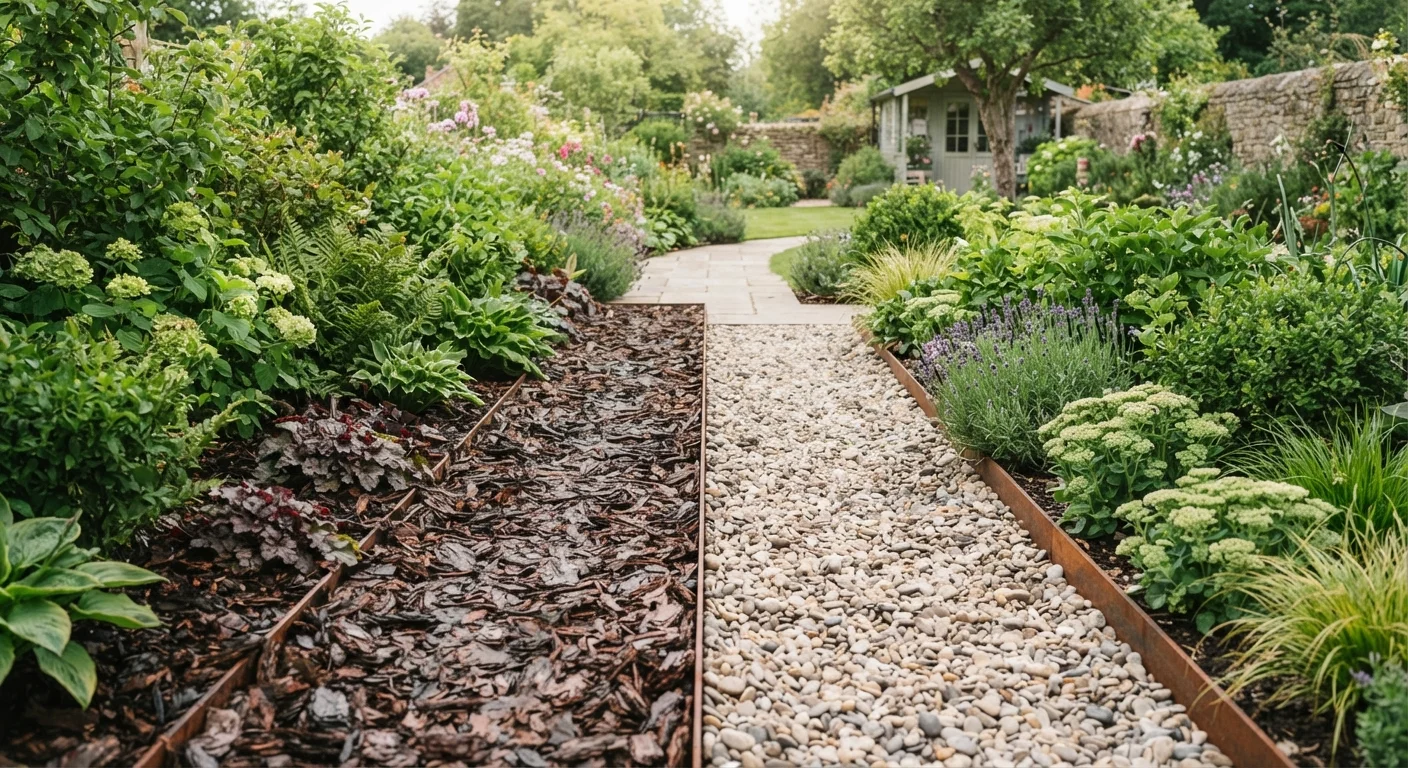
Visually, mulch conveys a naturalistic, organic quality that softens plant beds and draws the eye toward foliage and blooms. Gravel, by contrast, reads as more structured and architectural - it defines edges cleanly and pairs well with contemporary or southwestern landscape styles. Neither look is inherently superior; both can appear polished or untidy depending on how consistently they are maintained.
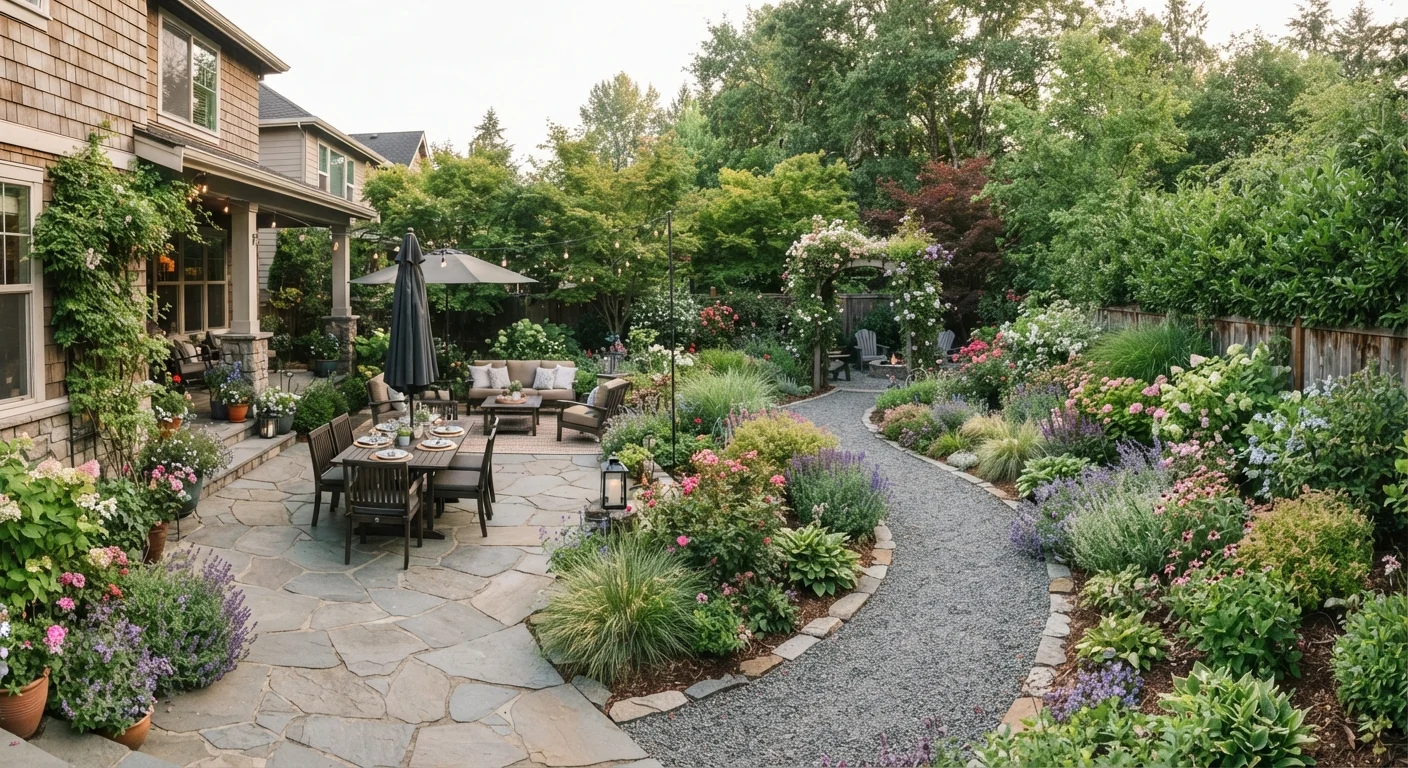
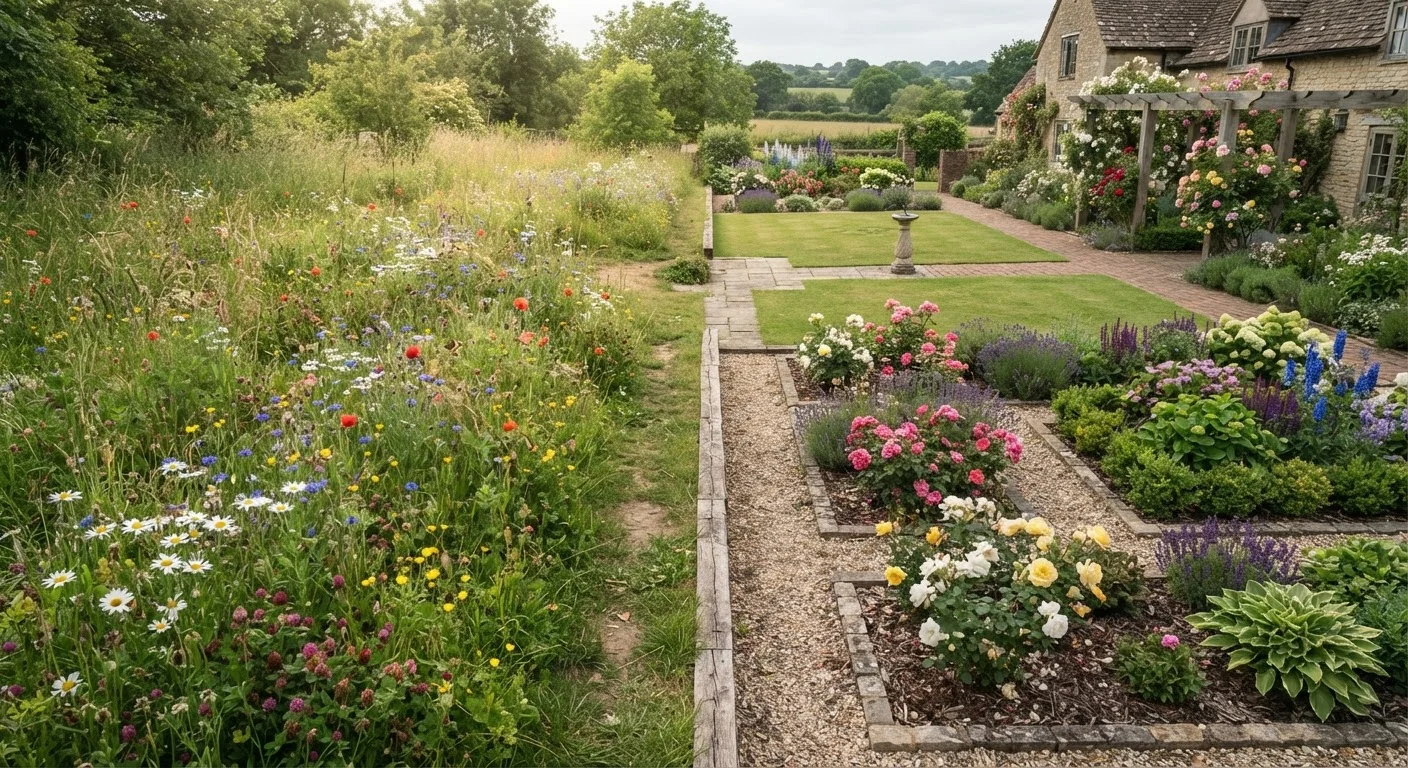
Many homeowners find the most functional outcome comes from using both: mulch in planting beds where soil health matters, and gravel along paths, driveways, or drainage corridors where durability and drainage are priorities. If you are considering gravel for a walkway specifically, the front walkway materials comparison article walks through how gravel performs relative to concrete, pavers, and flagstone. Similarly, planting for privacy offers ideas for combining ground cover with screening plants for a more complete landscape design.
The goal in either case is a ground cover that supports your plants, fits your maintenance capacity, and suits the regional climate - not simply one that looks appealing at the garden center.