Why the Method You Choose Actually Matters
Budgeting is one of the most reliable tools for building financial stability, yet many people abandon their budget within a few months. Research consistently points to the same root cause: choosing a method that doesn't match your lifestyle. Understanding the mechanics and trade-offs of each approach before you commit is time well spent. This article compares four widely used frameworks - zero-based budgeting, the 50/30/20 rule, Pay Yourself First, and envelope budgeting - so you can make an informed choice. For broader context, see the complete guide to budgeting fundamentals.
The Four Methods at a Glance
Before diving into each method individually, the table below summarizes how they compare across key practical dimensions.
| Zero-Based | 50/30/20 Rule | Pay Yourself First | Envelope Budgeting | |
|---|---|---|---|---|
| Effort level | High - rebuilt monthly | Low - broad categories | Low - automated transfers | Medium - cash management |
| Best income type | Steady or variable | Steady, predictable | Any income type | Steady with cash use |
| Savings focus | Explicit line item | 20% target allocation | Top priority, automated | Separate from envelopes |
| Flexibility | Low - every dollar assigned | High - broad buckets | Moderate - after savings | Low - fixed per category |
| Learning curve | Steep | Gentle | Very gentle | Moderate |
| Ideal for debt payoff | Yes - very effective | Partial - 20% bucket | Partial - savings first | No specific focus |
Zero-Based Budgeting: Total Accountability
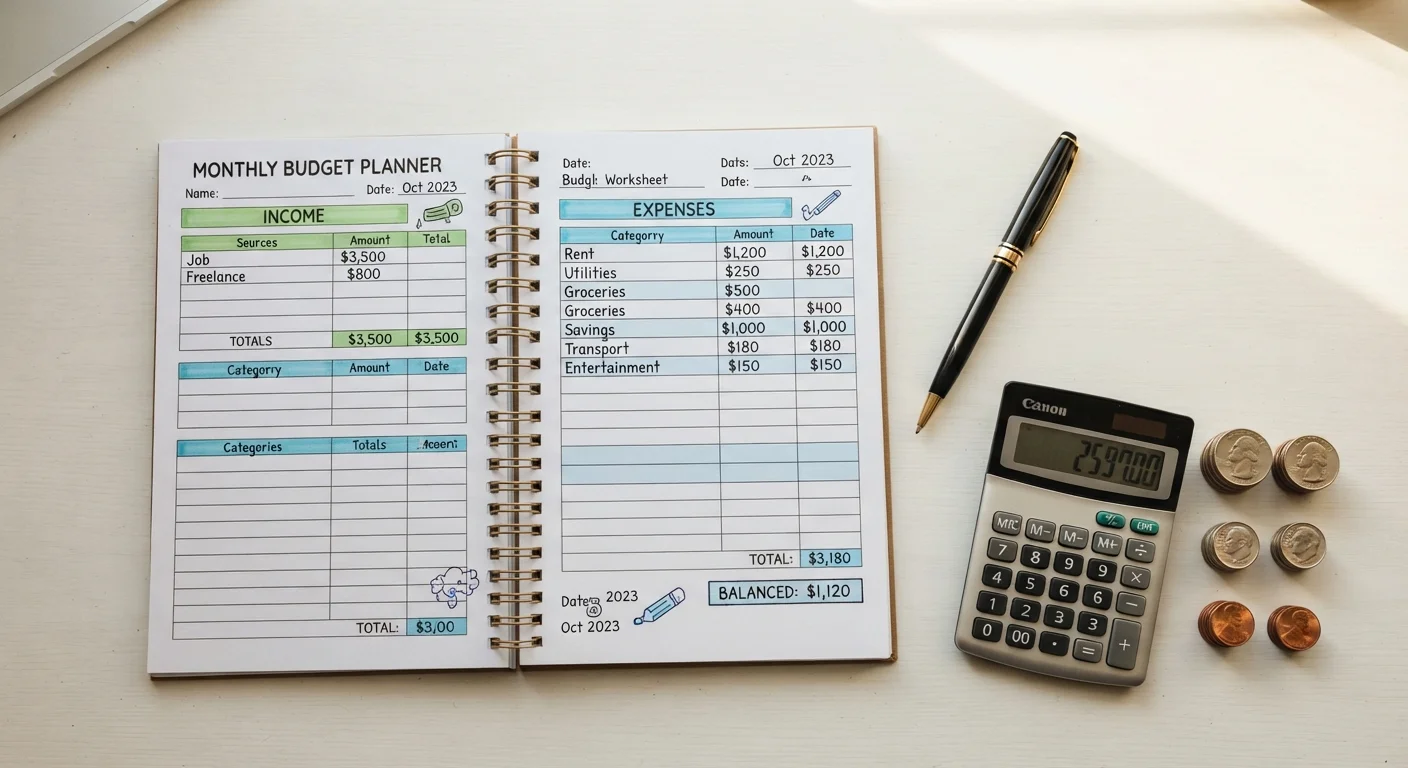
Zero-based budgeting (ZBB) requires you to assign every dollar of income a specific job - spending, saving, or debt repayment - so that income minus all allocations equals zero. You are not spending down to nothing; you are giving every dollar a purpose before the month begins.
How it works: Start with your total monthly take-home income. List every anticipated expense and savings goal. Allocate funds until every dollar is assigned. Any unallocated surplus is intentionally directed somewhere - an emergency fund, retirement contribution, or debt payment.
Best suited for: People with predictable monthly income who are comfortable with detail. ZBB is particularly effective for those managing debt aggressively, since it forces a hard look at discretionary spending. If you're weighing debt repayment strategies, ZBB pairs well with either the avalanche or snowball method.
Main drawback: It can be time-consuming and requires rebuilding the plan each month if income or expenses fluctuate.
Track Spending for 30 Days First
Before committing to zero-based budgeting, spend one month logging every transaction without changing your habits. This baseline reveals your actual spending patterns - not your assumed ones - making your first zero-based budget far more realistic and sustainable.
The 50/30/20 Rule: A Simple Starting Framework
Popularized in the early 2000s, the 50/30/20 rule divides after-tax income into three broad categories: 50% toward needs (housing, utilities, groceries, insurance), 30% toward wants (dining out, entertainment, subscriptions), and 20% toward savings and debt repayment beyond minimums.
Best suited for: Budgeting newcomers who want structure without granular tracking. The simplicity makes it easy to sustain.
Main drawback: The 50% needs allocation is difficult to achieve in high-cost cities, where housing alone can consume 40% or more of income. The rule also doesn't distinguish between high-interest debt and long-term savings priorities. Use it as a starting point, not a permanent prescription. You may also want to pair it with a tracking tool - see our comparison of manual tracking versus budgeting apps for guidance.
Pay Yourself First: Automate Savings Before Spending
Pay Yourself First (PYF) reverses the typical savings logic. Rather than saving what remains after expenses, you transfer a set amount to savings or investments immediately when income arrives, then spend what's left.
How it works: Decide on a savings target - even a modest percentage to start - and automate the transfer on payday. The remaining balance covers living expenses. This approach leverages behavioral economics: money that never enters your checking account is much harder to spend. To learn how savings fits into broader wealth-building, explore the saving and investing hub.
Best suited for: Those who find themselves consistently spending everything before saving, or anyone who prefers automation to willpower.
Main drawback: If the savings transfer is set too high, it can create cash-flow problems for essential expenses. Start conservatively and adjust.
Envelope Budgeting: Cash-Based Category Control
Envelope budgeting allocates cash into physical (or digital) envelopes labeled by spending category - groceries, gas, dining, entertainment. When an envelope is empty, spending in that category stops for the month.
Best suited for: People who overspend in specific discretionary categories and benefit from a tangible, visual spending limit. It also works well for those who prefer cash transactions over digital payments.
Main drawback: Managing physical cash is inconvenient for most modern payment environments. Digital adaptations exist, but they require consistent categorization discipline. Whichever version you use, tracking methods matter for keeping envelopes accurate.
This article provides general financial education and is not personalized financial advice. Consider consulting a licensed financial adviser to determine which budgeting approach best fits your individual situation.