Why National Park Planning Is Different From Other Road Trip Stops
Most road trip stops - a diner, a state park, a scenic overlook - require no advance reservation. You arrive, you look, you leave. National parks increasingly don't work that way. Surging visitor numbers have pushed the most popular parks toward reservation-only entry systems, timed-arrival windows, and permit lotteries that operate months ahead of any given travel date.
Treating a national park as a spontaneous detour in peak season is one of the most common planning mistakes on American road trips. Arriving at Arches or Glacier without a timed-entry reservation during summer can mean being turned away at the gate entirely - wasting a driving day and a motel booking in the process.
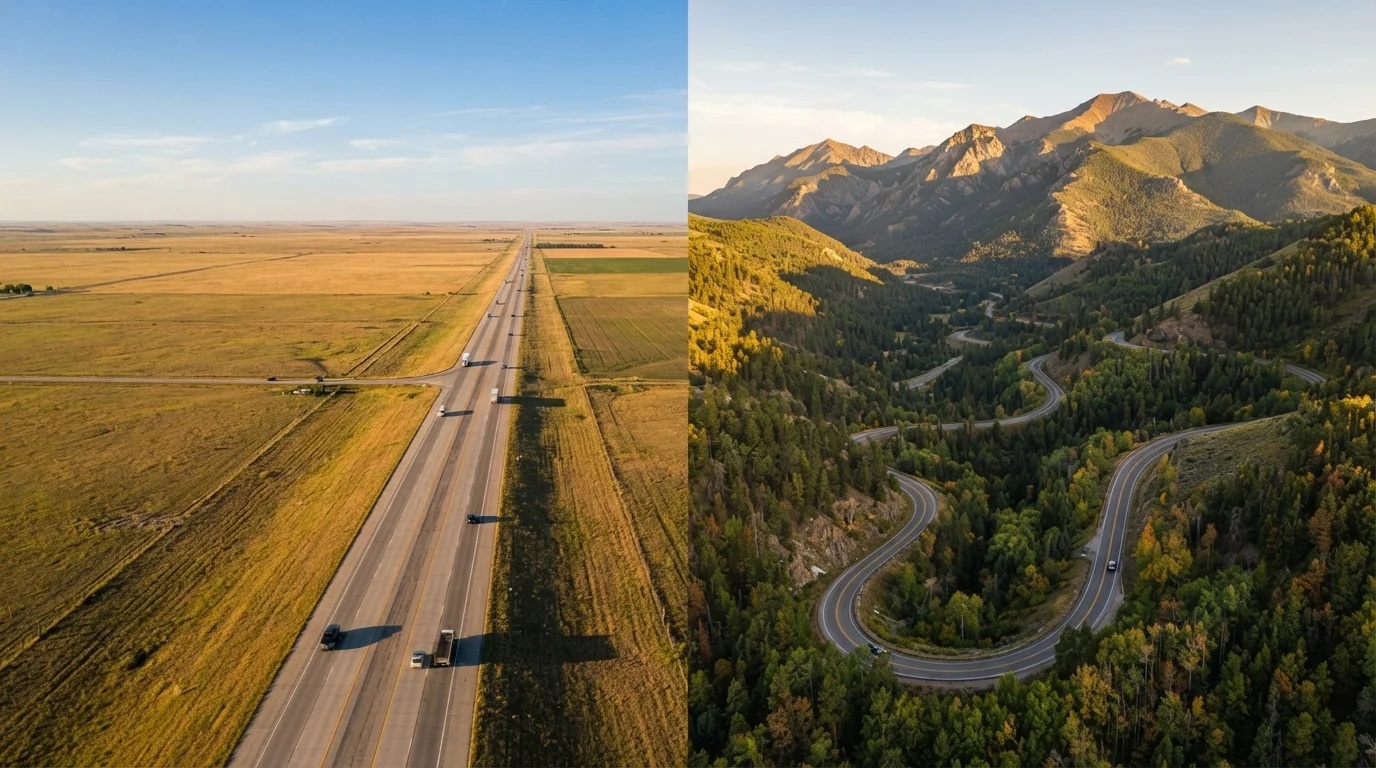
The planning framework here treats each park as a fixed anchor point in your itinerary, with driving days and accommodation built around it - not retrofitted after the fact. If you're still in the early stages of building your route, the scenic byways vs. interstates guide can help you decide which type of road to prioritize on segments between parks.
What you will need
Recreation.gov account
Required to book timed-entry permits, campsite reservations, and back-country permits at most national parks.
America the Beautiful Pass
Annual interagency pass covering entrance fees at national parks, monuments, and other federal lands - reduces per-park costs when visiting multiple sites.
NPS App (National Park Service)
Provides offline park maps, trail details, alerts, and visitor information for use inside parks with limited cell coverage.
Paper or downloaded campground confirmation
Required for check-in at many campgrounds where cell service and printed kiosks are unavailable.
Step-by-Step: Building National Parks Into Your Route
Identify which parks are actually on your route
Open a mapping tool and plot your origin and destination. Then look at what national parks fall within roughly 50 miles of that corridor - not parks you'd like to visit, but parks that your route can physically accommodate without adding a full extra driving day. This honest geographic filter is where most planning goes wrong: people list parks they want and then try to force the route around them.
Cross-reference the NPS website's park finder by state to confirm which sites are full national parks versus national monuments or recreation areas - entry requirements and permit systems vary by designation.
Check reservation and permit requirements for each park
Visit each park's individual page on nps.gov and look for a 'Reservations' or 'Permits' section. Note the following for each park: whether timed-entry is required and during which dates, when reservations open (often 90 days out or on a rolling basis), whether a separate wilderness or backcountry permit is needed beyond the entrance fee, and what the entrance fee is if no pass applies.
Record this information in a simple table or note - date of permit release, cost, and any lottery deadlines. This becomes your reservation calendar.
Build park days into your driving schedule before finalizing dates
Most visitors underestimate how long a meaningful park visit takes. A single large park - Grand Canyon South Rim, Yosemite Valley, Yellowstone - warrants a full day minimum; two days is more realistic if you plan any hiking or exploration beyond the main overlooks. Budget your driving days around these anchored park days, not the other way around.
Calculate the drive time between parks using realistic averages - park roads themselves are often slow, winding, and subject to traffic delays in summer. Add buffer days for weather, fatigue, or unexpected closures.
Secure accommodations near each park early
In-park lodges and campgrounds book out months in advance for peak season (generally late May through early September). If you want to stay inside a park boundary, treat those reservations as urgently as the entry permits themselves - they often open on the same rolling 6-month window.
If in-park lodging is unavailable, identify gateway towns within a reasonable driving distance. Many parks have established gateway communities with motels, vacation rentals, and private campgrounds that serve as practical alternatives. Confirm check-in times against your planned arrival from the road.
Verify seasonal road and facility conditions before you leave
National park roads close seasonally - some high-elevation roads in Yellowstone, Rocky Mountain, and Olympic don't open until May or June depending on snowpack. Visitor centers, shuttle systems, and specific trailheads may operate on reduced schedules outside peak months. Check the park's current conditions page on nps.gov no more than two weeks before departure, as updates happen frequently.
If your route includes the American Southwest, also account for summer heat advisories that restrict hiking hours in parks like Death Valley and Big Bend.
Confirm your full itinerary in writing before departure
Write out a day-by-day itinerary that includes: driving segments with mileage and estimated time, entry reservation confirmation numbers, campground or lodging confirmations, and any permit documents. Store copies both digitally (in a downloaded, offline-accessible format) and on paper. Share the itinerary with someone not on the trip.
If you're new to multi-stop road trip planning, the cross-country drive planning guide covers the broader logistics of structuring a long drive before you get to the park-specific details.
Permits Sell Out Months in Advance
Timed-entry reservations for high-demand parks - including Glacier, Rocky Mountain, and Arches - routinely fill within minutes of release on recreation.gov. Do not assume you can purchase entry at the gate during peak season. Check the specific park's reservation page and mark your calendar for the release date before you commit to any travel dates.
Don't Rely on Cell Service Inside Parks
Cell coverage is limited or nonexistent in large portions of many national parks. Download offline maps, park trail maps, and campground confirmation emails before you arrive. Attempting to pull up reservation QR codes or navigate via phone at the entrance gate can create delays for you and other visitors behind you.
Stack Parks on the Same Corridor
Several national parks sit close enough together to share a logical driving corridor - Zion, Bryce Canyon, and Capitol Reef in Utah, for example, or the Badlands and Wind Cave in South Dakota. Clustering parks along a single route reduces backtracking and gives you more time inside the parks rather than behind the wheel. See our Southwest road trip planning guide for region-specific park clusters.
Practical Considerations After Your Itinerary Is Set
Once your itinerary is confirmed, a few logistical items remain. First, calculate whether an America the Beautiful annual interagency pass makes financial sense for your trip. At the time this was written, individual park entrance fees ranged from roughly $15 to $35 per vehicle. If you're visiting three or more fee-charging parks on a single trip, the annual pass often offsets its cost - but run the math for your specific parks before purchasing.
Second, review what you're packing for days inside the parks. Hydration, sun protection, layers for elevation changes, and appropriate footwear matter more inside park terrain than on a standard driving day. For a complete vehicle kit checklist beyond the park-specific items, see what experienced road trippers keep in the car.
Finally, build in realistic expectations. A national park visited at a reasonable pace - time to hike a trail, sit at a viewpoint without rushing, eat a meal - will feel memorable. The same park visited in two hours on the way to the next destination rarely does. The itinerary discipline you build in the planning phase is what makes the difference on the road.