Beyond the obvious snacks and chargers—here's a practical checklist of what seasoned US road trippers keep on hand for safety, comfort, and flexibility.
Key Takeaways
Safety gear - jumper cables, a reflective triangle, and a basic first aid kit - belongs in every car before a long drive.
Paper maps and downloaded offline navigation are reliable backups when cell service disappears on rural routes.
Comfort and fatigue management items make multi-day drives safer, not just more pleasant.
Regional conditions (desert heat, mountain cold, storm-prone corridors) should shape what extra items you carry.
Packing for flexibility - cash, snacks, a spare key - reduces the impact of unexpected detours or delays.
Why This List Is Different From a Generic Packing Guide
Most road trip packing lists stop at phone chargers and sunglasses. That's fine for a two-hour drive, but experienced road trippers think differently. They pack for the things that might go wrong - a dead battery at a rest stop, a sudden detour through roadless terrain, a gas station that turns out to be closed - not just for the things they planned.
This checklist focuses on what actually earns its place in the car after enough miles. It's organized by category so you can work through it systematically before departure. If you're planning a route through remote or low-service stretches, also read our guide on fuel, connectivity, and cell coverage in rural America - the two pieces work together.
Required
Portable Jump Starter
Restarts a dead battery without needing another vehicle - useful at remote rest stops and overnight parking areas.
Required
Offline Navigation App
Provides turn-by-turn directions when cell service drops - download maps for your full route before departure.
Optional
Portable Air Compressor
Inflates a low tire at any stop without requiring a service station, buying you time to reach a repair shop safely.
Required
Multi-Port Car Charger
Keeps all devices powered simultaneously, reducing conflict over charging priority during long drive days.
Required
Pre-Stocked First Aid Kit
Handles minor injuries and ailments without relying on access to a pharmacy or urgent care in remote areas.
Optional
Portable Battery Pack
Charges phones and small devices when the engine is off - essential during campsite stays or long parking stops.
The Checklist
Work through each category below before you load the car. Items marked must are non-negotiable for any overnight or multi-state drive. Items marked should are strongly recommended. Nice-to-have items earn their space on longer or more remote routes.
Vehicle Safety & Emergencies
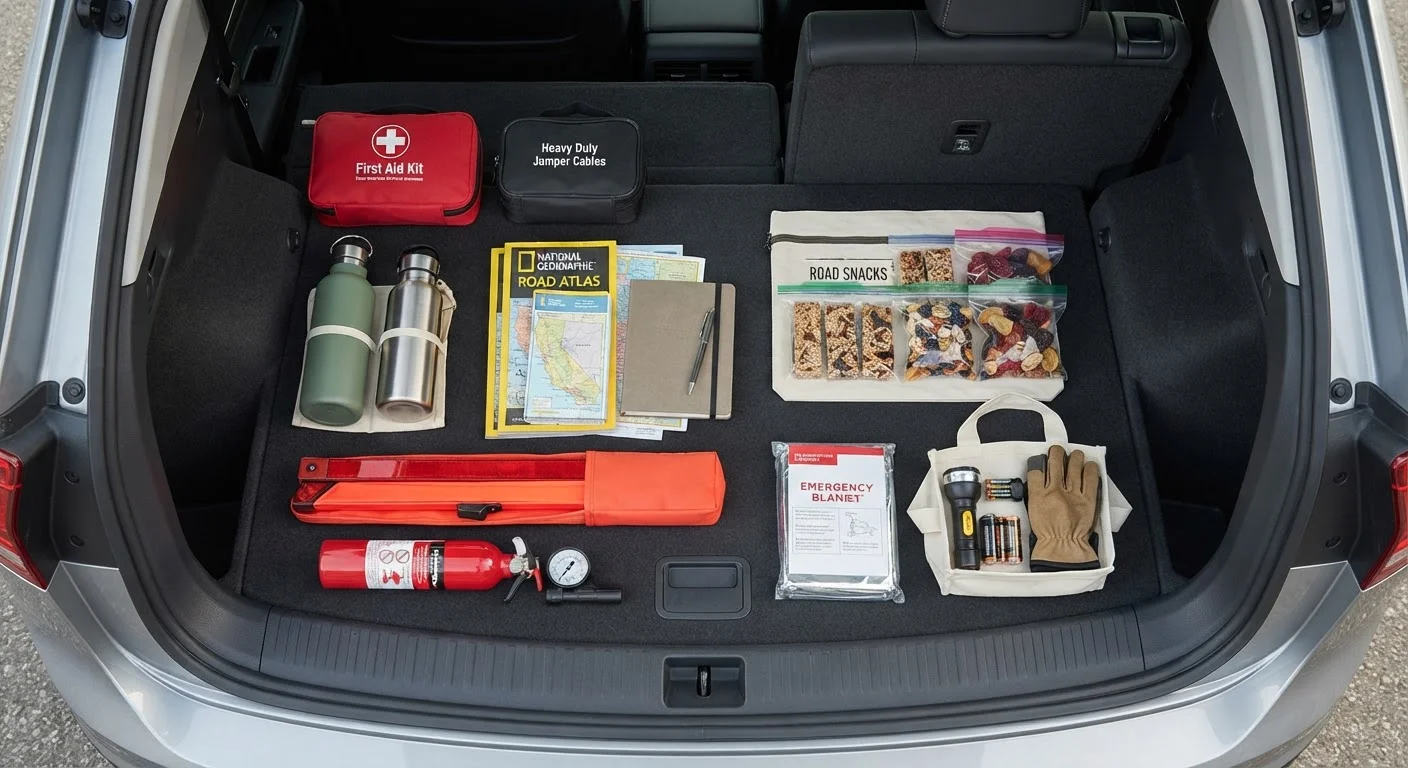
Keep jumper cables or a portable jump starter in the trunk - battery failures are among the most common roadside stops.Must
Pack a reflective warning triangle or road flares to mark your vehicle if you're stopped on a highway shoulder.Must
Carry a properly inflated spare tire, a car jack, and a lug wrench - and confirm you know how to use them before you leave.Must
Include a tire pressure gauge and a small portable air compressor to handle slow leaks without needing a service station.Should
Store a quart of the correct motor oil and a container of coolant for older or high-mileage vehicles.Should
Pack a heavy-duty flashlight with fresh batteries and keep it accessible from the driver's seat.Must
First Aid & Health
Carry a pre-stocked first aid kit that includes bandages, antiseptic wipes, pain relievers, blister pads, and any prescription medications your group needs.Must
Pack any prescription medications in original labeled containers with enough supply to cover unexpected delays.Must
Include insect repellent and sunscreen, especially for trips through the South, Southwest, or areas with extended outdoor exposure.Should
Bring a small thermometer and antidiarrheal medication for multi-day trips where access to pharmacies is uncertain.Nice to have
Navigation & Documents
Download offline maps for your entire route before departure - cell service in rural corridors is often unreliable for hours at a stretch.Must
Keep a current paper atlas or printed regional maps in the glove box as a true backup when all devices fail.Should
Carry your driver's license, vehicle registration, and proof of insurance - stored separately from your wallet in case of theft.Must
Have a written list of emergency contacts, roadside assistance numbers, and your insurance provider's claims line, stored offline.Should
Power, Connectivity & Tools
Use a multi-port car charger or an inverter that handles everyone's devices without fighting over a single USB port.Must
Carry a fully charged portable battery pack capable of charging a phone at least twice, for use when the car is off.Should
Pack a basic multi-tool or pocket knife - useful for everything from cutting rope to tightening a loose panel screw.Should
Bring duct tape and zip ties, which solve a surprising number of minor mechanical and cargo problems on the road.Nice to have
Comfort, Hydration & Food
Keep a reusable water bottle per person and a larger jug in the trunk as a reserve, especially for desert or mountain routes.Must
Pack non-perishable, high-protein snacks that hold up in heat - nuts, jerky, and energy bars outperform chips over a full day of driving.Should
Include a small cooler for medications, fresh food, or drinks on multi-day trips where food access is unpredictable.Should
Bring a neck pillow and a small blanket for passengers - comfort on long legs directly affects driver alertness through fewer stop requests.Nice to have
Cash, Cards & Flexibility
Carry a mix of small bills and change - some rural toll roads, parking areas, and campgrounds are cash-only.Must
Keep a spare key in a secure location separate from your main key, such as a lockbox or with a trusted co-traveler.Should
Pack a small notebook and pen for jotting directions, reservation confirmations, or notes when screens aren't practical.Nice to have
Overloading your vehicle affects braking distance, fuel efficiency, and tire wear - all of which matter more on long drives. Pack the emergency and safety items first, then fit comfort and convenience around them. If you can't reach your spare tire or emergency kit without unpacking everything, reorganize before you leave.
Regional and Route-Specific Additions
Your base list stays constant, but your route should add items on top of it. A few examples:
Desert Southwest: Extra water capacity (at least one gallon per person beyond daily drinking needs), sun shades for parked windows, and awareness that gas stations can be 50+ miles apart. See our Southwest road trip planning guide for route-specific detail.
Mountain passes: Tire chains or cables where legally required in winter, an ice scraper, and extra layers even in late spring or early fall - conditions change fast above 8,000 feet.
National park routes: Physical entry passes or confirmation of reservation windows, since cell service for digital passes can be unreliable at park gates. More on this in our guide to factoring national parks into a road trip route.
Fatigue is its own category of risk on any long drive. Why road trippers underestimate driving fatigue is worth reading before departure - the items in your car won't help if the driver is too tired to operate safely.
This checklist is for general planning and informational purposes. Verify any safety or legal requirements (such as chain laws or park entry rules) with official state and federal sources before your trip, as regulations and conditions change.
Travel Planning Editorial Team is the collective byline for our editorial team and contributor network. Articles published under this byline or an editorial pen name are researched, written, and reviewed according to our editorial standards for clarity, consistency, and independence before publication.
The content provided on our blog site traverses numerous categories, offering readers valuable and practical information. Readers can use the editorial team’s research and data to gain more insights into their topics of interest. However, they are requested not to treat the articles as conclusive. The website team cannot be held responsible for differences in data or inaccuracies found across other platforms. Please also note that the site might also miss out on various schemes and offers available that the readers may find more beneficial than the ones we cover.