
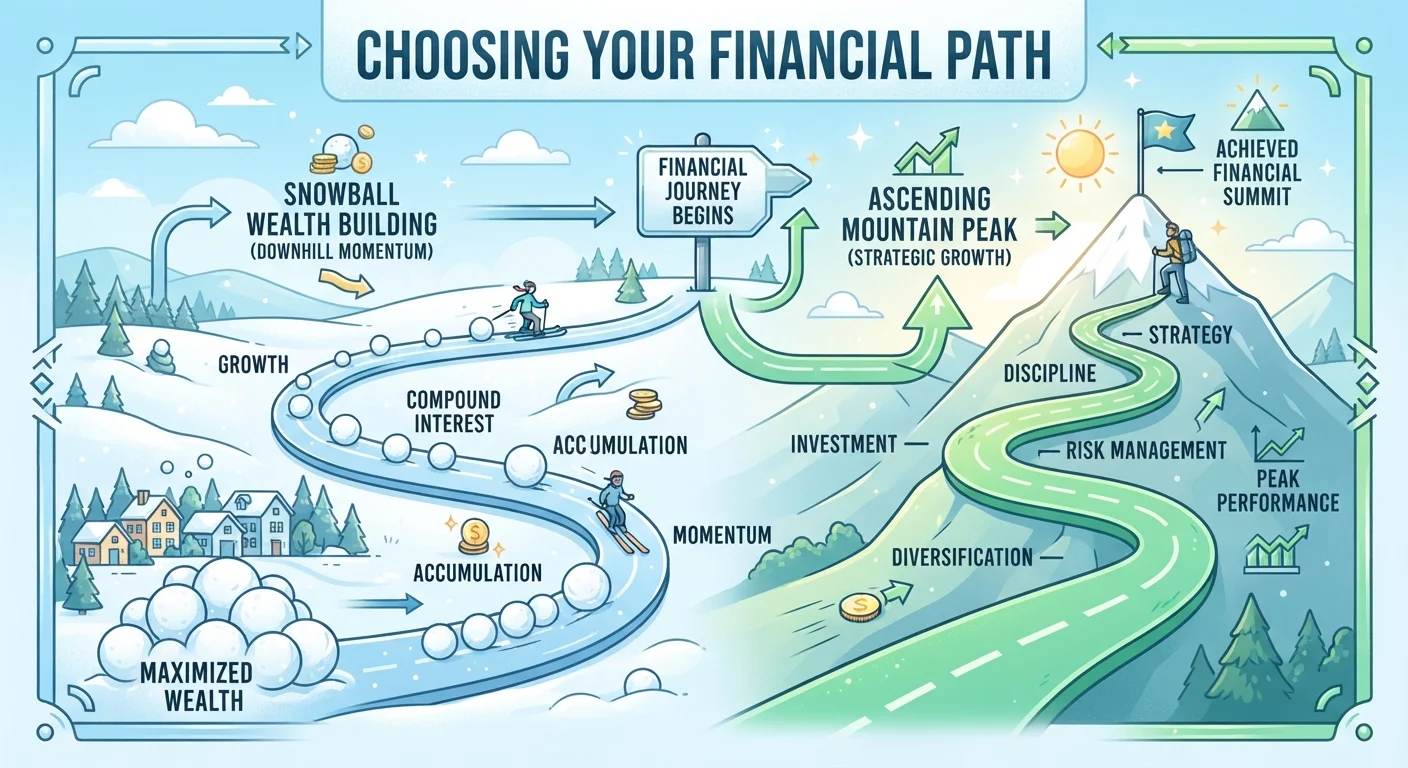
How Each Strategy Works
Both the avalanche and snowball methods share the same core mechanic: make minimum payments on all debts, then direct any extra money toward one priority debt. Where they differ is in how that priority debt is chosen.
The Debt Avalanche ranks your debts by interest rate, from highest to lowest. You put every available extra dollar toward the highest-rate balance. Once it's eliminated, you redirect that payment to the next highest rate, and so on. Because high-interest debt costs the most per dollar owed, this method reduces the total amount you pay over the life of your debts.
The Debt Snowball ranks debts by balance, from smallest to largest, regardless of interest rate. You eliminate the smallest balance first, then roll that freed-up payment into the next-smallest debt. Each payoff creates a momentum effect - the psychological equivalent of a snowball gaining size as it rolls downhill.
| Debt Avalanche | Debt Snowball | |
|---|---|---|
| Primary ranking factor | Highest interest rate first | Smallest balance first |
| Total interest paid | Generally lower | Generally higher |
| Time to first payoff | Potentially longer | Typically faster |
| Psychological motivation | Driven by long-term math | Driven by quick wins |
| Best suited for | Disciplined, numbers-focused borrowers | Motivation-driven borrowers |
| Risk of abandonment | Higher if early progress feels slow | Lower due to frequent milestones |
If you're also working on a broader spending plan, see how debt repayment fits within different frameworks in our budgeting methods comparison.
The Math: Where the Avalanche Has the Edge
From a purely arithmetic standpoint, the avalanche method almost always results in paying less total interest and becoming debt-free sooner. When high-interest balances are left to compound, they grow faster - attacking them first limits that damage.
~$1,000+
Potential interest savings with avalanche over snowball
The gap varies widely by balance size and rate spread, but analyses of common debt scenarios regularly show meaningful savings when the highest-rate debt is prioritized.
77%
US adults carrying some form of debt
According to Federal Reserve consumer finance data, the vast majority of American households carry at least one form of debt, underscoring the broad relevance of repayment strategy choices.
The gap between methods can be modest or significant depending on the interest rates and balances involved. If your highest-rate debt also happens to be your largest balance, the avalanche advantage is magnified. Conversely, if your debts carry similar interest rates, the difference in total cost may be relatively small.
It's worth noting that the avalanche's mathematical edge assumes you make consistent extra payments throughout. Any lapse or budget disruption can narrow - or erase - the savings advantage over the snowball approach.
This article is for general financial education purposes only and does not constitute personalized financial advice. Consult a qualified financial professional regarding your specific situation.
The Psychology: Where the Snowball Holds Its Own
Behavioral research consistently shows that people are more likely to continue a habit when they experience early success. Paying off a debt in full - even a small one - delivers a tangible, motivating milestone that an interest-rate spreadsheet cannot replicate.
This is especially relevant for anyone who has previously started a repayment plan and abandoned it. If the concern isn't the math but the follow-through, the snowball method addresses the more pressing problem. A slightly less efficient plan executed faithfully outperforms the theoretically optimal plan that gets dropped after three months.
Some borrowers find a hybrid approach useful: clearing one or two small balances using snowball logic to free up mental bandwidth, then switching to avalanche ordering for the remaining debts. This isn't a formally named method, but it's a practical compromise many people find sustainable.
Building strong repayment habits early can also reduce how often you need to choose between these strategies at all. Our guide on responsible borrowing habits covers practical steps worth starting now.
Choosing the Right Approach for Your Situation
Consider the following factors when deciding which strategy fits your circumstances:
- Interest rate spread: If one debt carries a significantly higher rate than the rest (say, 24% vs. 8%), the avalanche is harder to argue against. If rates cluster closely together, the difference in total cost is smaller and the psychological case for snowball strengthens.
- Number of accounts: Managing many separate balances can be mentally taxing. Eliminating accounts quickly - snowball logic - simplifies your financial picture.
- Income stability: Borrowers with variable or unpredictable income may benefit from the snowball's faster account closures, which reduce the minimum-payment floor they need to cover each month.
- Personal motivation style: Honest self-assessment matters here. If tracking interest savings keeps you engaged, avalanche is a good fit. If you need to see accounts closed to stay committed, choose snowball.
If your debts are spread across multiple lenders at varying rates, it may also be worth understanding whether debt consolidation could simplify your repayment structure before applying either strategy.
And before taking on any new debt during repayment, reviewing a pre-loan checklist can help you weigh whether additional borrowing is the right move.