
Why Borrowing Habits Matter More Than One-Time Decisions
Most credit damage doesn't happen in a single dramatic moment. It accumulates quietly - a missed payment here, a maxed-out card there - until the effects become hard to reverse. The good news is that credit health responds just as reliably to consistent positive habits. You don't need a perfect financial situation to borrow responsibly; you need repeatable behaviors that work within your actual life.
This is general financial education, not personalized advice. For guidance specific to your situation, consider consulting a licensed financial professional.
If you're newer to credit, our guide for new borrowers covers foundational options and timelines worth understanding first.
Set up automatic payments for at least the minimum due on every account
Payment history is typically the largest factor in most credit scoring models. A single missed payment can remain on your credit report for years and cause a significant score drop. Automation removes the risk of forgetting, even during busy or stressful periods.
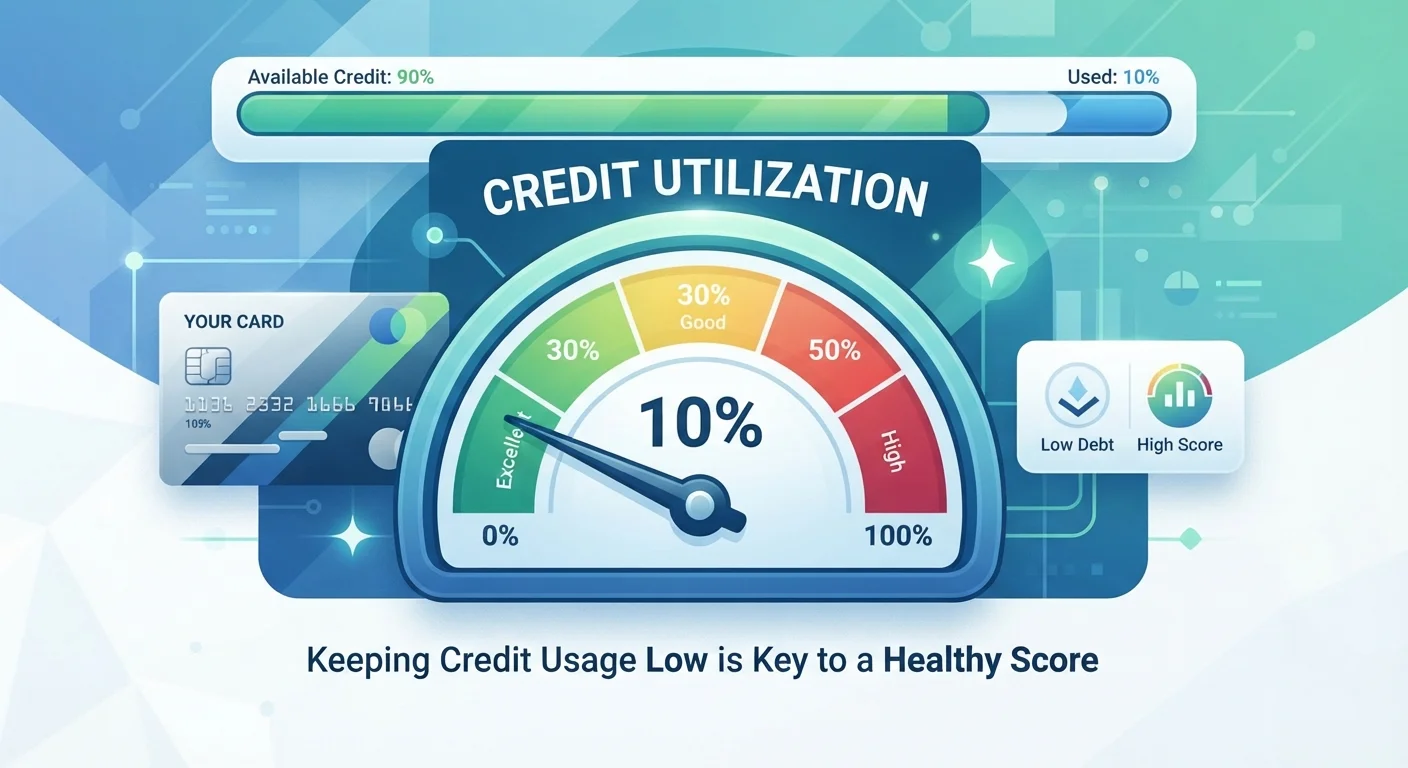
Keep your credit card balances well below your credit limit
Credit utilization - the ratio of your balance to your available credit limit - is a key scoring factor. Carrying high balances relative to your limit signals elevated risk to lenders, even if you pay on time. Most guidance suggests staying below 30% utilization per card and overall, though lower is generally better.
Apply for new credit only when you have a clear, specific need
Each credit application typically triggers a hard inquiry, which can temporarily lower your score by a small amount. Multiple inquiries in a short period can compound this effect and signal financial stress to lenders. Being selective preserves your score and your borrowing capacity.
Review your credit report at least once a year for errors or unfamiliar accounts
Errors on credit reports - including accounts that aren't yours, incorrect balances, or outdated negative marks - are more common than many people realize. Left unchecked, they can suppress your score or indicate identity theft. Disputing errors is a straightforward process and can lead to real score improvements.
Borrow based on your repayment ability, not your approved credit limit
Lenders approve credit based on their risk models, not your actual monthly budget. Treating your credit limit as a spending target often leads to balances that take months or years to pay down - generating interest charges that erode the value of whatever you purchased. Borrowing what you can realistically repay within a planned timeframe keeps debt from compounding.
Core Habits That Support Long-Term Credit Health
The practices below are grounded in how credit scoring models generally work and in widely accepted principles of debt management. Implementing even a few of them consistently can meaningfully shift your credit trajectory over time.
For a deeper look at one of the most influential factors in your score, see our article on credit utilization.
35%
Weight of payment history in FICO scores
According to FICO's published scoring model breakdown, payment history is the single largest factor, making on-time payments the highest-leverage habit for most borrowers.
30%
Weight of amounts owed (utilization) in FICO scores
FICO's model breakdown identifies credit utilization as the second-largest scoring factor, underscoring why carrying high balances can drag down scores even with a perfect payment record.
Fitting Responsible Borrowing Into Your Broader Financial Picture
Borrowing habits don't exist in isolation. They're most sustainable when they're connected to a working budget and a savings cushion. When you have money set aside, you're less likely to rely on credit to cover emergencies - which reduces the risk of carrying balances you can't quickly pay down.
If budgeting structure is something you're still developing, the Budgeting Basics hub offers practical starting points. And for anyone navigating existing debt alongside these habits, reviewing structured debt repayment strategies can help you prioritize which balances to address first.
Responsible borrowing isn't about restriction - it's about giving yourself more options over time. The habits above require no dramatic lifestyle changes, just consistency applied in the right places.
This article is for general informational and educational purposes only and does not constitute personalized financial, credit, or legal advice. Consult a qualified financial professional before making decisions specific to your situation.