Why Plant Privacy Screens Instead of Building Fences?
Fences solve privacy problems quickly, but living screens offer advantages that wood and vinyl simply cannot match: air filtration, noise reduction, wildlife habitat, and curb appeal that increases rather than diminishes over time. A well-chosen hedge or tree line can also add meaningful value to a property in ways that a standard fence rarely does.
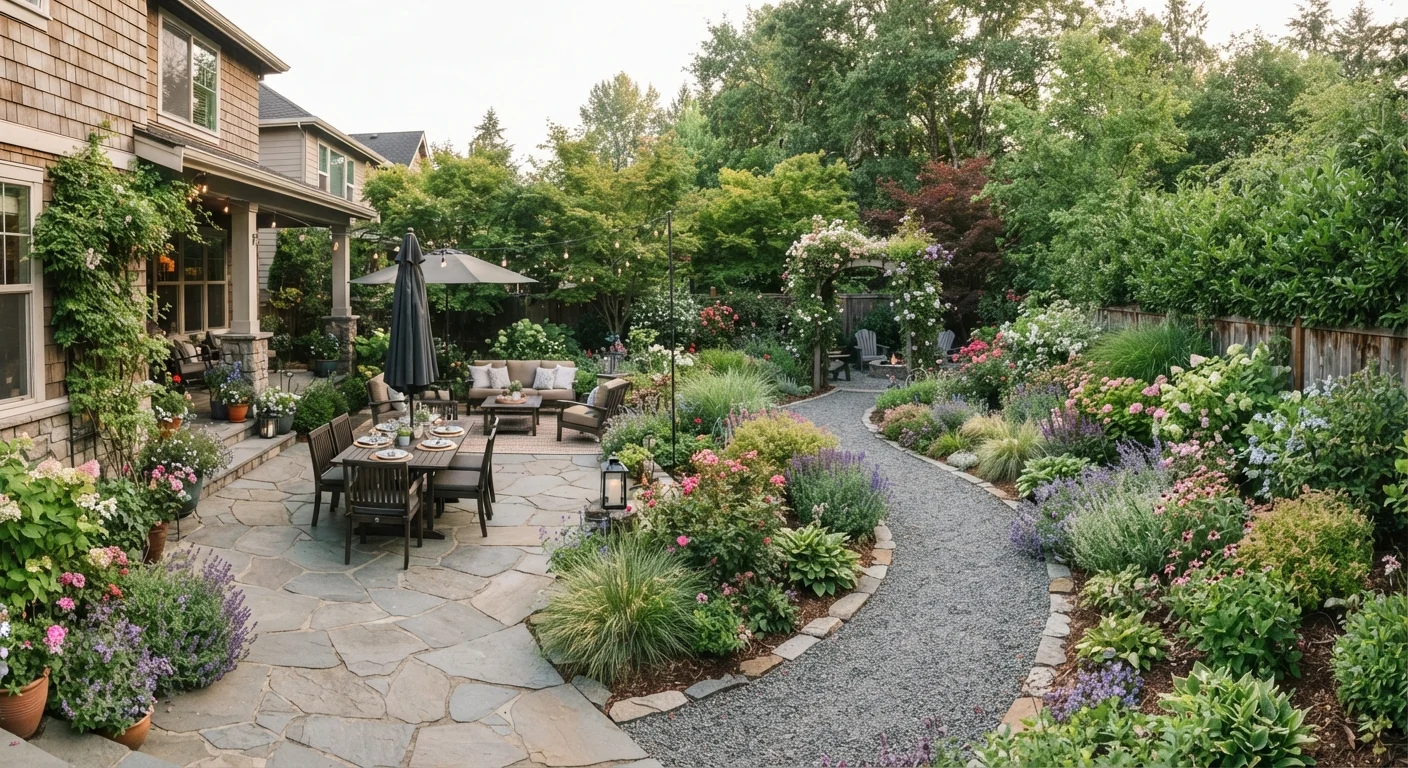
The trade-off is patience. Most privacy plantings take two to five years to reach functional screening height, and some slower-growing options may take a decade or more. Understanding that timeline - and selecting plants whose mature size fits your space - is the foundation of every successful privacy planting plan. As you plan, also think about how plantings will interact with any hardscape features already in your yard; balancing hard and soft landscape elements is key to a cohesive design.
The seven plants below cover a range of climates, growth rates, and maintenance levels. Use them as a starting framework, then verify regional suitability with your local cooperative extension service before purchasing.
Arborvitae (Thuja occidentalis and related species)
Arborvitae is one of the most widely planted privacy trees in the United States, and for good reason. Columnar varieties grow densely from ground to tip, creating a solid evergreen wall without requiring significant horizontal space. Depending on the cultivar, mature heights range from about 10 feet to over 30 feet.
Growth rate is a key appeal: many cultivars add one to two feet per year under good conditions. They tolerate a wide range of soil types but prefer consistent moisture, especially in the first two years. They perform best in USDA Hardiness Zones 3-8, making them suitable for most of the continental US.
Maintenance note: Arborvitae require little pruning when given adequate space at planting. Deer browse can be a significant problem in suburban and rural settings - a factor worth researching for your specific area before committing.
Columnar arborvitae can add one to two feet per year, reaching screening height faster than most alternatives.
Leyland Cypress (×Cuprocyparis leylandii)
Leyland cypress is a fast-growing evergreen hybrid known for its rapid vertical growth - sometimes three to four feet per year in ideal conditions. It creates a dense, feathery screen and tolerates a range of soil types. It is best suited to USDA Zones 6-10, so it is not a reliable choice in colder northern climates.
Its speed, however, comes with a caution: Leyland cypress can outgrow its space quickly, and without regular trimming it becomes difficult to manage. It is also susceptible to several fungal diseases and pest pressures, particularly in regions with humid summers. Annual shearing helps maintain density at a manageable size and improves airflow through the canopy.
Maintenance note: Plan for annual shearing if you want a tidy, defined hedge rather than a large informal tree. Avoid planting where mature height would conflict with overhead utilities.
Leyland cypress grows up to four feet per year, but without annual trimming it quickly becomes difficult to control.
Holly (Ilex species)
Hollies offer a versatile, attractive option for privacy screening in Zones 5-9, depending on species. Evergreen hollies - such as American holly and many hybrid cultivars - maintain dense foliage year-round, and their berries provide wildlife value through winter. They adapt well to both sun and partial shade, which makes them useful in yards with variable light conditions.
Growth rates vary by species: some hollies add about one foot per year while others are notably slower. Most benefit from light shaping in late winter or early spring. For reliable berry production, hollies typically require both a male and a female plant in reasonably close proximity - a detail easily overlooked at the nursery.
Maintenance note: Confirm pollination requirements before purchasing. If only female plants are installed, berry production - and much of the ornamental appeal - will not occur.
Evergreen hollies provide year-round screening and winter wildlife habitat, but most varieties require both male and female plants for berries.
Privet (Ligustrum species)
Privet has been used as a formal hedge plant for centuries, and it remains a popular choice for homeowners who want a dense, controllable screen that responds well to shearing. Semi-evergreen to fully evergreen depending on climate and species, privet can reach screening height relatively quickly - typically adding two or more feet per year - and tolerates hard pruning exceptionally well.
The main caution with privet is invasiveness: several species, particularly Japanese and Chinese privet, are classified as invasive plants in many US states, where they escape cultivation and crowd out native vegetation. Always verify whether the specific species or cultivar you are considering is appropriate and non-invasive in your region before planting.
Maintenance note: Non-invasive cultivars and species are available; ask specifically about local regulatory status before purchasing. Privet performs best in Zones 5-8.
Privet tolerates aggressive pruning and grows quickly, but several species are invasive - verify regional suitability before planting.
Bamboo (Phyllostachys and Fargesia species)
Bamboo can create a dramatic, nearly immediate privacy screen, with some running varieties adding several feet of height in a single growing season. Clumping bamboo species - particularly cold-hardy varieties from the Fargesia genus - are far more manageable and are generally preferable for residential use.
Running bamboo spreads aggressively through underground rhizomes and can invade neighboring properties, damage hardscape, and become extremely difficult to remove. If running bamboo is used, a physical rhizome barrier installed at planting is strongly advised. Clumping bamboo is significantly better-behaved and is the recommended starting point for most homeowners.
Hardiness varies considerably by species; some Fargesia varieties are reliably cold-hardy to Zone 5, while others are better suited to milder climates.
Maintenance note: Research the specific species' spread behavior before purchasing. Check whether your municipality has any regulations governing bamboo planting.
Clumping bamboo is far more manageable than running varieties and provides dramatic screening without aggressive spread.
Viburnum (Viburnum species)
Viburnums are a large and varied genus with excellent ornamental qualities - fragrant spring flowers, attractive fall foliage, and berries that draw birds - alongside solid screening performance. Several species, including Viburnum rhytidophyllum (leatherleaf viburnum) and Viburnum × pragense, remain largely or fully evergreen in Zones 5-8, making them useful for year-round privacy.
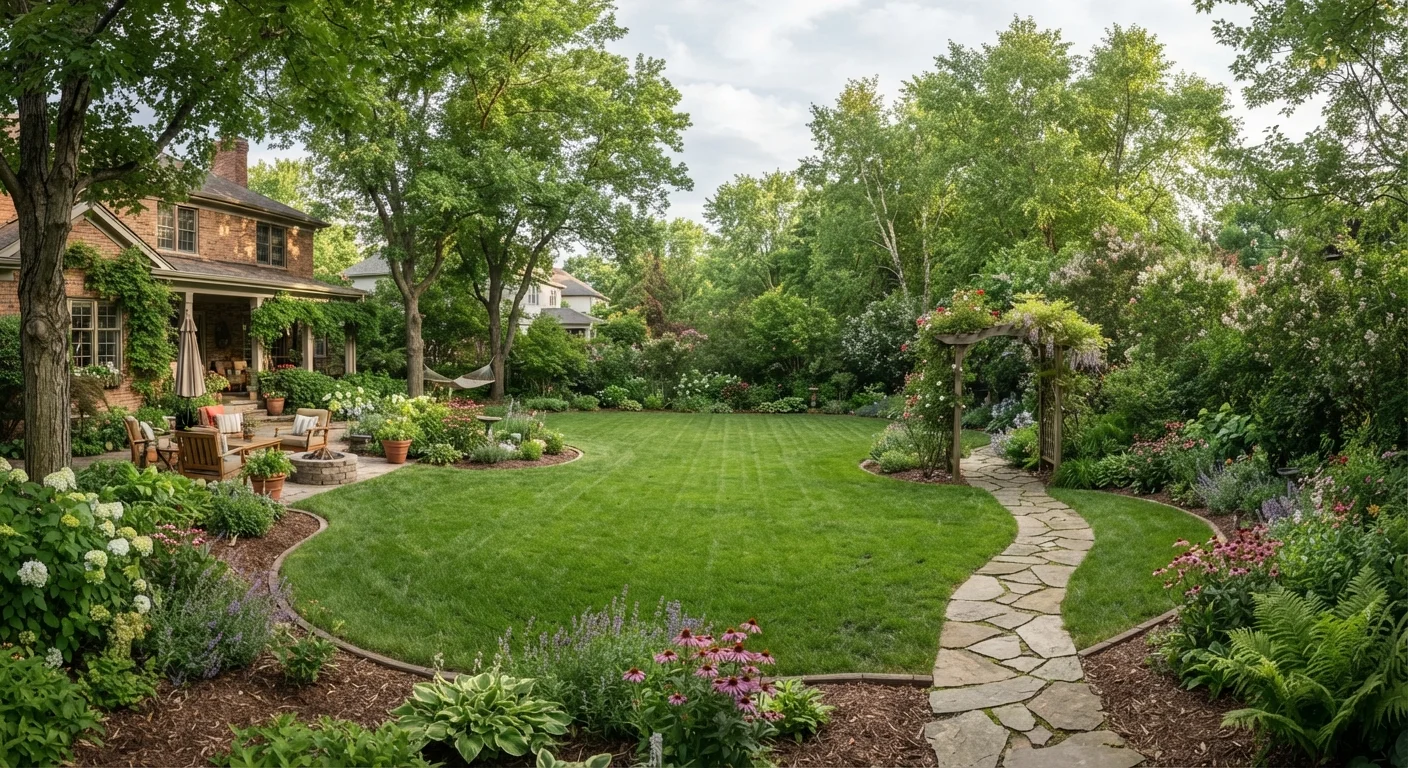
Growth rates are moderate, generally one to two feet per year, which means viburnums are better suited to homeowners willing to wait a few seasons for full coverage. Their ornamental value during that wait period - unlike a plain fence or an unadorned wall of arborvitae - helps make the interim period more pleasant. Considering native viburnum species alongside ornamental cultivars is worth exploring; native vs. ornamental plant trade-offs deserve careful thought when building long-term landscape plantings.
Maintenance note: Most viburnums need minimal pruning beyond removing damaged or crossing branches. Avoid heavy shearing, which reduces flowering.
Viburnum offers four-season ornamental interest alongside moderate screening performance - a versatile choice for layered plantings.
Nellie Stevens Holly and Other Hybrid Evergreens
Hybrid evergreen shrubs - including crosses and cultivated selections bred specifically for screening - often combine the best traits of their parent species: faster growth, improved disease resistance, and predictable form. Nellie Stevens holly is a frequently cited example, growing at a rate of two to three feet per year and forming a dense, pyramidal screen with attractive foliage and berries.
These purpose-bred plants can simplify selection for homeowners who want reliable performance without navigating the full complexity of species-level choices. They are typically well-suited to Zones 6-9. As with any cultivated hybrid, regional adaptability should still be confirmed locally.
When installing taller privacy plantings on properties with grade changes, consider how root systems interact with slope stability. Erosion control strategies on sloped yards are particularly relevant when privacy plantings are sited along berms or hillside property lines.
Maintenance note: Hybrid evergreens generally need only light shaping to maintain their natural form. Avoid heavy pruning that removes the upper growing tip, which can disrupt the natural pyramidal silhouette.
Purpose-bred hybrid evergreens like Nellie Stevens holly often outperform species plants in growth rate, form, and disease resistance.
Planning Your Privacy Screen for Long-Term Success
Before you dig, map your site carefully. Note sun exposure across the day, prevailing wind direction, soil drainage, and any utility lines overhead or underground - these factors will determine which plants survive and which struggle. Most municipalities also have setback rules governing how close plantings can be to property lines, sidewalks, and sight-line corners near streets; check with your local planning department before installation.
Layer Plant Heights for Better Results
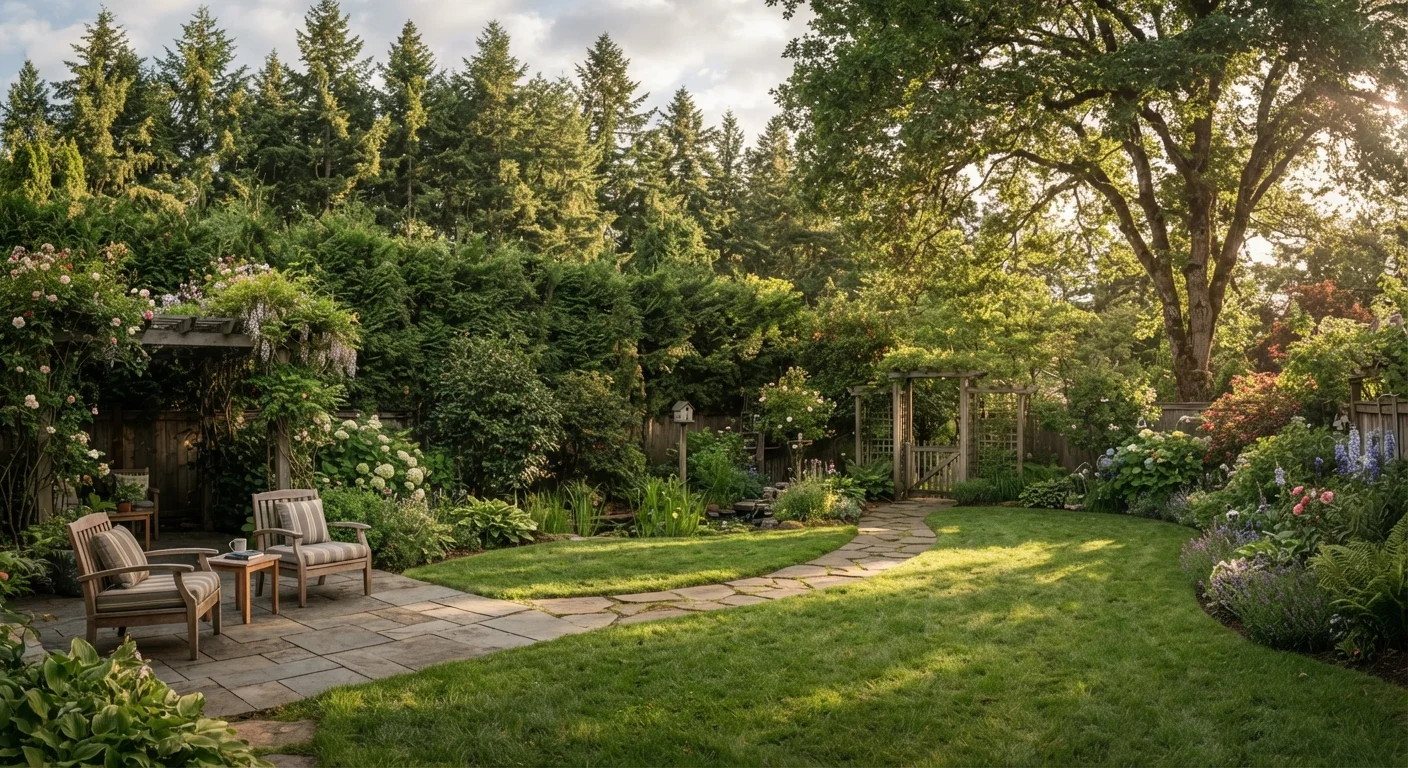
A single row of one plant species creates an obvious, fence-like effect and can have weak spots when individual plants die or are damaged. Consider layering: taller trees at the back, mid-height shrubs in the middle, and lower plants or groundcovers at the front. This approach produces a more natural appearance, improves wind resistance, and ensures coverage even if one layer is affected by pests or disease.
Spacing is one of the most common planning mistakes homeowners make. Planting shrubs too close together accelerates initial coverage but often leads to root competition, disease pressure from poor airflow, and the need to remove plants within a decade. Always space to the mature spread listed on the plant tag, not the current container size.
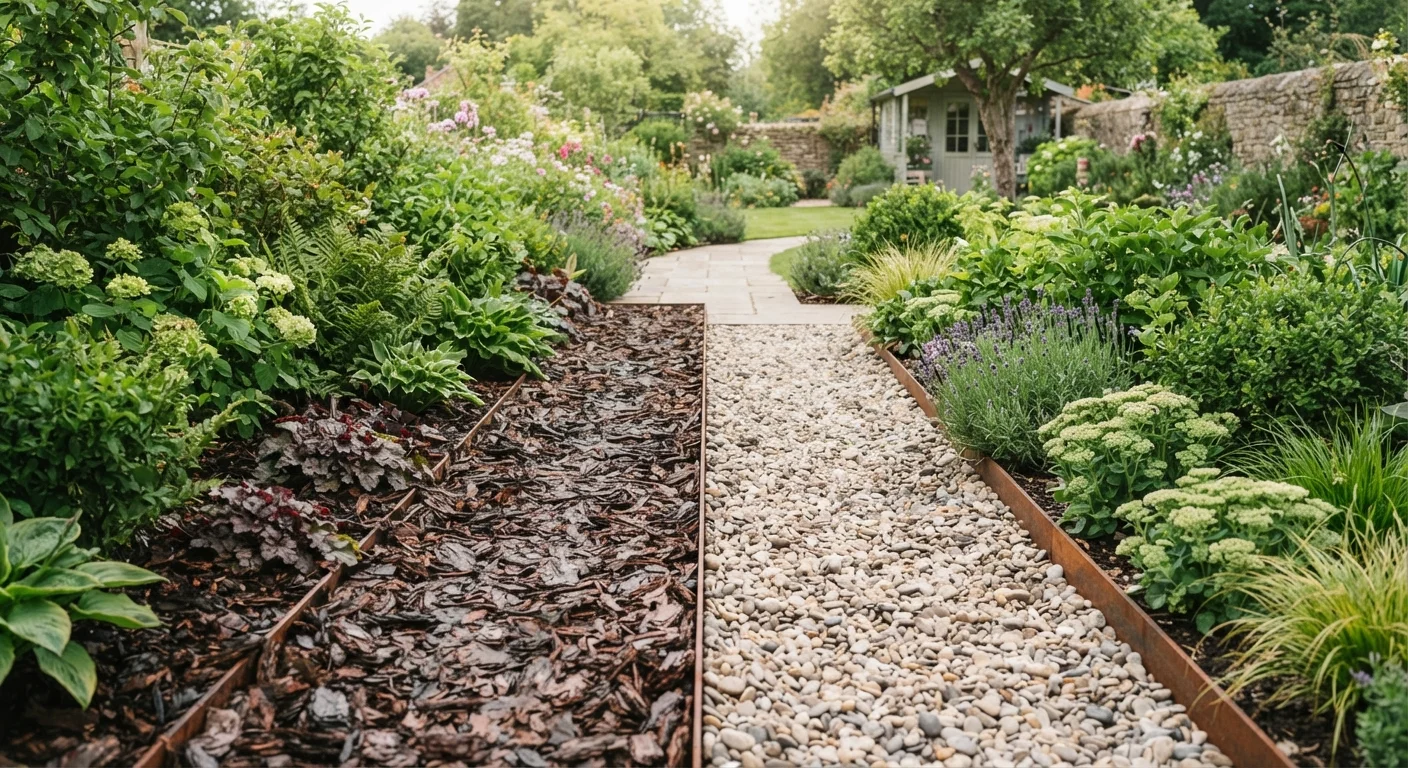
Once your screen is established, ground cover beneath and around it matters too. Choosing between mulch and gravel at the base of your plantings can meaningfully affect moisture retention, weed suppression, and soil temperature - all of which influence plant health. And before finalizing your plant list, it's worth reviewing common landscaping myths that can quietly undermine even a well-intentioned planting plan.