Why DIY Myths Persist - and Why They Matter
Home improvement advice spreads fast. A tip overheard at a hardware store, repeated in a social media comment thread, or handed down by a well-meaning relative can take on the authority of fact. Some of that advice is genuinely useful. Some of it is harmless but ineffective. And a meaningful portion of it is wrong in ways that can damage your home, void your insurance, or put you in physical danger.
This article examines the most consequential DIY myths - the ones with real stakes. For a balanced look at when doing it yourself makes sense and when it doesn't, see our honest overview of DIY trade-offs.
Myth
You can silence a squeaky floor by just driving a nail anywhere near the squeak.
Fact
Random nailing rarely fixes the underlying cause and can split finish flooring or miss the subfloor entirely.
Squeaky floors are almost always caused by movement between the subfloor and the floor joists below, or between the finish flooring and the subfloor. The fix requires fastening through the right layer, at the right location, into solid material. Driving nails at random can crack hardwood boards, leave cosmetic damage, and do nothing to stop the movement causing the noise. The correct approach involves locating the joist with a stud finder, using the appropriate fastener length, and - where access allows - reinforcing the connection from below.
Myth
A tripped breaker just needs to be reset - there's no need to investigate why it tripped.
Fact
A breaker trips because it detected an overload or fault; resetting without investigation can allow a dangerous condition to continue.
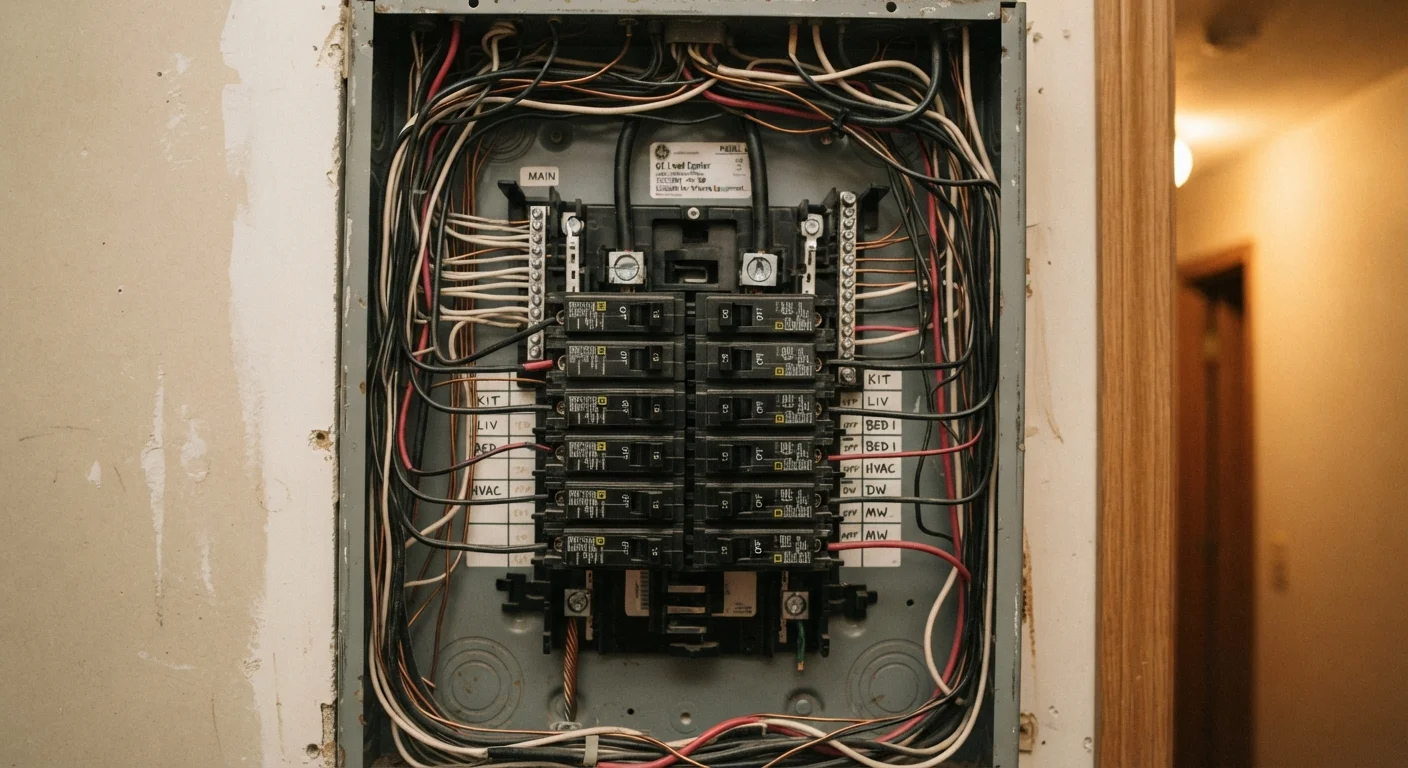
Circuit breakers are protective devices, not inconveniences. When one trips, it is doing exactly what it was designed to do: interrupting current to prevent overheating or fire. Repeatedly resetting a breaker that keeps tripping - without identifying whether the circuit is overloaded, whether there is a wiring fault, or whether a connected appliance is drawing too much current - can damage wiring insulation over time and create genuine fire risk. If a breaker trips more than once without an obvious cause (such as a clearly overloaded extension cord), the investigation should involve a licensed electrician.
Myth
Expanding foam sealant will fix any gap or crack, including structural ones.
Fact
Expanding foam is an air and moisture sealant, not a structural material - using it in load-bearing gaps can mask problems and prevent proper repair.
Polyurethane expanding foam has legitimate uses: sealing gaps around pipes and conduit, filling voids around window and door frames to stop drafts, and blocking pest entry points. It has essentially no structural strength. Filling a crack in a foundation wall, a split in a floor joist, or a gap in a load-bearing sill with foam addresses nothing structurally and can actually delay the proper diagnosis and repair of a serious problem. If you spot cracks in foundation concrete, masonry, or framing members, have them evaluated by a qualified contractor before doing anything that might conceal them.
Myth
Painting over mold with a mold-resistant primer kills the mold and solves the problem.
Fact
Paint does not kill active mold; it covers it temporarily while the underlying colony continues to grow.
Mold-resistant paints and primers are preventive products - they help inhibit future mold growth on clean, dry surfaces. Applied over an active mold colony, they are largely cosmetic. The mold beneath will continue to grow, and it will eventually push back through or around the painted layer. Proper remediation requires removing the mold-affected material (or treating it with an appropriate antimicrobial product on non-porous surfaces), identifying and correcting the moisture source driving growth, allowing the area to dry thoroughly, and then applying a preventive coating. Covering active mold also hides it from future buyers or inspectors - which creates disclosure and liability issues.
Myth
As long as a pipe isn't leaking, any plumbing repair you make is safe to leave as-is.
Fact
Some improper plumbing connections create health or pressure risks that aren't visible as drips or puddles.
A connection that doesn't leak water immediately isn't necessarily safe or code-compliant. Improper venting can allow sewer gases - including hydrogen sulfide and methane - to enter living spaces without any visible water leak. Cross-connections between supply and drain lines can introduce contamination into drinking water. Incorrect pipe materials or solvents used on mismatched plastics can fail over time under pressure. The absence of an active drip is a starting point, not a guarantee. When in doubt about whether a plumbing repair is correct, a licensed plumber's inspection is worth the cost.
Myth
You don't need a permit for interior work - permits are only for additions and major structural changes.
Fact
Many jurisdictions require permits for electrical panel work, HVAC replacement, water heater installation, and other interior systems work.
The scope of permit-required work varies by municipality, but it commonly extends well beyond additions and structural modifications. Replacing a water heater, adding an electrical circuit, installing a new HVAC system, or moving gas lines typically requires a permit and inspection in most US jurisdictions - regardless of whether the work is done by a homeowner or a contractor. Unpermitted regulated work can complicate home sales, create insurance claim issues, and in some cases require expensive demolition and correction before a permit can be retroactively issued. Always check with your local building department before starting systems work.
Where Permit and Professional Rules Actually Apply
One of the most persistent categories of DIY myth involves what work homeowners are legally allowed to do themselves. The honest answer: it depends entirely on your local jurisdiction, and the stakes of getting it wrong are higher than many people realize.
Never DIY Gas Line Work
Any repair, modification, or extension of a natural gas or propane supply line must be performed by a licensed professional in virtually every US jurisdiction. Gas leaks are odorless in their natural state - utilities add a sulfur compound as a safety warning, but this does not substitute for proper pipe integrity. Attempting gas line work without licensure and appropriate pressure testing puts your household and your neighbors at serious risk.
Electrical work is a particular source of confusion. Myths about safe wire-splicing, breaker sizing, and what counts as a "minor" modification circulate widely - and some are genuinely dangerous. Our companion piece on common electrical myths covers those in detail. For a broader look at your home's systems - plumbing, HVAC, and electrical together - the Home Systems hub is a useful reference point.
Permits are another area where myth often wins over fact. Many homeowners believe permits are optional bureaucratic friction. In practice, unpermitted work on regulated systems can affect your home's insurability and complicate a future sale. Our guide to permit requirements for DIY repairs explains which projects typically trigger a permit and why that process exists.
If you're working on a home built before 1980, there's an additional layer of risk that no amount of YouTube tutorials will eliminate: the possible presence of lead paint or asbestos-containing materials. Disturbing either without proper precautions is a health hazard. Before starting any renovation in an older home, review our guidance on working safely with older homes.
~33%
Home fires linked to electrical failure or malfunction
According to the U.S. Fire Administration, roughly one-third of home structure fires involve electrical systems as a contributing factor.
~$4,000
Average cost to remediate unpermitted work before a home sale
Real estate attorneys and home inspectors commonly report that correcting unpermitted systems work before closing costs sellers thousands of dollars.
Not every plumbing issue requires a professional, however. Dripping faucets, slow drains, and loose supply lines are often genuinely within DIY range - and knowing which problems fall into that category saves money without introducing risk. Our article on repairs most homeowners can handle themselves draws that line clearly.
Finally, don't overlook small structural quirks like nail pops or squeaky floors. These rarely signal serious problems, but the wrong fix can make them worse. Our explainer on nail pops and squeaky floors walks through what actually causes them and what a safe, effective repair looks like.