Why Electrical Myths Are More Dangerous Than Other Home Myths
Electrical mistakes rarely announce themselves gradually. Unlike a slow roof leak or a drafty window, a wiring error can cause a fire inside a wall or a fatal shock with no warning at all. That's what makes electrical myths uniquely dangerous - confident but incorrect assumptions lead homeowners to take risks they wouldn't take if they understood what was actually happening.
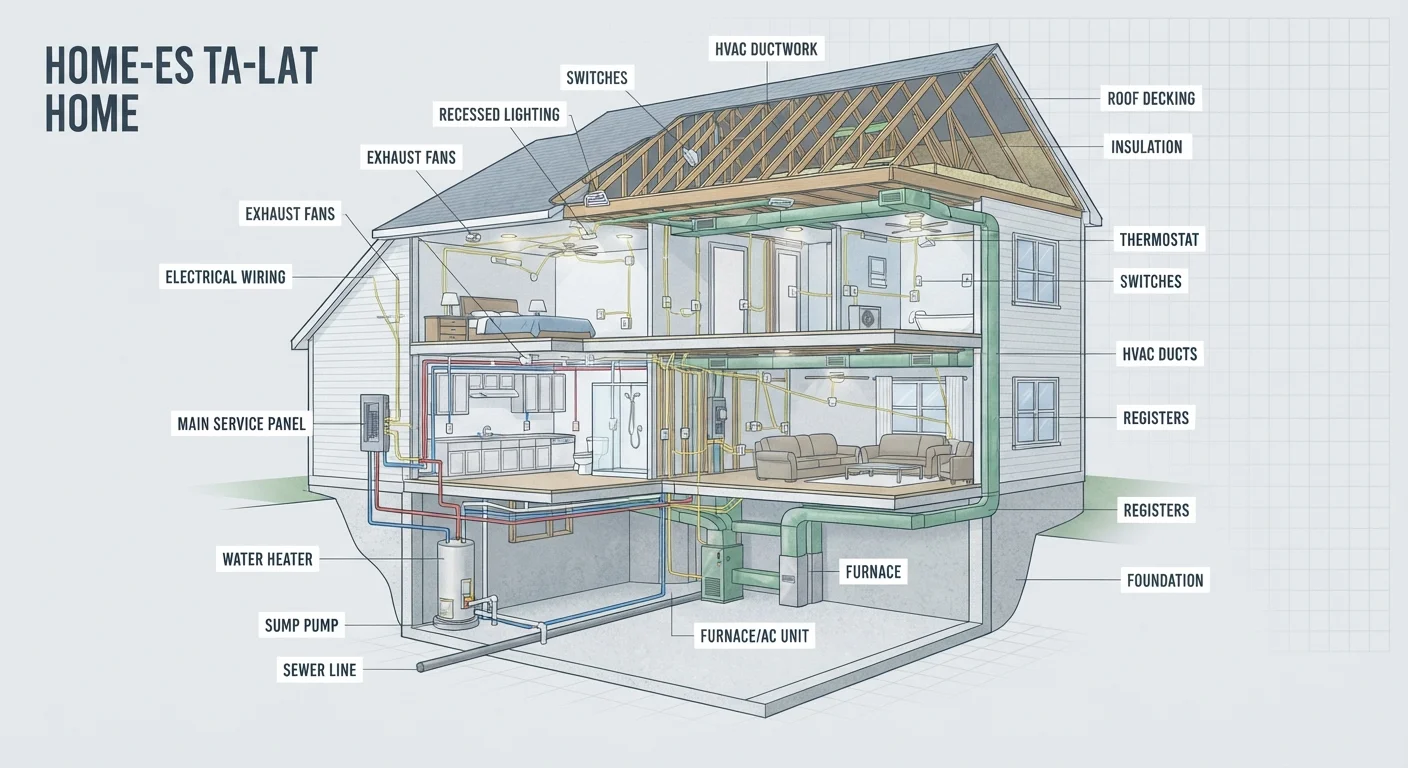
Many of these myths feel logical on the surface. They're passed down from well-meaning relatives, repeated in online forums, and sometimes even echoed by contractors working outside their specialty. Sorting fact from fiction is a genuine safety priority. See our plain-language guide to home systems terminology if you want to build a stronger foundation before diving in.
Myth
If the breaker hasn't tripped, the circuit is safe and not overloaded.
Fact
A breaker that hasn't tripped only means the current hasn't exceeded the breaker's rating - it says nothing about whether wiring is undersized, degraded, or running dangerously hot.
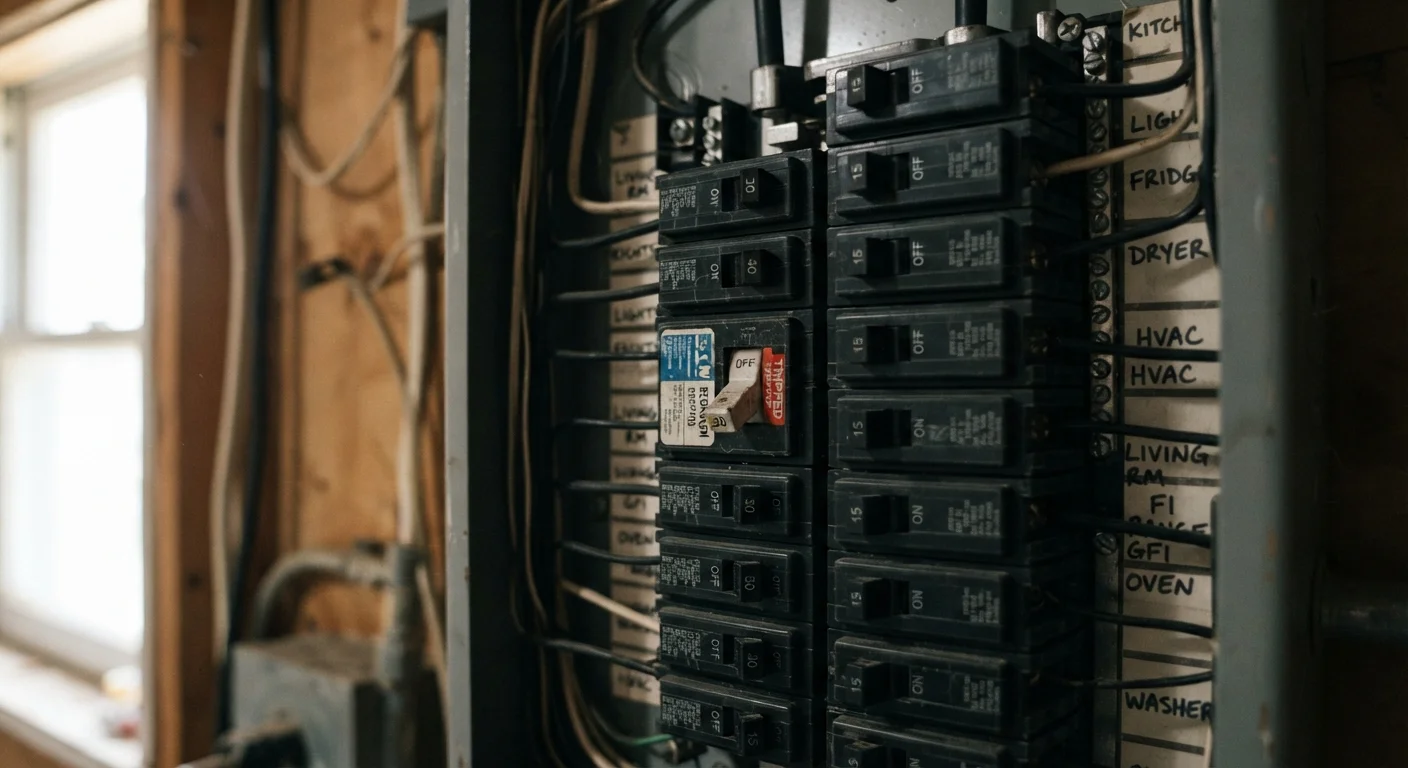
Breakers are calibrated to protect wiring from sustained overcurrent, but they don't respond instantly to every dangerous condition. Wiring that is undersized for its actual load, damaged by pests, or improperly connected can run hot enough to ignite insulation or framing long before the breaker trips. A breaker that trips frequently is telling you something important - our guide on interpreting breaker trips explains what those patterns mean.
Myth
You can use a higher-amp fuse or breaker if the original keeps blowing - it just means the rating is too low.
Fact
Oversizing a fuse or breaker removes the protection the device provides. The wiring can now overheat well beyond its safe capacity without triggering a shutoff.
Fuses and breakers are sized to match the wire gauge they protect, not to match what you want to plug in. A 15-amp circuit uses 14-gauge wire that is rated for exactly that load. Installing a 20- or 30-amp fuse on that same wire means the wire can be forced to carry far more current than it can handle safely, generating heat that builds inside walls. The correct response to a repeatedly tripping breaker is to find the cause - not to install a larger one.
Myth
Rubber-soled shoes will protect you from electric shock when doing electrical work.
Fact
Standard rubber-soled footwear offers minimal, unreliable protection against household voltages and should never be treated as a safety measure.
The insulating properties of ordinary shoes vary enormously based on moisture, wear, and materials - none of which you can verify in the moment. True electrical protection requires rated insulating equipment (such as Class-rated rubber gloves tested to specific voltage levels) and, more importantly, working on de-energized circuits confirmed with a non-contact voltage tester. The only reliable protection when working on household wiring is turning off the circuit at the panel and verifying with a tester that power is off before touching any conductors.
Myth
Aluminum wiring is inherently dangerous and must be completely replaced.
Fact
Aluminum wiring used in branch circuits during the 1960s and 70s poses elevated risk if improperly maintained, but it can be made significantly safer through specific remediation approaches without full replacement.
Aluminum expands and contracts more than copper as it heats and cools, which can loosen connections over time and create arcing hazards at outlets, switches, and fixtures. However, the US Consumer Product Safety Commission has documented that homes with aluminum wiring can be addressed through methods such as pigtailing with approved connectors or replacing devices with those rated CO/ALR. A licensed electrician familiar with aluminum wiring should evaluate the system and recommend the appropriate approach for your home's specific configuration.
Myth
If you can't see any damage on a cord or outlet, it's safe to use.
Fact
Electrical hazards are frequently invisible: degraded insulation inside walls, loose connections inside outlet boxes, and heat damage that hasn't yet caused visible discoloration can all be active hazards.
A discolored outlet face or a warm cover plate are late-stage warning signs - the underlying problem has often been developing for some time. Outlets that spark when you plug something in, circuits that produce a burning smell intermittently, or lights that flicker without an obvious cause all warrant investigation by a licensed electrician. These aren't quirks to tolerate; they are indicators that something in the system is functioning outside normal parameters.
Myth
Low-voltage wiring - for doorbells, thermostats, or landscape lighting - carries no real shock risk.
Fact
While low-voltage systems are generally less lethal than line-voltage circuits, they are not entirely without risk, and some transformer outputs can still cause injury.
Most doorbell and thermostat wiring operates at 24 volts AC, which is unlikely to cause a fatal shock in a healthy adult under dry conditions - but "low risk" is not the same as "no risk." Some landscape lighting systems use higher secondary voltages, and the primary (line-voltage) side of any transformer carries full 120V power. Working on line-voltage components without proper precautions remains dangerous regardless of what the transformer's output is. Always confirm which portion of a low-voltage system you are working on before assuming it is safe to handle.
When to Stop and Call a Licensed Electrician
One of the most important truths in home electrical work is knowing where the line is. Replacing a light switch or a standard outlet on an existing circuit is within reach for a careful, informed DIYer in most US jurisdictions - but running new circuits, upgrading panels, or working anywhere near the service entrance requires a licensed electrician and, almost always, a permit.
Never Work on Energized Circuits
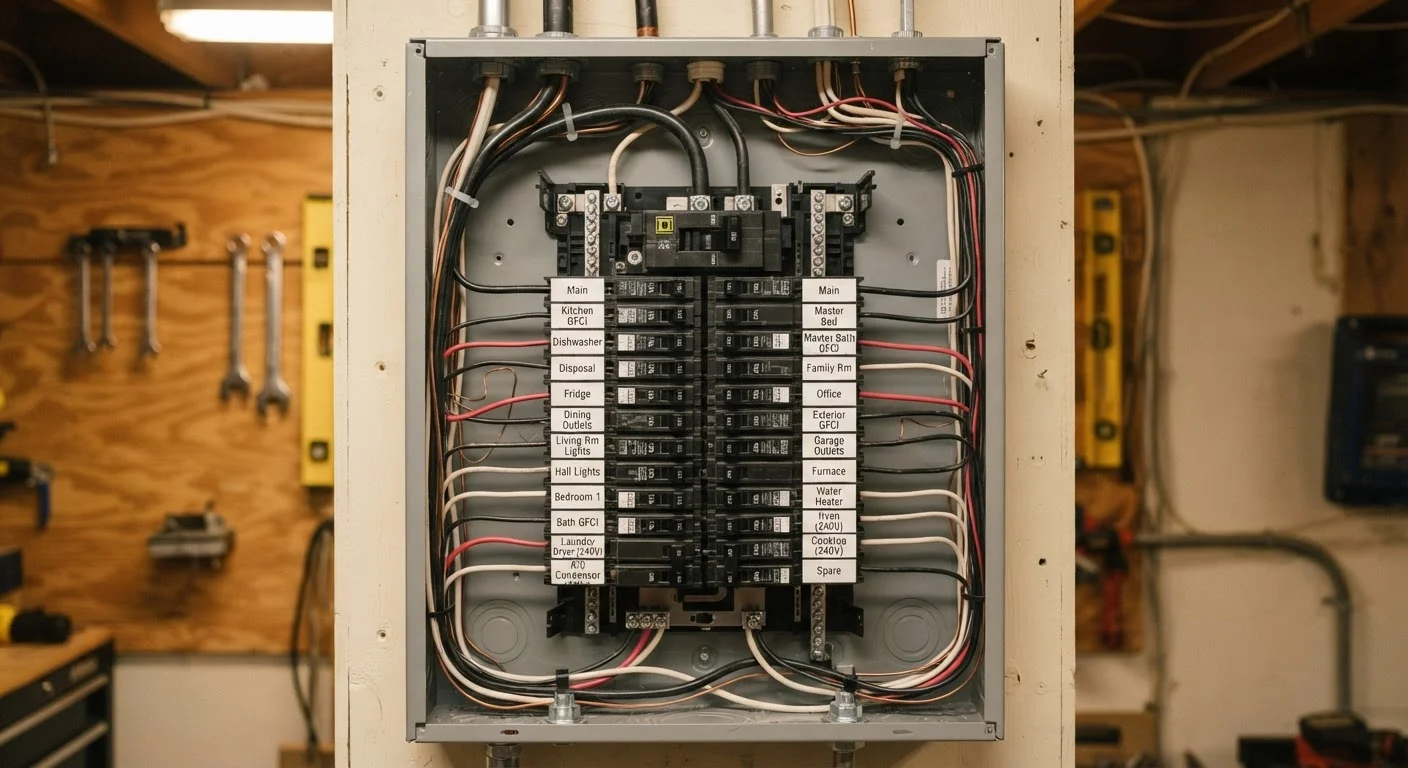
All electrical work - even replacing an outlet - should be done with the circuit confirmed off at the breaker and verified dead with a non-contact voltage tester. Do not rely on a breaker label alone; labels can be wrong. If you are unsure which breaker controls a circuit, or if turning off a breaker doesn't kill power to the device, stop and consult a licensed electrician before proceeding.
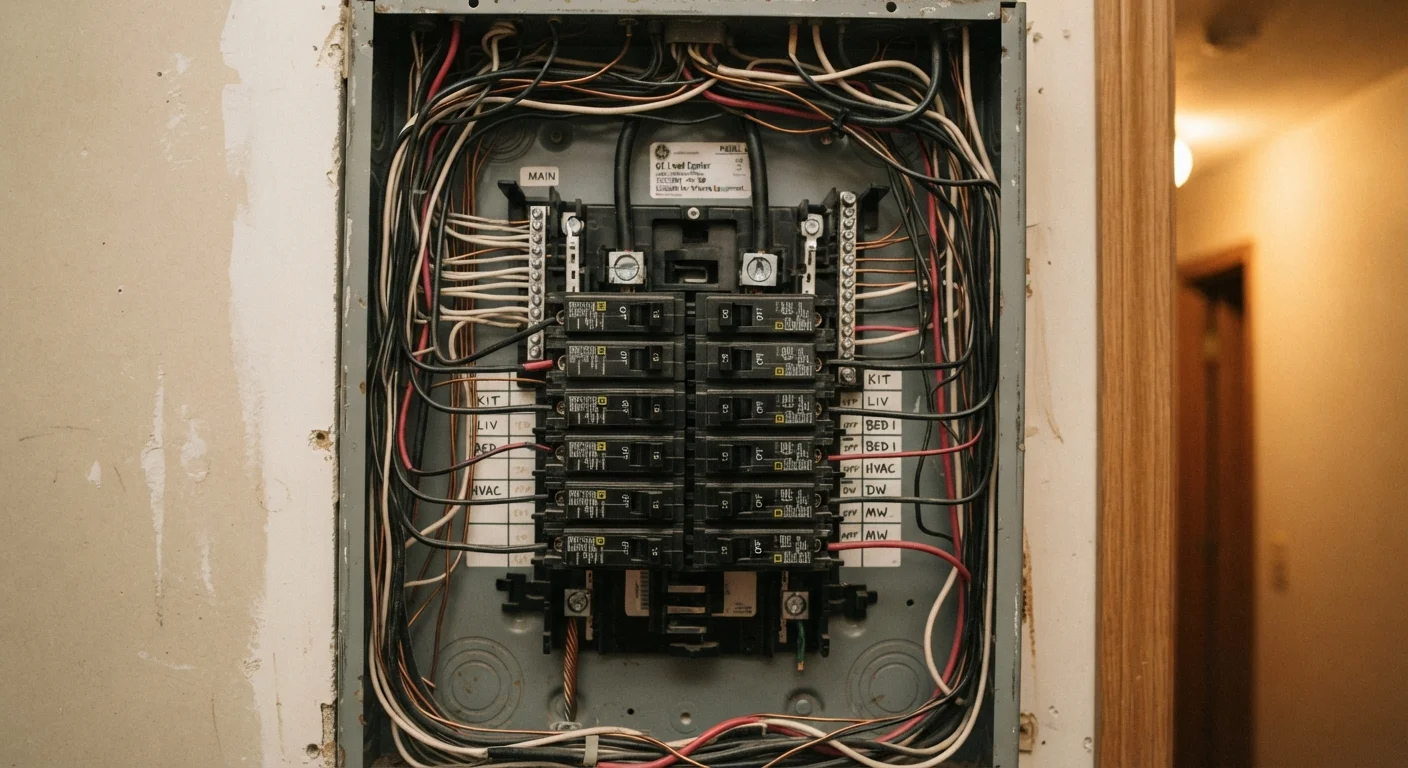
Permits exist for good reason. An inspection ensures work meets current code, which protects your family and keeps your homeowner's insurance valid. Unpermitted electrical work can create problems when you sell the home and may void coverage if a fire results. To understand what's happening inside your panel and why those protections matter, see our article on what every homeowner should understand about electrical panels.
If your breakers are tripping repeatedly, that pattern itself is diagnostic information. Our guide on when a tripped breaker is a warning sign explains what to watch for. And if you want to avoid other costly misconceptions around the home, the companion piece on DIY myths that could damage your home or safety is worth reading alongside this one.
Unpermitted Electrical Work Creates Lasting Risk
In most US jurisdictions, adding circuits, upgrading panels, or modifying service entry wiring requires a permit and inspection. Skipping this step may violate local code, create liability if a fire occurs, and complicate the sale of your home. Always verify permit requirements with your local building department before starting any electrical project beyond simple device replacement.