Why This Vocabulary Matters
When a plumber mentions a P-trap or an electrician references your service panel, a vocabulary gap can lead to misunderstandings, unnecessary upsells, or poor decisions about repairs. Knowing the right terms helps you ask sharper questions, compare quotes more accurately, and spot when something doesn't sound right.
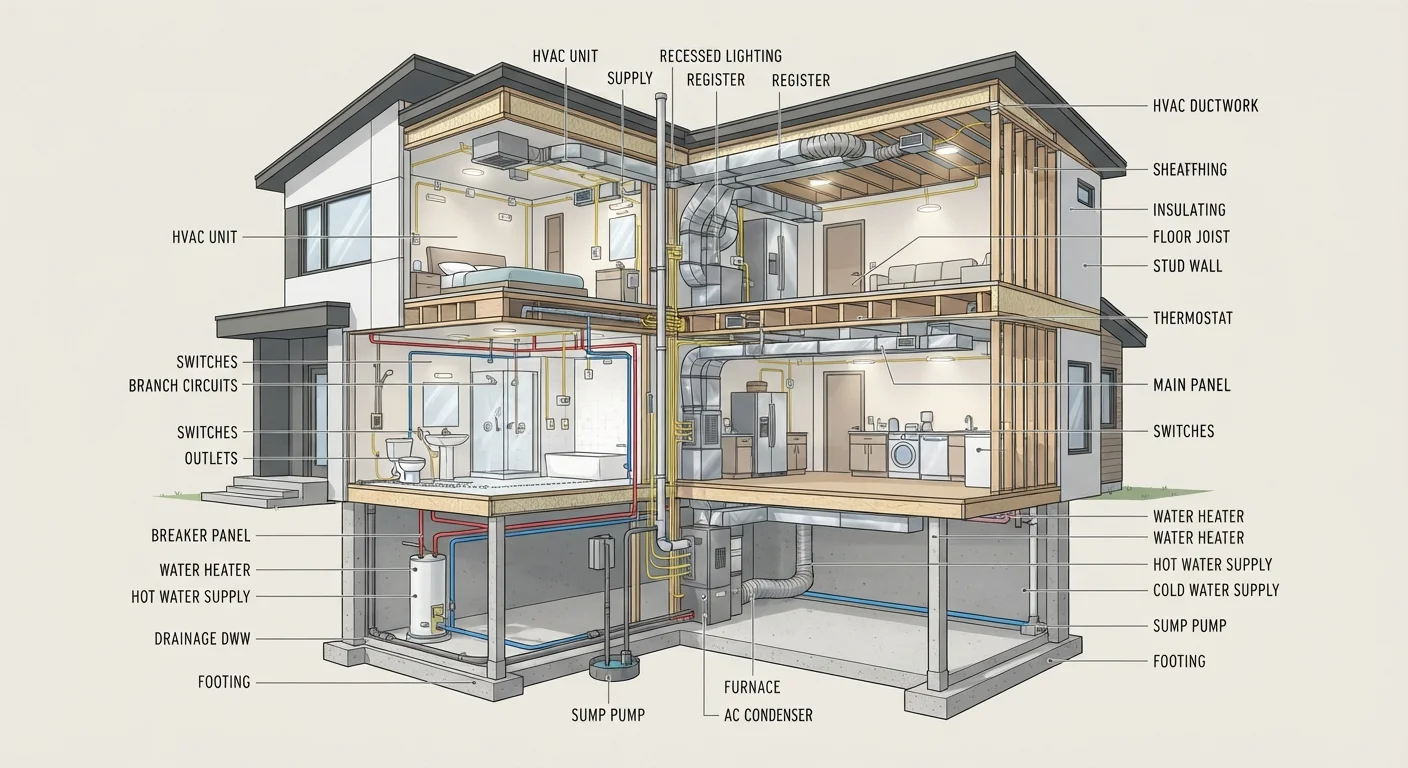
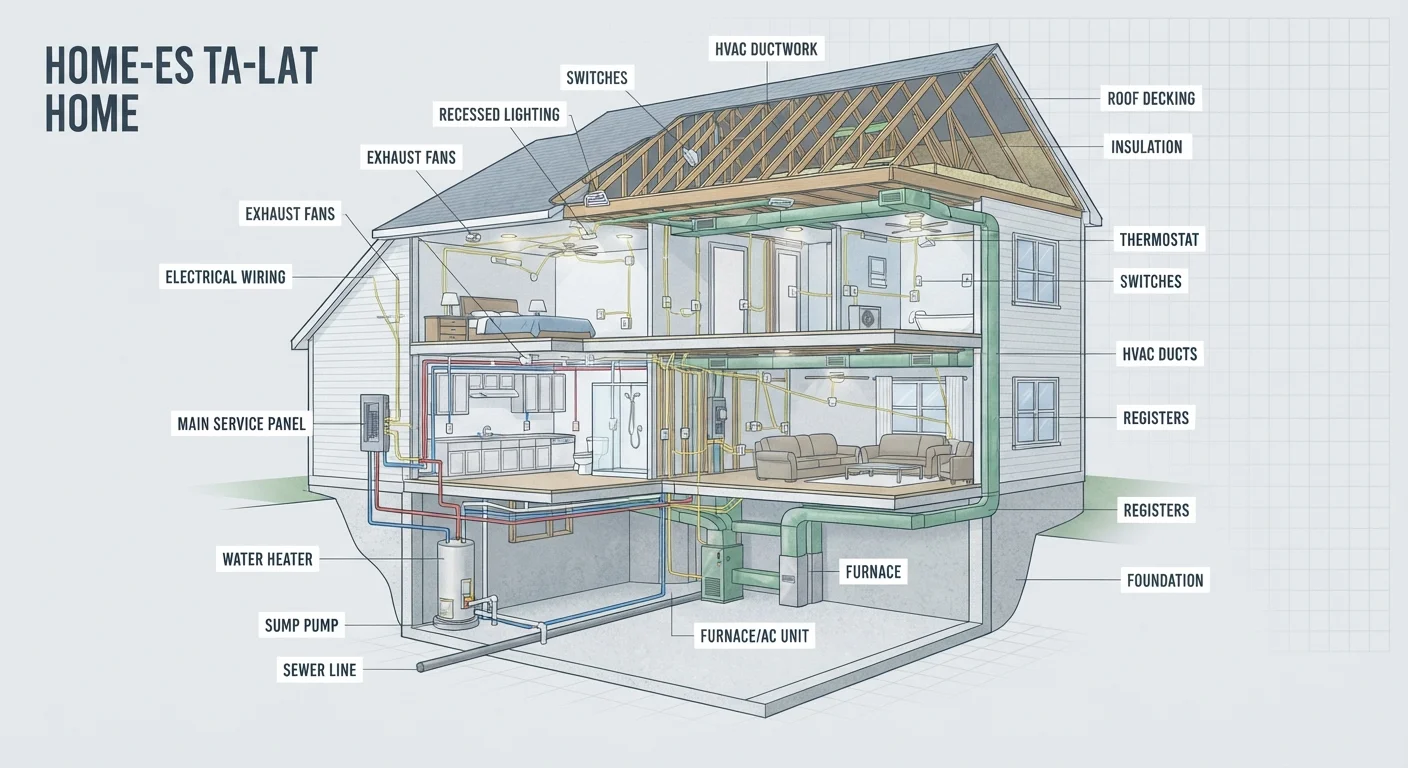
This reference covers the most commonly used terms across plumbing, electrical, and HVAC - the three systems that keep a home livable. For a deeper look at how these systems interact with each other, see Understanding Your Home as an Interconnected System.
P-trap
A curved section of pipe beneath drains that holds standing water to prevent sewer gases from entering living spaces. It gets its name from its P-like shape when viewed from the side.
Circuit breaker
A resettable safety switch inside the service panel that automatically cuts power to a circuit when it detects an overload or short circuit. Unlike a fuse, it can be reset rather than replaced after it trips.
GFCI outlet
A Ground Fault Circuit Interrupter outlet that monitors current flow and shuts off power within milliseconds if an imbalance is detected, protecting against electric shock. These are required by electrical code near water sources.
Heat pump
An HVAC system that transfers heat between indoors and outdoors rather than generating heat by burning fuel. It can both heat and cool a home depending on the season.
MERV rating
Minimum Efficiency Reporting Value - a standardized scale rating an air filter's effectiveness at capturing airborne particles. Ratings typically range from 1 to 16, with higher numbers indicating finer filtration.
Pressure-reducing valve (PRV)
A plumbing device installed where the water supply enters a home that reduces high municipal water pressure to a safe level for household pipes and fixtures. Without one, excessive pressure can damage appliances and shorten pipe lifespan.
SEER rating
Seasonal Energy Efficiency Ratio - a metric used to rate the cooling efficiency of air conditioners and heat pumps over an entire cooling season. Higher SEER values indicate more efficient operation.
Service panel
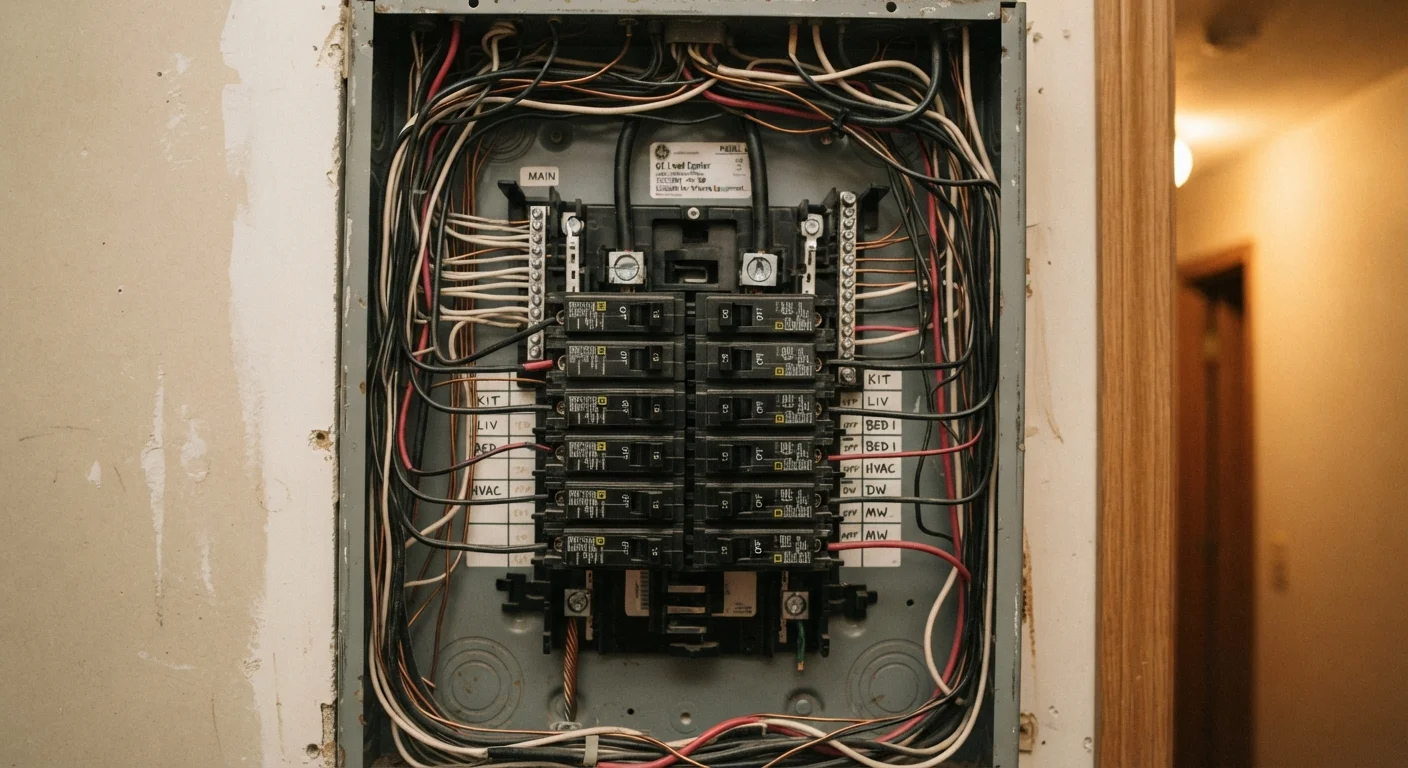
Also called a breaker box or electrical panel, this is the main distribution point where utility electricity enters the home and is divided into individual circuits, each protected by its own breaker.
Drain-waste-vent (DWV)
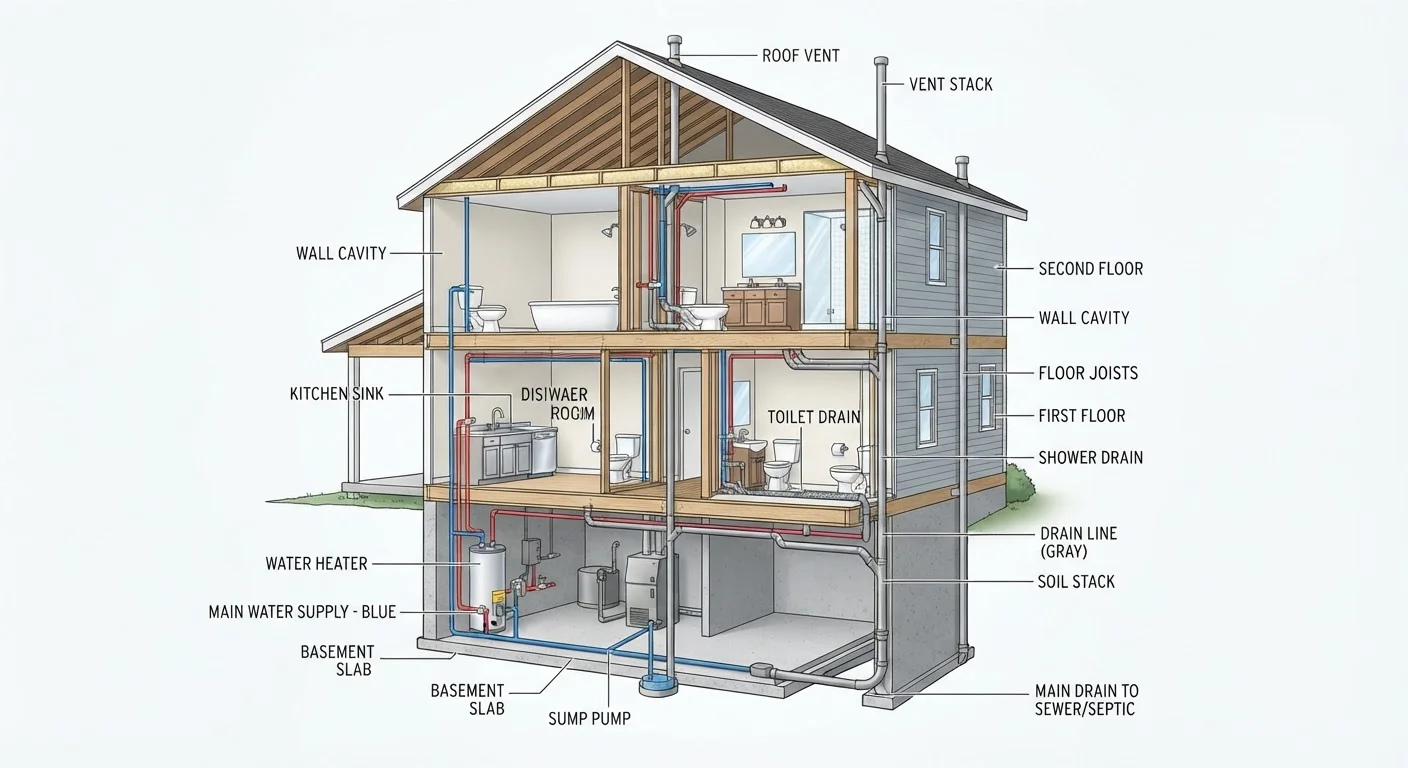
The system of pipes that removes wastewater and solid waste from a home while venting sewer gases safely through the roof. The vent pipes also maintain air pressure so drains flow correctly.
Refrigerant
A chemical compound used in air conditioners and heat pumps that absorbs heat indoors and releases it outdoors through a compression cycle. Handling or recharging refrigerant requires EPA certification.
Air handler
The indoor unit of a split HVAC system that contains the blower fan, evaporator coil, and filter. It circulates conditioned air through the home's duct network.
AFCI breaker
An Arc Fault Circuit Interrupter breaker that detects the electrical arcing that can ignite insulation and cause house fires. Modern building codes require these in bedrooms and living spaces in many jurisdictions.
Plumbing Terms to Know
Your home's plumbing is divided into two subsystems: supply lines that bring pressurized fresh water in, and drain-waste-vent (DWV) lines that carry used water and waste out. Every term below relates to one of these two functions.
| Standard residential water pressure | 40-80 psi (Plumbing industry general guidance) |
| Typical home electrical service | 100 or 200 amps (National Electrical Code general practice) |
| MERV filter scale range | 1 to 16 (ASHRAE Standard 52.2) |
| GFCI response time | 1/40th of a second (Electrical safety industry standard) |
| Systems covered in this guide | Plumbing, Electrical, HVAC |
- P-trap: The curved pipe section beneath sinks and tubs. It holds a small amount of water that blocks sewer gases from entering your home. If a drain smells, a dried-out P-trap is often the cause.
- Shutoff valve: A valve controlling water flow to a specific fixture or zone. Knowing where these are - under sinks, behind toilets, at the water heater - lets you stop a leak fast without turning off water to the whole house.
- Main shutoff: The single valve that stops all water flow into the home. It's typically near the water meter or where the supply line enters the foundation.
- Pressure-reducing valve (PRV): A device that lowers incoming municipal water pressure to a safe level for household pipes, typically 40-80 psi. Excessively high pressure can damage fixtures and accelerate pipe wear.
For a full walkthrough of how supply and drain lines work together, see Your Home's Plumbing System, Explained.
Electrical Terms to Know
Electrical vocabulary is particularly important because misunderstanding it can have safety consequences. Always consult a licensed electrician for any work beyond basic tasks like replacing outlets or switches.
- Service panel (breaker box): The metal enclosure where utility power enters your home and distributes to individual circuits via circuit breakers. Each breaker protects one circuit from overload.
- Circuit breaker: A resettable switch that automatically cuts power to a circuit when it detects an overload or fault. A breaker that keeps tripping usually signals a problem that needs professional attention.
- GFCI outlet: Ground Fault Circuit Interrupter - an outlet with built-in protection that shuts off power in milliseconds if it detects current leaking to ground. Required by code near water sources such as kitchens, bathrooms, and outdoor areas.
- AFCI breaker: Arc Fault Circuit Interrupter - a breaker that detects dangerous electrical arcing, a common cause of house fires. Modern codes require these in bedrooms and living areas in most jurisdictions.
- Amperage (amps): A measure of electrical current flow. Most homes have 100- or 200-amp service; the latter is generally needed to support modern appliances and EV chargers.
Misconceptions about wiring are common and sometimes dangerous - Common Electrical Myths That Put Homeowners at Risk addresses several of them directly. For a detailed look at service panels, see Electrical Panels: What Every Homeowner Should Understand.
HVAC Terms to Know
HVAC terminology can feel especially opaque. These are the terms that appear most often in service calls and system descriptions.
- Air handler: The indoor unit in a split HVAC system that circulates conditioned air through the ductwork. It typically houses the blower fan, evaporator coil, and air filter.
- Condenser unit: The outdoor component of a central air or heat pump system. It releases heat removed from your home's interior. Keeping the area around it clear of debris improves efficiency.
- Heat pump: A system that moves heat rather than generating it, capable of both heating and cooling a home. In mild climates, heat pumps can be more energy-efficient than traditional furnaces.
- MERV rating: Minimum Efficiency Reporting Value - a scale from 1 to 16 that rates an air filter's ability to capture particles. Higher ratings trap smaller particles but also restrict airflow more, so matching the rating to your system's specifications matters.
- SEER rating: Seasonal Energy Efficiency Ratio - measures cooling efficiency over a season. Higher SEER numbers indicate greater efficiency; minimum federal standards for new equipment vary by climate region.
- Refrigerant: The chemical compound that cycles through an air conditioner or heat pump, absorbing and releasing heat to cool or warm air. Handling refrigerant requires EPA certification; a homeowner should never attempt to recharge a system independently.
If you want to understand how your specific heating setup works, Forced Air vs. Radiant Heat: How Each System Actually Works breaks down the key differences in plain language.
Putting This Knowledge to Work
Familiarity with these terms won't make you an expert tradesperson, but it will make you a more informed homeowner. When you schedule service calls, you'll be able to describe problems more precisely. When you receive estimates, you'll understand what's being proposed. And when something sounds off, you'll have the vocabulary to ask follow-up questions.
If you're building out your home repair capabilities more broadly, A Homeowner's First Toolbox: What Belongs in It and Why is a practical companion resource. For more hands-on repair guides, explore the DIY & Repairs hub.
This article is for general informational purposes. For electrical, gas, or structural work, always consult a licensed professional and verify local permit and code requirements before beginning any project.