What an Electrical Panel Actually Does
Utility power arrives at your home as a single high-current feed. The electrical panel-also called a breaker box, load center, or distribution board-takes that feed and divides it into manageable circuits that serve individual areas or appliances throughout your home. Think of it as a hub: one large stream of electricity enters, and dozens of smaller, controlled streams leave.
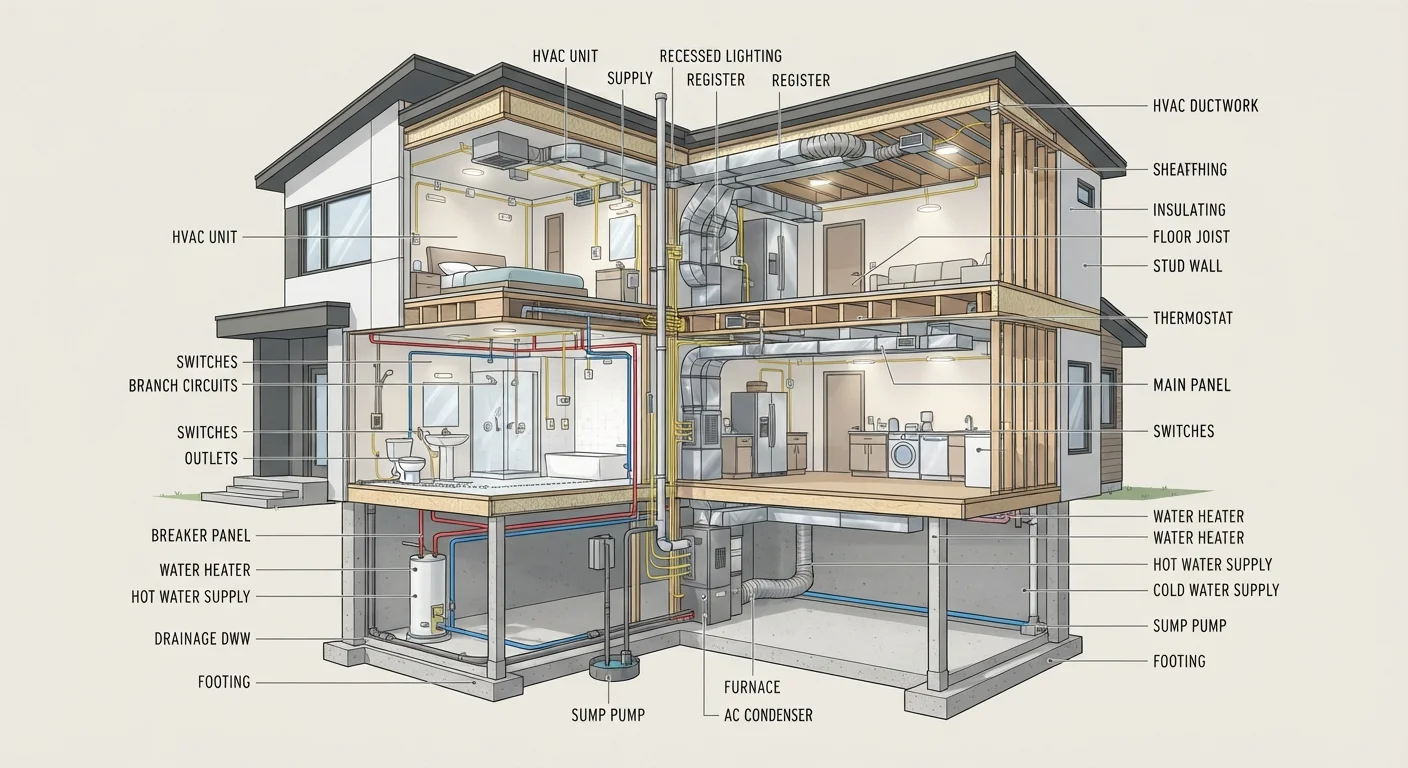
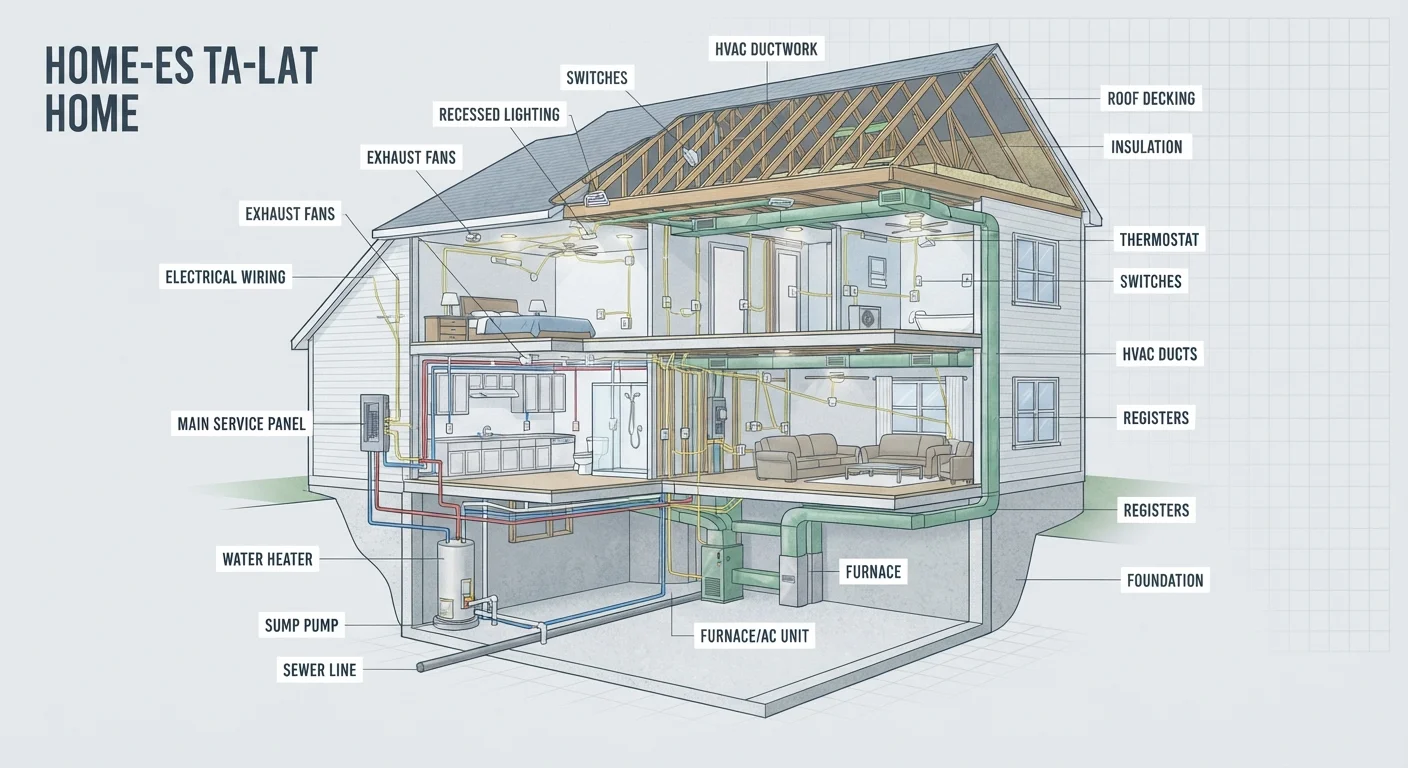
Beyond distribution, the panel provides protection. Every circuit is guarded by a breaker that will automatically cut power if current rises beyond what the wiring can safely carry. This prevents overheated wires, which are a leading cause of residential fires. Understanding this dual role-distribution and protection-helps you interpret what your panel is telling you when something goes wrong. For broader context on how electrical fits into your home's overall systems, see how home systems interconnect.
Circuit breaker
A resettable safety switch that automatically shuts off power to a circuit when current exceeds a safe level, protecting wiring from overheating.
Amperage (amps)
The measure of how much electrical current flows through a circuit or panel. Higher amperage means more current capacity.
Branch circuit
An individual wiring loop that runs from the panel to serve a specific area or appliance in the home, protected by its own breaker.
Service entrance
The utility-supplied cables that bring power into the top of your electrical panel. These cables are always live and must never be touched by anyone other than a utility worker or licensed electrician.
Double-pole breaker
A breaker that occupies two slots in the panel and supplies 240 volts for high-demand appliances like electric dryers, ranges, and HVAC equipment.
Load calculation
An assessment performed by an electrician to determine whether a panel's capacity can safely handle current and planned future electrical loads.
Anatomy of Your Panel: Key Parts Explained
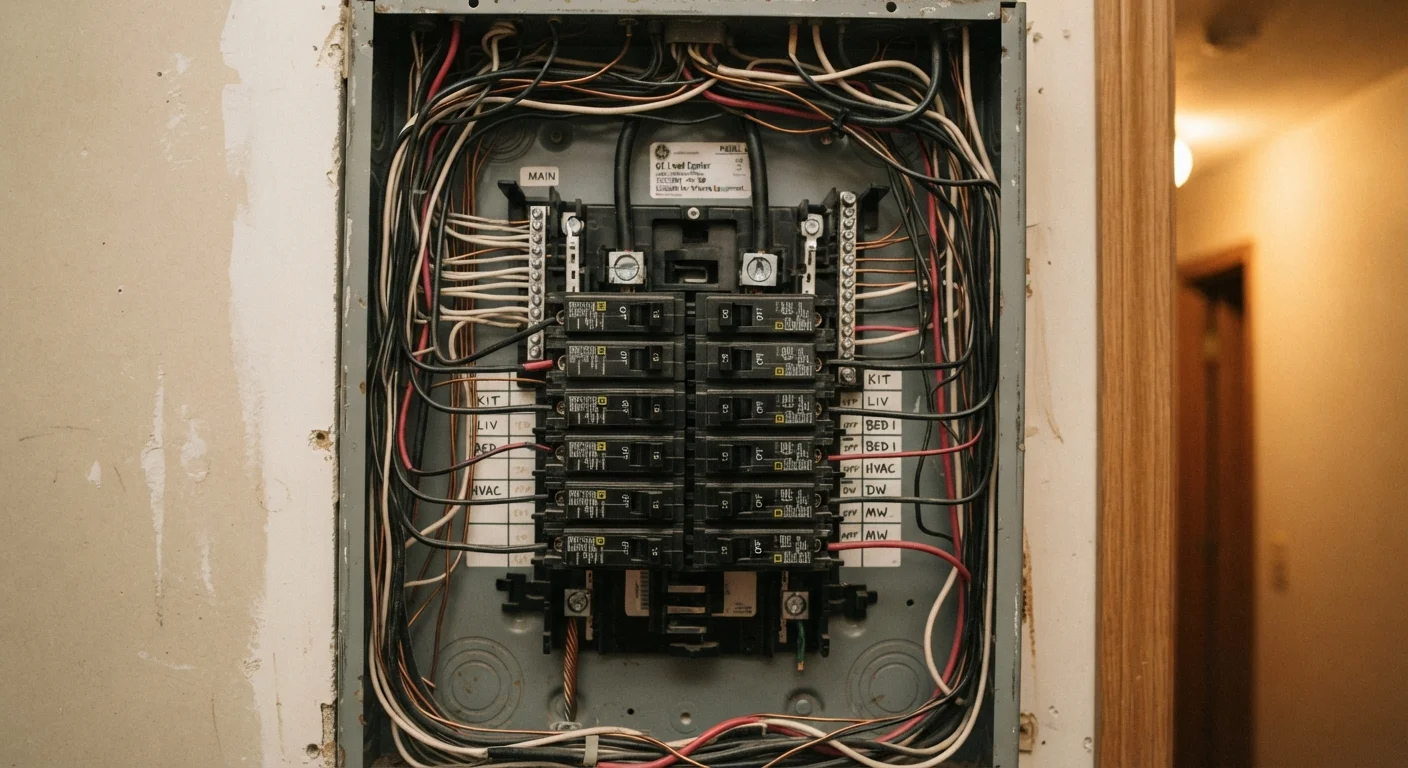
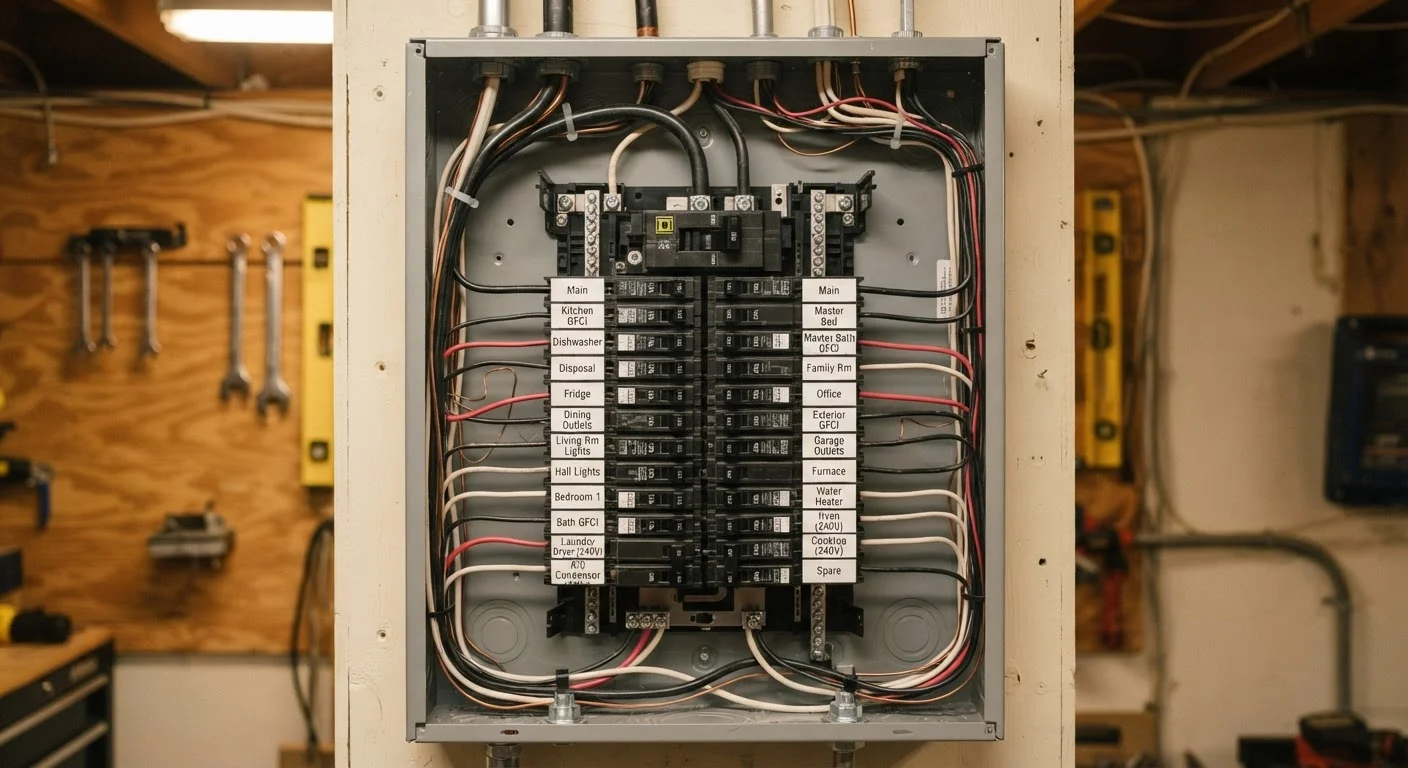
Opening the panel door reveals a structured layout. Here are the components you'll encounter:
- Main breaker: The large double-pole breaker at the top (or bottom) of the panel. Flipping it cuts power to every branch circuit simultaneously, though the service entrance cables above it remain energized at all times.
- Branch circuit breakers: The individual switches that protect each circuit in your home-lighting, outlets, appliances. Single-pole breakers handle 120-volt circuits; double-pole breakers serve 240-volt loads like dryers and water heaters.
- Bus bars: Metal strips running down both sides of the panel interior. Breakers snap onto the hot bus bars; a separate neutral bus bar and grounding bus bar collect return and ground conductors.
- Service entrance cables: The thick wires entering from the top of the panel, carrying power directly from the utility. These are always live and are never touched by homeowners.
- Breaker directory: The labeled legend on the door listing which breaker controls which area. Keeping this accurate is one of the simplest, highest-value maintenance habits a homeowner can adopt.
For a plain-language explanation of terms you may encounter when discussing this with a contractor, home systems terminology offers a useful reference.
Amperage, Capacity, and Why It Matters
Amperage (amps) measures how much current can flow through the panel at once. Most homes built after roughly 1970 have 200-amp service, which comfortably supports modern loads including central air conditioning, electric ranges, and multiple high-draw appliances operating simultaneously. Older homes may have 60- or 100-amp service, which can become limiting as electrical demand grows.
Each branch circuit is also rated by amperage-commonly 15 or 20 amps for general living spaces, and 20-50 amps for dedicated appliance circuits. The breaker rating must match the wire gauge on that circuit; mismatches allow wires to carry more current than they were designed for, which is a fire hazard.
Label Your Breakers Now, Not Later
An accurate breaker directory is invaluable during an emergency or renovation. Walk through your home with a helper: have one person flip breakers while the other confirms which lights and outlets lose power. Write clear, specific labels-'Master bedroom outlets' beats 'Bedroom 2.' Review the directory whenever you add or change circuits.
If you're adding square footage, an electric vehicle charger, or a heat pump system, your existing panel capacity is a critical factor. An electrician can perform a load calculation to determine whether your current service supports the planned addition.
What Homeowners Can-and Cannot-Do Themselves
There is a clear and important boundary around panel work. Here is how to think about it:
Reasonable homeowner tasks:
- Resetting a tripped breaker (flip it fully off, then back on)
- Updating the breaker directory label
- Identifying which breaker controls a given outlet using a circuit tracer tool
- Turning off the main breaker during an emergency
Work that requires a licensed electrician:
- Adding, replacing, or removing circuit breakers
- Installing a subpanel
- Any work on or near service entrance cables
- Upgrading panel capacity or service amperage
- Installing AFCI or GFCI breakers
Most panel work is regulated by local electrical codes and typically requires a permit and inspection. Attempting it without proper licensing not only poses serious shock and fire risks-it can also create liability issues with your homeowner's insurance. See common electrical myths for a rundown of dangerous assumptions that get homeowners into trouble. If you're building out your home toolkit for the tasks you can do, a homeowner's first toolbox guide is a practical starting point.
Signs Your Panel Needs Professional Attention
Your panel will often give you warning signals before a serious problem develops. Contact a licensed electrician if you notice any of the following:
- Breakers that trip repeatedly on the same circuit without an obvious overload - this may indicate a wiring fault rather than too many devices plugged in. When a tripped breaker is a warning sign covers this pattern in depth.
- Breakers that feel loose or won't stay in the on position after resetting.
- Scorch marks, rust, or corrosion anywhere inside the panel.
- A burning smell or unusual heat near the panel.
- Buzzing or crackling sounds coming from the box.
- A panel that is over 25 years old and has never been inspected.
None of these symptoms should be ignored or addressed with a DIY fix. Electrical failures are among the most preventable causes of home fires, and a qualified inspection is a straightforward, relatively low-cost precaution compared to the risks involved.
This article provides general educational information about residential electrical panels. It is not a substitute for advice from a licensed electrician. Always consult a qualified professional before performing any electrical work, and verify permit requirements with your local authority having jurisdiction.