Why Breakers Trip - The Three Core Causes
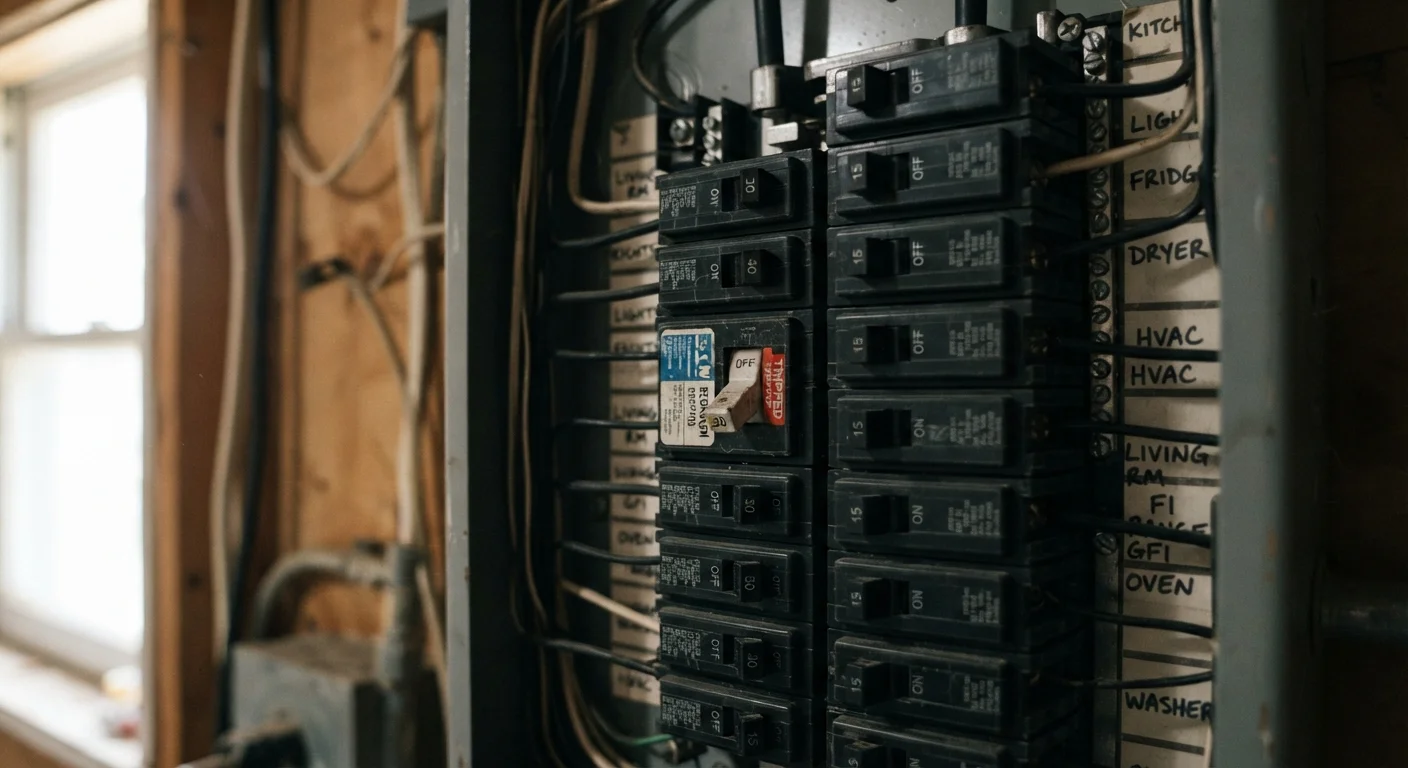
Understanding why a breaker trips is the first step toward knowing whether you have a minor inconvenience or a genuine hazard. There are three primary causes:
- Circuit overload: Too many devices are drawing power from a single circuit at the same time, exceeding its ampere rating. This is the most common and least alarming cause - plug in fewer devices, redistribute loads, and the circuit typically behaves normally.
- Short circuit: A hot (live) wire makes unintended contact with a neutral wire, usually inside an outlet, switch, appliance cord, or wall. The resulting surge of current is immediate and significant. A tripped breaker from a short circuit often resets but trips again instantly.
- Ground fault: Similar to a short circuit, but the hot wire contacts a ground wire or a grounded surface. Ground fault circuit interrupter (GFCI) outlets and breakers are designed specifically to respond to this, particularly in wet areas like bathrooms and kitchens.
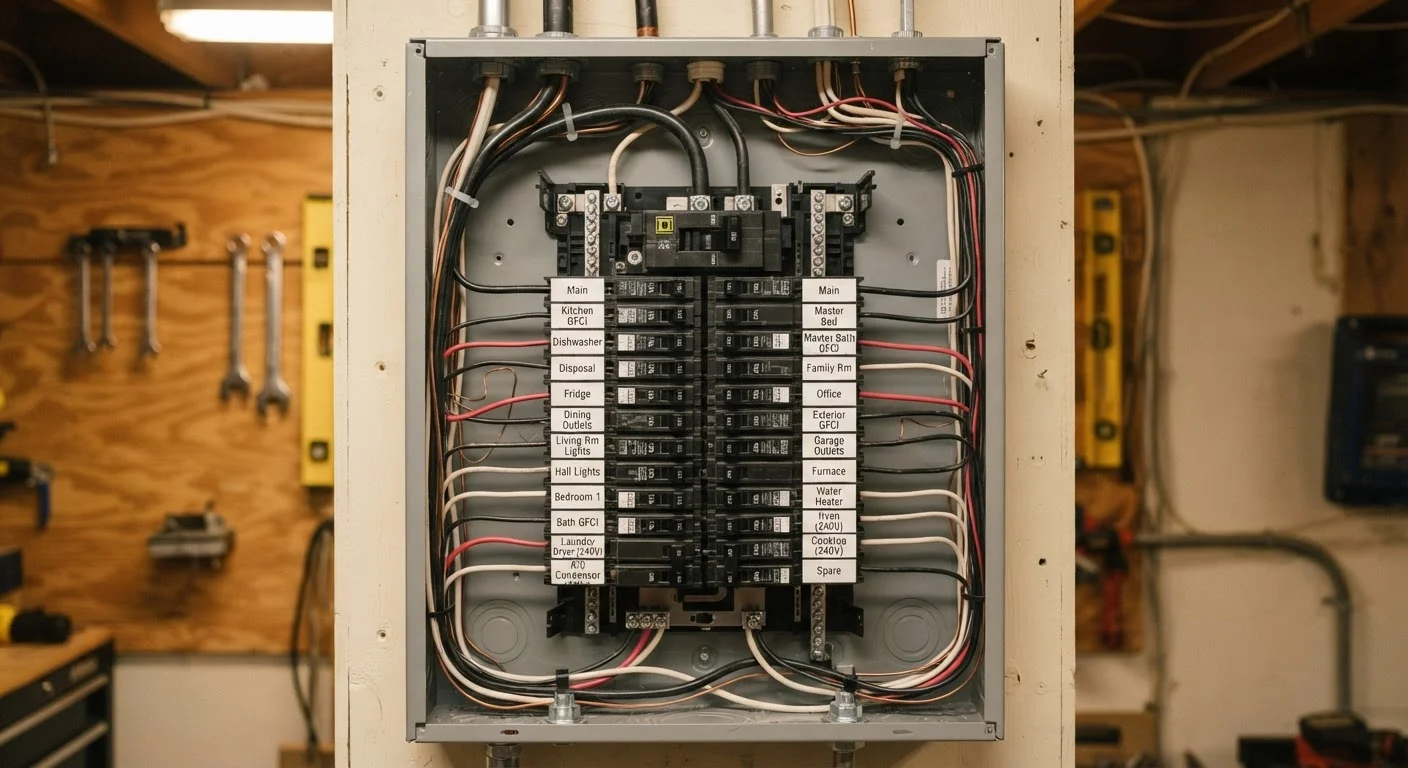
For a deeper look at how these components work together, see our guide to understanding your electrical panel.
GFCI and AFCI Breakers Serve Different Purposes
Standard breakers respond to overloads and short circuits. GFCI (Ground Fault Circuit Interrupter) breakers protect against ground faults in wet areas. AFCI (Arc Fault Circuit Interrupter) breakers are designed to detect dangerous arcing faults inside walls - a common source of fires in older wiring. If your panel lacks AFCI protection, ask a licensed electrician whether an upgrade is appropriate for your home and local code requirements.
Patterns That Signal a Deeper Problem
A single trip that resolves after reducing the load is rarely cause for alarm. The following patterns, however, suggest something more serious is happening inside your wiring or panel:
- The same breaker trips repeatedly across different sessions and with no obvious overload - especially if it trips under a light load.
- The breaker trips immediately after being reset, with nothing plugged into the circuit. This almost always points to a short circuit or wiring fault within the wall.
- Multiple breakers trip simultaneously when only a single appliance is turned on, which can indicate a problem with the main panel itself.
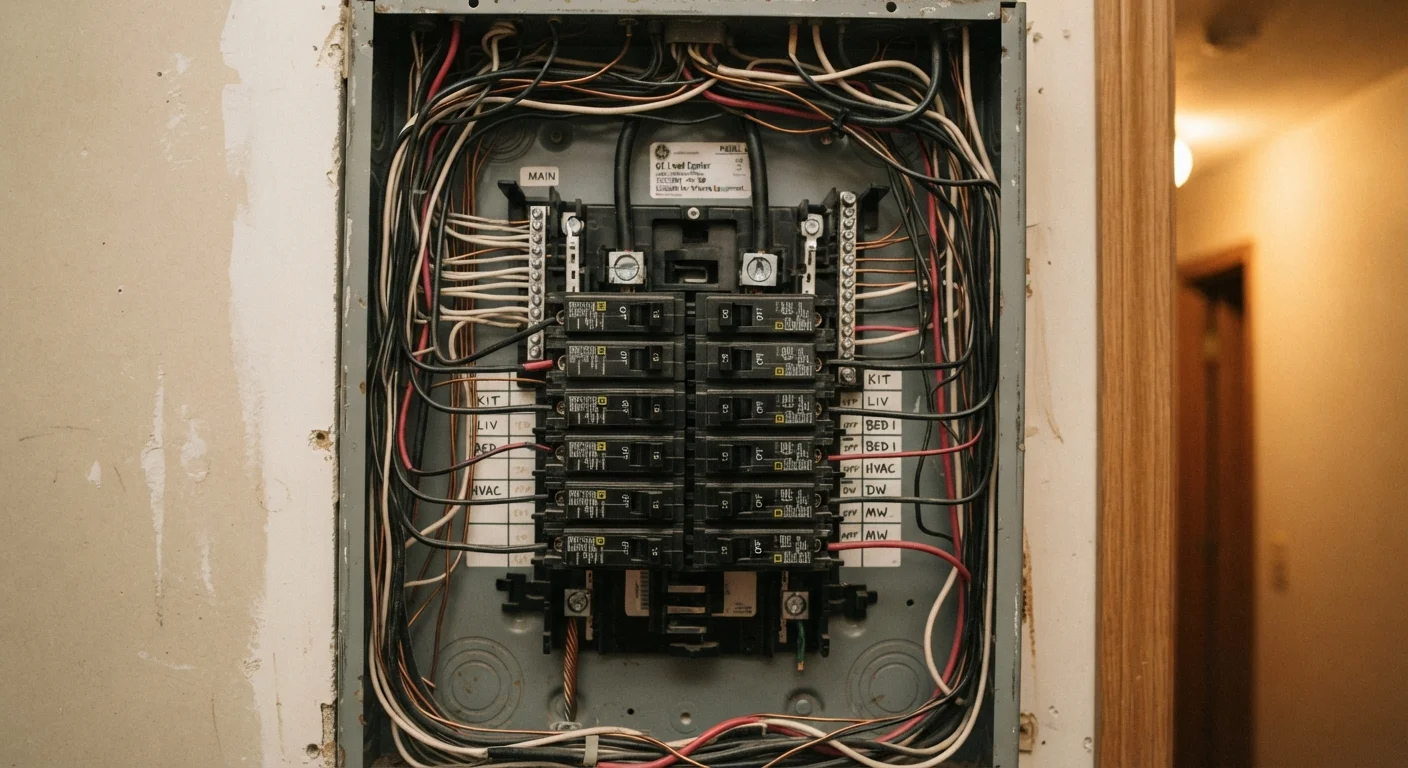
- You notice a burning smell, discoloration, or warmth around the panel, outlets, or switches associated with the tripping circuit. These are serious warning signs that should prompt you to call a licensed electrician without delay.
- Lights dim or flicker when a circuit trips, which may point to voltage fluctuation issues beyond a simple overload.
Label Your Panel Before a Problem Occurs
A clearly labeled electrical panel makes it much easier to identify which circuit is affected when a breaker trips. Take 20 minutes to test and label every breaker using a simple plug-in outlet tester. This small task can save significant time - and stress - during an emergency.
Any of these patterns moves the situation from "annoying" to "potentially dangerous." Wiring problems that are ignored or masked can create fire hazards inside walls where they are difficult to detect early.
What Homeowners Should - and Should Not - Do
There is a clear line between what a homeowner can reasonably handle and what requires a licensed electrician.
Safe steps for homeowners
- Identify and unplug devices on the circuit before resetting.
- Redistribute high-draw appliances (such as space heaters or hair dryers) to separate circuits.
- Check appliance cords and plugs for visible damage before using them again.
- Test and reset GFCI outlets, which can cut power to nearby standard outlets when they trip.
Work that requires a licensed electrician
- Any inspection or replacement of the breaker itself.
- Investigation of wiring inside walls or the panel enclosure.
- Upgrading a panel or adding new circuits.
- Any work where a permit may be required by local code.
One common and dangerous mistake is replacing a breaker with a higher-amperage model to stop nuisance trips. This removes the protective limit the breaker is designed to enforce and can allow wires to overheat beyond their rated capacity. It is also worth reviewing common electrical myths that put homeowners at risk before attempting any DIY approach.
~51,000
Home electrical fires reported annually in the US
According to the US Fire Administration, electrical fires are among the leading causes of residential structure fires each year.
25+ years
Typical service life of a circuit breaker
Industry guidance generally places breaker lifespan at 25-30 years, though individual units can fail earlier, especially under repeated thermal stress from frequent trips.
When to Call an Electrician - and What to Tell Them
If you have identified any of the warning patterns above, scheduling an inspection with a licensed electrician is the appropriate next step. When you call, be ready to describe:
- Which circuit or breaker is affected (usually labeled on the panel door).
- How often and under what conditions the breaker trips.
- Any physical signs you have noticed - smells, warmth, discoloration, or flickering lights.
- The age of your home's wiring, if known, and whether the panel has been upgraded.
Older homes - particularly those with wiring installed before modern grounding standards - can be more susceptible to faults that a newer panel masks rather than resolves. An electrician can assess whether the issue is a single faulty breaker, deteriorated wiring, or a panel that has reached the end of its useful service life.
A tripped breaker that returns to normal after a simple load reduction is doing exactly what it should. One that keeps tripping, trips under no apparent load, or is accompanied by heat or odor is no longer a nuisance - it is your home's electrical system asking for professional attention.