How Forced-Air Heating Works
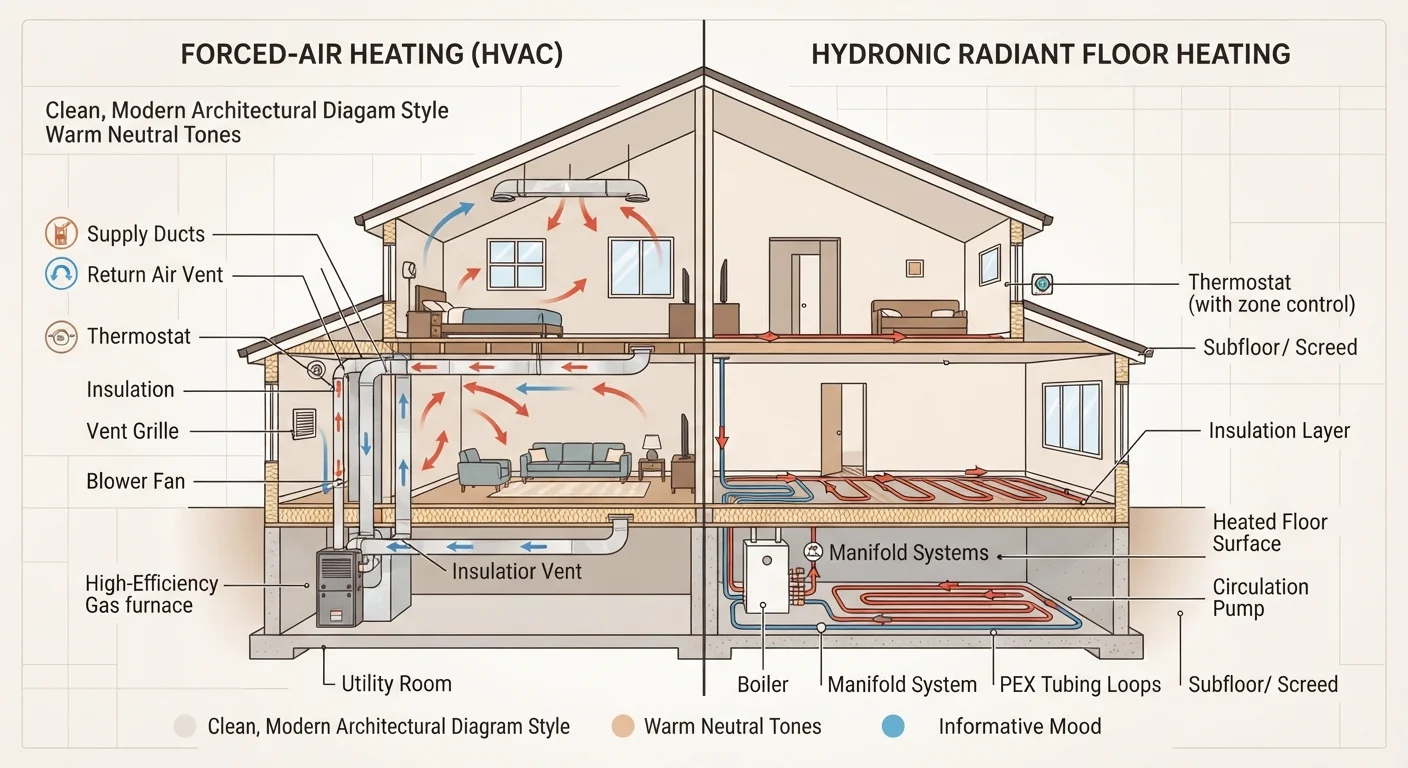
Forced-air heating is the most common residential heating method in the United States. The system starts at a central heat source - most often a gas furnace, though oil furnaces and heat pumps also use forced-air delivery - where air is heated and then pushed by a blower fan through a network of supply ducts. That warm air exits through registers (the vents you see in floors, walls, or ceilings), rises, and eventually returns to the unit via return-air ducts to be reheated and recirculated.
A few key components make this loop function:
- The heat exchanger: In a gas furnace, combustion gases heat a metal heat exchanger; the blower moves household air across the outside of that exchanger without the two airstreams ever mixing.
- The blower motor: Pushes air through the entire duct network. Its condition directly affects airflow quality and energy use.
- The duct system: Supply ducts carry warm air out; return ducts pull cool air back. Leaks in either leg reduce efficiency and can cause uneven heating.
- The air filter: Traps dust and particulates before air reaches the heat exchanger - the single most important component for homeowners to maintain.
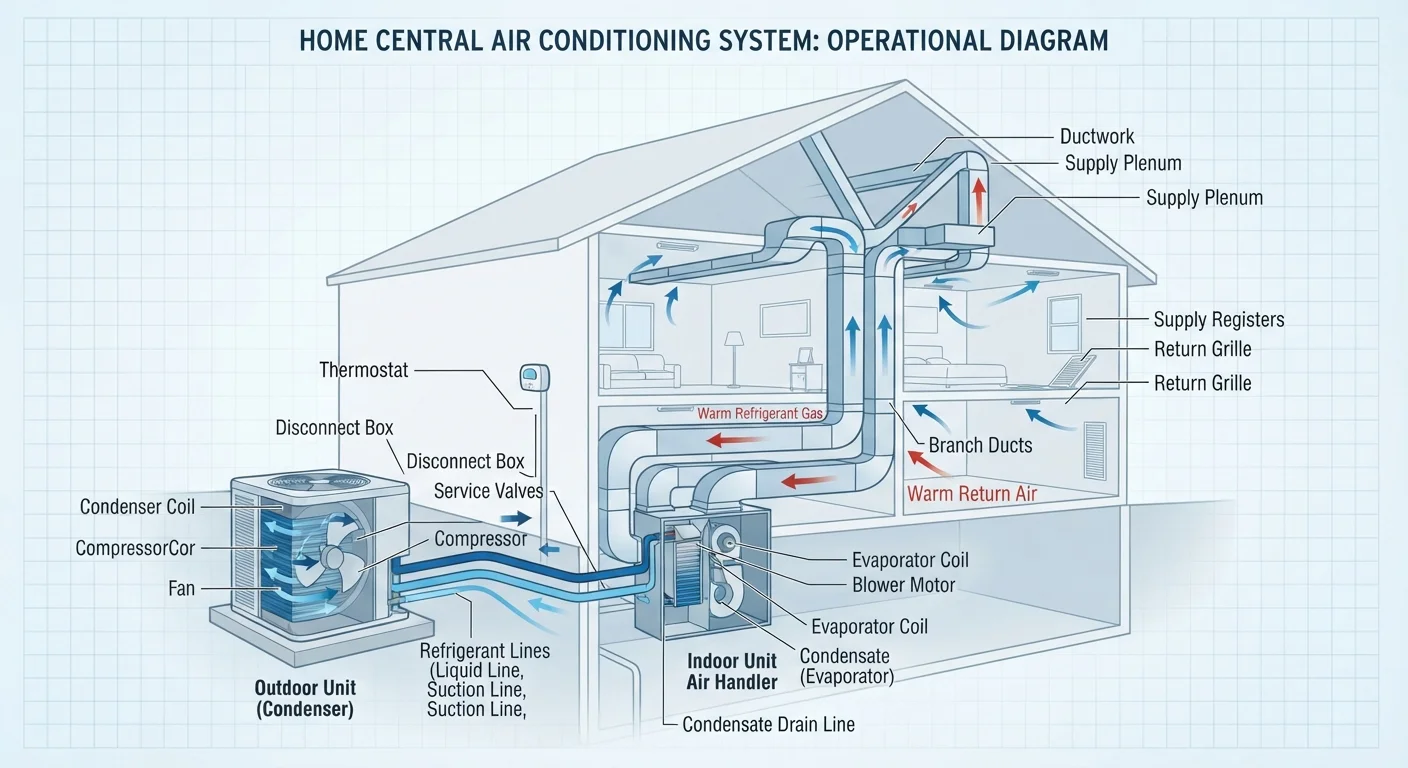
One major advantage of forced-air systems is versatility. The same ductwork that delivers heat in winter can distribute cooled air from a central air conditioner in summer - something radiant systems cannot do. For more on how that cooling side operates, see how the cooling cycle actually works.
Heat Pumps and Forced-Air Systems
Heat pumps are increasingly common and use the forced-air delivery method - they simply produce heat differently, by extracting heat energy from outdoor air (or the ground) rather than burning fuel. If your home has a heat pump, the ductwork, blower, and filter maintenance principles described here still apply. The distinction matters most when diagnosing problems at the heat source itself, which a qualified HVAC technician should handle.
How Radiant Heat Works
Radiant heat works on a fundamentally different principle: rather than warming air and distributing it, it warms the surfaces of a room - floors, walls, or ceiling panels - which then radiate heat outward to people and objects nearby. The sensation is often compared to standing in sunlight; warmth reaches you directly rather than through the surrounding air.
There are two primary types:
- Hydronic (water-based) radiant: A boiler heats water that circulates through flexible tubing embedded in the floor or installed in wall or ceiling panels. Hydronic systems are the most common form of radiant heat and are considered highly efficient once operating temperatures stabilize.
- Electric radiant: Heating cables or mats are embedded beneath flooring. Electric radiant is simpler to install but typically costs more to operate in areas with high electricity rates, so it's most practical for small areas like a single bathroom floor rather than whole-home use.
Because radiant systems don't blow air, they produce no drafts, don't stir up dust or allergens the way forced-air can, and maintain very even floor-to-ceiling temperatures. The trade-off is thermal lag - radiant systems heat up and cool down more slowly than forced-air, which means they work best when set to a consistent temperature rather than programmed for large daily setbacks.
| Criterion | Forced-Air Heating | Radiant Heat |
|---|---|---|
| Heat delivery method | Warmed air through ducts | Warmed surfaces radiate heat |
| Can deliver cooling? | Yes, via same ductwork | No - separate system needed |
| Temperature evenness | Variable; prone to hot/cold spots | Very even, floor to ceiling |
| Response time | Fast - heats quickly | Slow - high thermal lag |
| Air quality impact | Circulates dust; filter dependent | No air movement; quieter |
| Typical installation cost | Lower in existing homes | Higher, especially in retrofits |
| Main maintenance task | Filter changes; duct sealing | Boiler service; bleeding lines |
| Humidity control integration | Easy - whole-house humidifiers attach directly | Requires separate strategy |
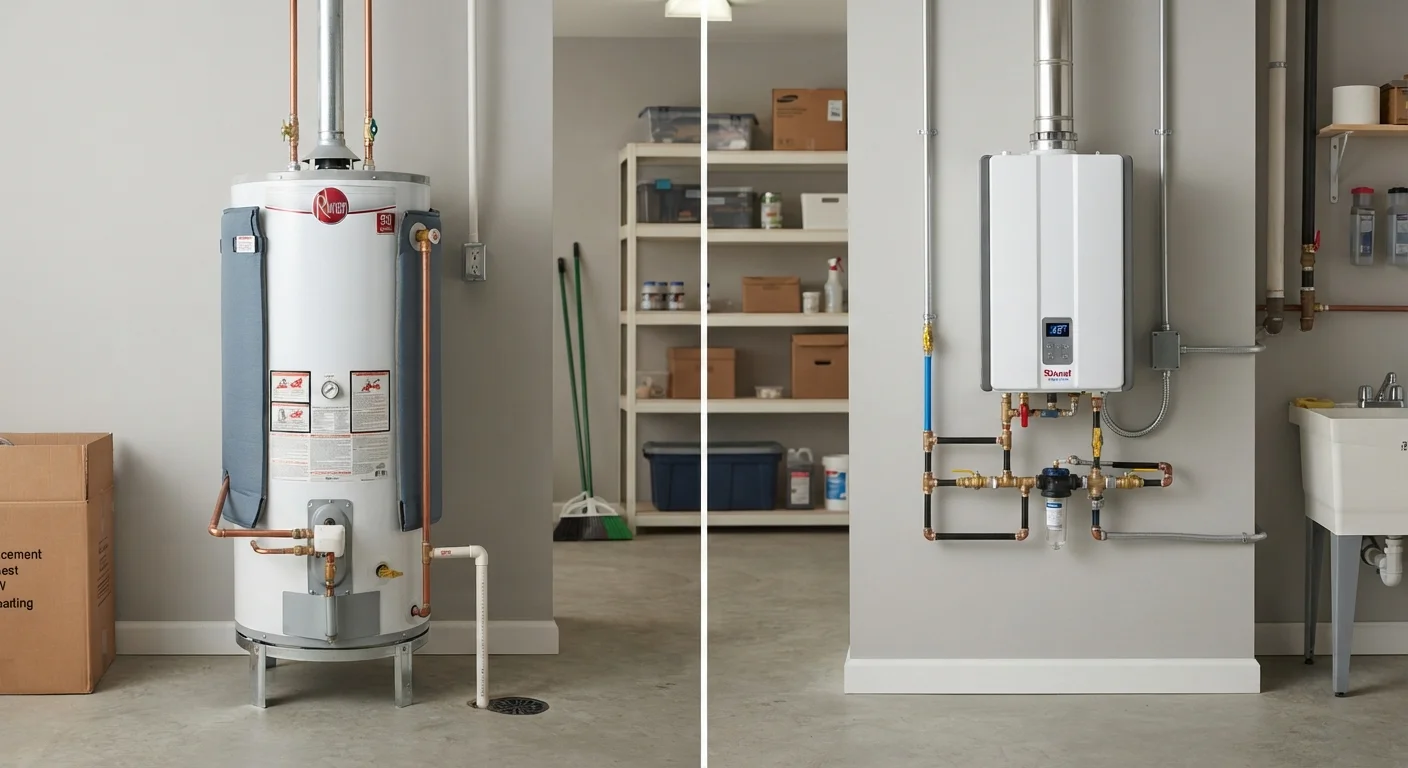
Radiant heat also requires a separate solution for cooling, since the delivery method - warm surfaces - cannot be adapted to air conditioning. Homeowners often pair a hydronic radiant system with a ductless mini-split for cooling. If you're weighing related home system decisions, comparing tank and tankless water heaters is a useful parallel exercise, since hydronic radiant systems rely on a boiler that functions similarly to a water heater.
Maintenance, Troubleshooting, and When to Call a Pro
Knowing your system type changes how you approach routine maintenance and early problem-solving.
Forced-Air Maintenance Priorities
- Filter changes: Replace the air filter every 1-3 months depending on filter type and household conditions (pets, dust levels). A clogged filter restricts airflow and forces the blower to work harder.
- Duct inspection: Visible duct joints in attics or basements should be checked periodically for disconnections or gaps. Sealing leaks with mastic sealant or metallic tape (not standard duct tape) can measurably improve efficiency.
- Annual furnace inspection: A licensed HVAC technician should inspect the heat exchanger, burners, and flue annually. A cracked heat exchanger can allow combustion gases into living spaces - a serious safety concern requiring professional evaluation.
Radiant Heat Maintenance Priorities
- Boiler servicing (hydronic): Annual service by a qualified technician keeps pressure, circulator pumps, and expansion tanks operating correctly.
- Bleeding radiators or panels: Air trapped in hydronic lines can cause gurgling sounds and cold spots. Bleeding the system releases trapped air and restores even heat distribution - a task many homeowners learn to do themselves.
- Thermostat strategy: Avoid large temperature setbacks with radiant systems. The slow thermal mass of the system means it takes considerable time to recover, potentially leaving the home cold during recovery periods.
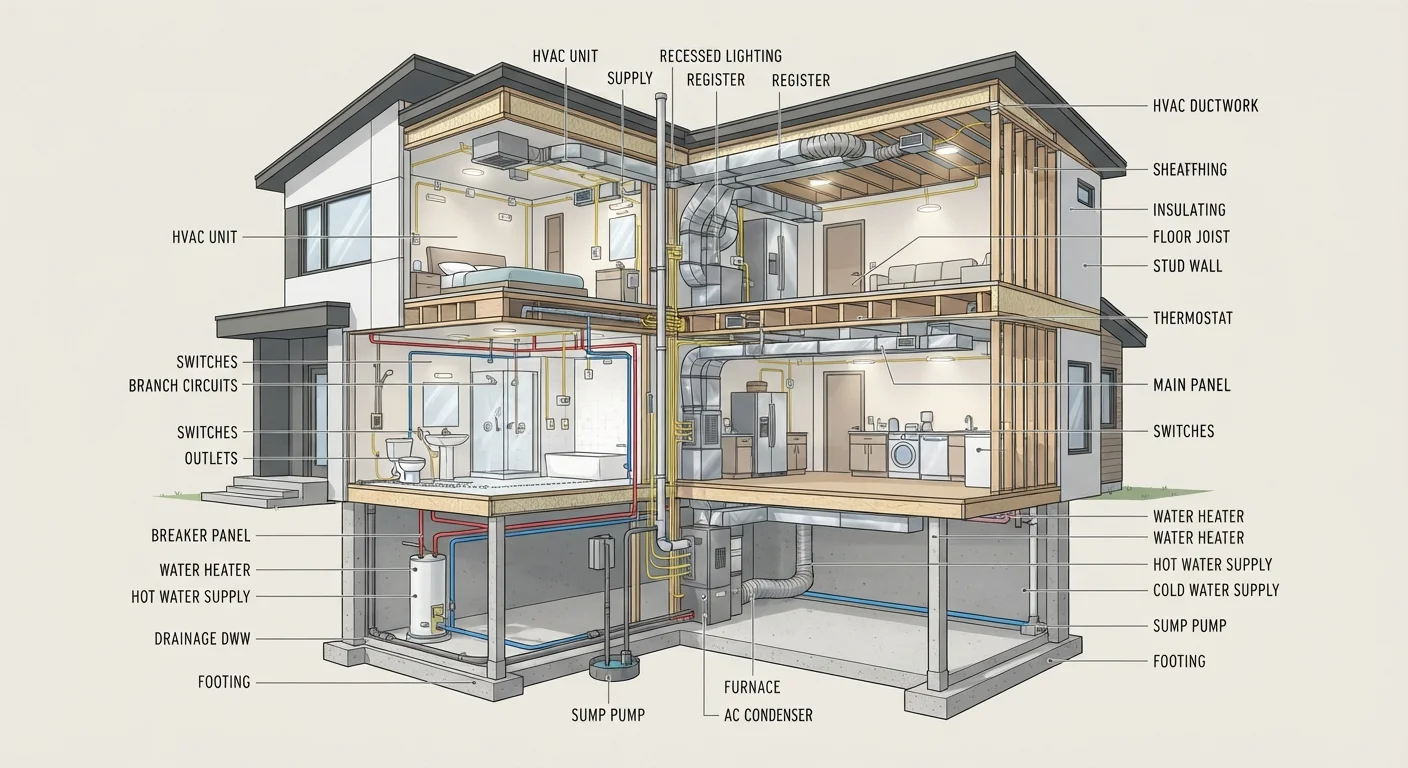
For context on how heating systems interact with other home systems, understanding your home as an interconnected system is a helpful starting point. And if terminology from a technician ever leaves you puzzled, a plain-language HVAC and home systems glossary can help you follow the conversation.