The Core Principle: Moving Heat, Not Making Cold
A common misconception is that your air conditioner creates cold air. It doesn't. It moves heat - specifically, it extracts heat energy from the air inside your home and expels it outdoors. What's left behind is air that feels cool because its heat content has been reduced.
This is the same physics principle behind your refrigerator. Both rely on the fact that a liquid refrigerant absorbs heat as it evaporates into a gas, and releases that heat as it's compressed back into a liquid. Your central AC system simply applies this principle on a whole-home scale, using your duct network to distribute the result.
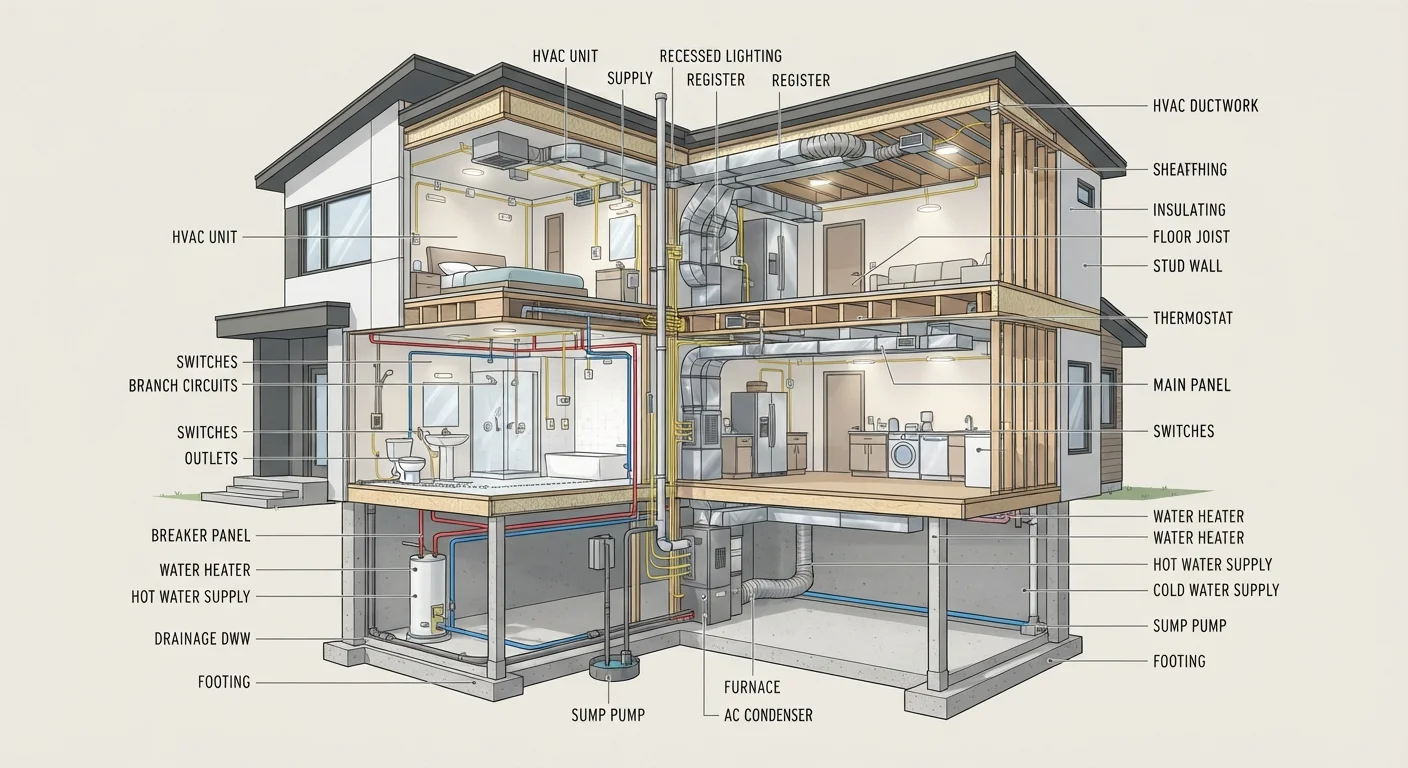
This distinction matters practically: it explains why an AC system struggling to remove heat (due to a dirty coil, low refrigerant, or a failing compressor) produces warmer air - not because it's making less cold, but because it's moving less heat. Understanding the interconnected nature of your home's systems helps put this in context alongside your other mechanical equipment.
The Four-Component Loop Explained
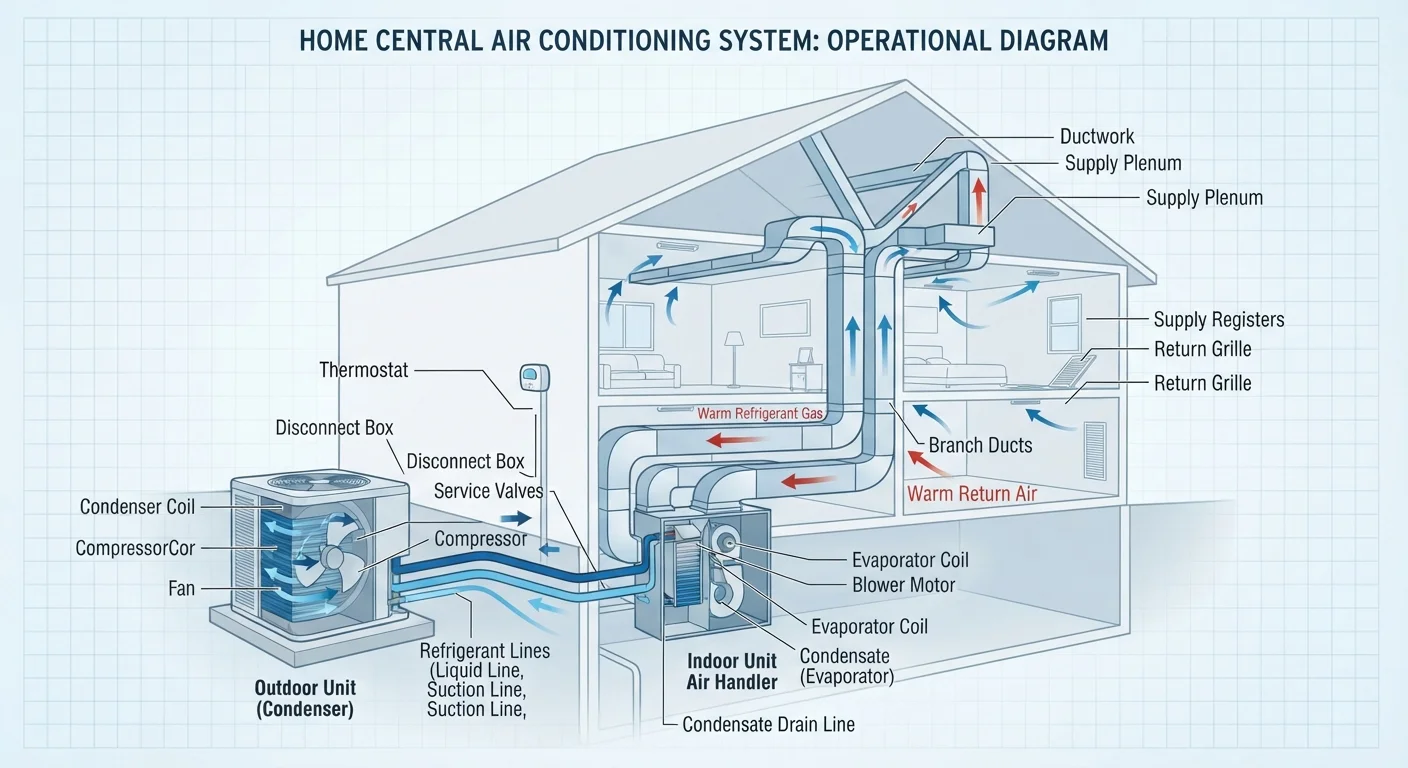
The refrigerant cycle runs continuously through four components whenever your system is operating. Here's what each one does:
- Evaporator coil (indoor unit): Warm indoor air is blown across this coil by the air handler. Cold liquid refrigerant inside the coil absorbs the heat from that air, causing the refrigerant to evaporate into a low-pressure gas. The now-cooler air continues into your ducts.
- Compressor (outdoor unit): The low-pressure refrigerant gas travels outside and enters the compressor. The compressor squeezes the gas under high pressure, which raises its temperature significantly - hotter than the outdoor air.
- Condenser coil (outdoor unit): The hot, high-pressure gas flows through the condenser coil. A fan blows outdoor air across it, and because the refrigerant is now hotter than that outdoor air, heat flows out of the refrigerant into the atmosphere. The refrigerant cools and condenses back into a liquid.
- Expansion valve: Before the liquid refrigerant returns indoors, it passes through an expansion valve, which drops its pressure and temperature rapidly - preparing it to absorb heat again at the evaporator coil.
This loop repeats as long as the system runs. No refrigerant is consumed; it's a closed system that changes state continuously between liquid and gas.
~6%
Share of U.S. electricity used by air conditioning
According to the U.S. Energy Information Administration, air conditioning accounts for roughly 6% of all electricity produced in the United States annually.
90%+
U.S. homes with air conditioning
The EIA's Residential Energy Consumption Survey indicates that more than 90% of U.S. homes now have some form of air conditioning, with central systems being the most common type.
15-20 years
Typical central AC system lifespan
The U.S. Department of Energy notes that central air conditioning systems generally last 15 to 20 years with proper maintenance, though compressors may fail earlier without regular servicing.
What Can Go Wrong - and What the Symptoms Tell You
Knowing how the cycle works gives you a useful diagnostic framework. Most central AC problems trace back to one of the four components or the refrigerant itself.
Check Your Filter Before Calling a Technician
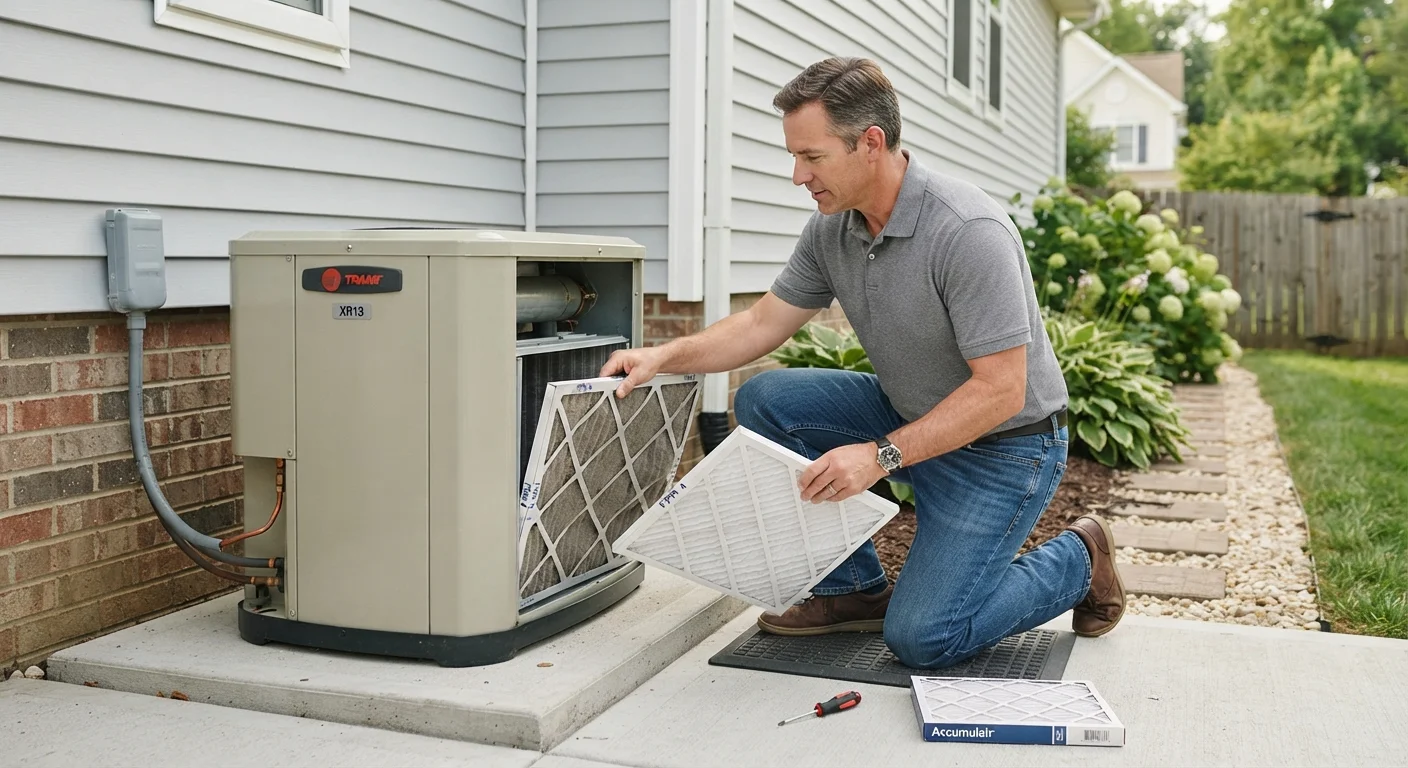
A dirty air filter is the single most common cause of reduced AC performance and can mimic symptoms of more serious failures, including icing on the evaporator coil and warm air from vents. Before scheduling a service call, replace the filter and allow the system to run for a full cycle. If the problem persists, then contact a licensed HVAC professional.
Warm air from vents often points to a refrigerant leak (the coil can't absorb enough heat), a failing compressor (pressure isn't building), or a dirty evaporator coil (airflow is blocked). Ice forming on the indoor unit is counterintuitive but usually means restricted airflow - a clogged filter or blocked return - causing the coil to get too cold and freeze condensation. Loud mechanical sounds from the outdoor unit frequently indicate compressor or fan motor issues. Short cycling (the system turns on and off rapidly) can signal an oversized system, a refrigerant problem, or a faulty thermostat.
None of these symptoms require you to diagnose the root cause yourself. But recognizing that warm air likely means a heat-transfer failure - rather than the unit simply being "broken" - helps you communicate effectively with an HVAC technician and evaluate their diagnosis. See our guide on HVAC maintenance tasks homeowners can safely do themselves for upkeep steps that help prevent many of these issues.
Your Role as a Homeowner
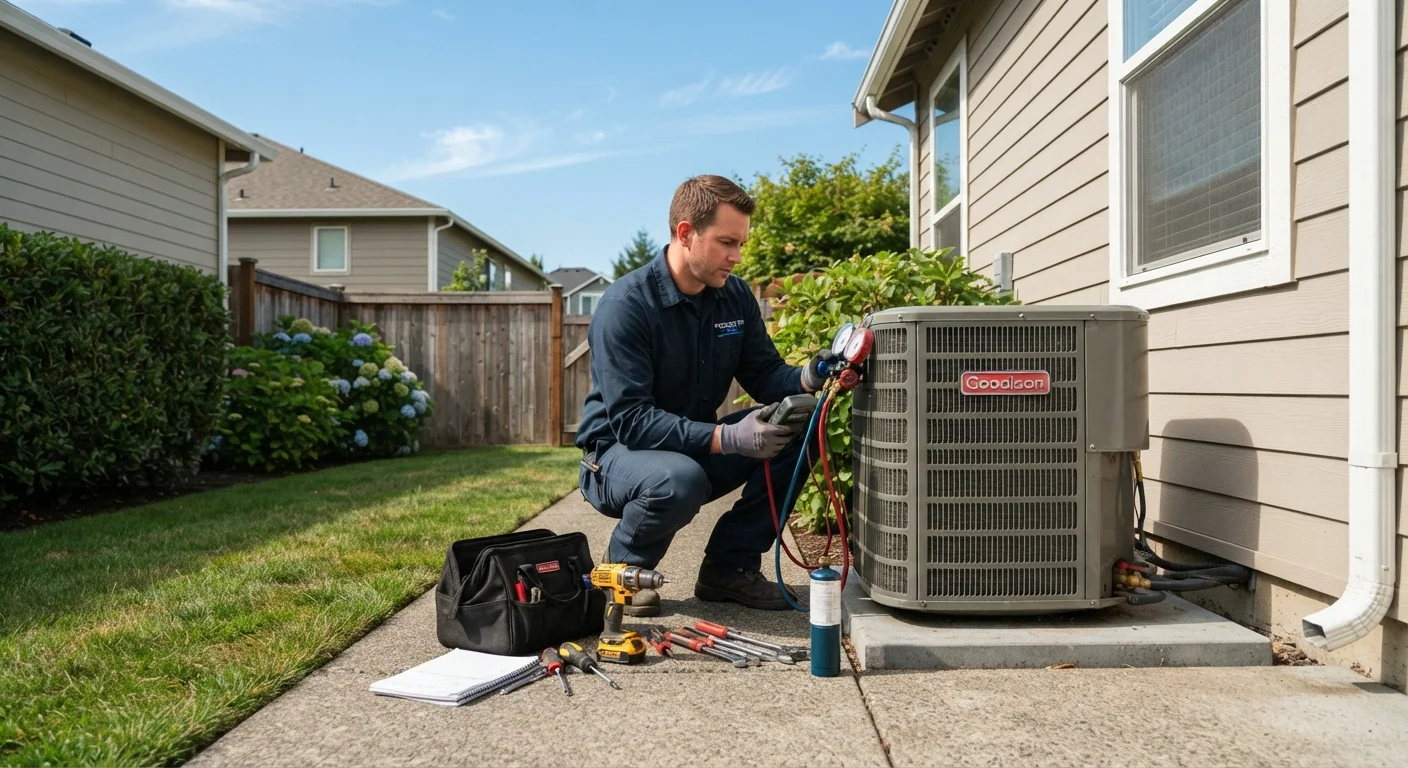
Most of what happens inside a central AC system - refrigerant handling, electrical connections, compressor service - requires a licensed HVAC technician. Refrigerant work is federally regulated, and electrical components in both the indoor and outdoor units carry serious shock risk. Do not attempt to open or service these components yourself.
What homeowners can manage safely: replacing air filters on schedule (typically every one to three months, depending on filter type and household conditions), keeping the area around the outdoor condenser unit clear of debris and vegetation, and ensuring supply and return vents inside aren't blocked by furniture or rugs. These steps directly support airflow - the foundation of an efficient refrigerant cycle.
Before cooling season begins each year, a professional tune-up allows a technician to check refrigerant levels, inspect electrical connections, clean coils, and verify that all four components are functioning correctly. Our seasonal HVAC prep checklist outlines what to expect from that process. If your home uses a different heating approach, the forced air vs. radiant heat comparison explains how those systems differ from your AC's delivery method.