How Fresh Water Gets Into Your Home
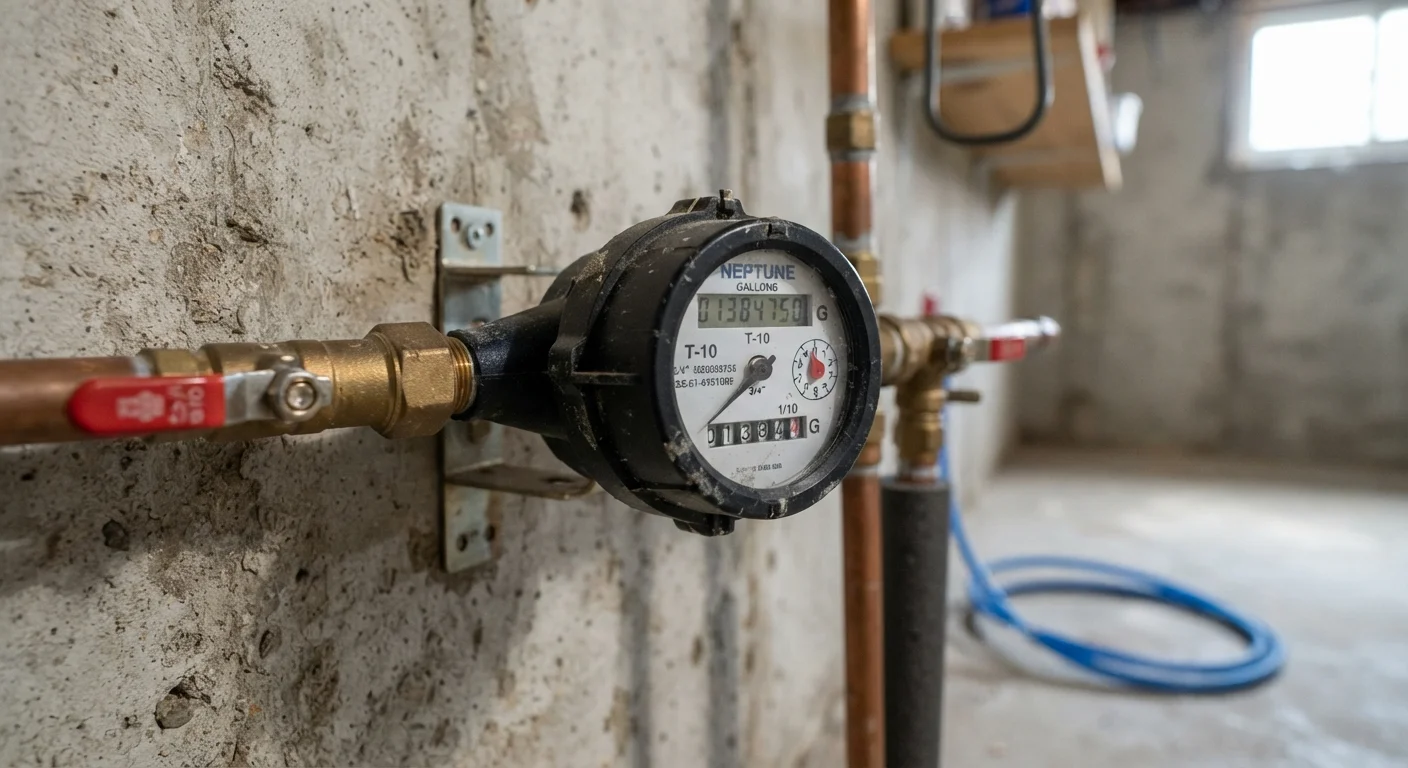
Water enters your home from either a municipal supply line or a private well. Municipal water arrives under pressure - regulated to roughly 40-80 psi (pounds per square inch) - through a single main line that passes through a main shutoff valve and often a pressure-reducing valve (PRV) before branching throughout the house.
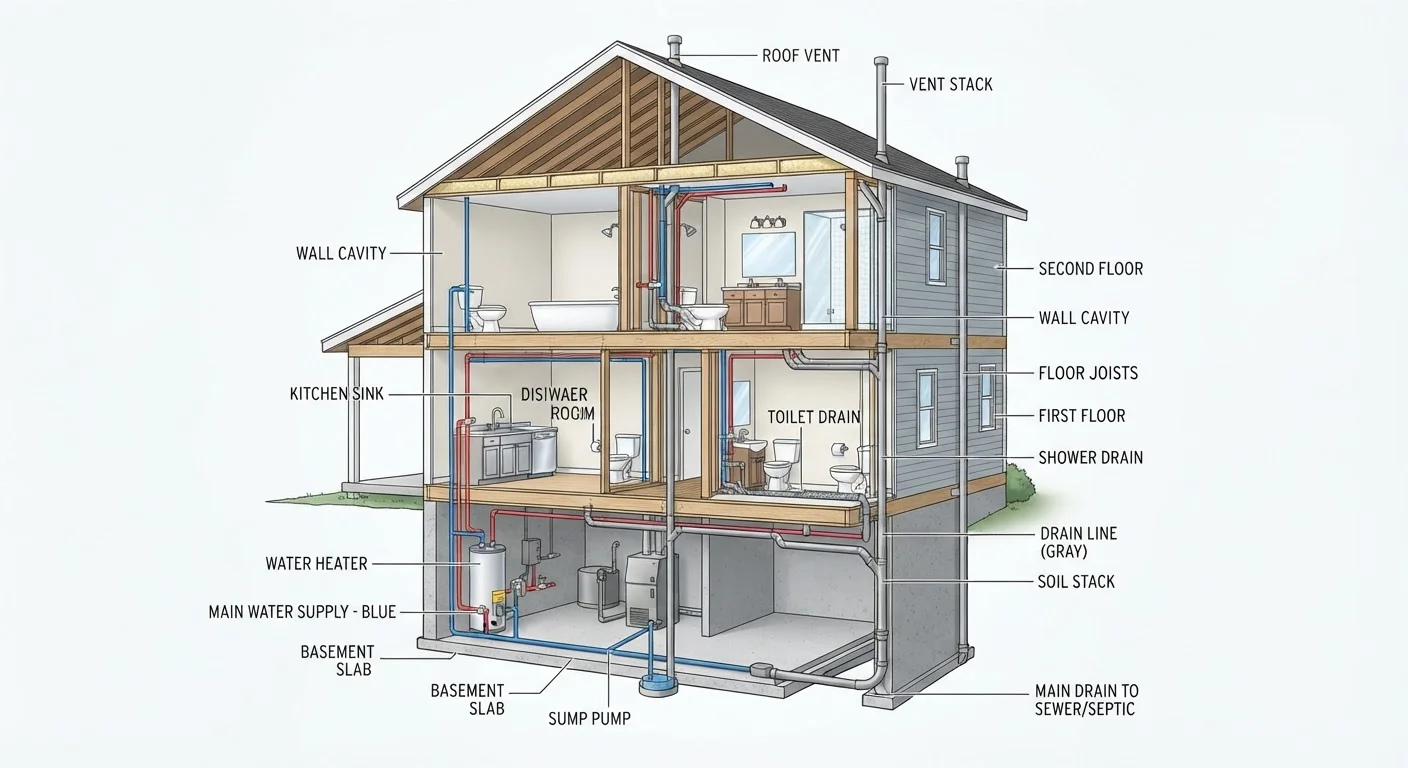
From there, the supply system splits into two parallel paths: one delivers cold water directly to fixtures, appliances, and hose bibs; the other routes cold water through your water heater before distributing hot water to the same destinations. These pressurized pipes are typically made of copper, CPVC plastic, or cross-linked polyethylene (PEX) in modern homes.
Knowing where your main shutoff valve is located is essential. In a leak or burst-pipe emergency, turning it off immediately can prevent thousands of dollars in water damage. It is usually found near the water meter, in a basement, or along an exterior wall. You can also learn to read your water meter to spot hidden leaks before they become serious problems.
Find Your Shutoff Valve Now
Don't wait for an emergency to locate your main water shutoff valve. Walk through your basement, utility room, or exterior walls now and identify it clearly. Consider labeling it with a tag so any household member - or a contractor - can find it quickly. Test it annually by turning it fully off and back on to prevent it from seizing.
The Drain-Waste System: Getting Water Out
Unlike the supply system, which relies on pressure, the drain-waste system works entirely by gravity. Every pipe in this network is sloped - typically ¼ inch of drop per foot of horizontal run - so wastewater flows downhill toward a main drain stack, and eventually out to either a municipal sewer or a private septic system.
Several key components make this work reliably:
- P-traps: The curved pipe beneath every sink, tub, and floor drain. The bend holds water, forming a seal against sewer gases rising into your home. If a fixture goes unused for weeks, that water can evaporate - simply run the tap to restore the seal.
- Drain stack: The large vertical pipe (usually 3-4 inches in diameter) that collects waste from multiple fixture branch lines and carries it down to the building drain.
- Building drain and sewer line: The horizontal pipe at the base of the stack that exits the foundation and connects to the sewer or septic system.
Slow drains are often the first sign that something is partially blocking this system - hair, grease, or mineral buildup being the usual culprits. Understanding this structure helps you pinpoint whether a blockage is local (one fixture) or deeper in the system (multiple fixtures backing up).
10,000+ gallons
Water wasted annually by average household leaks
According to the U.S. Environmental Protection Agency's WaterSense program, the average home's leaks can account for nearly 10,000 gallons of wasted water per year.
¼ inch
Minimum slope per foot for drain pipes
Plumbing codes in the U.S. generally require horizontal drain pipes to slope at least ¼ inch per foot to ensure wastewater flows reliably by gravity.
40-80 psi
Normal residential water supply pressure range
Most municipal water systems deliver water to homes within this pressure range; a PRV (pressure-reducing valve) is commonly installed to keep it in the safe zone.
Vent Pipes: The Hidden Third System
Many homeowners are surprised to learn their plumbing includes an entire network of pipes dedicated to moving air, not water. The drain-waste-vent (DWV) system includes vent pipes that run upward from drain lines through the walls and exit through the roof. These pipes serve two critical functions:
- Pressure equalization: As water drains, it must displace air. Without venting, draining water creates a vacuum that pulls water out of P-traps - breaking the sewer-gas seal - or causes slow, gurgling drains.
- Sewer gas removal: Vents allow methane and hydrogen sulfide gases produced in drain pipes to escape safely through the roof rather than building up inside the house.
A blocked vent - from a bird's nest, debris, or ice in cold climates - is a common cause of mysterious gurgling sounds and sluggish drains throughout the home. Because vent work involves roof access and cutting into walls, it is generally a job for a licensed plumber.
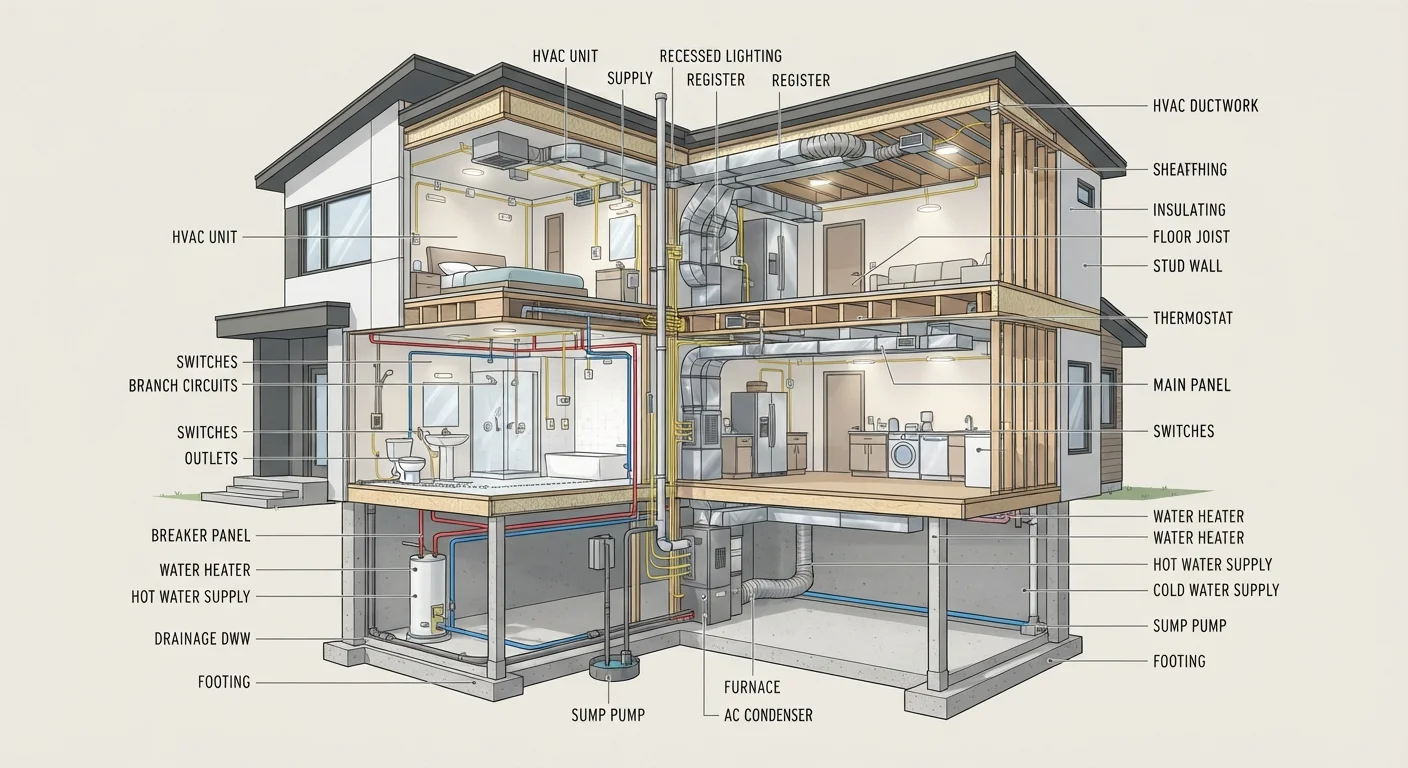
To understand how plumbing interacts with your home's other major systems, see our guide to how home systems work together.
Permits May Be Required for Plumbing Work
In most U.S. jurisdictions, replacing drain lines, extending supply pipes, or adding new fixtures requires a building permit and inspection. Requirements vary by municipality, so always check with your local building department before starting any significant plumbing project. Unpermitted work can create complications when you sell your home or file an insurance claim.
Putting It All Together: What This Means for Maintenance
Once you understand the three subsystems - supply, drain-waste, and vent - most plumbing problems become easier to categorize. A dripping faucet is a supply-side issue. A slow drain is likely in the drain-waste system. Gurgling sounds across multiple fixtures point to venting. That mental map helps you describe the problem accurately to a plumber or determine whether it's something you can address yourself.
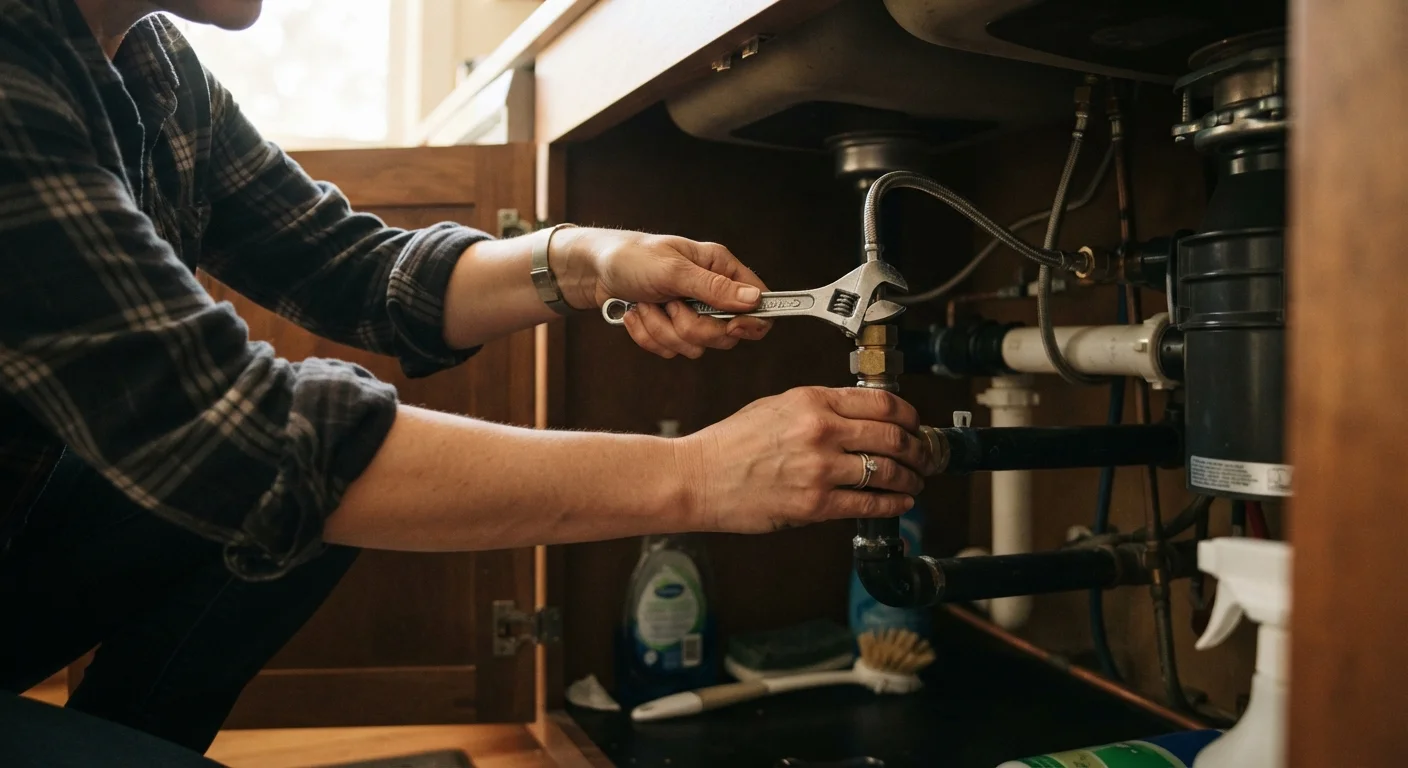
Routine plumbing maintenance that most homeowners can manage includes flushing water heater sediment annually, cleaning fixture aerators, checking under sinks for slow drips, and testing shutoff valves periodically so they don't seize from disuse. For an overview of repairs within DIY reach, see our article on repairs most homeowners can handle.
Work involving the main supply line, sewer connections, gas appliances, or anything requiring a building permit should always be done by a licensed plumber. When in doubt, a professional inspection is far less costly than repairing damage caused by an incorrect fix.
For plain-language definitions of terms you may encounter when talking to contractors, the home systems terminology guide is a useful reference to bookmark.