Where to Find Your Water Meter and What You're Looking At
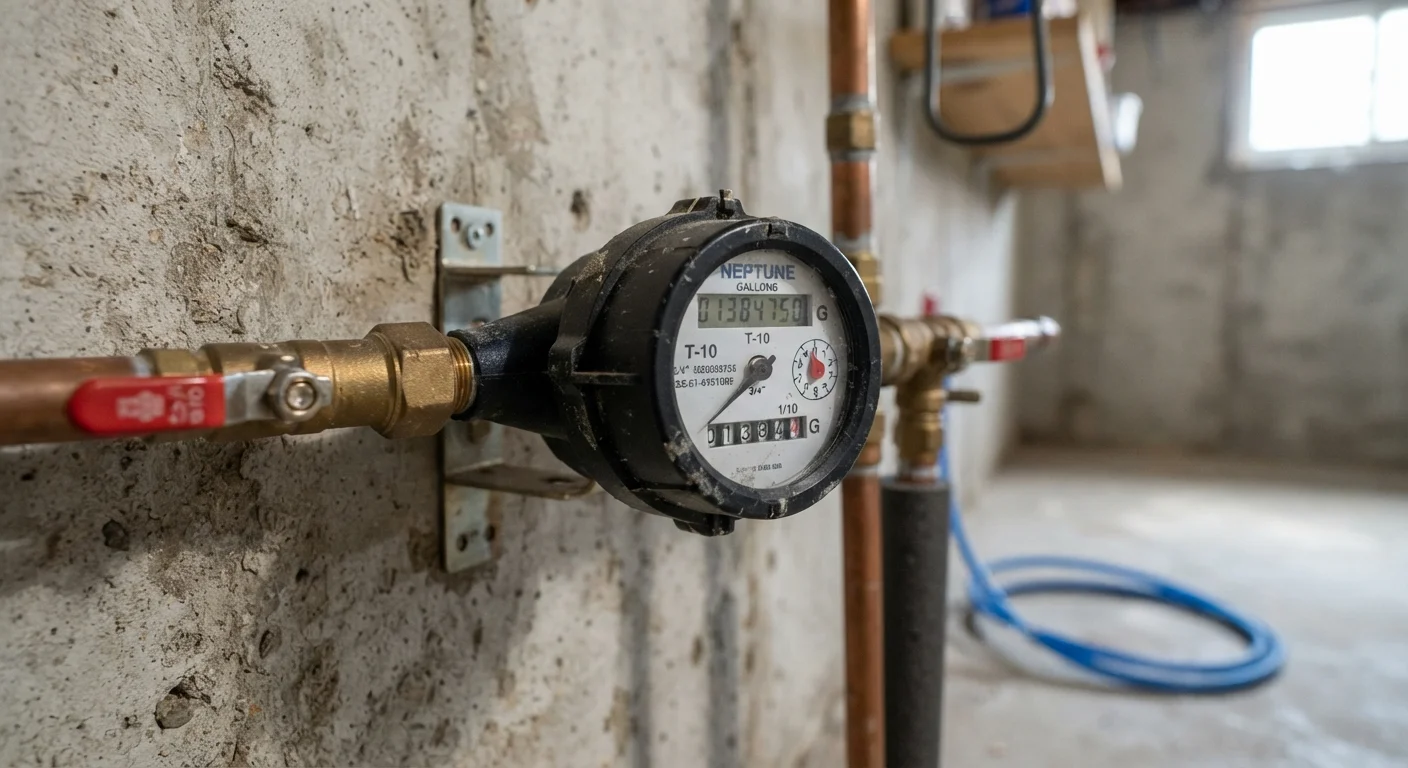
Your water meter is the official measurement device your utility uses to calculate your bill - and a useful tool for homeowners who want to monitor consumption or catch leaks early. In most US homes, the meter is located in one of three places: in a covered box set flush with the ground near the street (called a meter pit or curb box), in the basement near where the main supply line enters the house, or in a utility closet.
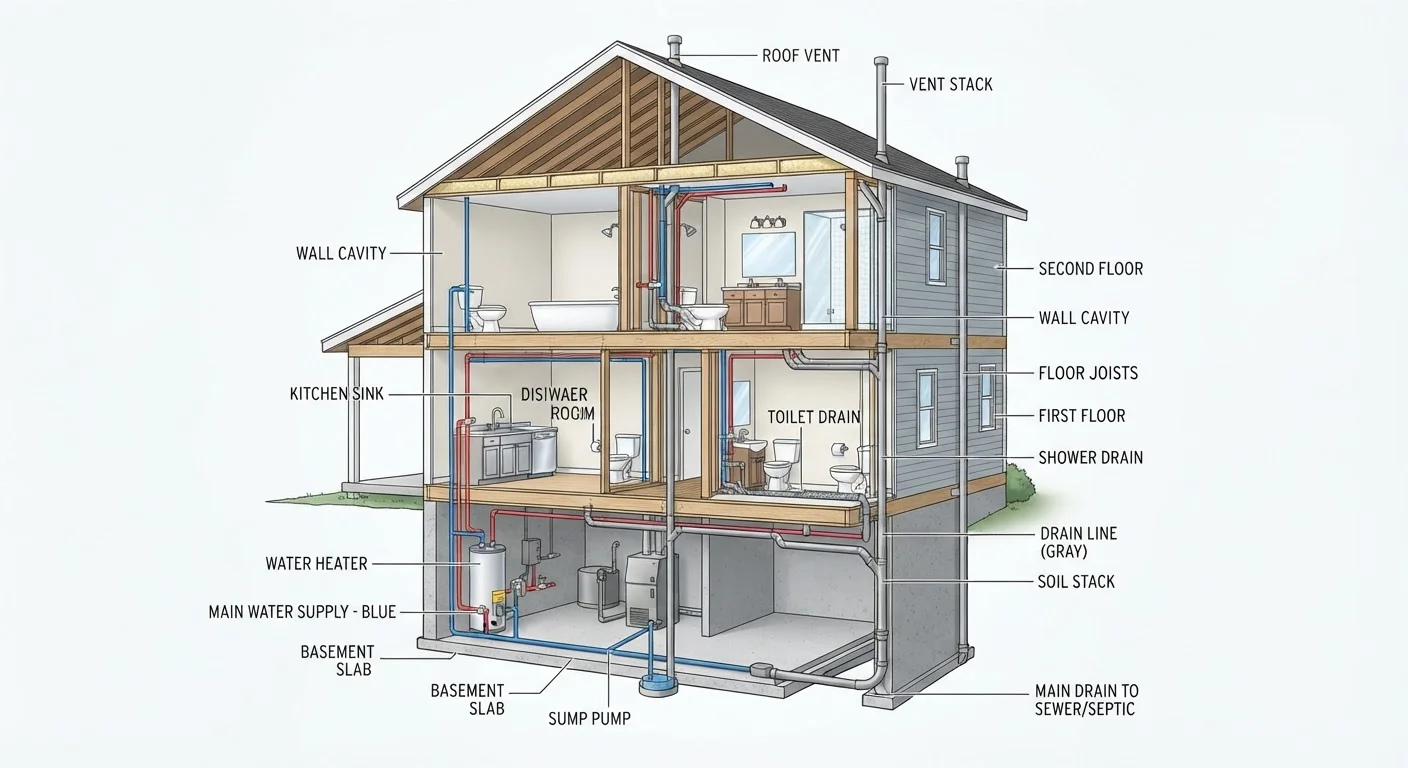
Two meter designs are common. Analog (dial) meters display a series of rotating dials that read like an odometer. Digital meters show a numeric LCD readout; some also include a small sweep hand or pilot flow indicator. Both record usage in the same unit - most often cubic feet (CCF or HCF) or gallons - so check your water bill to confirm which unit your utility tracks. Understanding this connection puts your meter reading in context alongside the rest of your home's supply infrastructure, covered in our overview of your home's plumbing system.
| Common meter location | Curb box near street, basement, or utility closet |
| Typical billing unit (US) | CCF (hundred cubic feet) or gallons |
| Gallons per CCF | Approximately 748 gallons |
| Leak test duration | 30 minutes with all water off |
| Meter types | Analog (dial) and digital (LCD) |
| Flow indicator movement (water off) | Signals an active leak in the system |
How to Take an Accurate Reading
Taking a meter reading takes less than two minutes. Follow these steps for consistent, comparable results:
- Open the lid carefully. Meter pits can shelter insects or spiders. Use a screwdriver or meter-lid key to lift the cover and set it aside on dry ground.
- Clear any debris. Brush away dirt or moisture from the face with a dry cloth before reading.
- Read left to right. On analog meters, note each dial in sequence. When the needle sits between two numbers, record the lower number. Dials often alternate clockwise and counter-clockwise - follow the direction of travel for each.
- Record the full number. Digits displayed in black or white typically count toward your billable usage; digits in red (on some models) represent fractions of the base unit.
- Note the date and time. A single reading is a snapshot; comparing two readings over a known time window tells you actual consumption.
To calculate usage between readings, subtract your earlier reading from the current one. Multiply the result by your utility's unit-conversion factor if needed (1 CCF = approximately 748 gallons).
CCF / HCF
Hundred cubic feet - a common unit of water measurement used on utility bills. One CCF equals approximately 748 gallons. Some utilities bill in gallons directly.
Flow indicator
A small rotating element (triangle, star, or sweep hand) on a water meter that moves whenever water is flowing through the line. It is useful for detecting leaks when all fixtures are off.
Meter pit / curb box
An in-ground enclosure near the street where the water meter is installed in many residential properties. It is covered by a removable lid and accessed for reading or service.
Main shutoff valve
A valve, typically located near the meter, that controls the entire water supply to a home. Closing it stops flow to all fixtures and appliances - essential during emergencies or major repairs.
Register
The numbered display on a water meter - either a row of dials or a digital LCD - that records cumulative water consumption since the meter was installed or last reset.
Using Your Meter to Detect Hidden Leaks
One of the most practical uses of your water meter is leak detection - particularly for slow leaks that never surface visibly. Here's a reliable method:
- Ensure no water is running anywhere in the home: no faucets, no appliances, no irrigation.
- Locate the flow indicator - a small red or blue triangle, star, or dial on the meter face. If it moves while all water is off, water is flowing somewhere it shouldn't be.
- For a more conclusive test, record your meter reading, avoid all water use for 30 minutes, then read again. Any increase confirms an active leak.
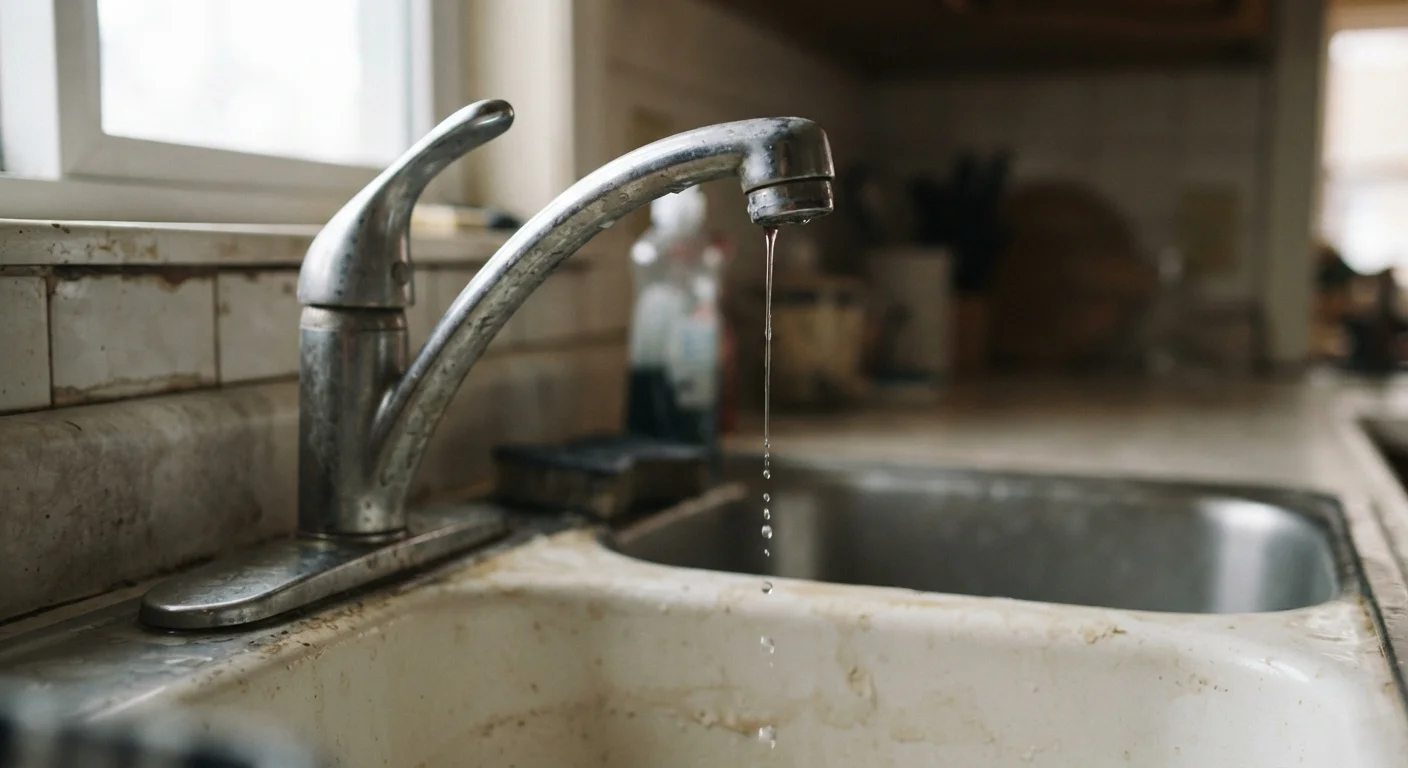
A running toilet, dripping faucet, or slow supply-line leak can add thousands of gallons per month to your bill without obvious signs. If your meter confirms a leak but you can't locate its source, a licensed plumber can perform pressure testing to isolate it. Issues like this sometimes connect to broader pressure problems - see our article on diagnosing low water pressure for related diagnostic steps.
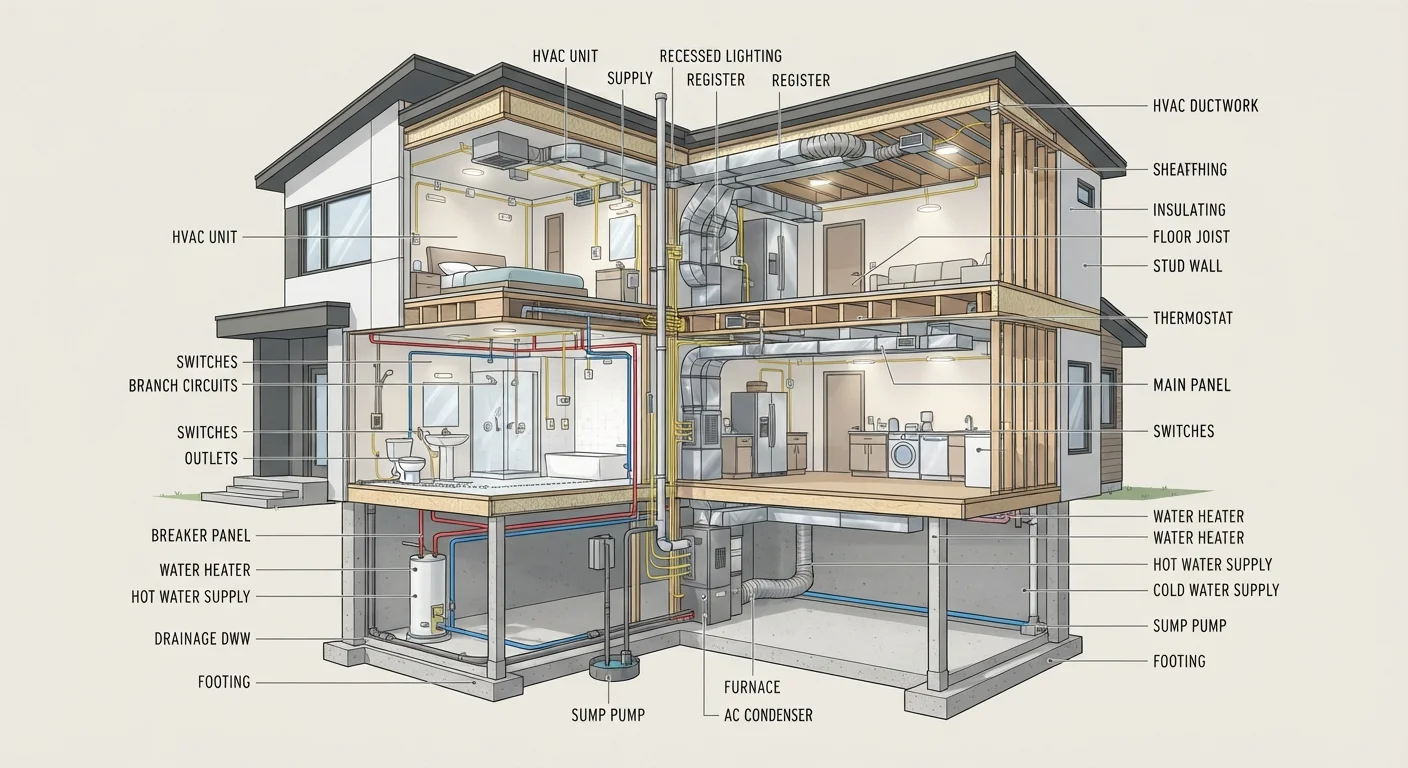
For broader context on how your water meter fits into your home's overall systems, refer to our guide on understanding your home as an interconnected system.