How Each System Delivers Water
Understanding how these two systems work mechanically helps clarify where each performs well - and where it falls short.
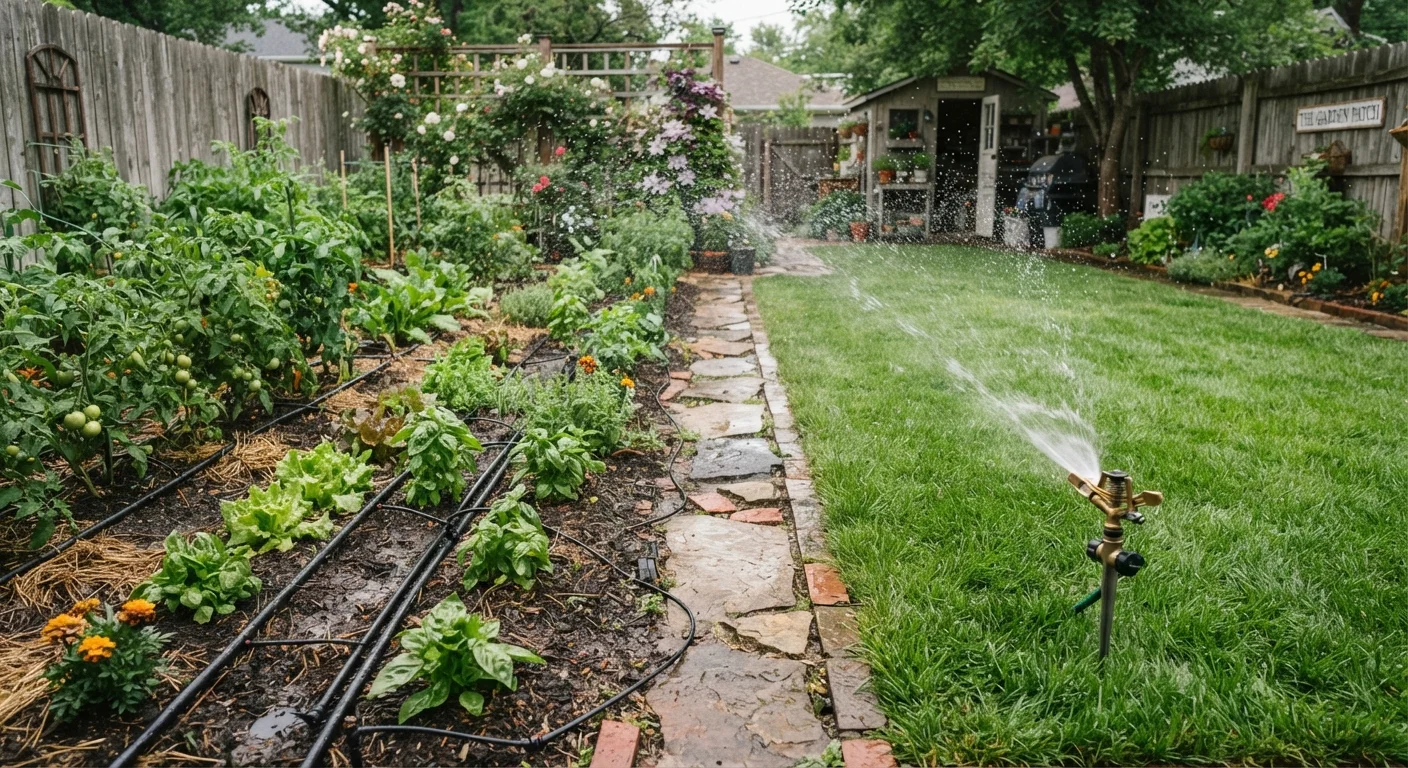
Drip irrigation uses a network of low-pressure tubing and small emitters placed at or near the soil surface. Water seeps slowly and directly to the root zone of individual plants, usually at rates of 0.5 to 2 gallons per hour per emitter. Because water is applied slowly and at ground level, evaporation is minimal and runoff is rare when the system is properly sized.
Sprinkler systems distribute water overhead through rotating heads, pop-up nozzles, or oscillating arms. Coverage is measured in precipitation rate - how many inches of water fall per hour across a given area. In-ground sprinkler systems can be zoned by area and programmed to run at set times, making them convenient for large lawns. Above-ground hose-end sprinklers are simpler but harder to control precisely.
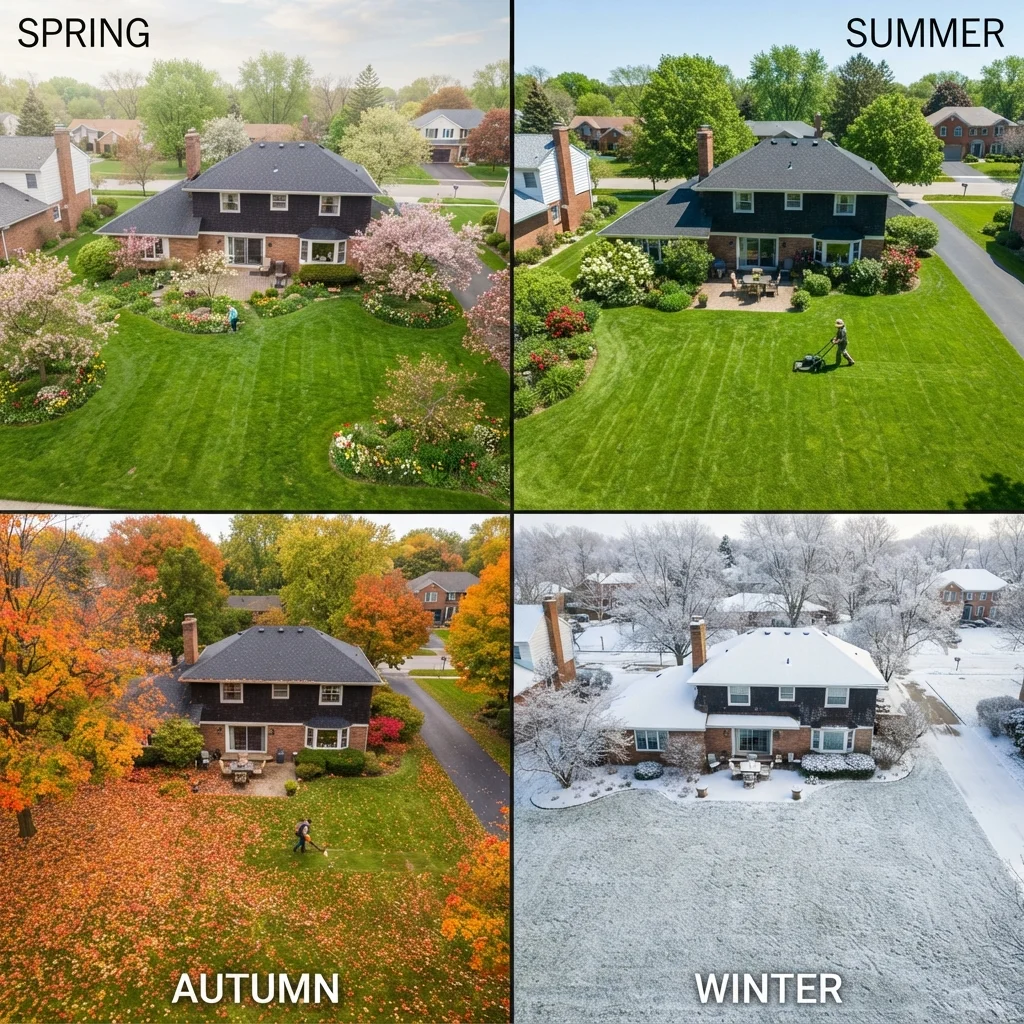
Because sprinklers apply water from above, a portion is always lost to evaporation before it reaches the soil - particularly when running during warm, windy, or sunny periods. Watering early in the morning reduces but does not eliminate this loss. See our year-round lawn maintenance guide for more on timing irrigation with seasonal needs.
| Criterion | Drip Irrigation | Sprinkler Systems |
|---|---|---|
| Water efficiency | High - minimal evaporation, targeted delivery | Moderate - evaporation loss varies with conditions |
| Best application | Garden beds, shrubs, vegetables, trees | Open turf, large lawns, groundcover areas |
| DIY friendliness | High - surface installation, modular components | Low to moderate - in-ground requires trenching and permits |
| Upfront cost (typical range) | Lower for most garden-scale installs | Higher for in-ground systems; lower for hose-end units |
| Maintenance | Emitter checks, tube inspection, occasional flushing | Seasonal winterization, head alignment, leak checks |
| Foliage disease risk | Low - water stays at soil level | Higher - wet foliage can promote fungal issues |
| Scalability | Easily expanded; modular layout | Zone additions require additional pipe runs |
Water Efficiency: The Numbers Behind the Choice
Water efficiency is where drip irrigation holds a clear advantage for planted beds. Studies from university cooperative extension programs consistently find that properly designed drip systems can reduce water use by 30 to 50 percent compared with overhead sprinklers when irrigating shrubs, vegetables, and ornamental plantings. Much of this gain comes from eliminating evaporation and avoiding water applied to bare soil between plants.
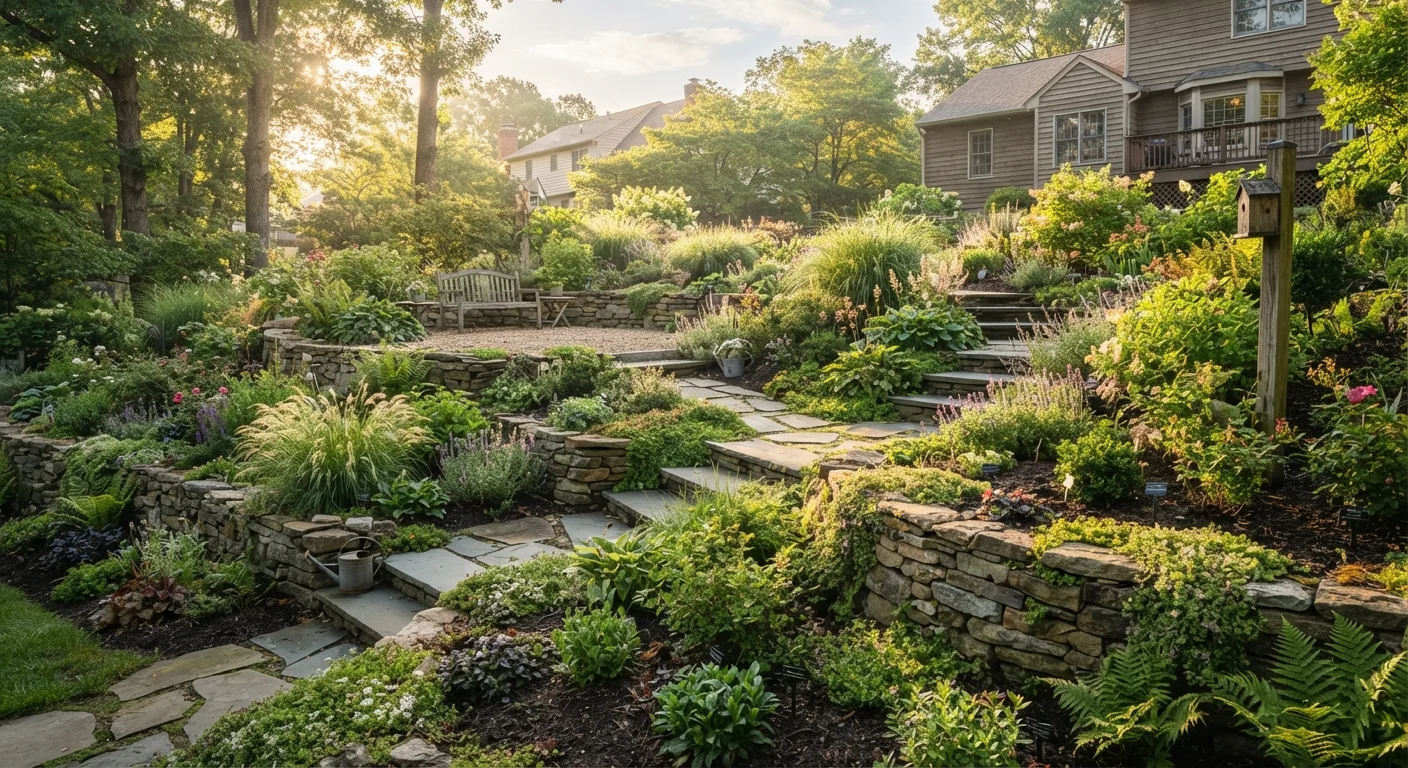
Sprinklers are not inherently wasteful on lawns, but they depend heavily on correct scheduling, nozzle selection, and system calibration. An oversaturated lawn sheds water as runoff, which carries no benefit to the grass and may contribute to local drainage issues - something worth considering if your yard includes slopes. Our article on landscaping on a slope covers drainage strategies in more detail.
30-50%
Potential water savings with drip vs. sprinklers
University cooperative extension research commonly cites this range for drip systems applied to shrubs and vegetable gardens compared with overhead irrigation.
~50%
Of US residential water used outdoors
The U.S. Environmental Protection Agency estimates that roughly half of residential water use goes to landscape irrigation, much of which is applied inefficiently.
Early AM
Optimal sprinkler run time to minimize evaporation
Irrigation experts generally recommend running sprinklers before 10 a.m. to reduce wind and heat-driven evaporation during the day.
Smart controllers - devices that adjust watering schedules based on local weather and soil moisture data - are available for both system types and can substantially reduce overwatering regardless of which approach you use.
Installation Scope and Maintenance Realities
Both systems require planning, but the nature of the work differs considerably.
Drip systems typically involve surface-laid or shallowly buried polyethylene tubing, emitters, and a backflow preventer at the hose bib. Many homeowners install drip systems themselves. Components are modular, making it straightforward to expand or reconfigure as planting layouts change. Emitters can become clogged with mineral deposits and need periodic inspection or replacement. Rodents occasionally chew through surface tubing, which is worth considering in some regions.
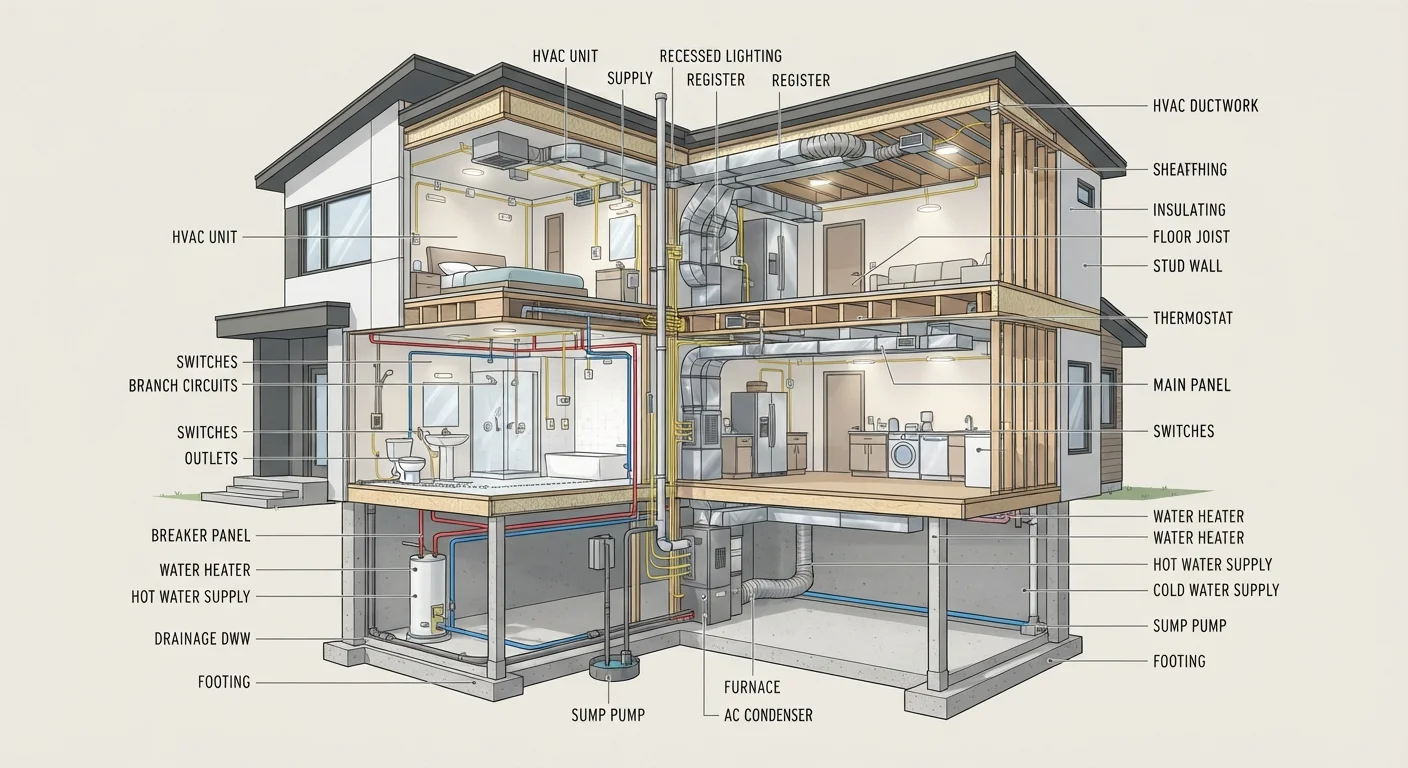
In-ground sprinkler systems require trenching, pipe installation below the frost line, and connection to your home's water supply - work that in most jurisdictions requires a permit and often a licensed plumber or irrigation contractor. The connection to your home's water system also means proper backflow prevention devices are typically required by code. Your home's plumbing and water systems are directly affected by a new in-ground irrigation tie-in, so understanding that relationship matters.
Ongoing maintenance for in-ground systems includes seasonal winterization (blowing out lines before freezing temperatures), head adjustment, and leak detection. Above-ground sprinkler attachments are far simpler to maintain but offer less precision and automation.
Ground cover choices in your planting beds also influence how well either system performs. Our comparison of mulch vs. gravel as ground covers explores how each material interacts with moisture retention - relevant to any irrigation decision.
Permits and Codes: Check Before You Connect
In-ground irrigation systems that tie into your home's water supply typically require a permit and inspection in most US jurisdictions. Backflow prevention devices - which stop irrigation water from siphoning back into your drinking water supply - are usually required by plumbing code. Requirements vary by municipality, so contact your local building or water authority before starting any in-ground installation. A licensed plumber or irrigation contractor can advise on code compliance in your area.