Why a Seasonal Framework Matters
Most lawn problems - bare patches, weed pressure, disease outbreaks - don't appear randomly. They trace back to maintenance decisions made weeks or months earlier, often in the wrong season. A structured, year-round approach removes the guesswork and lets you act proactively rather than reactively.
The two broad grass categories - cool-season grasses (such as Kentucky bluegrass, fescue, and ryegrass, which thrive in northern states) and warm-season grasses (such as Bermuda, zoysia, and St. Augustine, common in southern states) - follow different growth cycles. Every seasonal recommendation in this guide should be interpreted through that lens. If you're unsure what you have, your local cooperative extension office can help you identify your grass type and regional timing.
For a broader look at exterior maintenance beyond the lawn, see the Seasonal Exterior Home Maintenance Checklist, which covers gutters, siding, and driveways alongside landscaping tasks.
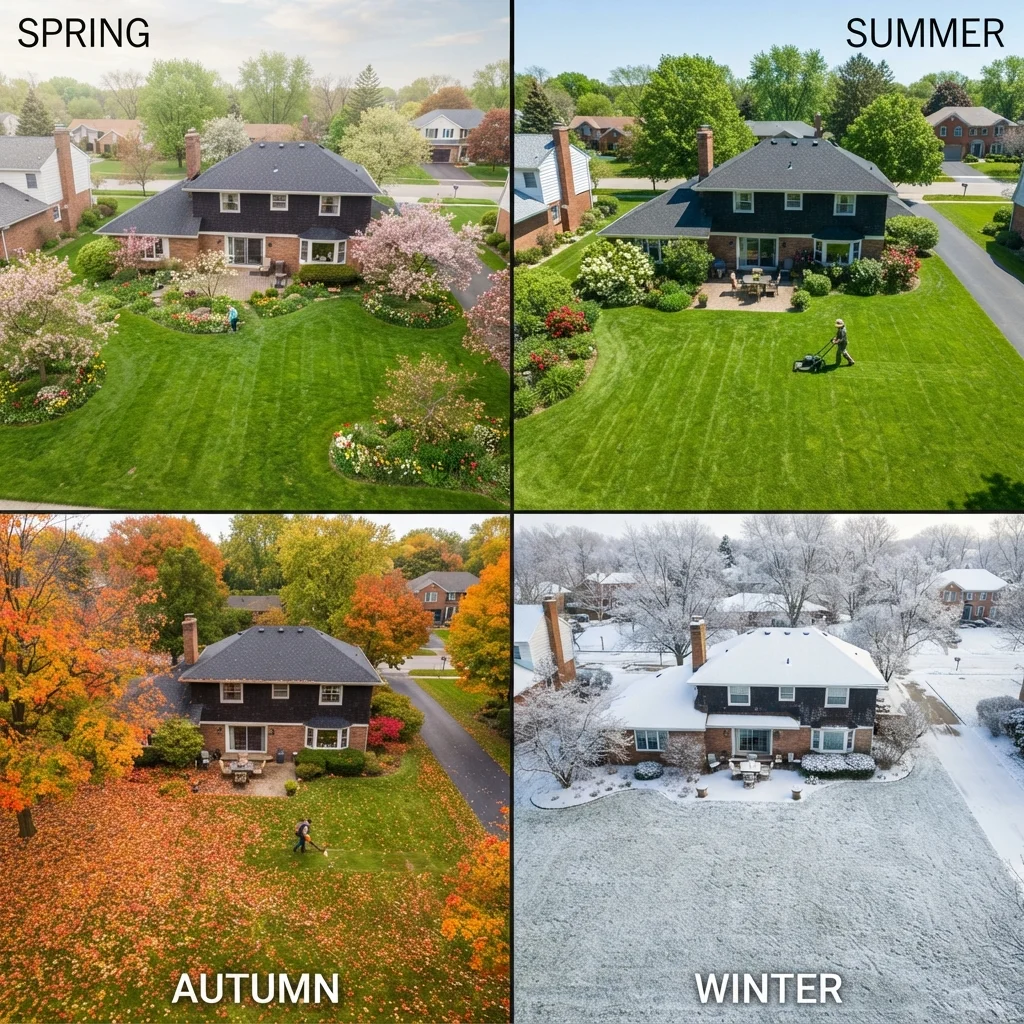
Spring: Restart and Repair
Spring is the season of assessment. Before applying any product, walk the lawn and take stock: note areas of winterkill, compaction, thatch buildup, or bare spots. Rushing to fertilize on the first warm day is one of the most common mistakes homeowners make.
- Rake and dethatch: Remove matted debris and thatch (the layer of dead grass stems at the soil surface) once the ground is firm enough to walk on without leaving deep footprints.
- Soil test: Apply lime or sulfur to correct pH only after a test confirms the need. Guessing leads to over-correction. Aim for a pH of 6.0-7.0 for most turf grasses.
- Fertilize at the right time: For cool-season grasses, hold off until soil temperatures consistently reach around 55°F. Feeding too early pushes leafy top growth at the expense of root development.
- Overseed bare areas: Scratch the soil surface lightly, apply seed appropriate for your grass type, and keep the area moist until germination.
- Pre-emergent weed control: Apply before soil temperatures hit 55°F to intercept crabgrass before it germinates - but skip this step if you're overseeding, as it will also inhibit grass seed.
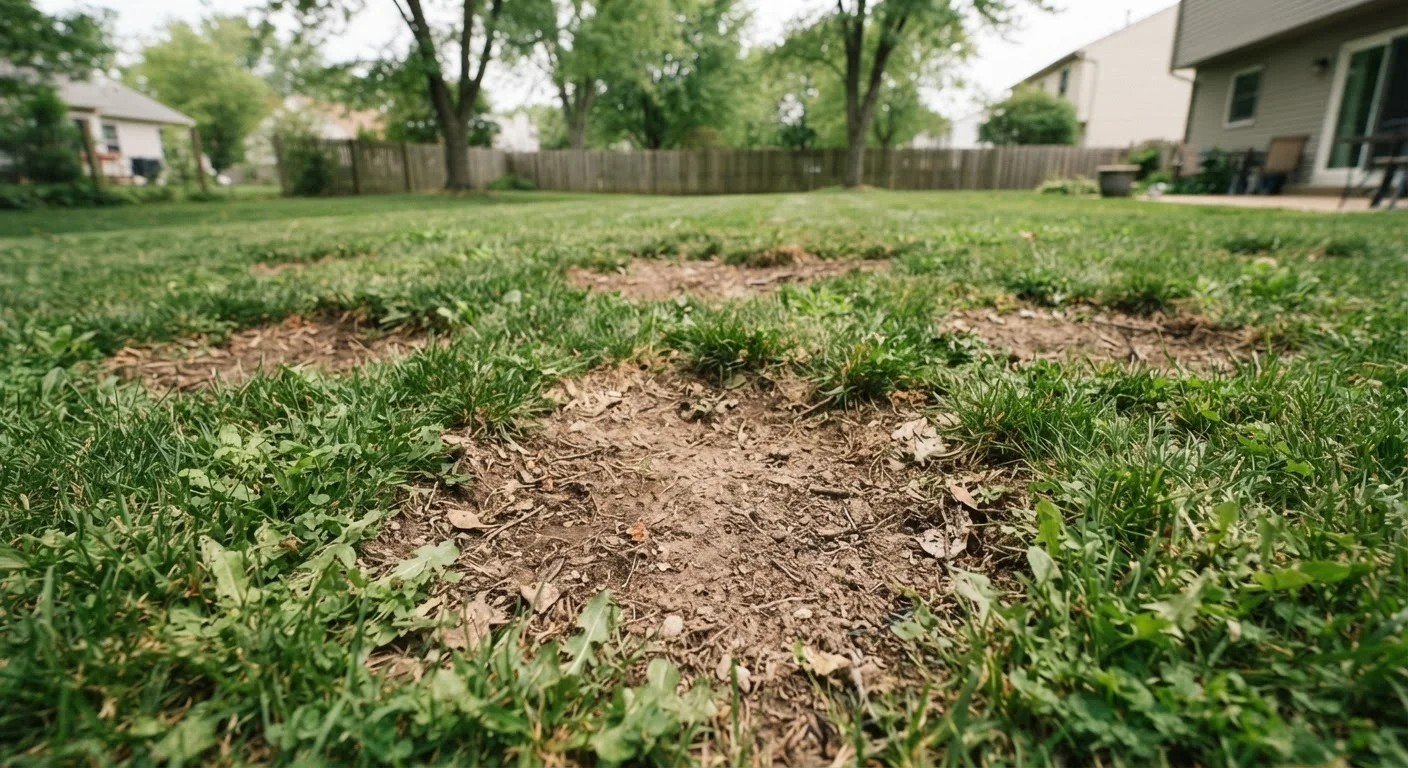
If your lawn has bare or struggling patches, the guide on patchy grass walks through the most common underlying causes and how to address each one.
Check Soil Temperature, Not the Calendar
Many spring lawn tasks are triggered by soil temperature rather than a specific date. An inexpensive soil thermometer takes the guesswork out of timing for fertilizing, seeding, and pre-emergent applications. Local weather services and cooperative extension websites often publish real-time soil temperature maps by region.
Summer: Maintain and Protect
Summer lawn care is primarily about defense. Heat, drought, foot traffic, and insects all stress turf simultaneously. The goal is to keep grass resilient without pushing it harder than conditions allow.
- Raise your mowing height: Taller grass (generally 3-4 inches for most cool-season types) shades the soil, reduces moisture loss, and crowds out weeds. Never remove more than one-third of the blade in a single mow.
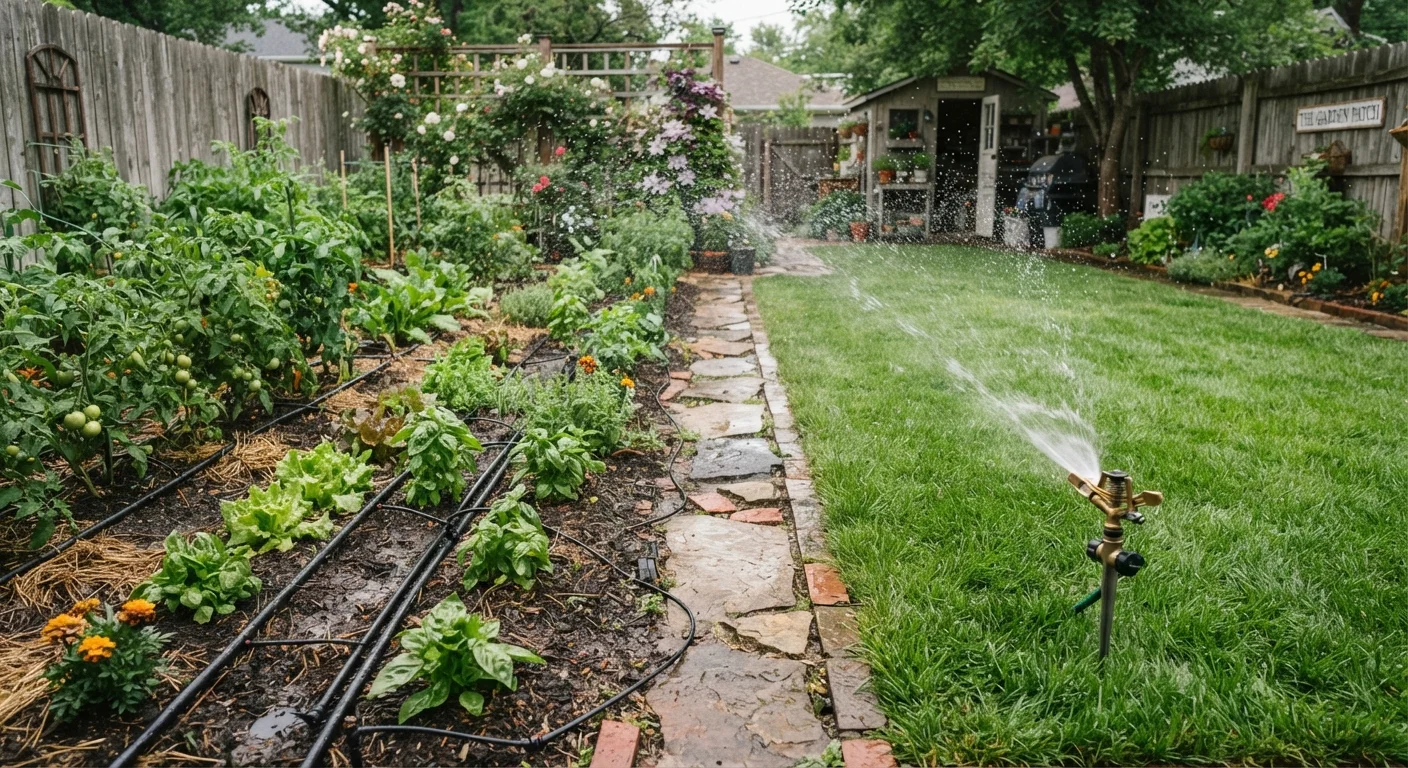
- Water deeply and infrequently: About 1 inch of water per week - from rainfall or irrigation combined - encourages deep root growth. Frequent shallow watering trains roots to stay near the surface, making turf more vulnerable to drought.
- Scout for insects: White grubs, chinch bugs, and sod webworms are active in summer. Signs include brown patches that don't respond to watering or turf that lifts away from the soil like a loose carpet.
- Avoid heavy fertilizing: For cool-season grasses, summer fertilizing risks burning stressed turf and encouraging disease. Warm-season grasses, however, are in their active growth period and can handle a mid-summer feeding.
Irrigation efficiency becomes critical in summer. The comparison of drip irrigation and sprinkler systems can help you decide which delivery method suits your yard's layout and water goals.
Fall: Strengthen and Prepare
Fall is the most productive season for cool-season lawn care and one of the most underused. As temperatures drop, grass roots actively grow and store energy for winter. Capitalizing on that growth window pays dividends the following year.
- Aerate compacted soil: Core aeration - removing small plugs of soil - improves oxygen and water penetration. Schedule it when grass is actively growing and can recover quickly.
- Overseed after aeration: The freshly opened soil is ideal for seed-to-soil contact. Water consistently until germination, typically 10-14 days for most cool-season varieties.
- Apply a fall fertilizer: A fertilizer with a higher potassium ratio supports root development and cold hardiness. This application often has more lasting benefit than spring feeding for cool-season grasses.
- Keep mowing: Continue mowing at a slightly lower height as growth slows, which reduces the risk of matting and snow mold over winter.
- Clear leaves promptly: A thick mat of wet leaves blocks light, traps moisture, and creates ideal conditions for fungal disease.
Apply fall fertilizer after a few light frosts but before the ground freezes - this timing, sometimes called 'dormant feeding,' allows roots to absorb nutrients without stimulating vulnerable top growth.
Grass roots remain metabolically active well below temperatures that stop shoot growth, meaning late-season nutrients are stored and drawn upon in early spring when the plant breaks dormancy.
If you're aerating and overseeding in the same session, run the aerator first so the seed falls directly into the core holes, dramatically improving seed-to-soil contact and germination rates.
Seed that sits on the surface of undisturbed soil is far more vulnerable to drying out, washing away, or being eaten by birds than seed that lands in a moist, protected soil channel.
For yards with slope challenges, fall is also the right time to evaluate erosion risks before winter rains arrive. The guide on landscaping on a slope covers ground cover options and terracing approaches that protect soil through wet seasons.
Winter: Rest and Plan
Dormant grass is not dead grass. Cool-season turf goes tan and still in winter, while warm-season grasses can go fully dormant after the first hard frost. Both states are normal and healthy - the lawn simply needs to be left alone.
- Minimize foot traffic: Walking on frozen or frost-covered turf crushes grass crowns, causing visible damage that persists into spring.
- Store equipment properly: Drain fuel from mowers, clean and oil blades, and store spreaders dry to extend their working life.
- Review your lawn calendar: Winter is the ideal time to plan changes - a new irrigation zone, a different grass variety for a shaded area, or adjustments to your fertilizer schedule.
- Avoid salt runoff: Ice-melt products that contain sodium chloride can damage turf margins along driveways and walkways. Calcium chloride or sand are generally less harmful alternatives, though concentrations still matter.
Winter is also a good time to tackle indoor home systems that support comfort year-round. The seasonal HVAC prep checklist pairs naturally with a winter planning mindset.
Year-Round Fundamentals That Never Change
Regardless of season, a few principles underpin every successful lawn maintenance program.
- Soil health is foundational
- Grass is only as healthy as the soil beneath it. Organic matter, proper drainage, and balanced pH allow roots to access nutrients efficiently. Test soil every two to three years rather than applying amendments by habit.
- Mow with sharp blades
- Dull blades tear grass rather than cut it cleanly, leaving ragged edges that invite disease and water loss. Sharpen blades at least once per season, more often on large lawns.
- Identify problems before treating them
- Applying a fungicide to what turns out to be a grub problem - or vice versa - wastes money and time. When in doubt about a lawn issue, your local extension office or a certified lawn professional can help with diagnosis.
- Avoid common myths
- More fertilizer is not always better, and daily watering often does more harm than good. The landscaping myths that cost homeowners money article covers several beliefs that quietly undermine lawn health.
A well-maintained lawn is the product of consistent, seasonally appropriate decisions made over years - not heroic interventions in a single weekend. Use this framework as a living reference, adjusting timing each year based on how your specific grass, soil, and local climate respond.
For a complete property-wide maintenance rhythm, the seasonal home maintenance checklist for DIY-minded owners integrates lawn tasks with interior and exterior upkeep across all four seasons.