Why Walkway Material Selection Matters
A front walkway does more than guide visitors to your door - it sets the tone for your home's exterior, manages stormwater, and must hold up to foot traffic, freeze-thaw cycles, and sun exposure for decades. Choosing the wrong material can mean premature cracking, costly repairs, or a surface that fights the rest of your landscaping rather than complementing it.
Understanding the practical differences between concrete, pavers, flagstone, and gravel before you commit will save both money and frustration. This comparison covers durability, installation complexity, maintenance demands, and typical cost ranges so you can match the right surface to your specific conditions. For context on how a walkway fits into your broader yard design, see how hardscaping and softscaping work together.
| Concrete | Pavers | Flagstone | Gravel | |
|---|---|---|---|---|
| Typical installed cost (per sq ft) | $8-$18 | $15-$30 | $20-$45 | $1-$4 + edging |
| Durability / lifespan | 25-50 years | 20-40+ years | 20-50 years | Indefinite with upkeep |
| Freeze-thaw performance | Moderate (needs joints) | Good (segmented flex) | Fair (mortar cracks) | Good (loose material) |
| Repairability | Difficult (visible patches) | Easy (swap units) | Moderate (repoint joints) | Easy (add gravel) |
| Maintenance demand | Low | Low to moderate | Moderate | High (raking, edging) |
| DIY friendliness | Low (requires mixer/forms) | Moderate (base critical) | Low to moderate | High |
| Curb appeal / aesthetics | Clean, modern | Versatile, classic | Natural, high-end | Informal, casual |
| Accessibility (mobility aids) | Excellent | Good | Fair (uneven surface) | Poor |
Concrete: Reliable, Durable, and Straightforward
Poured concrete remains one of the most widely installed walkway surfaces for good reason. When properly mixed, reinforced with rebar or wire mesh, and allowed to cure fully, a concrete walk can last 25 to 50 years with minimal intervention. Typical installed costs run roughly $8-$18 per square foot, depending on thickness, finish, and local labor rates - though prices vary significantly by region and project scope.
The main limitation is rigidity. Concrete expands and contracts with temperature swings, and without adequate control joints - intentional scored gaps that guide where cracking occurs - slabs can fracture unpredictably. Once a crack forms, patching is visible and rarely seamless. Decorative options such as stamped or exposed-aggregate finishes add visual interest, but they also add cost and can require sealing every few years to prevent surface wear.
Plan Control Joints Before Pouring
For concrete walks, control joints should be spaced no more than 8-10 feet apart and cut to a depth of about one-quarter the slab thickness. This guides where cracking occurs - keeping it in straight, manageable lines rather than random fractures across the surface. Discuss joint placement with your contractor before the pour, not after.
When to consider concrete: High-traffic primary walkways in moderate climates where the slab can be poured on stable, well-drained soil. Less ideal in regions with severe freeze-thaw cycling unless expansion joints are carefully planned.
Pavers: Flexible, Repairable, and Freeze-Thaw Friendly
Concrete or clay brick pavers are individual units set in a compacted sand-and-gravel base rather than poured as a monolithic slab. This segmented structure is the key advantage: if a single unit heaves, cracks, or stains, it can be pulled out and replaced without disturbing the rest of the surface. Installed costs typically range from $15-$30 per square foot, reflecting the more labor-intensive base preparation required.
Pavers perform particularly well in cold climates because individual units can shift slightly with frost heave and then settle back, rather than cracking the way a rigid slab does. That said, the jointing sand between units needs occasional replenishment, and weeds can colonize gaps over time - polymeric sand (a sand and binder mixture) mitigates this but is not a permanent solution. Proper base depth - generally 4-6 inches of compacted gravel - is essential; shortcuts here lead to uneven settling.
Flagstone: Natural Aesthetics With Higher Craft Demands
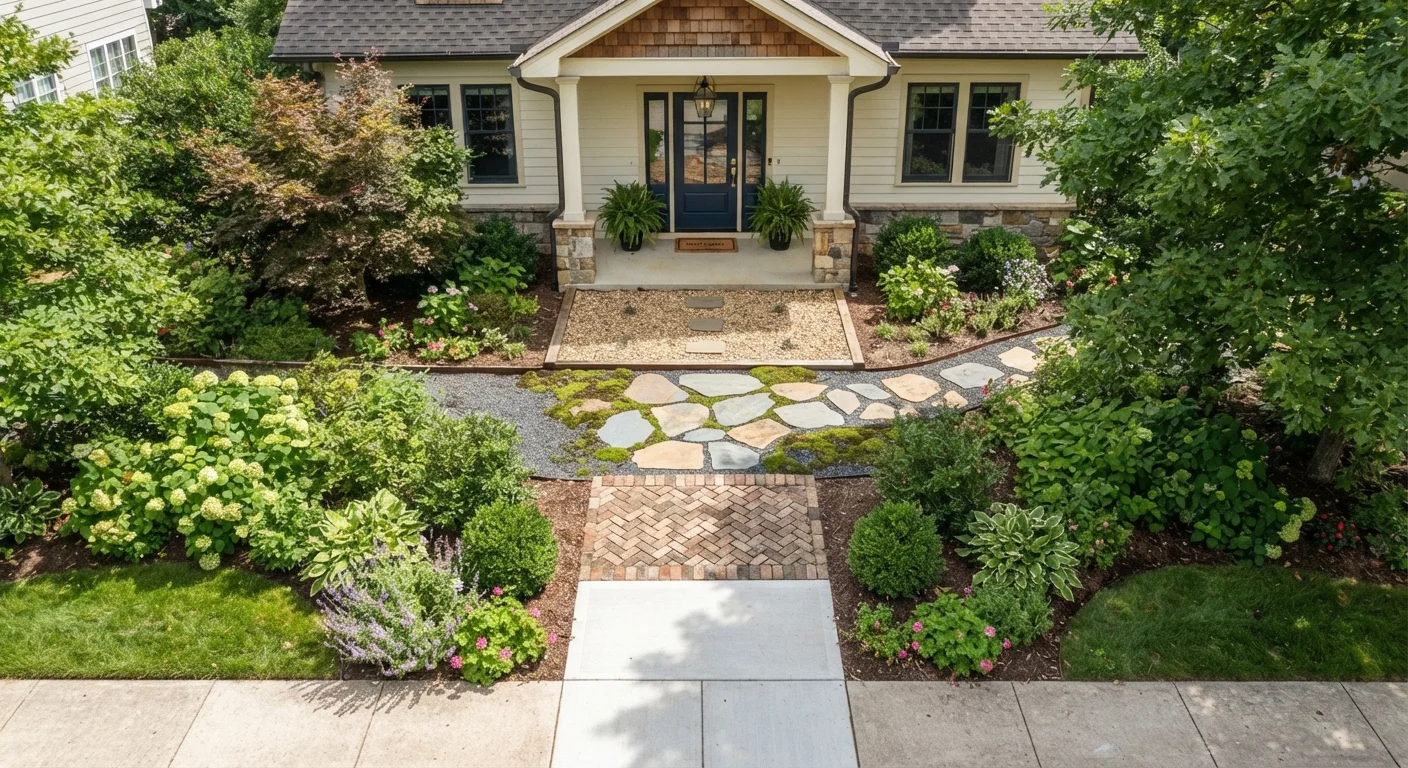
Flagstone - typically sandstone, slate, limestone, or bluestone cut into irregular slabs - creates walkways with an organic, timeless character that manufactured materials struggle to replicate. It can be dry-laid over a gravel-and-sand base or set in a mortar bed over concrete. Dry-laid installations are more forgiving of ground movement but require periodic re-leveling; mortared installations look cleaner but can crack along joints when the substrate shifts.
Installed costs are broad - roughly $20-$45 per square foot - because stone type, thickness, and regional availability vary considerably. The irregular shapes also demand more cutting and fitting time. Mortar joints need inspection every few years and may require repointing (filling worn-out joints with fresh mortar). Despite the higher investment, well-installed flagstone holds its appeal and can increase perceived home value.
Gravel: Low Cost, High Maintenance Tradeoffs
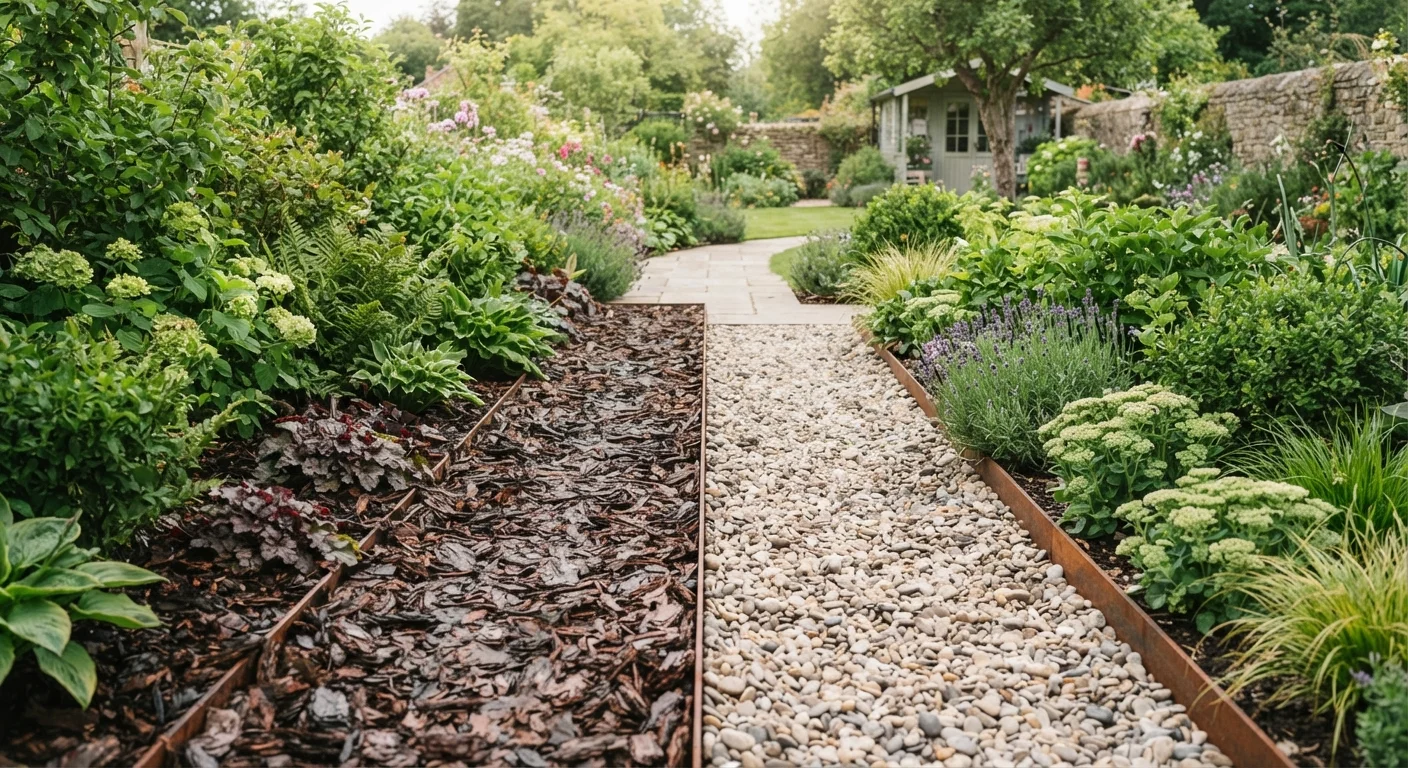
Loose gravel - including pea gravel, crushed granite, and decomposed granite - is the most affordable walkway option, with material costs often running $1-$4 per square foot plus edging and weed barrier. Installation is accessible for motivated DIYers: excavate a few inches, lay landscape fabric, install edging to contain the stone, and spread 2-3 inches of gravel.
The ongoing demands are the catch. Gravel migrates underfoot, requiring periodic raking to redistribute it. Edging that fails or shifts lets stone scatter into lawn or garden beds. Freeze-thaw cycles can cause subtle settling. Loose stone is also less accessible for mobility aids such as wheelchairs or walkers. If gravel appeals as a low-traffic accent path or side-yard surface rather than a primary walkway, it works well - just plan for annual upkeep. For a broader look at how gravel compares to other ground covers, see mulch vs. gravel for ground cover.
Key Factors to Weigh Before You Decide
Once you understand the materials, a few site-specific factors should guide your final choice:
- Climate: In areas with hard freezes, segmented surfaces like pavers tolerate frost heave better than monolithic concrete or mortared flagstone.
- Soil drainage: Clay-heavy soils that drain poorly increase the risk of settling for any surface; a deeper compacted base helps, but a drainage layer or perforated pipe may be needed.
- Traffic level: Primary front entries warrant more durable, stable surfaces; gravel and dry-laid flagstone are better suited to occasional-use paths.
- Permits: Some municipalities require permits for hardscape work, particularly when it affects grading or drainage. Check with your local building department before starting.
- Professional vs. DIY: Concrete pours and mortared flagstone are generally best left to experienced contractors. Paver and gravel installations are more DIY-accessible, provided base preparation is thorough.
Taking the time to match material properties to your site conditions - rather than choosing on aesthetics alone - will determine how well your walkway performs and how much upkeep it demands over the years ahead.