Why Body Style Is a Practical Decision, Not Just a Style Choice
Vehicle body style shapes nearly every dimension of ownership: fuel costs, insurance rates, parking ease, cargo capacity, and passenger comfort. Yet many buyers anchor to a category based on image or habit rather than an honest audit of their routine. Understanding what each body style is actually engineered to do - and where it falls short - gives you a concrete framework before you ever set foot on a lot.
If you're also weighing powertrain options, our guide to powertrain types explains how fuel type interacts with the vehicle categories described here.
| Sedan | SUV | Truck | Minivan | |
|---|---|---|---|---|
| Typical fuel economy | Highest among four types | Moderate; varies by size | Generally lowest | Comparable to mid-size SUV |
| Cargo flexibility | Fixed trunk; limited | Foldable seats; versatile | Open bed; weather-exposed | Best flat-floor flexibility |
| Passenger capacity | 5 (limited rear headroom) | 5-8 depending on model | 2-6 depending on cab size | 7-8 with sliding doors |
| Towing capability | Minimal or none | Moderate (varies widely) | Highest of all four types | Low to moderate |
| Urban parking ease | Easiest | Moderate | Most difficult | Moderate; sliding doors help |
| Typical entry price range | Generally lower | Moderate to high | Moderate to high | Moderate; often lower than 3-row SUV |
| All-wheel drive availability | Limited models | Widely available | 4WD standard on many | Select models only |
Sedan: Efficiency and Economy in a Familiar Package
Sedans are three-box vehicles - engine, cabin, trunk - and they remain the baseline against which other body styles are measured for fuel economy and purchase price. Their lower center of gravity typically produces more composed highway handling, and their aerodynamic profile generally results in better fuel efficiency than taller vehicles of equivalent engine size.
The trade-offs are real: trunk space is fixed and cannot be expanded by folding seats, rear-seat headroom is limited in many models, and sedans offer no meaningful towing capacity. Families with young children often find the low roofline and fixed trunk more inconvenient than they anticipated. For solo commuters, small households, or buyers managing a tight monthly budget, however, a sedan frequently delivers the most transportation value per dollar spent.
Test Your Real Cargo Needs Before Buying
Before committing to a body style, bring the items you actually transport - strollers, sports equipment, groceries - to the dealership and load them into the vehicle. What feels spacious in an empty showroom can feel restrictive once your real cargo is involved. This single step prevents a significant source of post-purchase regret.
SUV: The Versatile Middle Ground
Sport utility vehicles now account for a majority of new vehicle sales in the United States, and the reason is straightforward: they combine a raised ride height, flexible cargo configurations, available all-wheel drive, and seating for five to eight passengers in a single package. Crossover SUVs - built on car-like unibody platforms rather than traditional truck frames - deliver much of this utility while retaining relatively car-like fuel economy and ride quality.
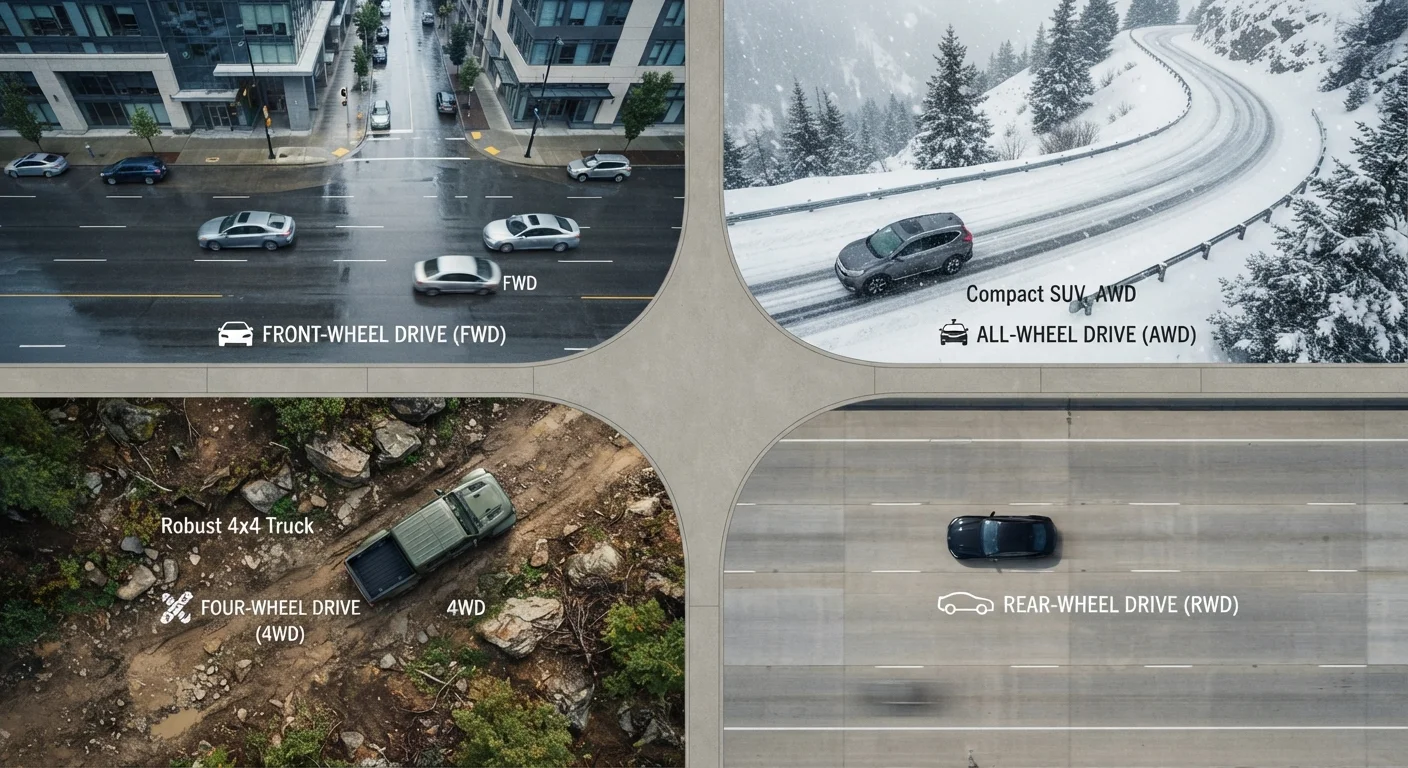
The risks of defaulting to an SUV are also well-documented. Larger models carry higher sticker prices, greater fuel consumption, and steeper insurance premiums. Many buyers overestimate how often they need all-wheel drive or third-row seating. Our article on common car-shopping assumptions explores this pattern in detail. If the SUV's capabilities genuinely match your weekly demands, it earns its cost; if they don't, you're paying for capability you'll rarely use. Drivetrain choice within the SUV segment also matters significantly - see our explainer on drivetrain configurations before deciding.
Truck: Purpose-Built Capability with Real Daily Trade-Offs
Full-size pickup trucks are purpose-engineered for towing trailers and carrying payload in an open bed. If you regularly haul equipment, tow a boat or RV, or work a job site, a truck's capability is difficult to replicate with any other body style. Modern full-size trucks also offer refined interiors and advanced driver-assistance technology that has narrowed - though not eliminated - the comfort gap with SUVs and sedans.
The ownership costs of a truck, however, are among the highest in the mainstream market. Fuel economy is generally lower than comparable SUVs, long wheelbases complicate urban parking, and the open bed requires additional investment (tonneau covers, bed liners) to be genuinely practical for everyday cargo. Buyers who want the truck aesthetic but rarely tow or haul often find the running costs hard to justify over time.
Minivan: The Underrated Family Hauler
Minivans have shed market share to SUVs for two decades, but on pure functional terms they remain the most efficient family transport solution in the mainstream market. Sliding rear doors eliminate door-ding risk in tight parking lots and make child-seat installation far easier than in SUVs. The flat floor, low load floor, and fold-flat second and third rows create cargo configurations that most SUVs cannot match without compromising seating.
Fuel economy in modern minivans is often comparable to mid-size SUVs, and purchase prices can be meaningfully lower than three-row SUVs with equivalent seating. The limiting factor is perception: many buyers dismiss minivans on image grounds without fully pricing out the alternative. For families with multiple children, regular road trips, or carpooling obligations, the minivan's interior architecture is difficult to beat. Worth reviewing before you finalize any configuration: our piece on features that rarely get used can help you avoid paying extra for options you won't need.
Making the Call: Matching Body Style to Your Actual Routine
The most useful exercise before choosing a body style is logging your actual vehicle use for two weeks - not what you think you'll do, but what you demonstrably do. Note passenger count, cargo volume, distances driven, and road conditions. That data cuts through the aspiration bias that leads many buyers to a truck or large SUV when a sedan or minivan would serve them better and cost less over the ownership period.
Once you have clarity on body style, the next decision layer involves powertrain and financing. Our financing hub covers loan structures, rate shopping, and payment planning so you enter negotiations with a complete picture.
This article is intended as general consumer education. Vehicle pricing, specifications, and fuel economy figures vary by model year and trim level. Consult manufacturer specifications and an independent mechanic before making a purchase decision.