How Each Financing Path Works
Understanding the mechanics of each option is the foundation for comparing them effectively. For a broader primer on loan structure and terminology, see our guide to auto financing from the ground up.
Dealer Financing (Indirect Lending)
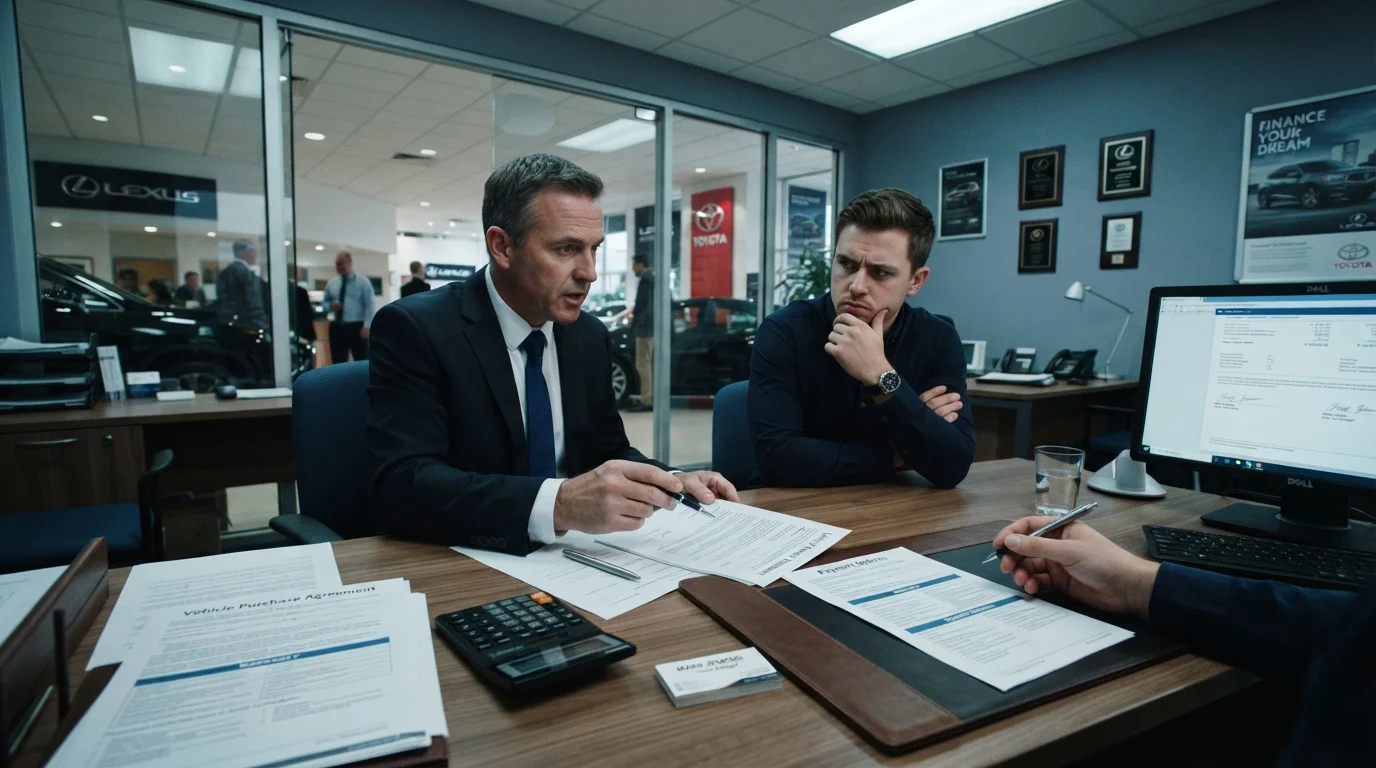
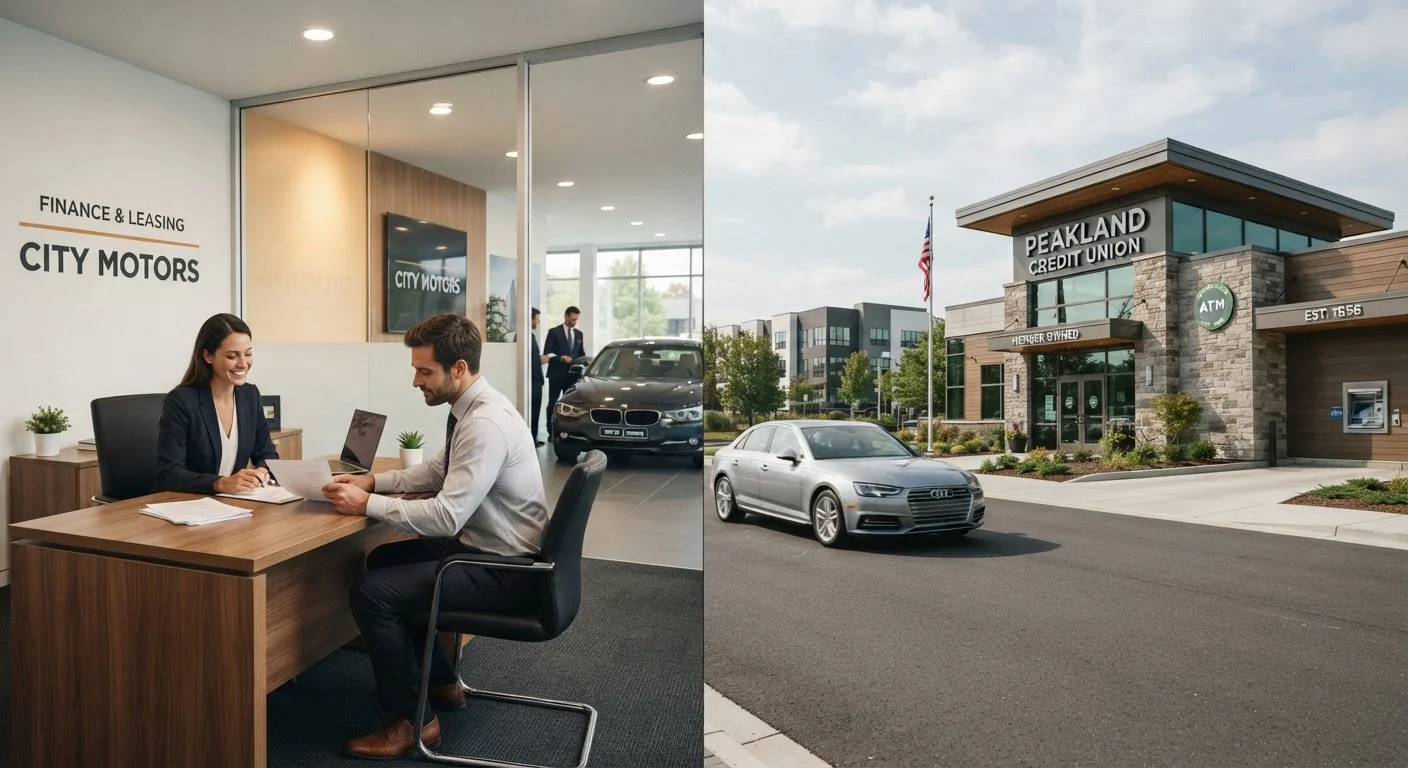
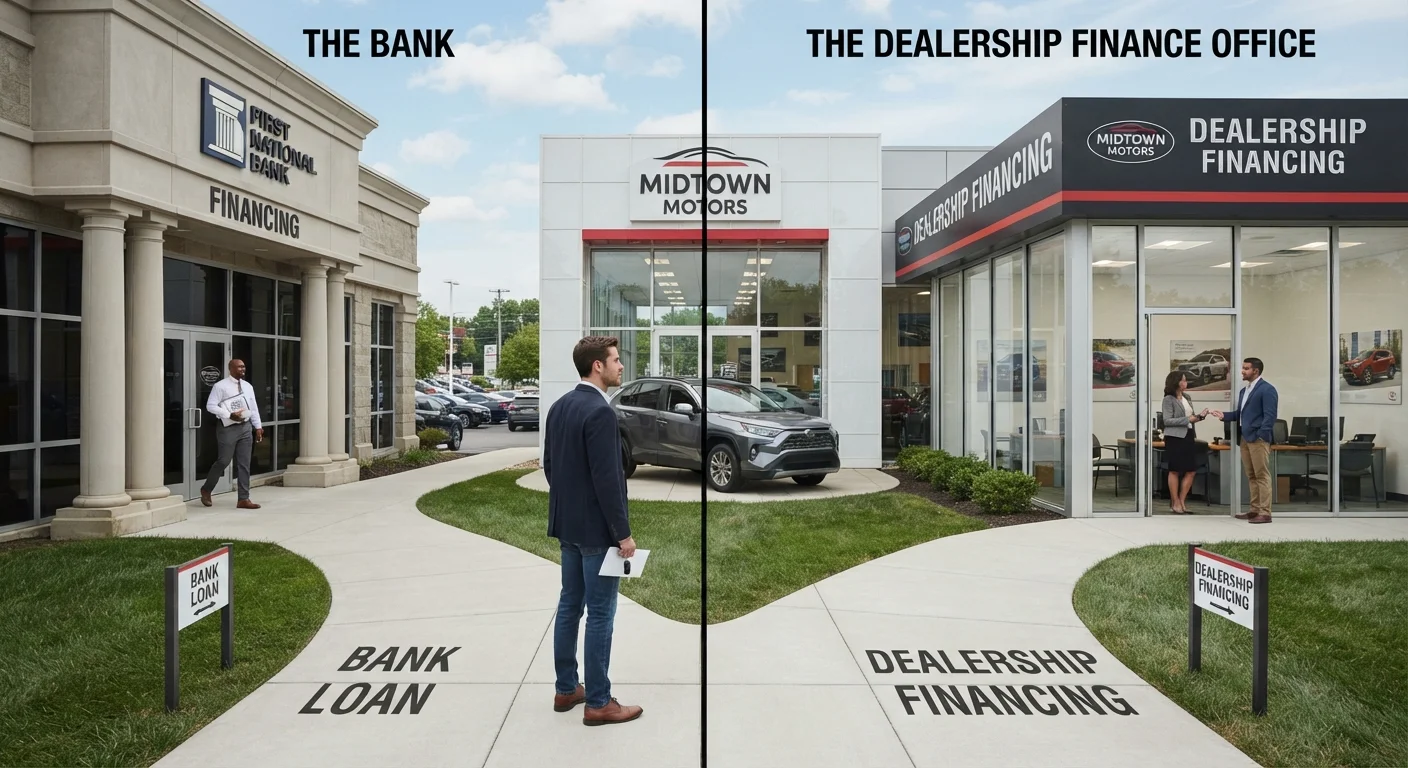
When you finance through a dealership, the dealer's finance and insurance (F&I) office submits your application to a network of third-party lenders - banks, captive finance arms, and sometimes credit unions. The lender approves a base rate (called the buy rate), and the dealer may mark that rate up before presenting it to you. The difference, called the dealer reserve, is compensation the dealer earns from the lender. This arrangement is legal and disclosed in federal truth-in-lending documentation, but it means the rate you see isn't necessarily the lowest rate for which you qualify.
Direct Lending (Bank or Credit Union)
With direct lending, you apply to a financial institution before visiting the dealership. If approved, you receive a pre-approval letter stating a maximum loan amount and interest rate. At the dealership, you use this pre-approval as your financing - or as a competitive benchmark if the dealer can beat it. Because there's no dealer reserve involved, the rate you're quoted is the lender's actual offer to you. Credit unions, in particular, are member-owned nonprofits that often pass savings along in the form of lower rates and fees.
| Criterion | Dealer Financing | Bank or Credit Union Loan |
|---|---|---|
| Rate transparency | Buy rate may be marked up | Rate quoted is your actual rate |
| Convenience | One-stop, same-day closing | Requires pre-application step |
| Negotiating leverage | Price and payments often bundled | Price negotiated separately from financing |
| Access to manufacturer promotions | Yes, via captive lender | No - promotions are dealer-exclusive |
| Rate competitiveness | Varies; depends on lender network | Credit unions often lowest; banks vary |
| Used vehicle availability | Available at franchised dealers | Available including private-party sales |
| Credit flexibility | Multiple lenders reviewed simultaneously | Credit union may offer more flexibility |
Rate Control and the Dealer Markup
The dealer markup on interest rates is one of the most financially consequential - and least discussed - aspects of dealership financing. Historically, markups of one to two percentage points above the buy rate were common industry practice. On a $30,000 loan over 60 months, even a single percentage point difference in APR can add hundreds of dollars in interest over the life of the loan.
Regulatory scrutiny of dealer reserve practices has increased over time, and some lenders have adopted flat-fee compensation models in response. Still, the markup structure persists in many dealership relationships. The most reliable defense is arriving with a competing pre-approval, which effectively caps the rate you'll accept and gives you a concrete number to evaluate any dealer offer against.
1-2%
Typical dealer rate markup above buy rate
Industry analyses have historically documented dealer reserve markups of one to two percentage points above the lender's approved base rate in many transactions.
~60%
New car buyers who finance through the dealer
Federal Reserve and industry survey data consistently show that a majority of new vehicle buyers use dealership-arranged financing, often without obtaining a competing offer first.
0.5-1%
Average rate advantage of credit unions vs. banks
National Credit Union Administration data has shown credit unions frequently offer auto loan rates below the national bank average, though individual offers vary by borrower profile.
For a deeper look at how dealerships structure financial conversations to their advantage, our article on dealer tactics that move money around without changing the total covers the specific techniques to watch for.
When Dealer Financing Wins: Manufacturer Promotions
Dealer financing isn't uniformly disadvantageous. Automakers periodically offer subvented rates - below-market APRs subsidized by the manufacturer's captive finance arm - to move inventory or support new model launches. These rates, sometimes as low as 0% APR for qualified buyers, are only accessible through dealer financing and can represent genuine savings that an outside lender cannot match.
The critical caveat: subvented rates are typically reserved for buyers with strong credit scores (often 700 or above), and accepting the promotional rate may require forgoing a cash-back incentive. Always calculate both scenarios - low-rate financing versus the cash rebate applied to outside financing - before deciding. The full tradeoffs between captive lender deals and pre-approved loans are worth reviewing alongside any promotional offer.
Promotional Rate vs. Cash Rebate: Run the Numbers
When a dealer offers a low promotional APR, there's often an alternative incentive - a cash rebate applied to the purchase price - that you must choose between. To compare them accurately, calculate the total interest paid under the promotional rate against the reduced loan balance you'd carry after applying the cash rebate to outside financing. The better deal depends on your loan amount, term, and the external rate you can secure. This calculation takes only a few minutes and can be worth hundreds of dollars.
Credit Unions: A Direct-Lending Advantage Worth Noting
Among direct lending sources, credit unions occupy a distinct position. As member-owned cooperatives, they operate without the profit motive of commercial banks, which often translates into lower loan rates, fewer fees, and more flexible underwriting - particularly for borrowers with non-prime credit or limited credit histories. Federal credit unions are capped by law in the interest rates they can charge on consumer loans, providing an additional structural protection for borrowers.
Membership requirements vary - some credit unions serve specific employers, communities, or affiliations, while others have broad eligibility - but the application process is generally straightforward. If you're new to understanding how installment loans like auto loans interact with your credit profile, our explainer on revolving credit vs. installment loans provides useful context before you apply.
For used vehicle purchases in particular, direct lenders tend to impose stricter vehicle-age and mileage limits than buyers expect. Our guide on financing a used car and where the rules change walks through those nuances in detail.