Why the Total Is the Only Number That Matters
Dealership negotiations rarely involve a single number. Instead, they unfold across several variables - vehicle price, trade-in value, financing rate, monthly payment, and add-ons - and experienced finance managers know how to shift dollars between those buckets without changing the total you actually pay. The monthly payment you focus on may drop, while the loan term quietly extends or the vehicle price quietly rises.
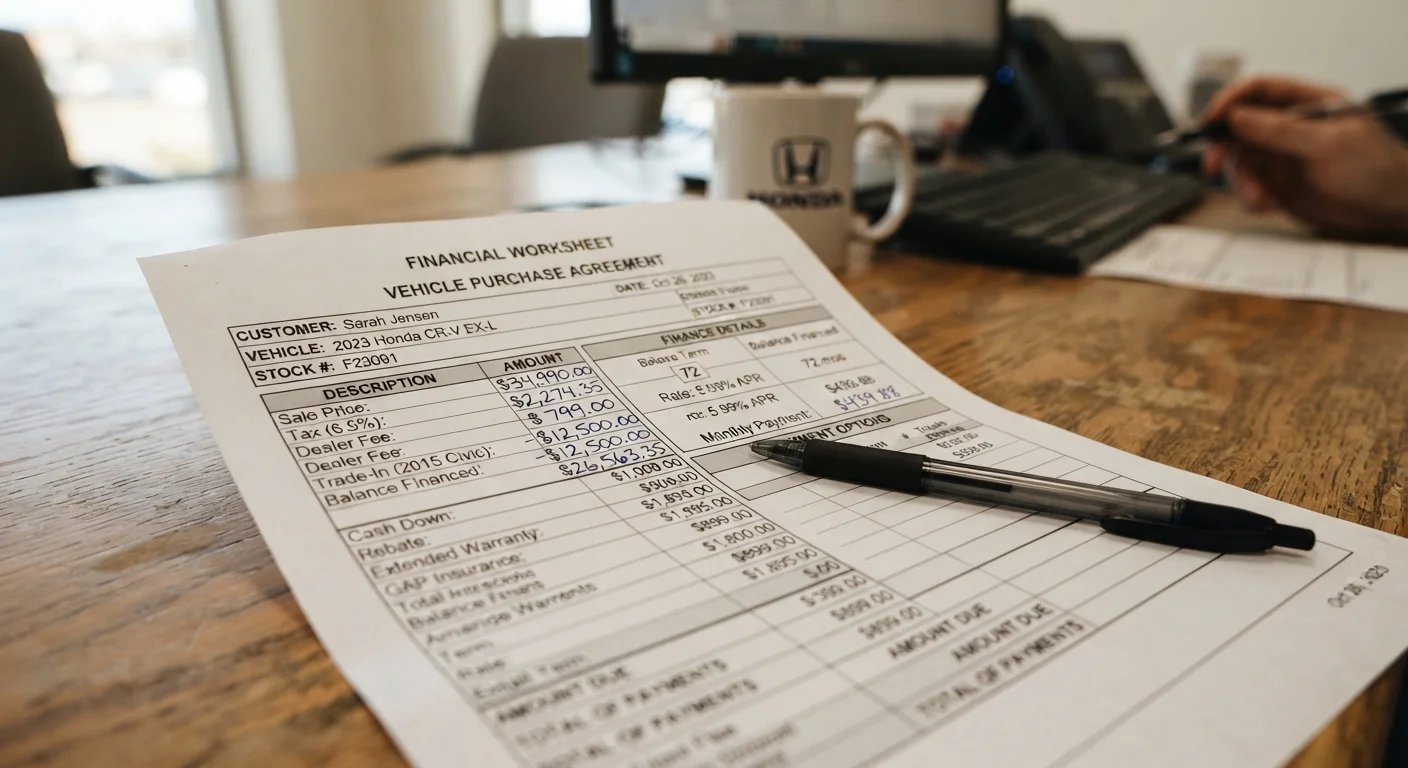
Understanding how these levers interact is the foundation of every sound negotiation. Our guide to reading a dealer worksheet breaks down every line item so you can see the full picture before signing.
| Key negotiation anchor | Out-the-door (OTD) total price |
| Common add-on presentation point | Finance-and-insurance (F&I) office |
| Loan term range in common use | 48 to 84 months |
| Dealer financing markup mechanism | Dealer reserve on buy rate |
| Trade-in protection strategy | Negotiate purchase price and trade-in separately |
The Most Common Money-Movement Tactics
Each tactic below isolates a different part of the deal. Dealers don't use all of them on every buyer, but knowing how each one works helps you keep the full transaction in view.
Payment Packing
A dealer quotes a monthly payment that already includes add-ons - extended warranties, paint protection, or gap coverage - without itemising them. Because the add-ons are buried in the payment figure, buyers who focus on affordability rather than total cost often never notice them. Always ask for an itemised breakdown before agreeing to any monthly number.
Blending the Trade-In
When a dealer combines your trade-in allowance with the purchase price negotiation, it becomes easy to give back on one side without realising it. A generous-sounding trade-in offer paired with little movement on the vehicle price can leave you paying more overall. The two conversations should stay separate - see why your trade-in and new car price should be two separate conversations for a fuller explanation.
Rate Markup on Dealer Financing
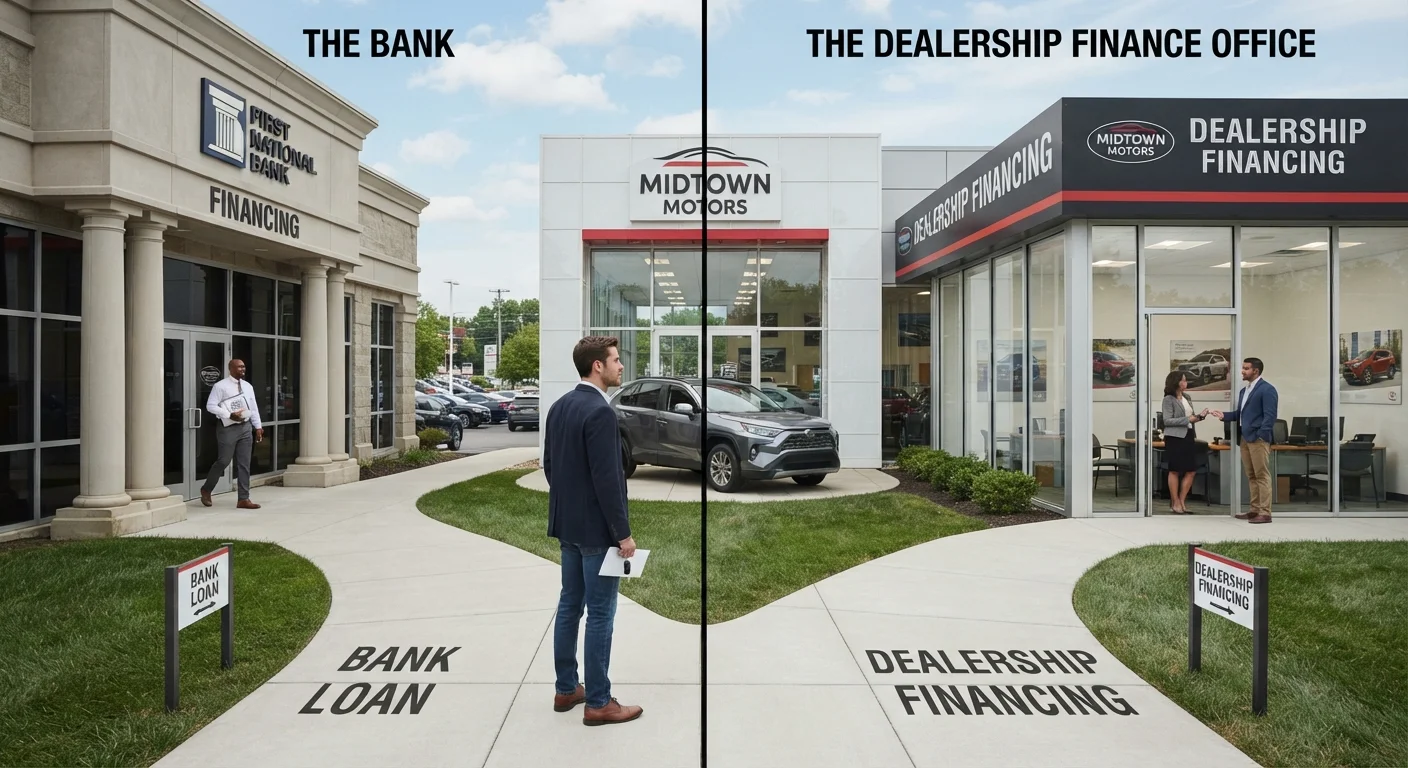
Dealers who arrange financing through third-party lenders often receive a "buy rate" - the lender's actual approved rate - and are permitted to mark it up before presenting it to the buyer. The difference is called a dealer reserve, and it goes to the dealership, not the lender. Arriving with a preapproved loan from a bank or credit union establishes a real benchmark. Our article on dealer financing vs. bank or credit union loans covers how to weigh those options.
Extending the Loan Term
Stretching a 48-month loan to 72 or 84 months lowers the monthly payment without reducing the purchase price. The total interest paid over the life of the loan increases substantially. When comparing payment quotes across dealers, always confirm the loan term alongside the rate.
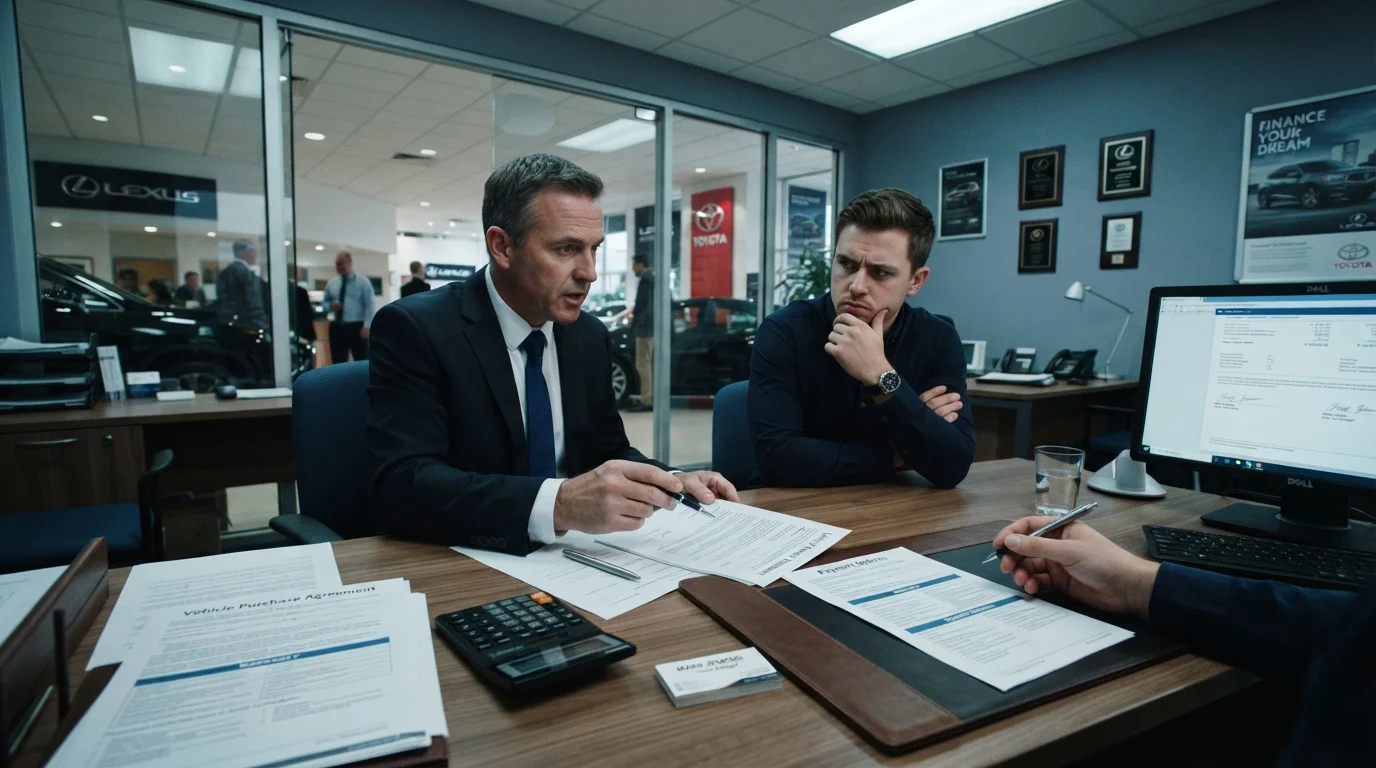
Add-On Inflation in the F&I Office
The finance-and-insurance (F&I) office is where profit margins are frequently recovered after a tough negotiation on price. Products like nitrogen tire inflation, fabric sealant, and dealer-branded warranties are presented as routine inclusions. Each deserves individual evaluation - see add-ons that inflate the final price for a breakdown of what each item actually provides.
Out-the-Door Price
The total amount a buyer pays to drive the vehicle off the lot, including vehicle price, taxes, registration fees, and any dealer charges. It is the only number that allows a true apples-to-apples comparison between offers.
Payment Packing
A practice in which a dealer includes the cost of add-on products inside a quoted monthly payment without disclosing them as separate line items. It makes the total cost of optional products less visible to the buyer.
Dealer Reserve
The difference between the interest rate a lender approves for a buyer (the buy rate) and the higher rate the dealer presents to the buyer. The dealer keeps this spread as additional profit.
F&I Office
The finance-and-insurance office where loan paperwork is completed and add-on products are offered. It is typically the last stop in a dealership transaction and a common point where additional costs are introduced.
Trade-In Allowance
The credit a dealer offers for a customer's existing vehicle as part of a new purchase transaction. When blended with the vehicle purchase price, it can obscure whether either number is genuinely favorable.
Buy Rate
The interest rate at which a lender agrees to finance a buyer's loan, before any dealer markup is applied. Buyers typically do not see this number unless they request it or obtain a competing preapproval.
Staying Anchored to the Out-the-Door Number
The most effective counter to all of these tactics is committing to a single reference point: the out-the-door (OTD) price, which includes all taxes, fees, and add-ons. Request it in writing early in negotiations and resist any attempt to reframe the conversation around monthly payments alone.
Preparation also matters before you arrive. Reviewing concessions buyers give away without knowing it can help you identify the small behavioural signals - like revealing your maximum budget - that shift leverage toward the dealer. Timing your visit thoughtfully, as outlined in reading the room, adds another layer of advantage. These tactics aren't about confrontation - they're about ensuring the deal reflects the actual terms you agreed to, rather than a rearrangement of the same total.
This article is for general informational purposes only and does not constitute financial or legal advice. Consult a qualified financial professional before making significant purchasing or financing decisions.