
How Used Car Loans Differ From New Car Loans
When lenders evaluate a used car loan application, they apply a different risk framework than they use for new vehicle purchases. The core reason is collateral uncertainty: a used vehicle's future value is less predictable, its condition varies widely, and it has already absorbed a portion of its depreciation curve. These factors combine to push interest rates higher and restrict loan structures in ways that can catch buyers off guard.
Interest rates on used car loans are routinely several percentage points above rates on comparable new car loans. The Federal Reserve's consumer credit data has consistently reflected this gap. A buyer who qualifies for a 5% rate on a new vehicle might face 8-9% or higher on a comparable used one, depending on credit profile and vehicle age. Over a multi-year loan, that spread translates into meaningful additional cost. Understanding what moves auto loan interest rates - including vehicle age, credit score, and down payment - helps buyers see which factors they can actually influence.
2-4%
Typical rate premium on used vs. new car loans
Federal Reserve consumer credit data has consistently shown used car loan rates running several percentage points above new car loan rates for comparable borrower profiles.
48-60 mo.
Common maximum term for older used vehicle loans
Many banks and credit unions restrict maximum loan terms on vehicles older than five years, limiting the monthly payment flexibility available to buyers.
~125,000 mi.
Typical mileage ceiling for lender eligibility
A significant number of lenders decline to finance used vehicles that exceed roughly 100,000-125,000 miles, reflecting concern about residual value and reliability risk.
Loan Terms, Age Limits, and Mileage Caps
One of the least-discussed differences in used car financing is the term restriction many lenders impose. While new car buyers can often access 72- or even 84-month loan terms, lenders routinely cap used car loans at 48 or 60 months - especially on vehicles more than five years old. The logic is straightforward: a lender is reluctant to hold a 7-year loan on a vehicle that may have reliability or resale issues well before the loan is paid off.
Beyond term length, many lenders set outright eligibility thresholds. Common examples include refusing to finance any vehicle older than 7-10 years at the time of purchase, or any vehicle that will exceed a certain age by the loan's end date. Mileage caps - often in the 100,000-125,000 mile range - are also standard at many institutions. If a vehicle you're considering doesn't meet a lender's criteria, you may need to look at specialty lenders, which often charge a premium for the additional flexibility.
These restrictions reinforce why vehicle selection and financing planning should happen in parallel, not sequentially. Falling in love with a car before confirming it's financeable is a common and costly sequencing mistake.
Preparing to Get the Best Terms Available to You
Improving your position before applying comes down to a handful of concrete steps. Start with your credit report. Errors on credit reports are not uncommon, and a disputed error - once corrected - can shift your score enough to qualify for a lower rate tier. Pull your reports from the three major bureaus and review them carefully before approaching any lender.
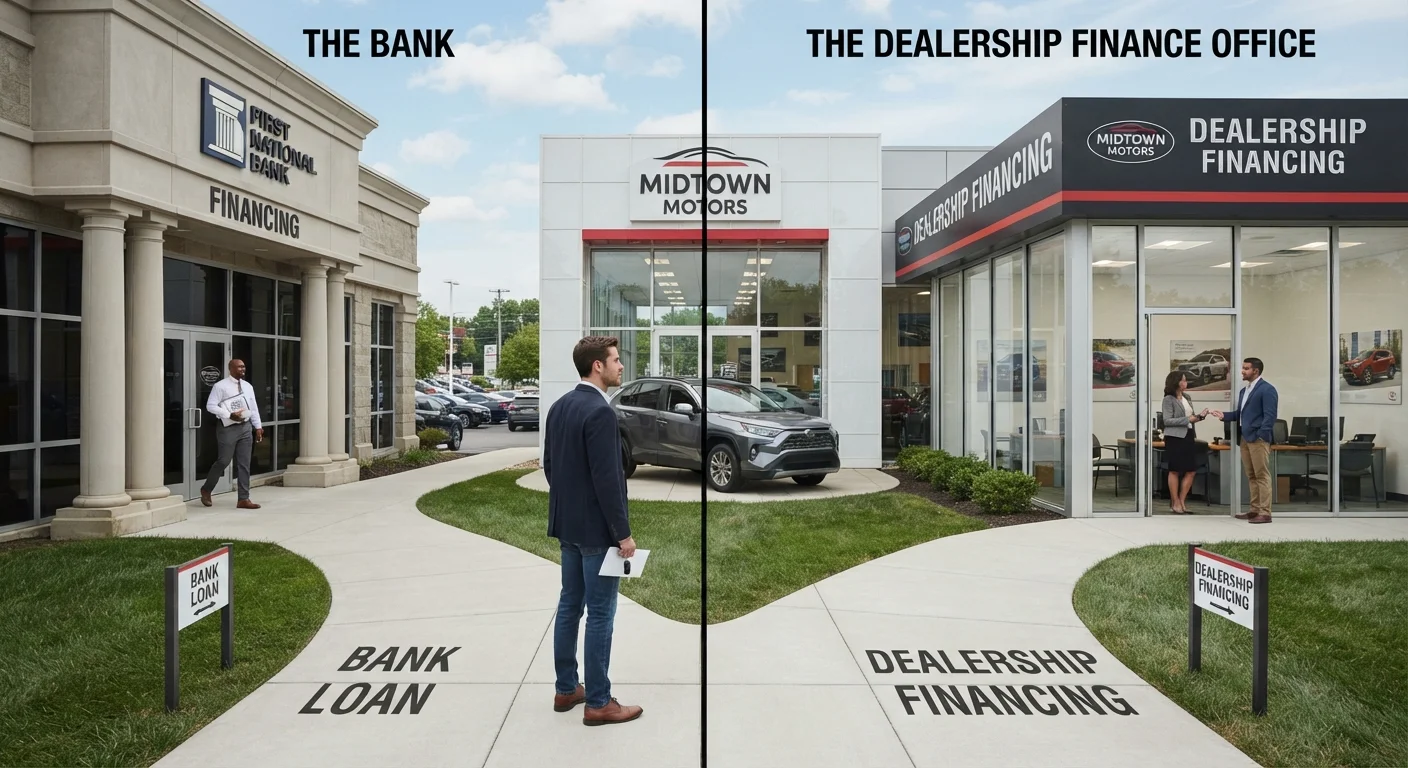
Next, secure a pre-approval from at least one bank or credit union before visiting a dealer. This serves two functions: it gives you a real rate benchmark, and it provides negotiating leverage if the dealer's financing arm offers a competing rate. Comparing dealer financing to bank or credit union loans is a useful exercise, since the winning option depends heavily on individual circumstances.
A meaningful down payment - generally 10-20% of the vehicle's purchase price - reduces the loan-to-value ratio lenders use to assess risk, which can translate to a lower rate or a loan approval you might not otherwise receive. Finally, use our car financing readiness checklist to verify you've compared multiple offers and reviewed all loan terms before committing.
Get Pre-Approved Before You Shop
Approaching a dealership with a pre-approval letter from a bank or credit union puts you in a much stronger negotiating position. It establishes a rate ceiling so you can objectively evaluate any dealer financing counter-offer. Even if you ultimately use dealer financing, the benchmark protects you from accepting an unnecessarily high rate.
When Refinancing Becomes a Useful Tool
Some buyers accept a higher rate on a used car loan at the point of purchase - either because their credit profile was thin or because they needed to move quickly. If your credit score improves meaningfully after purchase, or if market rates shift favorably, refinancing may reduce your rate and monthly payment. The key considerations are how much of the loan remains, whether prepayment penalties apply to the original loan, and whether closing costs on a new loan offset the rate savings.
Refinancing is not always the right move, and timing matters more than many borrowers realize. Understanding when refinancing makes sense can help you evaluate the conditions that make it worth pursuing versus situations where staying with your current loan is the financially sound choice.
This article provides general financial information for educational purposes only and is not personalized financial or lending advice. Consult a qualified financial professional for guidance specific to your situation.