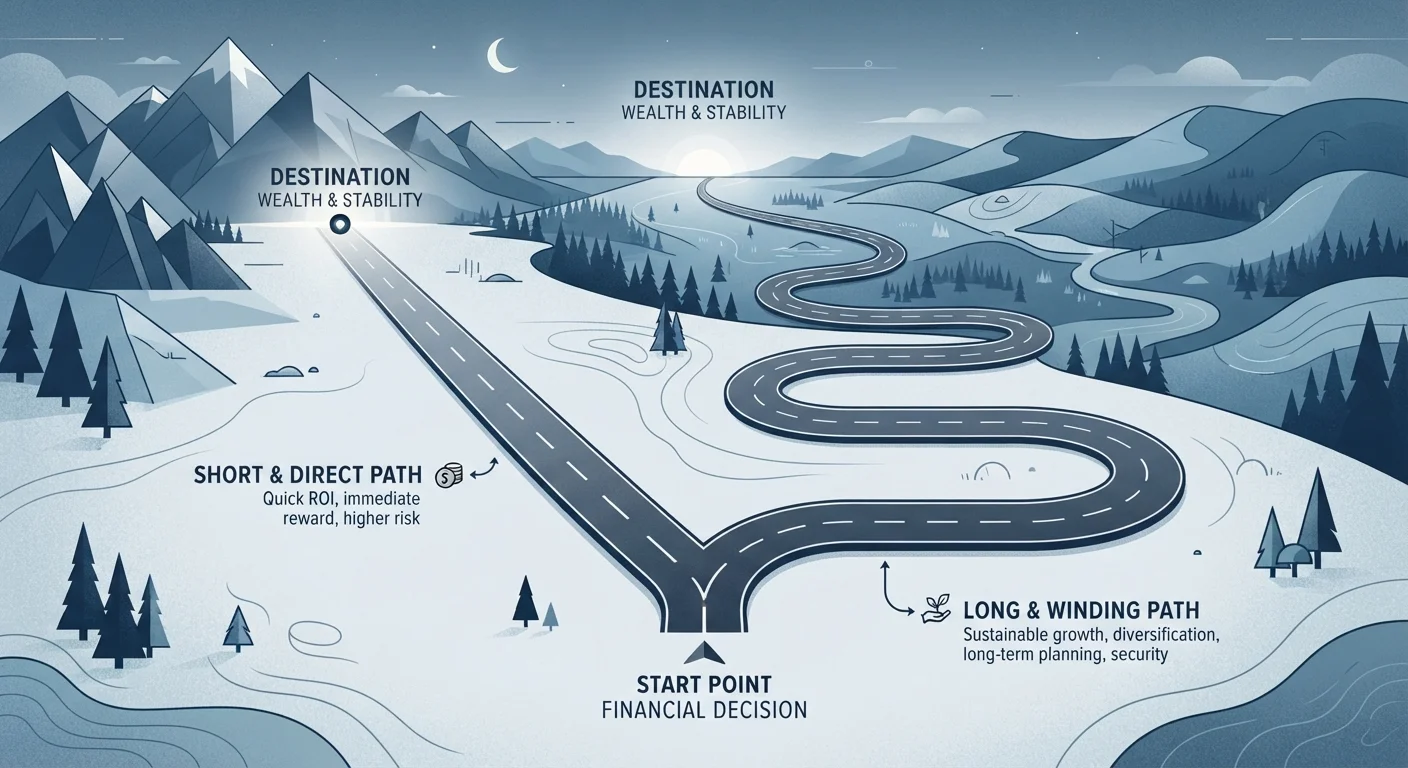
The Core Trade-Off: Monthly Comfort vs. Total Cost
When financing a vehicle, the loan term - the number of months over which you repay - shapes two numbers that rarely move in the same direction: your monthly payment and your total interest paid. Stretching the term lowers what you owe each month, but it extends the period over which interest accrues, driving up what the vehicle ultimately costs you.
This trade-off is often obscured at the dealership, where conversations tend to center on monthly payment amounts. Understanding both figures is essential before signing any contract. As our guide on common financing mistakes explains, anchoring to monthly payment instead of total cost is one of the most expensive errors a car buyer can make.
| Criterion | Short Term (36 months) | Long Term (72 months) |
|---|---|---|
| Monthly Payment | Higher | Lower |
| Total Interest Paid | Substantially less | Substantially more |
| Typical Interest Rate | Generally lower | Generally higher |
| Equity Build Speed | Fast | Slow |
| Underwater Risk Period | Short or none | Can last several years |
| Budget Flexibility | Lower monthly flexibility | Higher monthly flexibility |
| Common on Used Cars | Yes - often required | Less common; lender restrictions apply |
The Math: What a Longer Term Actually Costs
Consider a $30,000 vehicle with a $3,000 down payment - a $27,000 financed balance. At a 6% annual percentage rate (APR), the numbers break down as follows:
- 36-month term: Monthly payment of approximately $821; total interest paid roughly $1,570
- 60-month term: Monthly payment of approximately $522; total interest paid roughly $4,320
- 72-month term: Monthly payment of approximately $449; total interest paid roughly $5,350
The 72-month loan saves about $372 per month compared to the 36-month option - but costs nearly $3,780 more in total interest. That gap widens further when lenders charge higher rates for longer terms, which is common practice. Several factors move your auto loan rate, and term length is consistently among the most influential.
~$3,780
Extra interest on 72- vs. 36-month loan
Illustrative calculation on a $27,000 balance at 6% APR - actual amounts vary by rate and lender.
72 months
Most common new-car loan term in the US
Experian's State of the Automotive Finance Market reports six-year terms have become the most frequently chosen option among new-vehicle buyers.
20-30%
Typical depreciation in the first two years
Industry depreciation data consistently shows new vehicles lose a significant portion of their value in the initial ownership period, independent of loan structure.
The Depreciation Risk: Going Underwater
A vehicle's value depreciates fastest in its first two to three years - often dropping 20-30% from the purchase price. With a long loan term, your loan balance falls slowly while the car's market value drops quickly. This creates a period - sometimes lasting years - where you owe more than the vehicle is worth. Lenders call this being "upside-down" or "underwater" on the loan.
If the car is totaled or stolen during this window, a standard insurance payout covers only the vehicle's market value, not your remaining loan balance. Gap insurance (Guaranteed Asset Protection) can cover that difference, but it adds cost. Shorter loan terms close this window more quickly, reducing your exposure.
Buyers financing used vehicles face an amplified version of this risk. Used car financing carries distinct rules, including higher rates and vehicle-age restrictions that can make long terms particularly costly.
Gap Insurance and Long Loan Terms
Gap insurance covers the difference between your loan balance and the vehicle's actual cash value if the car is totaled or stolen while you're underwater on the loan. It is most relevant - and most commonly offered - with long loan terms and small down payments. Premiums and coverage terms vary by provider, so compare options carefully and verify what your existing auto insurance already covers before purchasing a separate gap policy.
Choosing Strategically: What the Numbers Should Drive
No single term length is universally correct. The right choice depends on your loan amount, interest rate, monthly budget, and how long you intend to keep the vehicle. Before committing, calculate the total interest paid - not just the monthly payment - using any standard loan amortization calculator. That single step surfaces the true cost difference.
If a long term is necessary to keep payments manageable, one practical approach is to make additional principal payments when your budget allows. This shortens the effective loan duration and reduces total interest without locking you into a higher required payment. Confirm with your lender that no prepayment penalty applies before pursuing this strategy.
For buyers weighing whether financing is even the right path, comparing cash purchase against financing provides useful context on how each approach affects your overall financial position. And if you're still deciding between owning and leasing, the leasing vs. buying trade-offs are worth reviewing before you choose a loan term at all.
This article provides general financial information for educational purposes and is not personalized financial or lending advice. Consult a qualified financial professional for guidance specific to your situation.