What Each Approach Actually Means
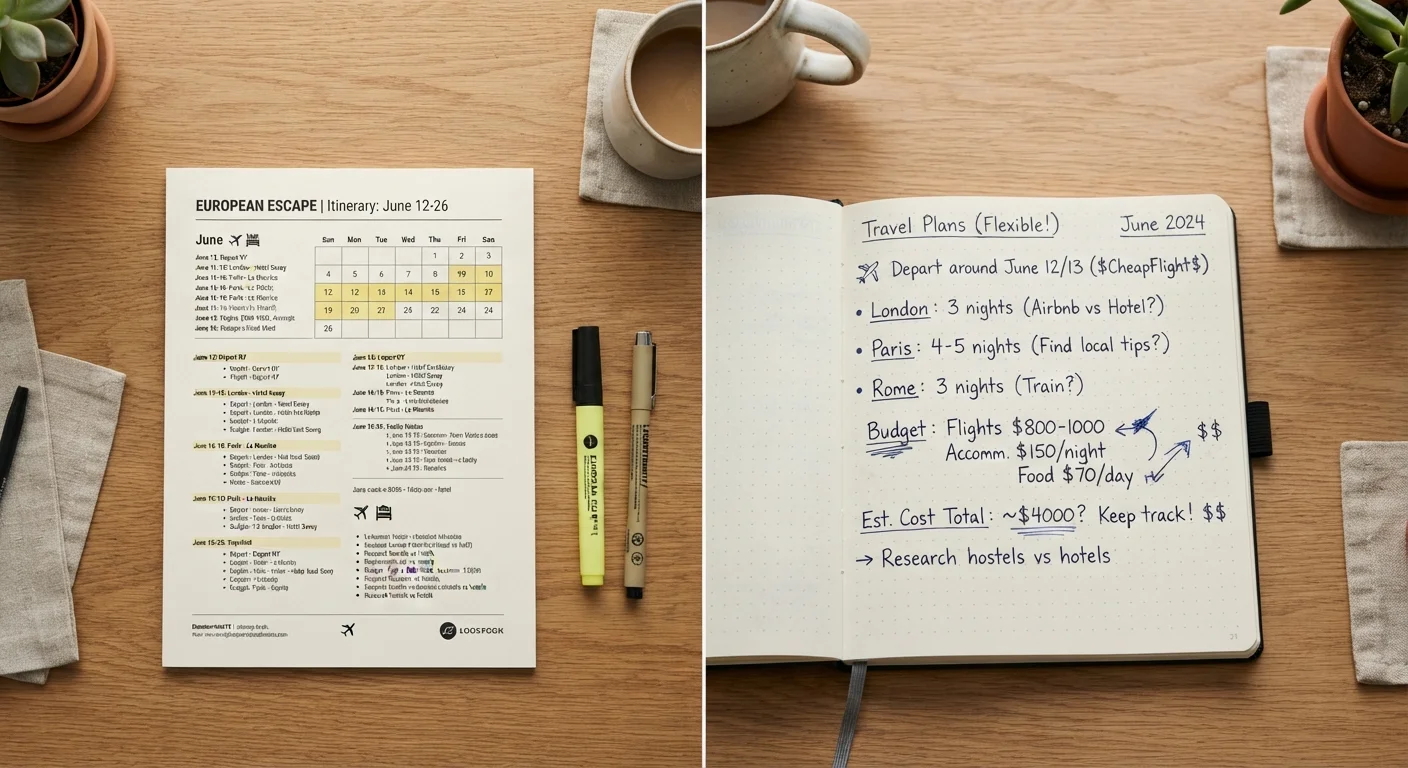
A fixed itinerary means you commit to specific travel dates upfront - often months ahead - and book flights, accommodations, and activities around that locked schedule. A flexible-dates approach means you define a travel window (say, a two-to-three-week range) and let price signals guide exactly when you depart and return.
These aren't just planning styles - they're fundamentally different relationships with cost. Fixed dates transfer pricing power to suppliers. Flexible dates return some of that power to you. Understanding which scenario applies to your trip is a prerequisite to any honest travel budget foundation.
The catch: flexibility has to be real. If your employer, your kids' school calendar, or a destination event constrains your window to a specific week, you're functionally working with a fixed itinerary regardless of what you call it.
How Timing Decisions Hit Your Flight Budget
Flight pricing is dynamic - algorithms adjust fares based on seat inventory, historical demand, and how close a departure date is. The day of week, week of month, and proximity to holidays all move prices significantly. Research from airline fare-tracking services consistently shows that midweek departures (Tuesday and Wednesday) tend to run lower than weekend departures on domestic routes, though this varies by carrier and route.
Flexible-date travelers can use fare comparison tools to scan across a 30- to 45-day window and identify the lowest-cost departure combinations. On popular domestic routes, the spread between the most and least expensive dates within the same month can exceed $150-$300 round-trip per person. On international routes, that variance grows further.
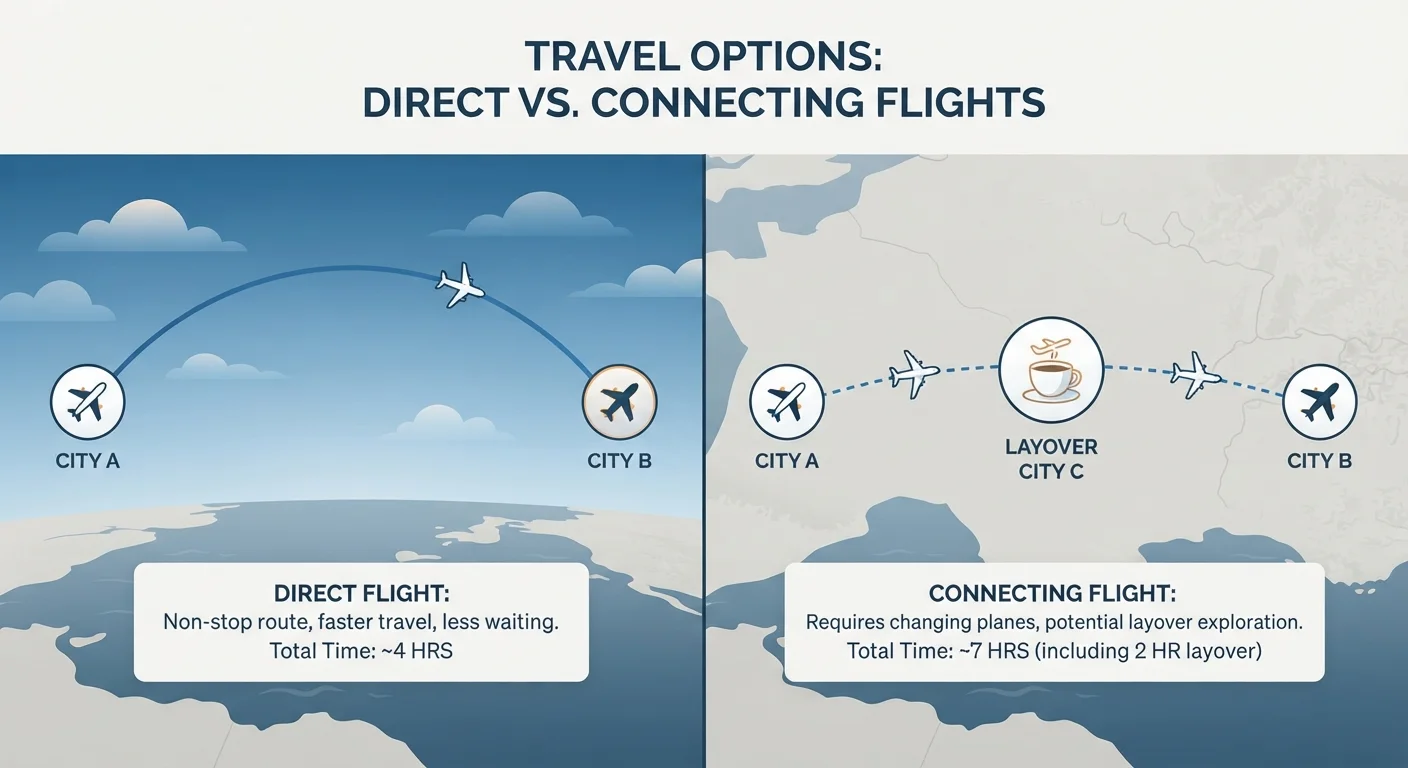
Fixed-itinerary travelers don't have this option. If your locked dates fall on a peak travel window - spring break, Thanksgiving, major holidays - you pay the market rate. The only lever left is how far in advance you book. Generally, booking domestic flights six to eight weeks out and international flights three to six months out tends to avoid last-minute premium pricing, though no timing guarantees specific fares. See our framework for weighing direct vs. connecting flight costs for additional ways fixed-date travelers can reduce air spend.
| Flexible Dates | Fixed Itinerary | |
|---|---|---|
| Flight cost potential | Lower - can target cheapest days | Higher - locked into demand pricing |
| Accommodation flexibility | High - avoid peak night premiums | Limited - pay market rate for locked nights |
| Planning effort | High - ongoing monitoring required | Lower - book and done |
| Schedule compatibility | Requires genuine calendar freedom | Works with any schedule constraint |
| Budget predictability | Variable until dates confirmed | Predictable once booked |
| Cancellation risk | Moderate - timing shifts may cost | Lower if booked with flexible policies |
Accommodation Costs Follow the Same Logic
Hotels and short-term rentals price dynamically too. A room that costs $120 on a Tuesday in early October may run $220 on a Friday in late October during foliage season in the same market. Flexible travelers can sidestep those peaks. Fixed-itinerary travelers absorb them.
One underappreciated dynamic: minimum stay requirements. Many vacation rentals enforce two- or three-night minimums on weekends, which can force fixed-itinerary travelers into longer stays than planned, adding nights - and cost - they didn't budget for. Flexible travelers can structure their arrival to avoid these constraints entirely. Our hotel vs. vacation rental comparison breaks down how accommodation type interacts with trip length and timing.
Use Shoulder Season as Your Default Target
If your dates have any flexibility at all, aim for the two to three weeks immediately before or after a destination's peak season. Prices on flights and accommodation typically drop 15-30% compared to peak windows, crowds are smaller, and the experience is often comparable. Research a destination's specific peak calendar before assuming when that window falls - it varies significantly by location.
The Hidden Costs of Flexibility
Flexible dates aren't free. The trade-offs are real and worth naming before you assume flexibility always wins:
- Opportunity cost: Monitoring fares across a wide window takes time and mental bandwidth. If you're tracking prices for weeks and ultimately book a fare only marginally cheaper, the return may not justify the effort.
- Accommodation availability: Waiting to confirm travel dates can shrink your lodging options, especially in smaller markets or during periods with limited inventory.
- Cancellation exposure: If you book activities or tours early to secure spots, then shift your travel dates, you may face non-refundable losses.
- Change fees and fare differences: Booking a cheap fare speculatively and then needing to change it can cost more than a moderately priced fixed booking.
For travelers who frequently see their travel budgets derailed, the structure of a fixed itinerary can actually prevent the kind of incremental overspending that flexible planning sometimes enables.
Hybrid Strategies Worth Considering
Most travelers land somewhere between fully fixed and fully flexible. A few hybrid approaches that work in practice:
- Flexible outbound, fixed return: Lock your return date around a work or family commitment, but leave your departure open within a window. This often yields meaningful flight savings while maintaining the structure you need.
- Fixed destination, flexible timing: Commit to where you're going but push your travel window to shoulder season - typically the weeks just before or after peak season. Prices drop, crowds thin, and the destination is often nearly identical. Our guide to seasonal travel disruptions explains how to identify those windows by destination.
- Fixed itinerary, flexible components: Lock flights and accommodation, but leave activity and dining spend as a variable pool rather than pre-booking everything. This approach aligns with daily budget tracking methods that give you real-time control mid-trip.
The right structure depends on how you weigh cost control against scheduling certainty. Mapping that out clearly - before you start searching - is what separates travelers who hit their budgets from those who don't. The step-by-step budget planning framework can help you formalize whichever approach you choose.