Why Most Travel Budgets Fail Before the Trip Begins
The most common budgeting mistake isn't overspending on vacation - it's under-planning before departure. Travelers who skip a structured framework tend to discover mid-trip that one category has consumed funds earmarked for another. Food eats into activity money. Baggage fees weren't accounted for. The contingency reserve was never set aside.
A budget that's built category by category, anchored to a firm ceiling, and checked against real costs gives you a decision-making tool - not just a wishlist. The framework below is designed to take you from a blank page to a complete, honest trip cost estimate.
What you will need
For a broader look at how budget decisions interact with every other aspect of trip planning, the complete guide to planning around a fixed budget provides end-to-end context.
Step-by-Step Budget Framework
Spreadsheet or budgeting app
Track estimated and actual costs across all spending categories before and during the trip.
Currency converter
Translate foreign costs into USD for accurate budget comparison on international trips.
Trip logistics reference
Confirm visa fees, entry requirements, and travel document costs that belong in your admin budget line.
Set your total budget ceiling first
Before you look up a single flight price, decide how much you can realistically spend on this trip in total. Pull that number from your savings or discretionary income - not from what flights happen to cost. This ceiling is the constraint that makes every subsequent decision meaningful. If you don't anchor here, scope creep will inflate the budget at every step.
For context on how this fits into your broader financial picture, the Budgeting Basics hub covers practical strategies for identifying available discretionary funds.
Define your six core spending categories
Every trip budget breaks down into the same six lines regardless of destination or style:
- Transportation - flights, fuel, trains, rental car, rideshares, airport parking
- Lodging - hotels, vacation rentals, hostels, campsite fees
- Food & drink - restaurants, groceries, coffee, alcohol
- Activities & entertainment - tours, entry fees, cultural sites, recreation
- Admin & logistics - visa fees, travel insurance, baggage fees, vaccinations, tips
- Contingency - 10-15% of the total above, reserved for surprises
Assign a dollar estimate to each line based on research, not guesswork. For unfamiliar terminology in any of these categories, travel budget terminology explained is a useful reference.
Research realistic cost estimates for each line
Use actual data, not averages from travel blogs. Check current airfare for your specific dates and route. Look up real nightly rates for accommodations in your target area. Review restaurant menus or search forums for realistic per-meal costs at your destination. For road trips, calculate driving distance × current fuel cost ÷ your vehicle's MPG.
Your timing decisions will significantly affect these numbers. How timing decisions shape your travel budget explains how flexibility can shift total costs in either direction - factor that in before locking figures.
Check totals against your ceiling - then adjust
Add up all six category estimates. If the sum exceeds your ceiling, you have three levers: reduce scope (fewer days, fewer activities), reduce tier (cheaper lodging category, cooking more meals), or delay the trip until you've saved more. Do not raise the ceiling to meet the estimate - that defeats the structure entirely.
For a comprehensive look at how budget constraints should shape destination and itinerary choices from the start, see planning a trip around a fixed budget.
Decide on a daily vs. total tracking method
Once the plan is solid, choose how you'll monitor spending during the trip. A daily budget (total ÷ number of days) makes it easy to course-correct each evening. A total pool approach gives more flexibility for uneven days - a cheap transit day followed by a big activity day. Neither is objectively better; the right choice depends on your travel style. Daily vs. total trip budget methods compared walks through both approaches in detail.
Audit admin and logistics costs before finalizing
Visa fees, required vaccinations, travel insurance premiums, and checked baggage fees are frequently underestimated or forgotten entirely. These aren't optional line items - they're fixed costs that hit before you even board. Verify current visa requirements through official government sources. For a step-by-step walkthrough of the visa process, what the visa application process involves covers the key steps. For broader logistics planning, trip logistics from start to finish is a thorough reference.
Never Skip the Contingency Line
Missed connections, unexpected medical costs, and itinerary changes are common enough that a contingency fund isn't optional - it's structural. Size it at 10-15% of your total trip cost and treat it as already spent. If you don't use it, great. If you do, you won't be scrambling. See how to size a travel emergency fund for a detailed breakdown.
Use a Spreadsheet, Not Memory
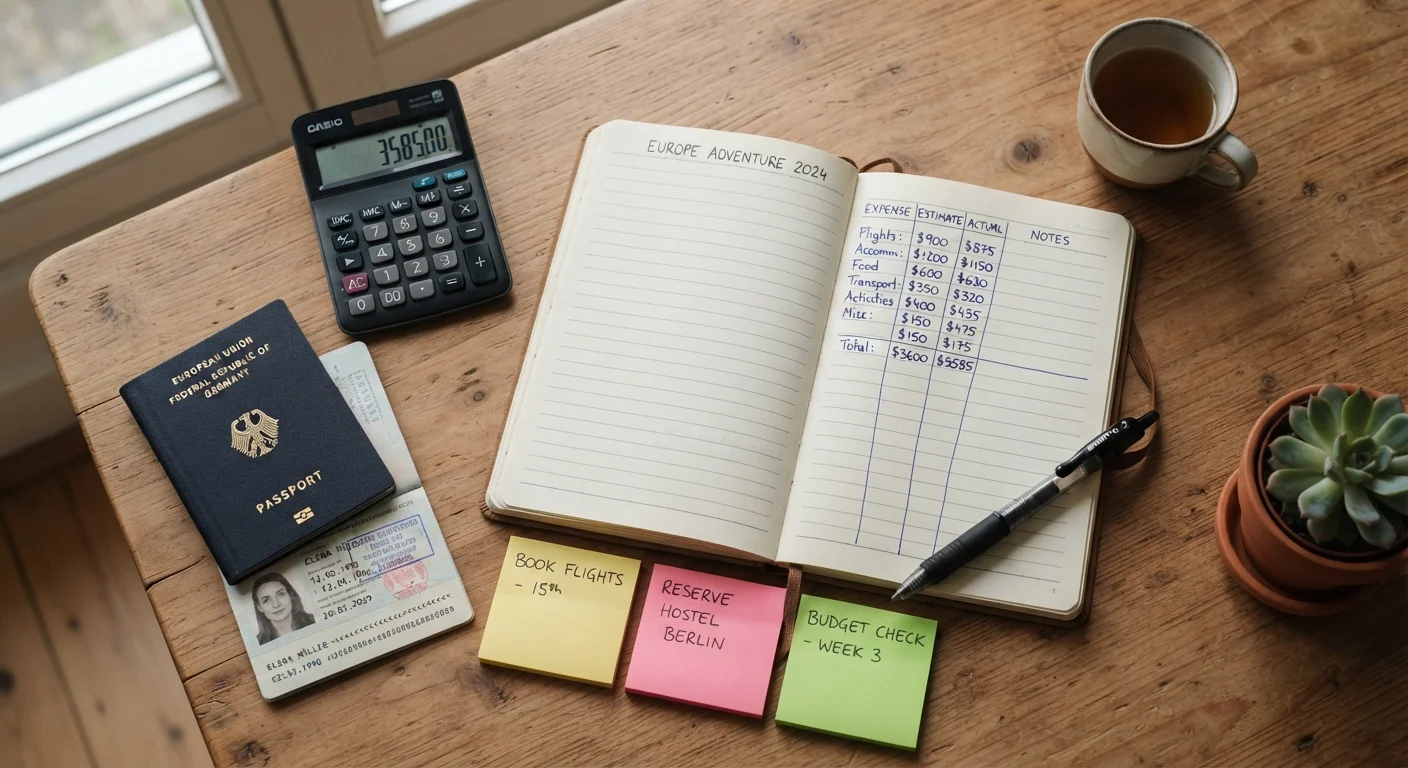
Even a basic spreadsheet with one row per cost category and columns for estimated vs. actual spending outperforms mental accounting by a wide margin. Free templates exist in Google Sheets - search 'travel budget template' and adapt one to your trip structure. The goal is externalizing the numbers so you can make real-time decisions without guessing.
Patterns of budget failure are worth understanding too. Where travel budgets break down and what to do differently identifies the specific habits and planning gaps that most commonly derail trip spending - and how to course-correct when you spot them.