
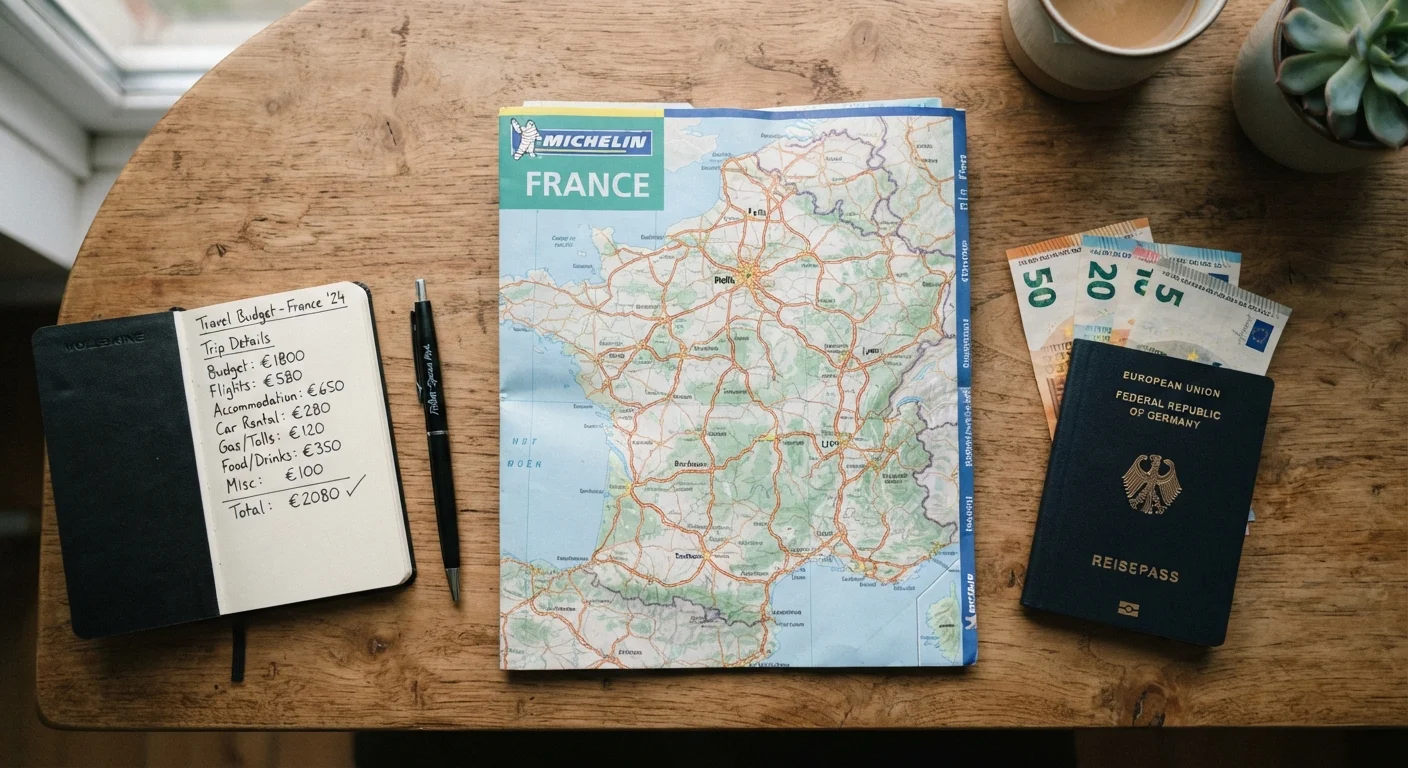
Set Your Hard Budget Number First
Most travelers pick a destination and then try to figure out if they can afford it. That sequence almost always leads to either overspending or disappointment. The more reliable approach is to establish a firm total budget - the actual dollar amount you can spend without financial strain - before any destination research begins.
To find that number, review your current savings and monthly cash flow. See our Budgeting Basics hub for a practical framework if you need a starting point. Subtract any upcoming fixed obligations due before or during the travel window. What remains is your realistic ceiling.
Write that ceiling down. Every decision that follows - where to go, how to get there, how long to stay - should be filtered through it.
Convert your total budget to a cost-per-day number before you fall in love with any destination. If your all-in budget is $1,800 and you want 10 days away, you have $180 per day - that's your filter for every destination comparison.
Framing the budget as a daily rate makes destination comparisons concrete and prevents the common trap of reverse-engineering affordability after emotional commitment to a place.
Request itemized quotes when comparing lodging options - not just nightly rates. A $120/night hotel with a $40 resort fee is more expensive than a $140/night hotel with no add-ons.
All-in pricing is the only reliable comparison metric. Headline rates routinely exclude mandatory fees that only appear at checkout.
Choose a Destination That Fits the Number
Once you have a total number, destination selection becomes a research exercise rather than a wish list exercise. Daily costs vary enormously by location. A week in a mid-size US city might run $100-$150 per day in lodging and meals combined; the same week in an expensive coastal market could easily double that.
Estimate a rough daily spending rate for each destination you're considering - lodging, three meals, local transport, and a small activities buffer - then multiply by your trip length and add your round-trip transportation cost. If the total exceeds your ceiling, either shorten the trip or choose a different destination. If you're planning a domestic drive, check our American Southwest road trip planning guide for a concrete example of how route, timing, and lodging type interact with cost.
50-65%
Share of travel budget spent on transport and lodging
Industry travel planning guidance consistently identifies transportation and accommodation as the two dominant cost categories in most trip budgets.
10-15%
Recommended contingency reserve
Travel financial planning frameworks commonly advise reserving at least 10% of total budget for unplanned expenses such as delays, medical needs, or equipment issues.
Build Your Budget Allocation by Category
A realistic travel budget has six categories. Allocate a dollar amount - not a percentage - to each before booking anything:
- Transportation (flights, gas, or train): This is usually the largest single line item. Get at least two real fare quotes before locking in a number.
- Lodging: Cost per night multiplied by number of nights. Account for taxes and fees, which can add 15-25% to the base rate.
- Food and drink: A common rule of thumb is $50-$80 per person per day for a mix of self-catering and sit-down meals, though this varies significantly by destination.
- Activities and entry fees: Research the two or three things you most want to do and get real prices. Parks, museums, and guided tours have published rates.
- Local transport: Rental cars, rideshares, transit passes. Don't assume this is negligible - a week-long car rental with fuel can cost $300-$600.
- Contingency: Reserve 10-15% of your total for the unexpected - a delayed flight requiring an extra night, a medical co-pay, or a broken piece of gear.
For a plain-language explanation of terms like per diem and dynamic pricing that appear in this process, see our travel budget terminology glossary.
Book in the Right Order
Booking sequence matters because your biggest fixed costs must be confirmed before you can accurately calibrate the variable ones. The recommended order is: transportation first, lodging second, activities third.
Locking in flights or a rental car first tells you exactly how much of your budget remains. Lodging comes next because it's the second-largest fixed cost and its price changes with demand and availability. Activities can often be booked closer to travel - and some can be skipped entirely if earlier costs ran high. For a full logistics framework covering documents, backup plans, and on-the-ground contingencies, see our complete trip logistics planning guide.
Don't Book Activities Before Locking in Fixed Costs
Activities and experiences are the easiest category to cut or scale back. Flights and hotel stays are not. If you pre-purchase event tickets, tours, or attraction passes before confirming your transportation and lodging costs, you may find yourself over-budget with non-refundable commitments already made. Confirm the big fixed costs first.
Manage Spending While Traveling
Pre-trip planning only works if you track against it in real time. Before departure, divide your remaining discretionary budget (food, activities, incidentals) by the number of travel days to get a daily allowance. Check your actual spending against that number each evening - not at the end of the trip when it's too late to adjust.
Practical tools for this include a notes app, a simple spreadsheet saved offline, or any basic expense-tracking app. The specific tool matters less than the habit of daily review. If you're running over on day three, you have time to compensate on days four through seven. If you wait until checkout to tally up, you don't.
For a detailed look at the patterns that cause budgets to fail mid-trip, see our companion piece: where travel budgets break down and what to do differently.
Common Budget Mistakes to Avoid
Even careful planners run into predictable traps. The most common ones are:
- Forgetting pre-trip costs: Luggage fees, travel insurance, airport parking, and new gear all draw from the same finite pool.
- Using the base lodging rate instead of the all-in rate: Taxes, resort fees, and cleaning fees are real costs. Always calculate total checkout price.
- No contingency buffer: Treating 100% of the budget as spendable leaves zero margin for anything unplanned.
- Currency exchange surprises on international trips: Foreign transaction fees and unfavorable exchange rates can erode 3-5% of spending silently.
- Overlooking the cost of eating out every meal: Three restaurant meals per day adds up faster than most people estimate. Even one self-catered meal per day meaningfully reduces food spend.
For guidance on trip logistics broadly, including how to organize documents, transportation, and accommodations in one planning workflow, the Trip Logistics hub covers the operational side of everything covered here.
This article is for general informational and educational purposes only. Costs, prices, and availability mentioned are illustrative estimates and will vary by destination, season, and individual circumstances. Always verify current prices directly with providers before making financial commitments.