
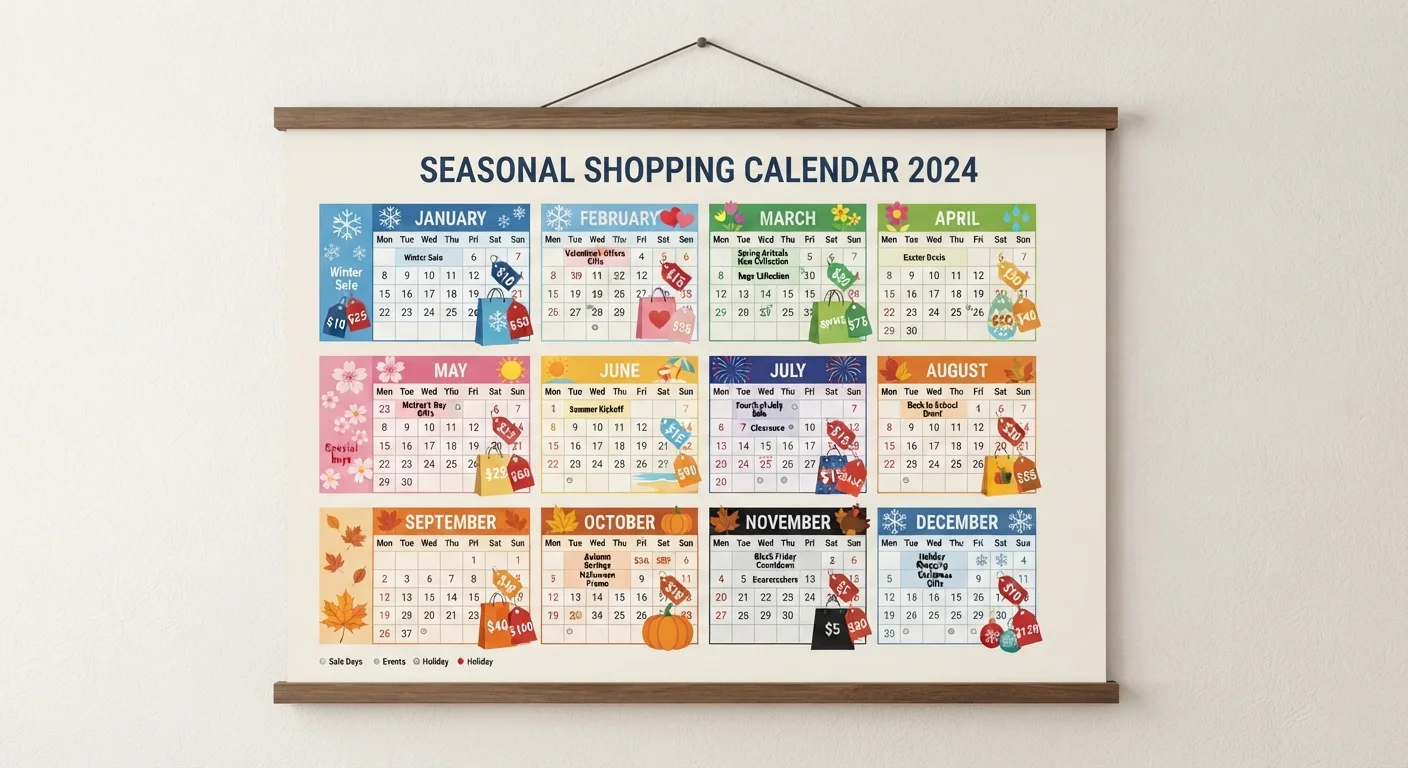
Why Retailers Mark Down When They Do
Retailers don't discount randomly. Clearance cycles are driven by inventory rotation, fiscal quarter endings, and the need to make floor space for incoming seasonal merchandise. Understanding these mechanics turns the sales calendar from a mystery into a tool.
Two forces drive most predictable markdowns: end-of-season inventory pressure and new model arrival cycles. When spring apparel arrives in stores in January and February, fall and winter clothing goes on clearance - often at 40-70% off. When a new appliance model year ships to warehouses in September and October, the prior year's floor models get cut to move. These patterns repeat reliably year over year.
It's worth noting that not every advertised markdown represents a genuine low price. As we explore in Sale Price Doesn't Always Mean Savings, retailers sometimes inflate pre-sale prices. The seasonal calendar helps you identify when true cost reductions are most likely - not just when a "sale" sign appears. And for a deeper look at how stores shape your spending instincts, retail pricing psychology is worth reading before any major purchase.
The Category-by-Category Markdown Calendar
Different product categories have distinct seasonal low points. Here's a practical breakdown of when genuine price drops are most common:
Major Appliances
New appliance models typically ship in September and October, making late summer (August-September) the window when retailers push prior-year inventory. Holiday weekends - particularly Memorial Day, Labor Day, and Presidents' Day - are traditionally the other reliable windows for major appliance promotions. These holiday sales are genuine clearance events with verifiable year-over-year price patterns, not manufactured urgency.
Electronics
New televisions are revealed at the Consumer Electronics Show each January, and new model inventory arrives by spring. This makes late winter (February-March) and the period immediately after the major fall shopping season (late November through December) the two windows where prior-generation pricing drops. Avoid buying electronics at the start of a product cycle - you pay the highest prices for the newest release.
Apparel
Clothing clearance runs on a roughly six-week lag behind the season. Winter clothing clearance starts in late December and runs through February. Summer clearance begins in July and extends into August. Buying a size up during these windows for the following year is a well-worn tactic that genuinely delivers savings.
Furniture and Mattresses
The furniture industry uses February and August as its primary clearance months, coinciding with major trade market weeks when retailers receive new collections and need to clear the showroom floor. Holiday weekend promotions also apply here, but February and August tend to offer deeper structural discounts rather than promotional pricing.
Outdoor and Lawn Equipment
Late summer (August-September) sees major markdowns on grills, patio furniture, and garden tools. Late winter (January-February) is the window for snow blowers and winter-specific equipment. Buying out of season is the single most reliable tactic in this category. Peak vs. off-season pricing explores this dynamic across several other spending areas.
Holiday Weekend Sales: Genuine or Manufactured?
Major holiday weekends (Memorial Day, Labor Day, Presidents' Day, Fourth of July) do correlate with genuine appliance and furniture markdowns, reflecting real retailer inventory goals. However, the same promotional framing is often applied to categories where no true clearance pressure exists. Before assuming a holiday weekend sale is meaningful in a given category, check whether that category appears on the seasonal calendar above. If it doesn't, treat the "event" with skepticism and verify pricing history independently.
Holiday Decorations and Seasonal Items
Decorations go on clearance within days of the holiday they support - typically 50-80% off immediately after Christmas, Halloween, and Easter. For flexible buyers, this is one of the most consistent deep-discount windows in retail.
How to Use This Calendar Without Buying Things You Don't Need
Timing awareness only pays off when it aligns with a genuine need. The discipline is building a short list of planned purchases 30-90 days out, then matching them against the seasonal calendar - not shopping opportunistically because a markdown window has arrived.
Practical steps:
- Audit upcoming needs quarterly. Major appliances, furniture, and electronics rarely fail without warning. If a refrigerator is aging or a mattress is past its useful life, note it before the failure forces a rushed purchase at whatever price is available.
- Track price history before the sale window. Browser extensions and retailer price-history tools let you verify whether a sale price during a clearance window is actually lower than the item's typical cost. Don't assume the markdown is real without checking.
- Watch for manufactured urgency separately. Flash sales and countdown timers rarely align with the genuine seasonal markdown calendar. Why flash sales rarely deliver explains why time pressure is often a distraction from actual value.
- Stack the calendar with fixed-income budgeting. For households on tight budgets, aligning large purchases to these windows - and planning for them in advance - can reduce financial strain significantly. Tactics for fixed-income shoppers offers additional frameworks for this kind of planning.
The seasonal sales calendar is less a shopping strategy than a planning discipline. Its value comes from reducing the number of purchases made under pressure - which is where most retail overpayment happens.