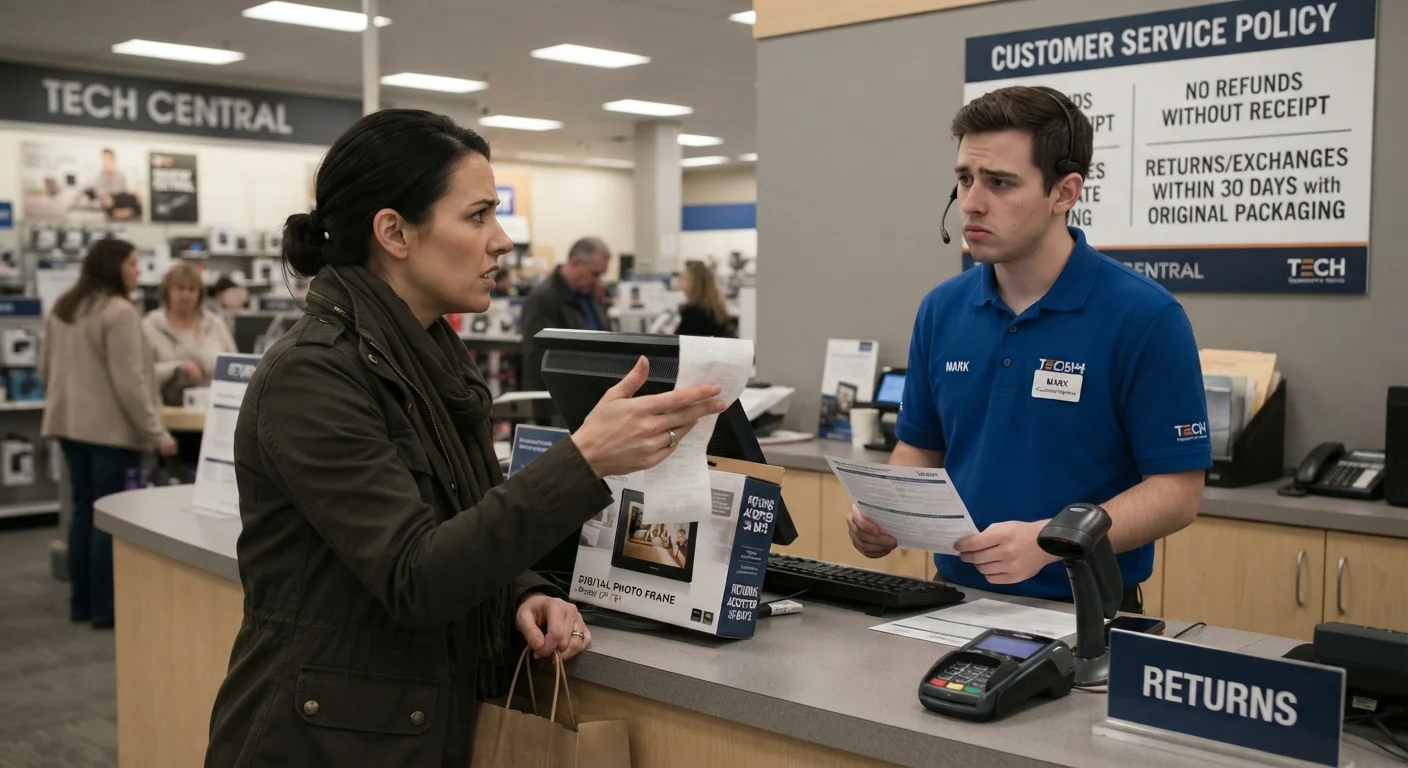

What Retailers Are Actually Required to Offer
Most US shoppers assume stores must accept returns within 30 days and issue a full refund. That assumption is largely incorrect. Common return policy myths cost shoppers money precisely because few people read the fine print before they need it.
In most states, retailers have wide discretion over their return policies as long as those policies are clearly disclosed at the point of sale. A store that posts "all sales final" or "store credit only" is generally within its legal rights to enforce that policy - even on a product you simply changed your mind about.
The critical exception is defective or materially misrepresented goods. If a product doesn't work as advertised, or was described inaccurately, consumer protection laws in most states give you a stronger legal footing to demand a full refund rather than a credit. The Federal Trade Commission and state attorneys general enforce rules against deceptive trade practices, which can include steering customers toward store credit when a cash refund is warranted.
State Laws Vary Significantly
Consumer protection rules around refunds and store credit are not uniform across the US. Some states - including California and New Jersey - have enacted stronger protections than federal minimums, sometimes requiring cash back for gift card or store credit balances under a certain threshold. Always check your specific state's consumer protection agency website for rules that apply to your situation.
The Real Pros and Cons of Accepting Store Credit
Before you sign anything or accept a gift card at the return desk, it's worth running a quick mental cost-benefit analysis. Store credit is not money - it is a claim against a specific retailer's future inventory.
Immediate resolution without lengthy dispute processes
Accepting store credit typically closes the transaction on the spot, avoiding the time and stress of escalated disputes or chargeback filings.
Often no restocking fee deducted
Many retailers waive restocking fees when a customer accepts store credit rather than a cash refund, meaning you keep the full original purchase value.
Useful if you shop at that retailer regularly
For a store you visit frequently, store credit functions like cash within that ecosystem and carries little practical downside.
Sometimes offered at higher value than cash refund
Some retailers issue store credit at a slight premium - for example, $110 in credit for a $100 return - as an incentive to accept it over a cash refund.
On the other side, the limitations are meaningful and often underestimated.
Locks your money to a single retailer
Unlike a cash refund, store credit cannot be spent elsewhere, which reduces your flexibility and may force you to make purchases you wouldn't otherwise.
Worthless if the retailer closes
Store credit and gift cards are unsecured claims against the retailer; if the company enters bankruptcy, cardholders are typically low-priority creditors with little recourse.
May have expiration dates or usage restrictions
Some store credit carries an expiration date or excludes certain product categories, further reducing its real-world value compared to a cash refund.
Delays access to funds for urgent needs
If the original purchase was a significant amount, being unable to recoup cash immediately can create genuine financial pressure for budget-constrained shoppers.
One factor many shoppers overlook: if a retailer goes out of business or files for bankruptcy, store credit and gift cards frequently become worthless. That's a meaningful risk with any retailer showing signs of financial instability.
When You Have Leverage - and How to Use It
Your negotiating position at the return desk depends on three things: how you paid, what went wrong, and what documentation you have.
How you paid matters enormously. Credit card holders have access to the chargeback process - a formal dispute mechanism run by card networks that can reverse a charge when goods are not as described or not delivered. Understanding how chargebacks work before you need one is time well spent. Cash and debit purchases give you far less leverage.
What went wrong determines your rights. A defective item, a product that arrived damaged, or a purchase that doesn't match its listing description all put you in a stronger position than a simple change of heart. Document the problem thoroughly - photographs, screenshots of the original listing, and any written communication with the retailer all help. Building a solid paper trail before a dispute arises is one of the highest-value habits a consumer can develop.
Online vs. in-store purchases have different rules. Your consumer rights differ meaningfully depending on the channel, including rules around cooling-off periods for certain online transactions. Check your state's laws and the retailer's specific policy for online orders before assuming your in-store experience applies.
If a retailer resists a legitimate refund claim, ask to speak with a manager, put your complaint in writing, and reference the specific defect or misrepresentation. Always complete your pre-return checklist before sending anything back - skipping steps can void your claim entirely.
~$3B
Gift card value lost annually to expiration and fees
The Consumer Financial Protection Bureau has highlighted billions in unredeemed gift card and store credit value lost each year by US consumers.
11 states
US states with gift card expiration restrictions
As of the most recent legislative surveys, roughly a dozen states have laws restricting or prohibiting expiration dates on store credit and gift cards, offering stronger consumer protections.