Why the First Week Sets the Tone
Bringing a new dog home is exciting - and overwhelming for the dog. Whether you've adopted a puppy or an adult rescue, your dog arrives in an unfamiliar environment without an established understanding of household rules, routines, or what you expect from them. The choices you make in these first seven days will shape how your dog views training, your home, and you as a partner.
This doesn't mean you need to pack the week with intensive lessons. In fact, the opposite is true. The primary goal early on is helping your dog feel safe and orienting them to their new world at a gentle pace. Before diving into specific skills, consider reading our pet owner's readiness checklist to make sure your environment and expectations are set up for success.
Positive Reinforcement
Adding something your dog values (like a treat or praise) immediately after a desired behavior to make that behavior more likely to happen again.
Marker
A clear, consistent signal - often a word like "yes" or a click - used to pinpoint the exact moment a dog does something correctly, before the reward is delivered.
Cue
A word, hand signal, or other signal that tells your dog which behavior you're asking for, such as "sit" or "come."
Recall
The behavior of coming to you when called - one of the most important and potentially life-saving skills a dog can learn.
Desensitization
Gradually exposing a dog to something they find scary or uncomfortable at a low intensity so they can learn to remain calm, without becoming overwhelmed.
Housetraining
Teaching a dog to eliminate (urinate and defecate) only in designated outdoor or indoor spots through consistent scheduling and reward.
Establishing a Daily Routine
Dogs are creatures of routine. Predictability lowers their stress levels and makes it much easier for them to understand what's coming next. In the first week, try to establish consistent times for feeding, bathroom breaks, play, training, and sleep.
- Feeding schedule: Two meals per day at the same times helps regulate digestion and creates natural opportunities for calm behavior before meals.
- Bathroom breaks: Take your dog out first thing in the morning, after each meal, after naps, and before bed. This structure is essential for housetraining success.
- Exercise: Regular physical activity reduces restlessness and makes your dog more receptive to learning. Match duration and intensity to your dog's age and breed.
- Sleep: Adequate rest - especially for puppies - is non-negotiable. Overtired dogs struggle to focus and are more prone to frustration-driven behaviors.
For guidance on feeding schedules that support your dog's overall wellbeing, our nutrition foundations guide is a useful companion resource.
The First Skills to Teach
Keep your goals modest and meaningful. In week one, focus on three foundational behaviors that make daily life easier and lay the groundwork for more complex skills later.
1. Sit
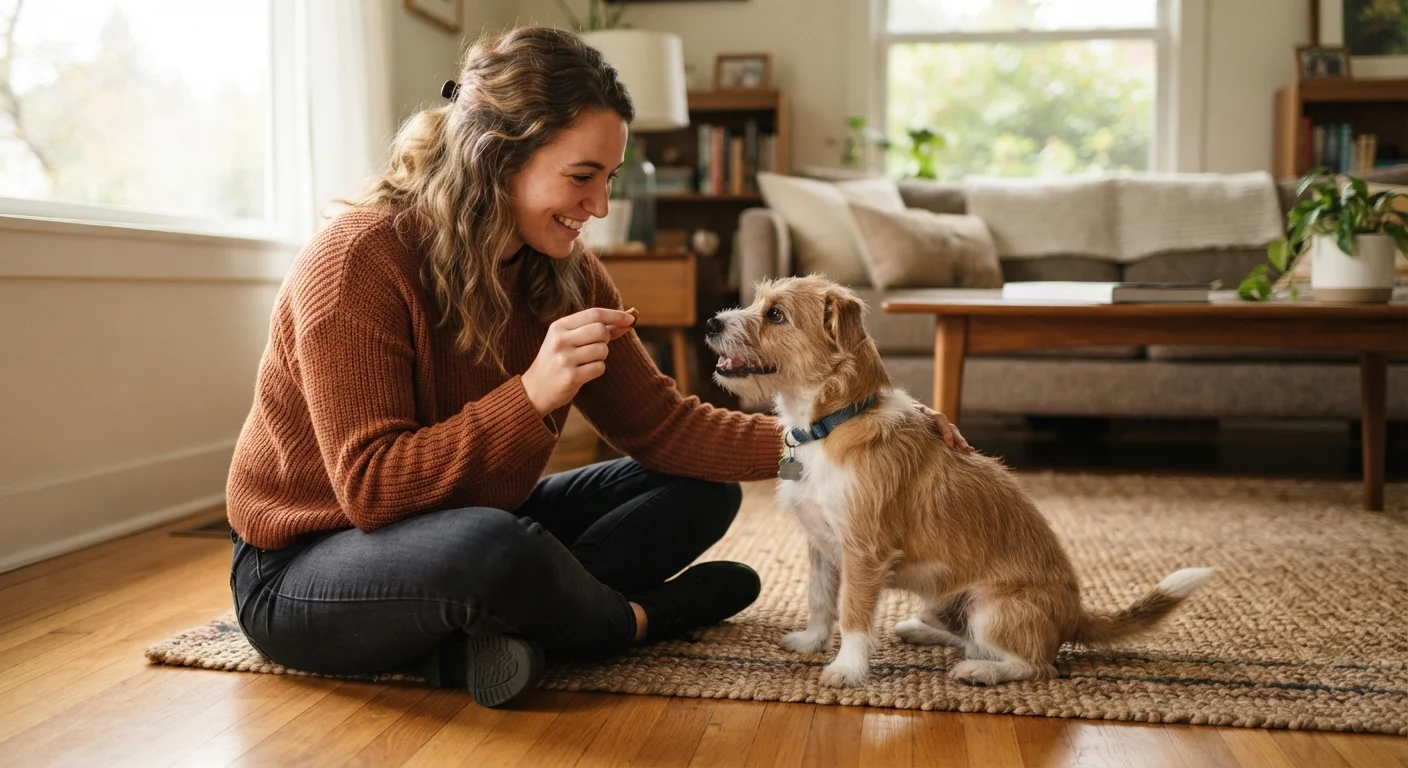
Hold a small treat near your dog's nose, then slowly move it up and back over their head. Most dogs will naturally lower their hindquarters as they follow the treat with their eyes. The moment their bottom touches the floor, mark the behavior with a clear word like "yes" and deliver the treat. Repeat in short sessions.
2. Name Recognition
Say your dog's name in an upbeat tone. When they look at you, immediately reward them. This builds attention - which is the foundation for all future training cues. Our guide to training signals explains how markers and cues work together in a training system.
3. Coming When Called (Recall)
In a small, low-distraction space, crouch down, say your dog's name followed by "come," and reward enthusiastically when they reach you. Make arriving at you the best thing that happened all day. Avoid calling your dog to you for anything they find unpleasant - like nail trims - during early training.
Keep Sessions Short and End on a Win
Aim for 3-5 minutes per session, two to three times daily. Always try to end each session with a success - even if that means asking for something easy like a behavior your dog already knows well. Ending on a positive note keeps your dog engaged and eager for the next session.
Building Trust Through Positive Reinforcement
Positive reinforcement means rewarding the behavior you want to see more of. When your dog does something right, mark and reward it quickly - ideally within one to two seconds - so the dog makes a clear association between the action and the outcome.
The science behind this approach is well-established. Understanding how dogs learn through operant and classical conditioning helps explain why reward-based methods work better than punishment in the long run. Punishment-based approaches can suppress behavior in the short term but often introduce fear or confusion that undermines the dog's willingness to engage.
Rewards don't always have to be food. Many dogs are highly motivated by play, praise, or brief access to something they enjoy - like sniffing a spot on a walk. Learn what your individual dog values most and use that knowledge strategically.
Common First-Week Mistakes to Avoid
Even well-intentioned owners fall into patterns that can slow progress. Here are the most common first-week missteps:
- Overloading with commands: Asking for too many different behaviors before any are reliably learned creates confusion. Master one before layering in another.
- Repeating cues: Saying "sit, sit, SIT" teaches your dog to wait for the third repetition. Say the cue once, help the dog succeed, and reward.
- Inconsistent rules: If the dog is allowed on the couch sometimes but not others, they cannot learn what the rule actually is. Decide on household rules before your dog arrives and stick to them.
- Skipping the dog's emotional state: Training a scared, overstimulated, or exhausted dog rarely works and can damage trust. Always read your dog's signals before beginning a session.
If your dog begins showing persistent difficulty responding to basic cues even after a week of consistent practice, our article on why dogs ignore commands may help you identify what's going wrong. And if you notice signs of distress when you leave the room, separation anxiety strategies offers further guidance.
This article is for general informational and educational purposes only and is not a substitute for professional veterinary or animal behavior advice. If your dog shows signs of aggression, severe fear, or other behavioral concerns, consult a licensed veterinarian or certified professional dog trainer.