Understanding Separation Anxiety in Dogs
Separation anxiety is one of the most frequently reported behavioral challenges in companion dogs. It describes a state of genuine psychological distress - not willful disobedience - that occurs when a dog is separated from the people or animals they're bonded to. The American Veterinary Medical Association and major animal welfare organizations recognize it as a significant welfare concern.
The condition exists on a spectrum. Some dogs show mild restlessness and settle within a few minutes; others experience intense panic that can result in self-injury, property destruction, or prolonged vocalization lasting the entire absence. Understanding where your dog falls on that spectrum shapes how you approach training and whether professional support is needed from the outset.
It's also worth noting that separation anxiety is distinct from other common problems. A dog that chews furniture only when unsupervised may be bored or under-exercised. Before committing to an anxiety-focused training plan, review this readiness checklist to confirm your baseline understanding and preparation are in place.
This Is Educational, Not Medical Advice
The strategies described here are general training guidance based on widely recognized behavioral principles. They are not a substitute for professional veterinary or behavioral assessment. If your dog's anxiety is severe, causing self-injury, or not responding to training, consult your veterinarian or a certified applied animal behaviorist before proceeding.
Tools and Preparation Before You Begin
Effective separation anxiety training requires minimal equipment but significant consistency. Before starting your first session, gather the resources listed below and set realistic expectations with everyone in your household.
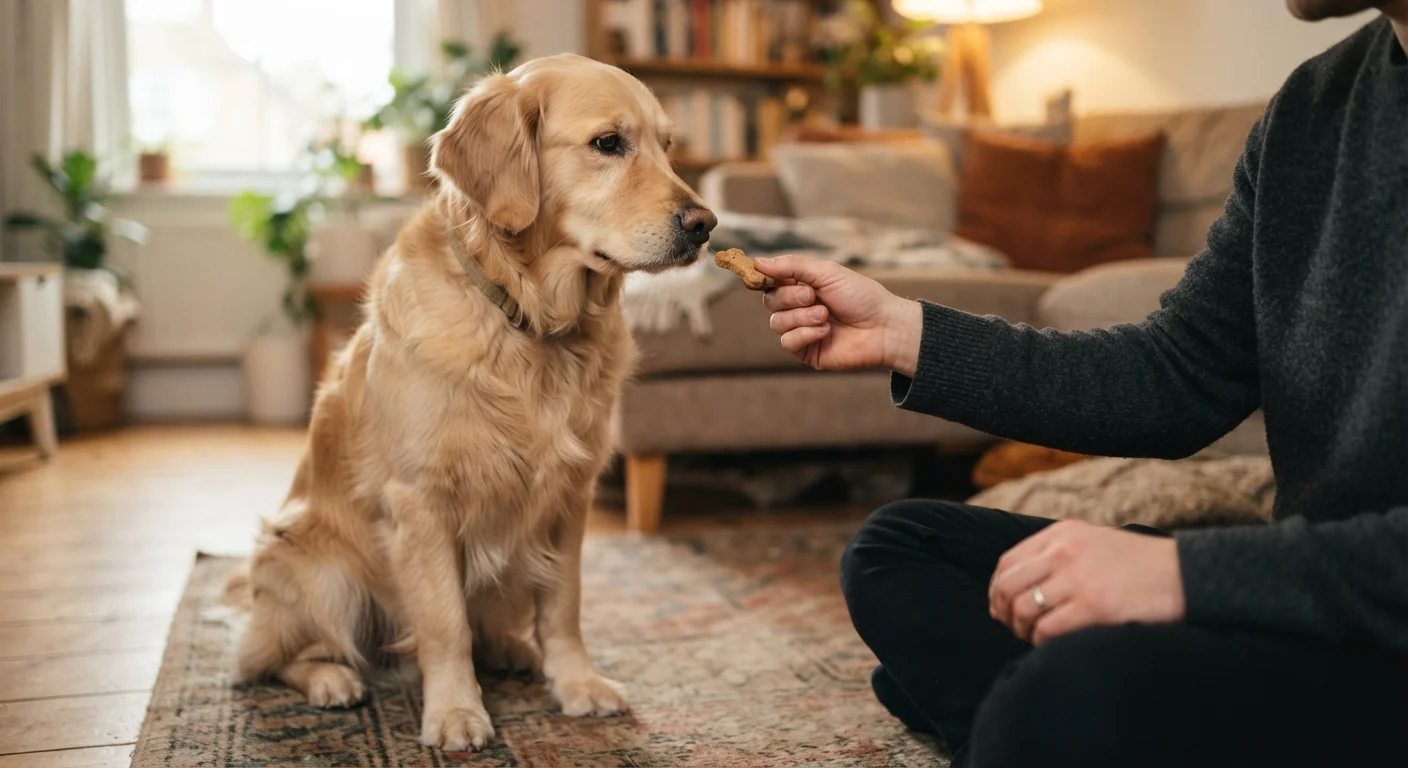
High-value treats
Used to build positive associations with departure cues and reward calm behavior during practice sessions.
Long-lasting food enrichment (e.g., stuffed food toy)
Provides a self-directed, calming activity that occupies your dog during brief planned absences.
Video monitoring device
Allows you to observe your dog's stress signals in real time without being physically present.
Training journal or log
Tracks session duration, your dog's reactions, and progress over time to guide pacing decisions.
Calming mat or designated rest spot
Gives your dog a familiar, comfortable anchor point during desensitization exercises.
What you will need
Video Monitoring Reveals the Full Picture
Many dogs begin showing stress signs (pacing, whining, lip-licking) within seconds of a departure, well before destructive behavior appears. Recording your dog during practice absences helps you identify their true threshold and adjust your training pace accordingly.
Step-by-Step Training: Gradual Desensitization
The following steps outline a graduated desensitization protocol, which is the approach most strongly supported by behavioral science for treating separation anxiety in dogs. Work through each step at your dog's pace - not on a fixed calendar schedule.
Avoid Flooding or Forced Exposure
Leaving a highly anxious dog alone for long periods to 'get used to it' - a technique sometimes called flooding - is not supported by behavioral science and can make anxiety significantly worse. Always work at your dog's pace, keeping absences shorter than the threshold that triggers visible distress.
Recognize the signs of genuine separation anxiety
Before starting training, confirm you're dealing with separation anxiety and not a different issue such as boredom, incomplete house-training, or a medical condition. True separation anxiety typically involves distress that occurs only or predominantly when the dog is left alone, and often begins within minutes of departure.
Common signs include: sustained vocalization (howling, barking), destructive behavior near exits, house-soiling despite being otherwise trained, excessive drooling or panting, and attempts to escape. A brief video recording of the first 20-30 minutes after you leave can confirm whether these behaviors are tied specifically to your absence.
Rule out medical factors and consult a professional
Schedule a veterinary appointment before beginning a behavior modification program. Some medical conditions - including pain, neurological changes, and age-related cognitive decline - can mimic or amplify anxiety. Your vet can also discuss whether behavioral medication might be appropriate as a complement to training in moderate to severe cases.
For complex presentations, ask for a referral to a board-certified veterinary behaviorist or a certified applied animal behaviorist (CAAB). These professionals have advanced training in diagnosing and treating behavioral conditions in animals.
Reduce pre-departure cue sensitivity
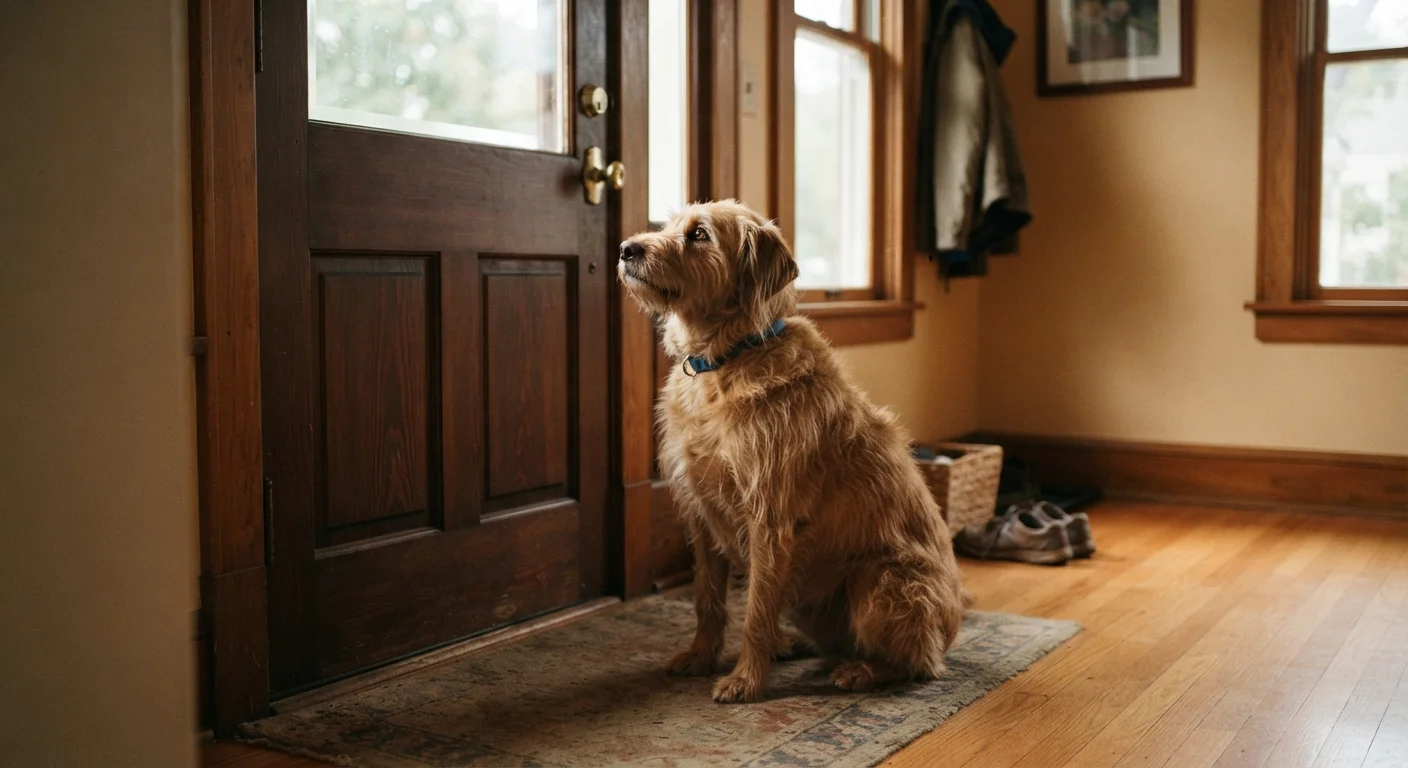
Dogs with separation anxiety often learn to read departure cues - picking up keys, putting on shoes, grabbing a bag - and begin escalating anxiety before you've even left. Practice these cues repeatedly without actually leaving. Pick up your keys, then sit back down. Put on your coat, then take it off. Repeat until your dog no longer reacts to these actions.
Understanding why this works is grounded in classical conditioning - the same learning science covered in our overview of how dogs learn. You're breaking the predictive link between the cue and the feared outcome (your departure).
Begin graduated desensitization with micro-absences
This is the core of separation anxiety training. The goal is to keep every absence shorter than the duration that triggers visible distress, then very gradually extend that duration over many sessions.
- Step out of the room (or behind a door) for 1-3 seconds, then return calmly.
- Gradually increase to 10 seconds, 30 seconds, 1 minute - only advancing when your dog is consistently calm at the previous level.
- Offer a long-lasting enrichment item (such as a stuffed food toy) as you depart, so the absence becomes associated with something positive.
- Return before distress begins; do not re-enter if your dog is vocalizing, as this can inadvertently reinforce the behavior.
Progress is rarely linear. Setbacks are normal - if your dog shows distress, drop back to a shorter duration that felt comfortable and rebuild from there.
Build independence and calm during your presence
Many dogs with separation anxiety follow their owners from room to room, which can increase dependency. Practice settle and stay exercises while you are home: ask your dog to rest on their mat while you move to another part of the room, gradually increasing the distance and duration.
Rewarding calm, settled behavior throughout the day - not just during formal sessions - helps your dog learn that relaxed independence is both safe and rewarding. This complements the foundational work described in our guide on training a new dog in the first week.
Track progress and adjust your plan
Keep a simple log of each session: the duration of the absence, what your dog did (observed via camera), and how quickly they settled after your return. Review it weekly to spot patterns and decide whether to progress, hold steady, or scale back.
If progress stalls despite consistent practice, revisit your veterinarian or consult a certified behaviorist. Avoid common training misconceptions - such as the idea that punishment speeds up learning - by reviewing training myths that can set you back.
When to Seek Professional Help
Training strategies work for many dogs with mild to moderate separation anxiety, but they are not universally sufficient. If your dog is causing self-injury during absences, cannot tolerate even a 5-second separation after several weeks of consistent training, or is deteriorating despite your efforts, professional intervention is the appropriate next step - not a sign of failure.
A veterinary behaviorist can assess whether medication would help lower your dog's baseline anxiety enough for training to become effective. A certified applied animal behaviorist (CAAB) or certified professional dog trainer (CPDT) with documented experience in separation anxiety can also provide tailored, session-by-session guidance.
This article provides general educational information about separation anxiety training strategies and is not a substitute for personalized veterinary or professional behavioral advice. If you have concerns about your dog's mental or physical health, consult a licensed veterinarian.