Two Foundational Learning Mechanisms
All modern, science-based dog training rests on two types of learning: classical conditioning and operant conditioning. These are not training styles - they are biological processes happening continuously in every dog's brain.
Classical conditioning was first described by Ivan Pavlov, who demonstrated that animals form automatic associations between unrelated events. When a neutral stimulus (like the sound of a clicker) is consistently paired with something meaningful (like food), the neutral stimulus eventually triggers the same internal response on its own. In training, this is why a dog can learn to feel calm and attentive the moment it hears a marker sound - the sound predicts good things.
Operant conditioning, developed by B.F. Skinner, governs voluntary behavior. Dogs learn to repeat actions that produce favorable outcomes and to reduce actions that produce unfavorable ones. The four consequences are: positive reinforcement (adding something good), negative reinforcement (removing something aversive), positive punishment (adding something aversive), and negative punishment (removing something good). Research and veterinary consensus strongly favor positive reinforcement as the cornerstone of pet training, because it achieves reliable results without generating fear or suppressing a dog's willingness to try.
Classical vs. Operant: Both Happen Simultaneously
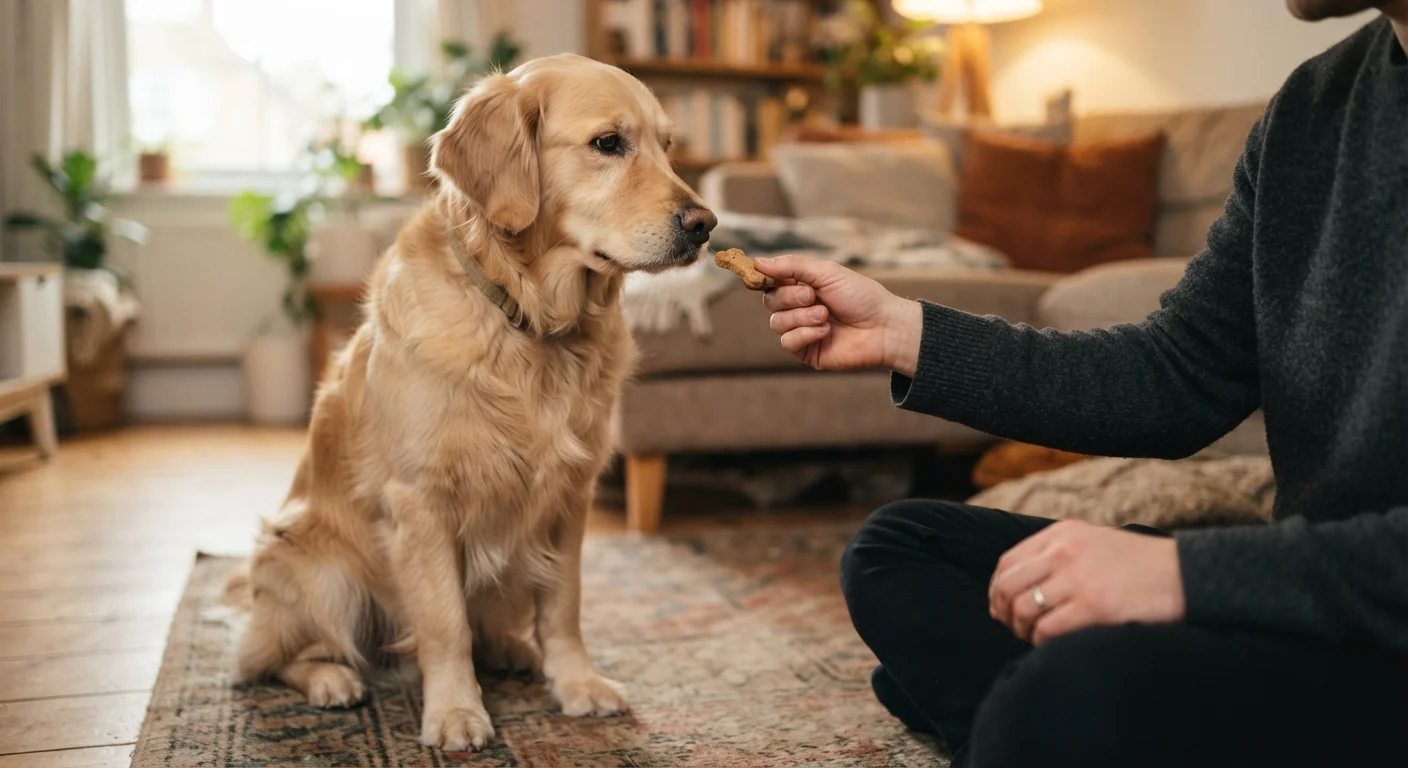
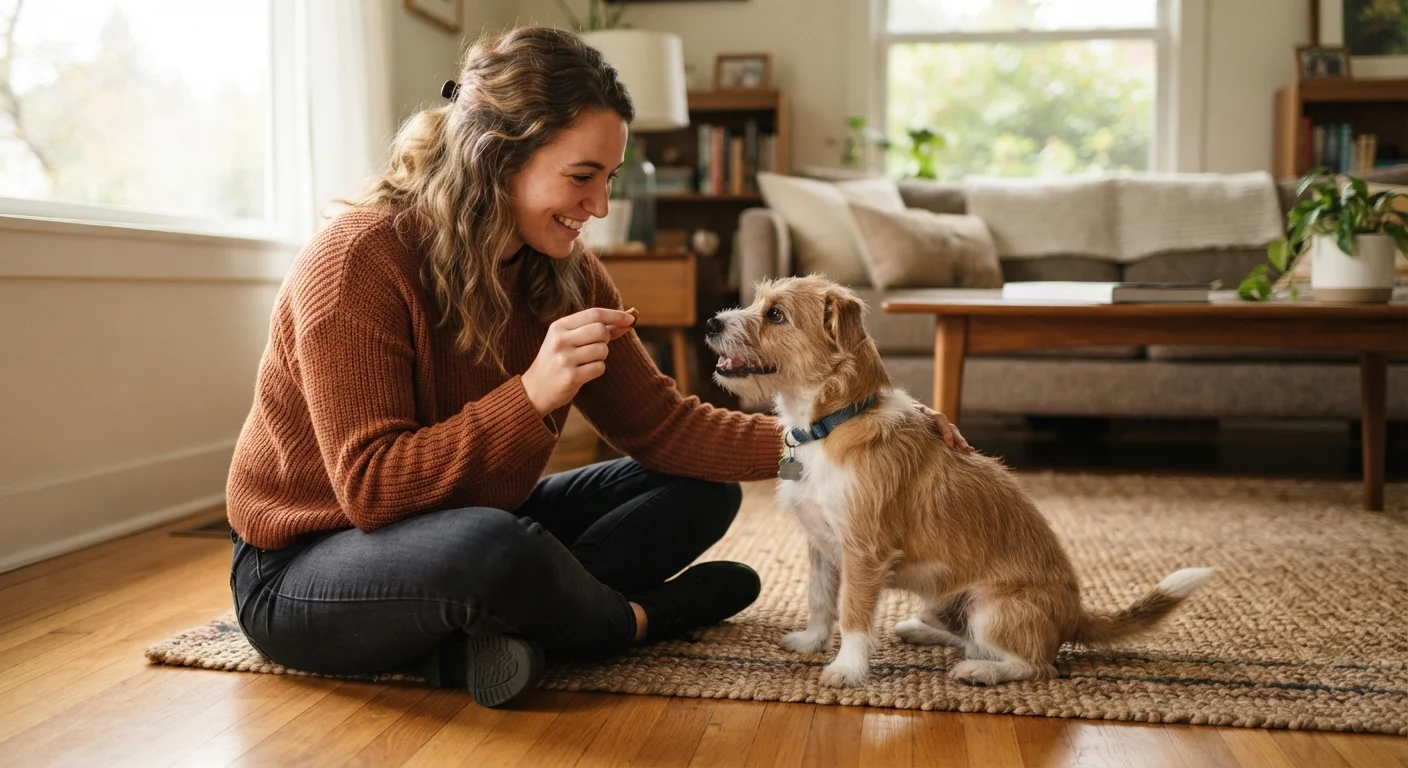
In real-world training, classical and operant conditioning are not separate events - they occur at the same time. When a dog earns a treat for sitting, it is operantly learning that sitting pays off while also classically associating the training context (your presence, the leash, the training space) with positive feelings. This is one reason the overall relationship between dog and owner matters so much.
Why Timing and Consistency Are Everything
Dogs cannot connect consequences to behavior the way humans connect cause and effect through language. A dog's associative window - the span of time in which it links an event to its own action - is very short, generally measured in seconds. A reward or correction delivered even a few seconds after a behavior is over will be associated with whatever the dog was doing at that precise moment, not what the owner intended to mark.
This is why marker training (using a clicker or a consistent verbal cue like 'yes') is so effective: it freezes the moment of correct behavior in the dog's mind, giving the owner a small but critical window to deliver the reward without confusion. Consistency matters equally - if a behavior is rewarded sometimes and ignored or corrected at other times without clear criteria, the dog receives conflicting information and learning slows significantly. For an accessible overview of training vocabulary, see our guide to core training signals.
Use Short, Frequent Sessions
Training works best in brief, focused bursts rather than long marathon sessions. Aim for 5-10 minutes, two to three times a day. Dogs retain and consolidate learning during rest periods - ending a session while your dog is still engaged and successful sets the stage for faster progress next time.
The Role of Emotion and Stress in Learning
Learning is not purely mechanical - a dog's emotional state directly shapes its ability to absorb new information. A dog that is anxious, fearful, or in pain is operating under elevated stress hormones, particularly cortisol, which impair the brain's capacity to form and consolidate new memories. This is one of the central reasons behavioral scientists and veterinary behaviorists advise against training methods that rely on fear or pain.
Effective learning happens when a dog feels safe, engaged, and mildly motivated - not overwhelmed. Short sessions (5-10 minutes for most dogs), high-value reinforcers, and ending on a success all help keep arousal in the productive zone. This is also why building a positive relationship matters: dogs are more attentive and resilient learners with handlers they trust. Techniques rooted in outdated dominance models can damage that relationship; for a fuller examination, see our article on training myths that behavioral science has debunked.
73%
Dogs trained with positive reinforcement show fewer problem behaviors
A study published in the journal Applied Animal Behaviour Science found that dogs whose owners used primarily reward-based methods exhibited significantly fewer fear and aggression-related behaviors than those trained with aversive techniques.
5-10 min
Optimal single training session length for most dogs
Veterinary and applied behavior guidelines consistently recommend keeping individual training sessions short to maintain focus and prevent cognitive fatigue, particularly in puppies and anxious dogs.
~2 seconds
Window for effective behavioral marking
Behavioral research indicates that consequences must be delivered within approximately two seconds of a behavior for the dog to reliably associate the outcome with its own action.
Putting the Science Into Practice
Understanding these mechanisms shifts training from a series of commands into a genuine communication system. A practical starting framework looks like this:
- Identify the behavior you want - be specific. 'Sit calmly when the door opens' is clearer than 'be good.'
- Choose a reinforcer that genuinely motivates your individual dog. Food is the most reliable for most dogs, but play, praise, or access to something the dog wants can also serve.
- Mark the exact moment the correct behavior occurs, then deliver the reinforcer promptly.
- Gradually raise criteria - a process called shaping - only after the dog is performing reliably at the current level.
- Vary and maintain learned behaviors using intermittent reinforcement schedules, which research shows produces the most durable behavior over time.
If you are just starting out, our guide to your first week training a new dog translates these principles into a day-by-day routine. For a comprehensive look at methods, timelines, and working through setbacks, see the complete picture on pet training.
This article is for general educational purposes. For dogs with significant behavioral concerns - including fear, aggression, or anxiety - consult a certified applied animal behaviorist or a veterinary behaviorist for professional, individualized guidance.