What a Whole-House Humidifier Actually Does
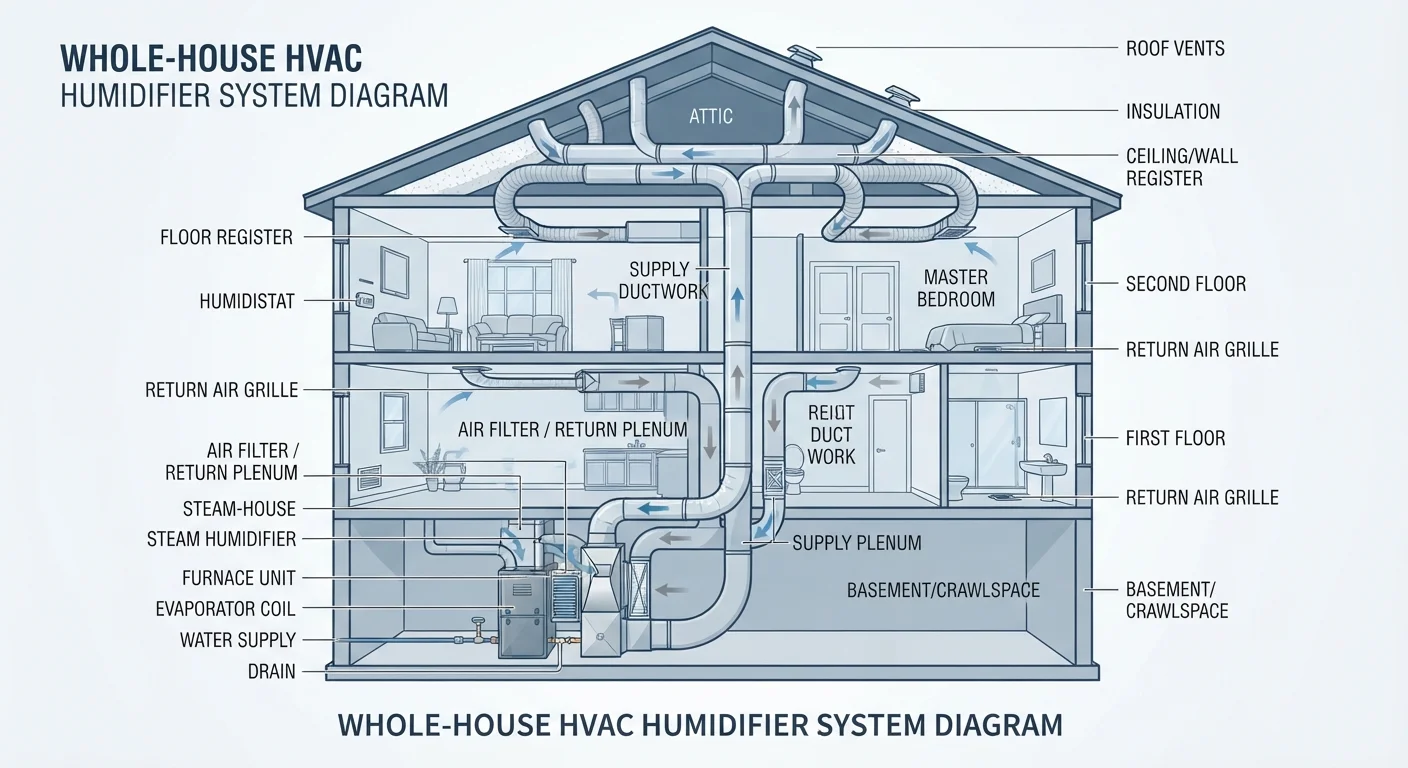
A whole-house humidifier - sometimes called a central or bypass humidifier - integrates directly into your home's forced-air HVAC system. Rather than moistening a single room, it adds water vapor to the air as it circulates through the ductwork, distributing humidity throughout the entire living space in a single pass.
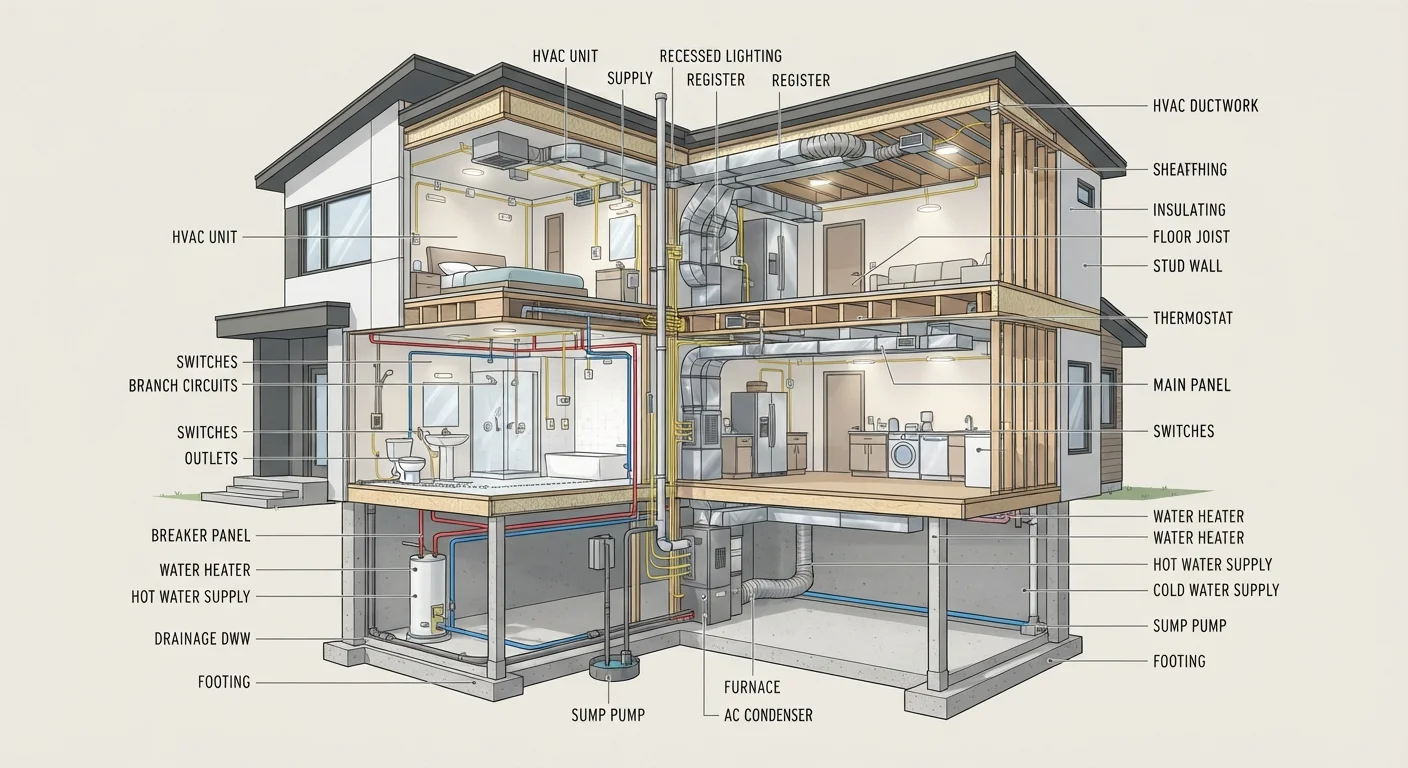
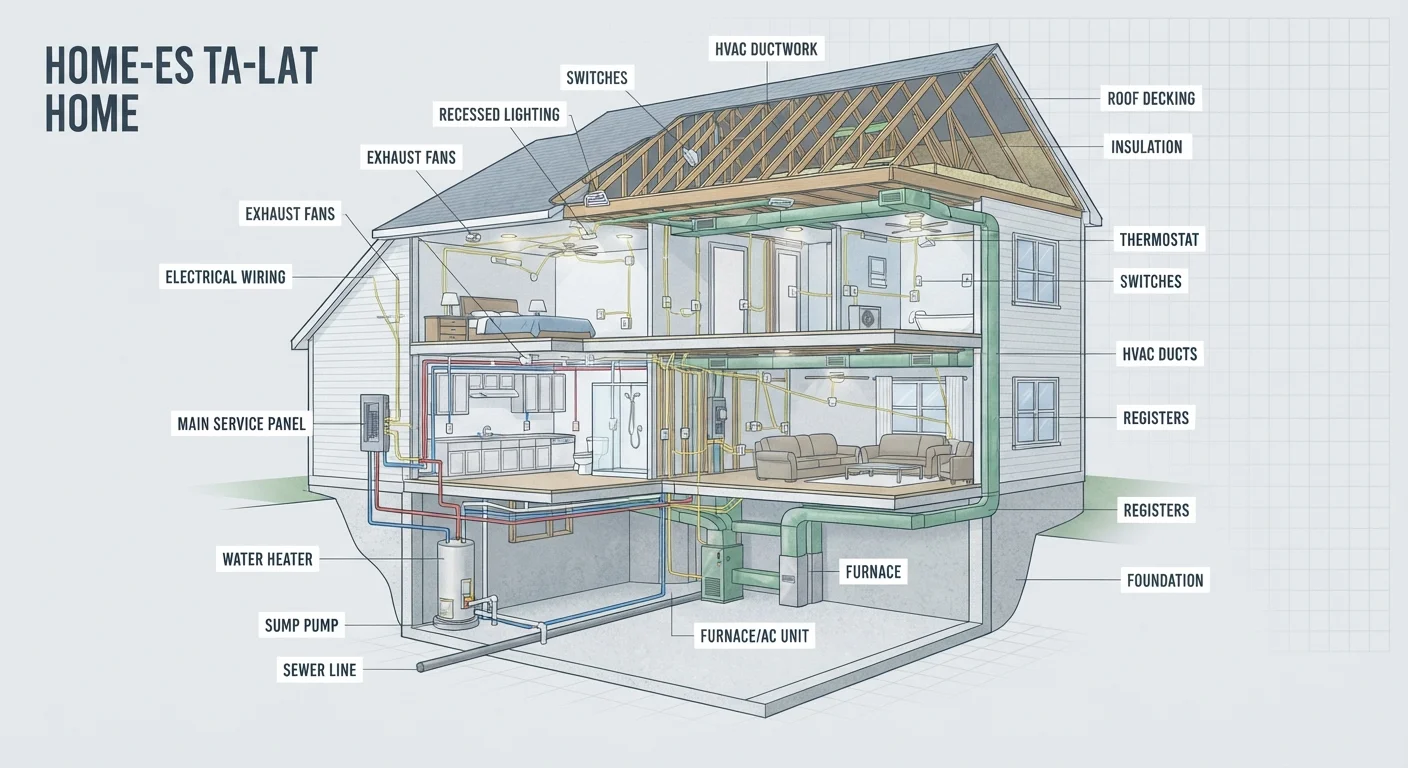
Most units connect to a cold-water supply line and use one of three mechanisms: a rotating drum, a flow-through evaporator pad, or a steam generator. A humidistat - essentially a thermostat for moisture - controls when the unit activates, keeping relative humidity within a target range. If you want to understand how this fits into your home's broader infrastructure, see our guide to your home as an interconnected system.
Bypass vs. Flow-Through vs. Steam
Bypass humidifiers divert some airflow through a water-saturated pad and work only when the furnace fan is running. Flow-through models run water continuously over a pad and drain excess away, reducing standing water. Steam humidifiers boil water to produce vapor and can operate independently of the furnace fan - they are more capable but also more expensive to purchase and operate. Your HVAC technician can advise which type suits your system and climate.
The Advantages Worth Knowing
For many households, the benefits of a central humidifier are substantial and practical.
Whole-home coverage without multiple units
A single central humidifier conditions air throughout every room simultaneously, eliminating the need to refill and reposition portable units. Coverage is consistent regardless of floor plan size.
Lower ongoing effort than portable humidifiers
Once installed, a bypass or flow-through model requires no daily refilling - it draws directly from your water supply. Maintenance is seasonal rather than daily.
Can protect wood floors, furniture, and trim
Sustained low humidity causes hardwood flooring to gap, wooden furniture to crack, and door frames to warp. Maintaining 35-45% relative humidity reduces this type of structural stress.
May improve comfort during heating season
Humidified air can feel warmer at the same temperature, which some homeowners find allows them to lower thermostat settings modestly - though individual results vary.
Quiet operation integrated into existing system
Because it works within the ductwork rather than as a standalone appliance, there is no additional fan noise and the unit is typically out of sight entirely.
30-50%
Recommended indoor relative humidity range
The U.S. Environmental Protection Agency identifies this range as appropriate for indoor environments to balance comfort, air quality, and moisture-related risk.
~$400-$1,200+
Typical installed cost range
Costs vary significantly based on unit type (bypass vs. steam), home size, and regional labor rates - get multiple quotes from licensed HVAC contractors.
The Drawbacks You Shouldn't Overlook
The same system that solves dry-air problems can introduce a new set of challenges if not approached carefully.
Significant upfront installation cost
Depending on the unit type and labor in your area, professional installation commonly runs several hundred to over a thousand dollars. This is a meaningful investment compared to portable alternatives.
Mold and bacteria risk without maintenance
Standing water and damp evaporator pads create ideal conditions for microbial growth. A neglected unit can distribute contaminants through the ductwork into living spaces.
Risk of over-humidification and condensation damage
If the humidistat is set too high - or malfunctions - excess moisture can condense on windows, in wall cavities, and in attic spaces, potentially leading to mold, rot, or structural damage.
Hard water causes accelerated mineral scale buildup
In areas with high mineral content in tap water, scale accumulates quickly on evaporator pads and internal components, shortening their lifespan and reducing efficiency.
Only compatible with forced-air systems
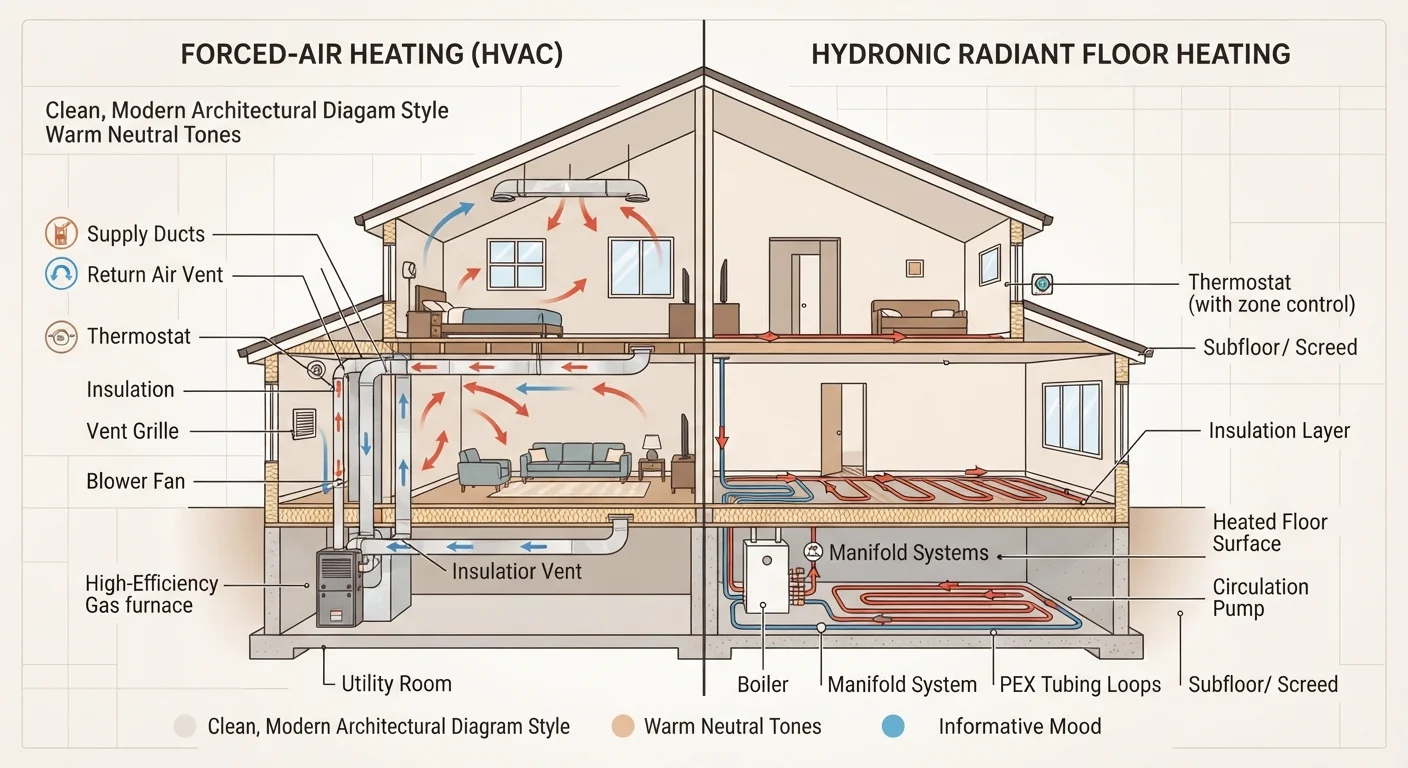
Homes heated by radiant systems - such as boilers with radiators or in-floor hydronic heating - have no ductwork, making central humidifier installation impractical without a separate air handler.
Installation and Maintenance: What's Actually Involved
Whole-house humidifiers are typically installed on the supply or return plenum of your furnace - the large duct section directly connected to the unit. Because installation involves cutting into ductwork, tapping a water line, and wiring a humidistat, this is work that should be performed by a licensed HVAC technician. Permits may be required depending on local codes; check with your municipality before scheduling work.
Once installed, maintenance is the make-or-break factor. At minimum, plan to:
- Replace the evaporator pad or water panel once per heating season - more often in areas with hard water.
- Clean the drum or reservoir annually to prevent mineral scale and microbial buildup.
- Inspect the water supply line and drain for blockages each fall before the heating season begins.
- Calibrate the humidistat if readings seem inconsistent.
If your system is paired with a forced-air furnace and you're unclear how that equipment works, our overview of forced-air vs. radiant heat systems can provide useful context. Unfamiliar with the terminology contractors use? The home systems glossary covers the HVAC terms you're likely to encounter.