
Why Multiple Inquiries Worry Borrowers - and Why the Fear Is Often Overstated
A persistent concern among car buyers is that shopping around for financing will damage their credit score. This fear has a basis in fact - hard inquiries do temporarily reduce your score - but it leads many borrowers to apply with only one lender, costing them potentially hundreds of dollars in higher interest over the life of the loan.
A single hard inquiry typically reduces a FICO score by fewer than five points, and the effect fades within a few months. More importantly, credit scoring models are specifically designed to distinguish between someone taking on many new debt obligations and someone responsibly comparing options for a single loan. The result is the rate-shopping window: a defined period during which multiple inquiries for the same loan type are treated as one. For a deeper look at how hard inquiries fit into the broader picture of score changes, see why your credit score dropped - it maps each common trigger to its likely impact.
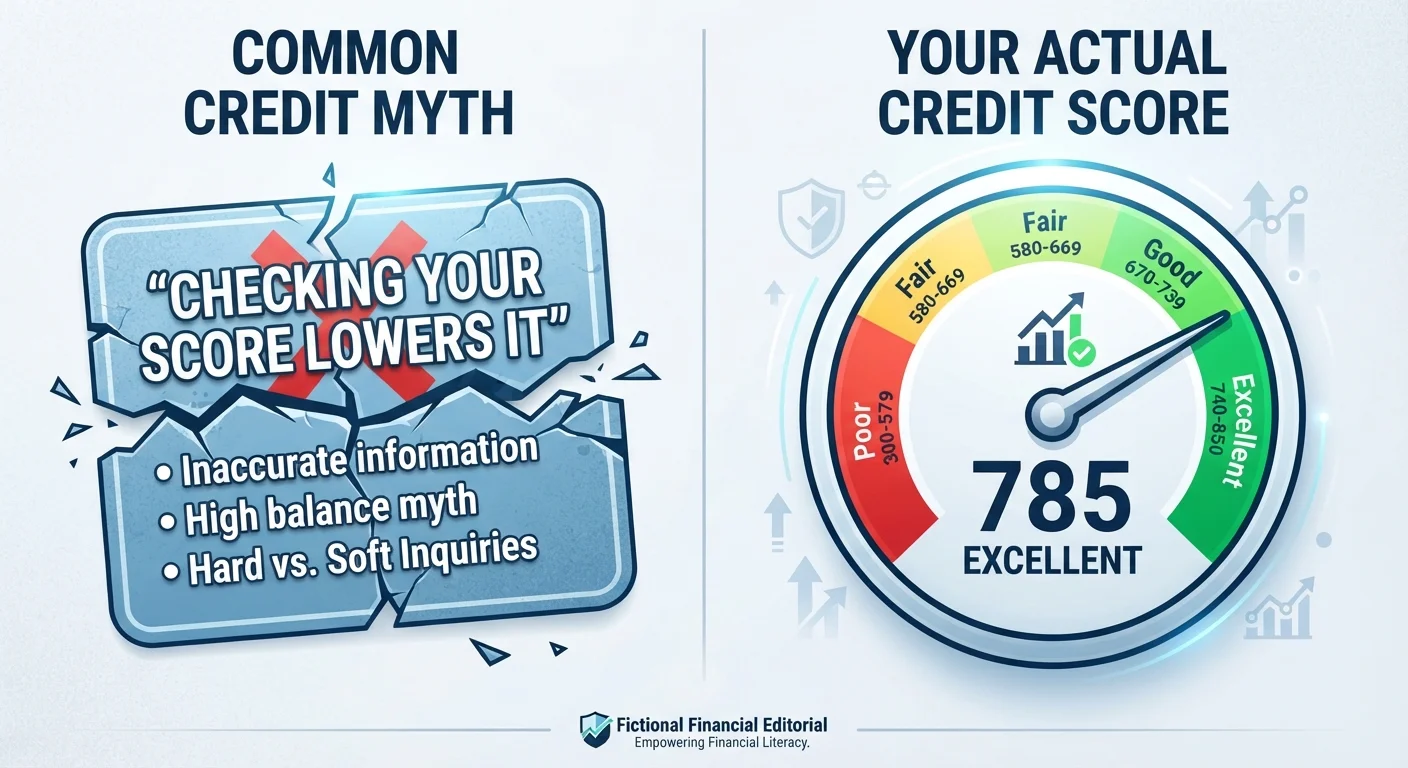
Understanding common credit myths is equally valuable here. The belief that any inquiry is catastrophic is one of the most costly misconceptions a borrower can hold.
Know Which Scoring Model Your Lender Uses
FICO Score 8 applies a 45-day rate-shopping window for auto loans, while older FICO models use a 14-day window. VantageScore models also have their own rules. Because lenders use different versions, you cannot assume a single window applies universally. Confirm the scoring model with each lender when possible, and to be safe, complete all your applications within 14 days.
What to Do Before, During, and After You Shop
Effective rate shopping is a process, not a single action. It begins well before you contact any lender and continues through the moment you sign a loan agreement. The steps below walk you through that process in sequence.
What you will need
AnnualCreditReport.com
Pull your free credit reports from all three bureaus to check for errors before lenders see them.
Lender prequalification tools
Estimate loan offers using soft pulls so you can compare rates without triggering hard inquiries.
Spreadsheet or comparison document
Track APR offers, loan terms, fees, and lender names side-by-side for a clear comparison.
Review your credit report before any lender does
Request your credit reports from all three bureaus - Equifax, Experian, and TransUnion - and review them for errors, unfamiliar accounts, or outdated negative items. Dispute any inaccuracies with the relevant bureau before you begin applying. Even a modest score improvement from correcting an error can meaningfully shift the rates you're offered. This step costs nothing and carries no credit impact.
Understand how the rate-shopping window works
FICO and VantageScore - the two dominant credit scoring frameworks - both recognize that borrowers comparison-shop for loans. To account for this, multiple hard inquiries for the same loan type within a set period are counted as a single inquiry when calculating your score. For FICO Score 8 (the most widely used version), that window is 45 days for auto loans. Older FICO models use a 14-day window. Because you often cannot know which model a lender uses, targeting a 14-day window for all formal applications is the most conservative and reliable approach.
Use soft-pull prequalification to build your lender shortlist
Before submitting any formal applications, use prequalification tools offered by banks, credit unions, and online lenders. These tools perform a soft inquiry - meaning they check your credit without creating a hard pull that affects your score. Prequalification results give you a realistic estimate of the APR range and loan terms you qualify for. Use these estimates to identify your two to four most promising lenders, then proceed to formal applications only with those candidates.
Submit all formal loan applications within your chosen window
Once you've identified your shortlist through prequalification, submit all formal applications within the same 14-day period. This ensures that even lenders using older FICO models will group the inquiries together. Have your income documentation, employment details, and vehicle information ready so you can complete each application quickly and accurately. Inconsistencies between applications can create delays or trigger additional verification steps.
Compare loan offers on total cost, not just monthly payment
When offers arrive, evaluate them on APR (annual percentage rate), loan term in months, any origination or prepayment fees, and total interest paid over the life of the loan. A lower monthly payment often signals a longer term, which typically means paying more in interest overall. Use a simple spreadsheet to lay the offers side by side. The goal is to find the combination of rate and term that minimizes total cost while keeping the payment manageable for your budget.
Use your best offer as leverage at the dealership
If you plan to finance through a dealership, bring your pre-approved offer as a benchmark. Dealers work with a network of lenders and sometimes can match or beat an outside offer - but only if they know they're competing. Present your rate clearly and ask whether the dealer's financing arm can improve on it. If the dealer's offer is worse after accounting for any manufacturer incentives, you have the information and the standing to decline it.
Use Prequalification Before Applying Formally
Many banks, credit unions, and online lenders offer prequalification using a soft credit pull, which does not affect your score. Use these tools first to narrow your list to the two or three lenders most likely to offer competitive terms, then submit formal applications only to those finalists within your shopping window.
Dealer Financing Is Not Always the Starting Point
When a dealership submits your application to multiple lenders simultaneously without your direction, those inquiries may fall outside your intended shopping window or exceed your expected count. Always ask how many lenders a dealer intends to contact before authorizing a credit pull, and clarify that you are already shopping independently.
Once you've secured financing and completed your purchase, the loan becomes part of your credit mix as an installment account. Understanding how installment loans are weighted differently from revolving credit can help you manage your broader credit profile going forward. And if market rates shift significantly after you've taken out your loan, it may be worth exploring when refinancing an auto loan makes sense.
Finally, if you want to understand what drove the specific rate you were quoted, the variables that move auto loan interest rates breaks down how your credit profile, loan term, vehicle age, and lender type each play a role.
This article provides general financial information for educational purposes and does not constitute personalized financial or lending advice. Consult a qualified financial professional regarding decisions specific to your situation.