The Cost Most Shoppers Underestimate
When consumers compare vehicles, they typically focus on purchase price, monthly payment, or fuel economy. Depreciation - the rate at which a vehicle loses market value over time - rarely enters that calculation with the weight it deserves. That's a costly oversight.
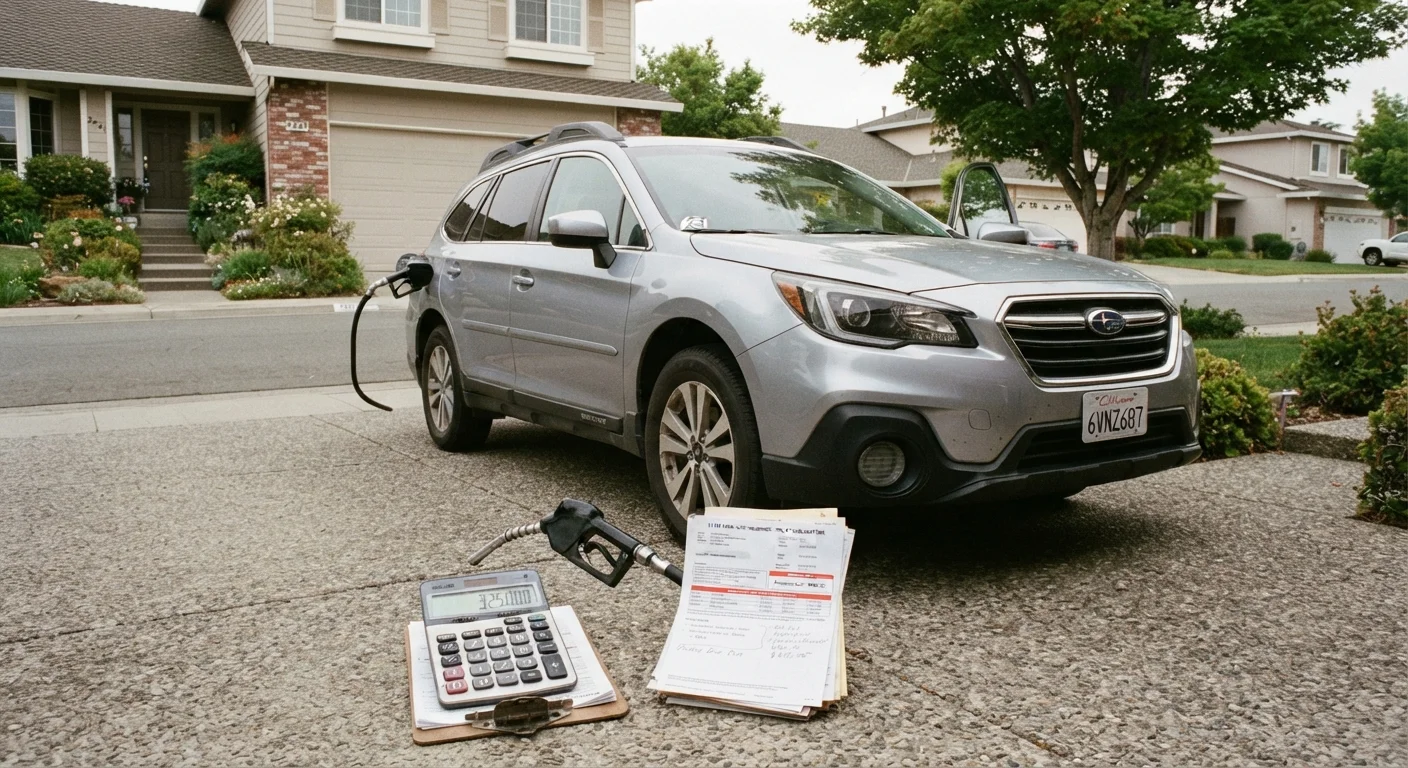
Industry estimates consistently show that depreciation accounts for roughly 40-50% of total ownership costs for the average new vehicle. For context, that often exceeds what drivers spend on fuel, insurance, and maintenance combined over the same period. If you want a complete picture of what a vehicle truly costs, depreciation belongs at the center of the analysis - not as a footnote. See our full breakdown of real ownership costs for the broader financial picture.
~50%
Share of ownership costs from depreciation
Industry estimates from automotive cost-of-ownership analyses consistently place depreciation at roughly 40-50% of total new-vehicle ownership expense.
15-25%
Value lost in the first year
Most new vehicles lose between 15% and 25% of their value in the first 12 months, according to widely cited automotive valuation benchmarks.
How Depreciation Curves Actually Work
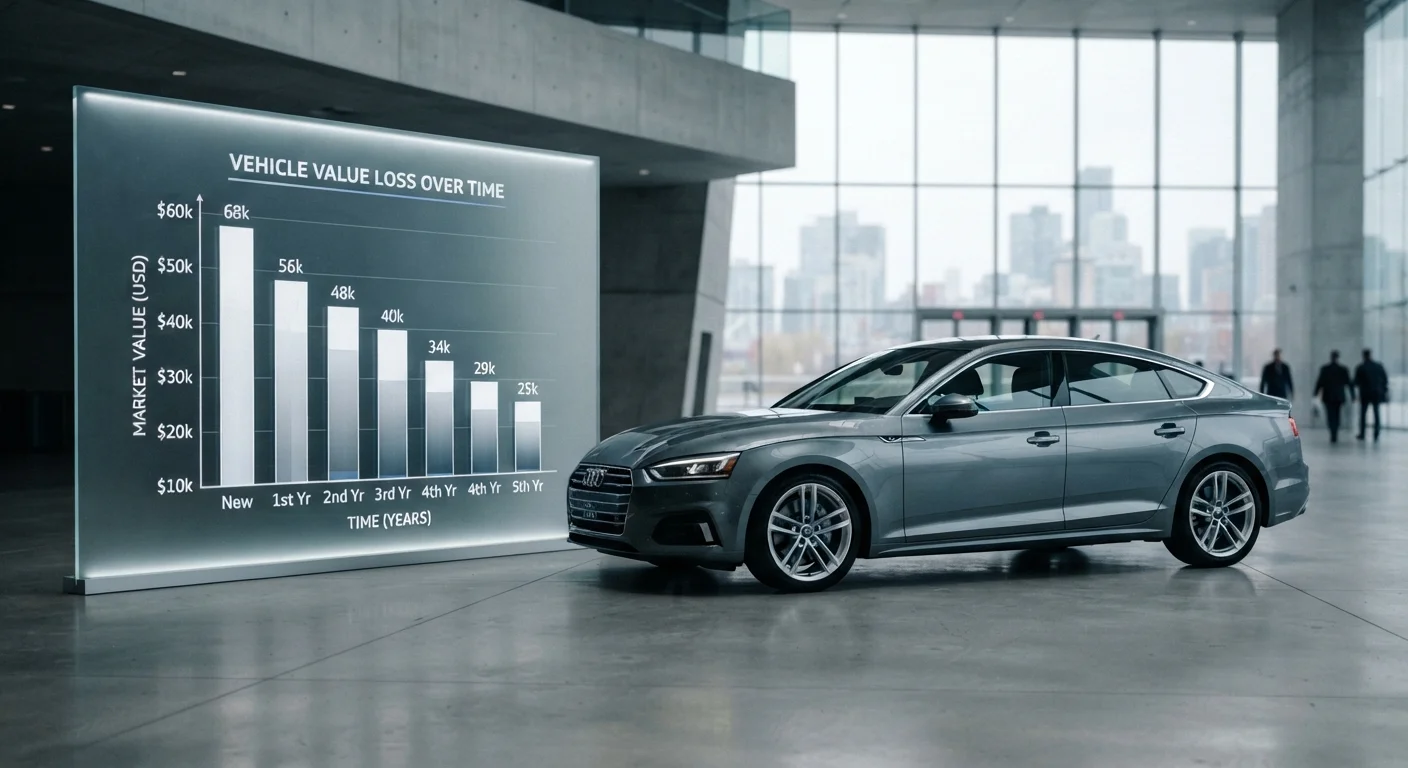
Vehicles don't lose value at a flat, predictable rate. Depreciation is front-loaded: the steepest drop typically occurs in the first one to three years of ownership. A new vehicle can shed 15-25% of its value in the first year alone, simply by transitioning from "new" to "used" status. By year five, cumulative depreciation for many vehicles reaches 60% or more of the original purchase price.
The curve then flattens. A six-year-old vehicle loses proportionally less value each subsequent year than it did early in its life. This flattening is why a slightly used vehicle - say, two to three years old with moderate mileage - can represent a meaningfully different value proposition than a brand-new one, even if the sticker prices appear similar at first glance.
Several factors shape where a specific vehicle sits on that curve: brand perception, powertrain type, historical reliability data, trim level popularity, and supply-demand dynamics in the used market all play measurable roles. Luxury vehicles and certain segment types have historically depreciated faster than practical, high-demand segments - though this varies and should be researched for any specific vehicle you're considering.
“The purchase price of a car is just the beginning. Depreciation is the silent cost that accumulates every month of ownership, and most buyers never see it coming until they try to sell.”
— Consumer automotive finance educators, Automotive cost-of-ownership research community
Best Practices for Using Depreciation as a Decision Tool
Knowing that depreciation exists is table stakes. Using it strategically requires a few deliberate habits.
Research a vehicle's historical depreciation rate before visiting a dealership.
Depreciation data is publicly available through automotive valuation resources and should inform your shortlist before you ever test-drive. Choosing a vehicle known to retain value over one with faster decline can result in thousands of dollars in difference at resale or trade-in.
Match your ownership timeline to the vehicle's depreciation curve.
If you plan to sell or trade within three years, the steepest part of the depreciation curve will hit you hardest. Either buy a vehicle that depreciates slowly, or buy used so that the original owner absorbs the early drop.
Factor residual value into your total cost calculation, not just the sticker price.
Two vehicles priced identically may have very different five-year costs once resale values are accounted for. The vehicle with lower depreciation may cost less to own overall, even if its purchase price is marginally higher. The lowest price isn't always the cheapest option - total cost of ownership tells a fuller story.
Consider certified pre-owned vehicles as a deliberate depreciation strategy.
Certified pre-owned (CPO) programs from manufacturers typically include inspection standards and limited warranty coverage, providing a degree of reliability assurance. Meanwhile, the first owner has absorbed the steepest depreciation drop, leaving you to benefit from a flatter portion of the value curve.
Evaluate trim level popularity when estimating future resale value.
Well-equipped mid-range trims typically retain value better than base or fully loaded trims, because the used-market buyer pool for those configurations is broader. A stripped base model may be harder to sell, while an over-optioned top trim may not recover its premium at resale.
Depreciation, Leasing, and the Residual Value Connection
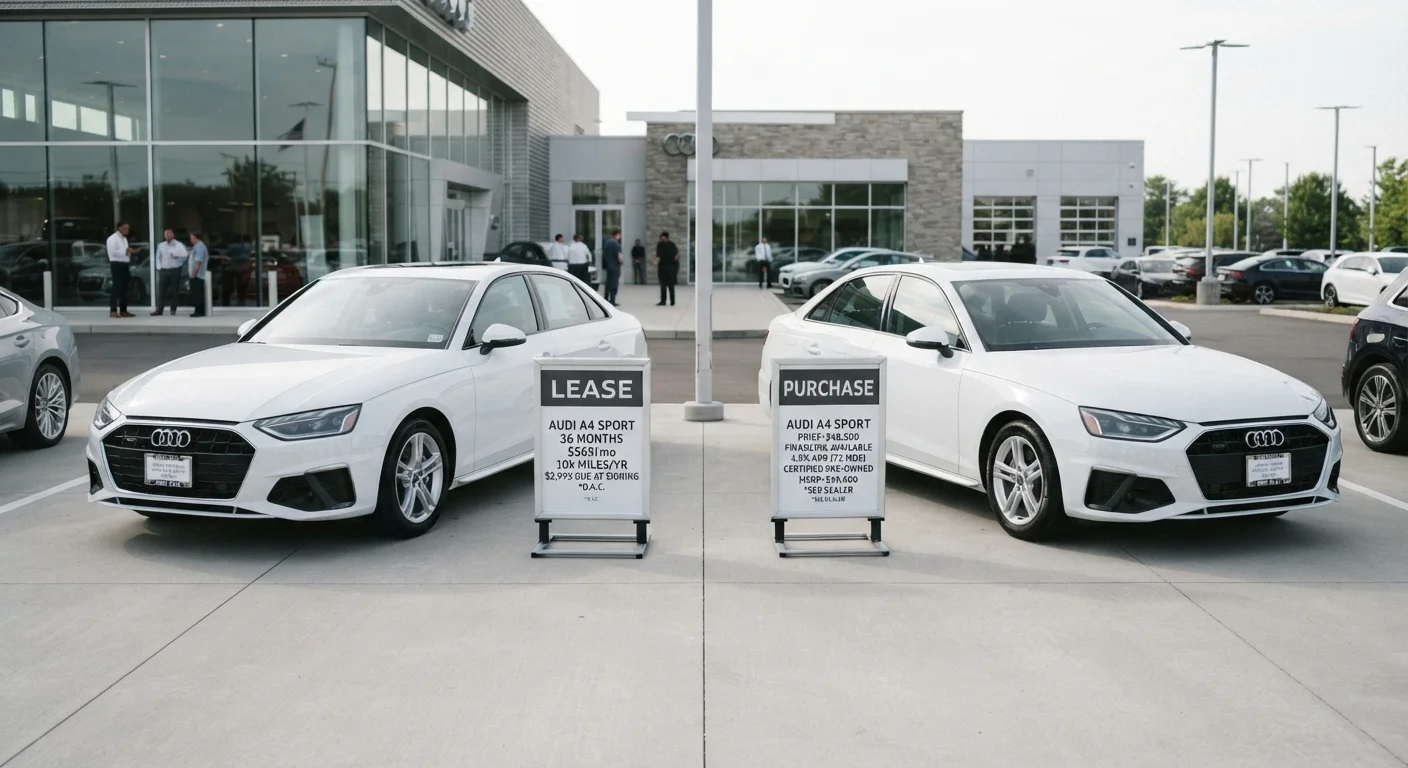
If you're evaluating a lease, depreciation becomes even more structurally important. Lease payments are essentially the cost of a vehicle's depreciation during the lease term, plus financing charges. A vehicle with a high projected residual value - meaning it holds value well - typically produces lower monthly lease payments for the same term and mileage cap.
This is why understanding depreciation isn't just relevant when buying. It directly affects the cost of leasing as well. Our guide to leasing vs. buying trade-offs covers how residual values factor into the total lease cost equation.
Before signing anything, also review how auto financing structures interact with a vehicle's depreciation timeline - particularly the risk of being "upside down" (owing more than the vehicle is worth) if depreciation outpaces loan principal paydown early in a loan term.
Avoiding the Common Missteps
Depreciation-related mistakes often stem from the same reasoning errors that drive other car-buying regrets. Shoppers anchor on a vehicle's emotional appeal or brand prestige without accounting for how those factors historically affect resale. Others assume all vehicles in a segment depreciate similarly, which isn't the case - within the same class, depreciation rates can vary by 20 percentage points or more over five years.
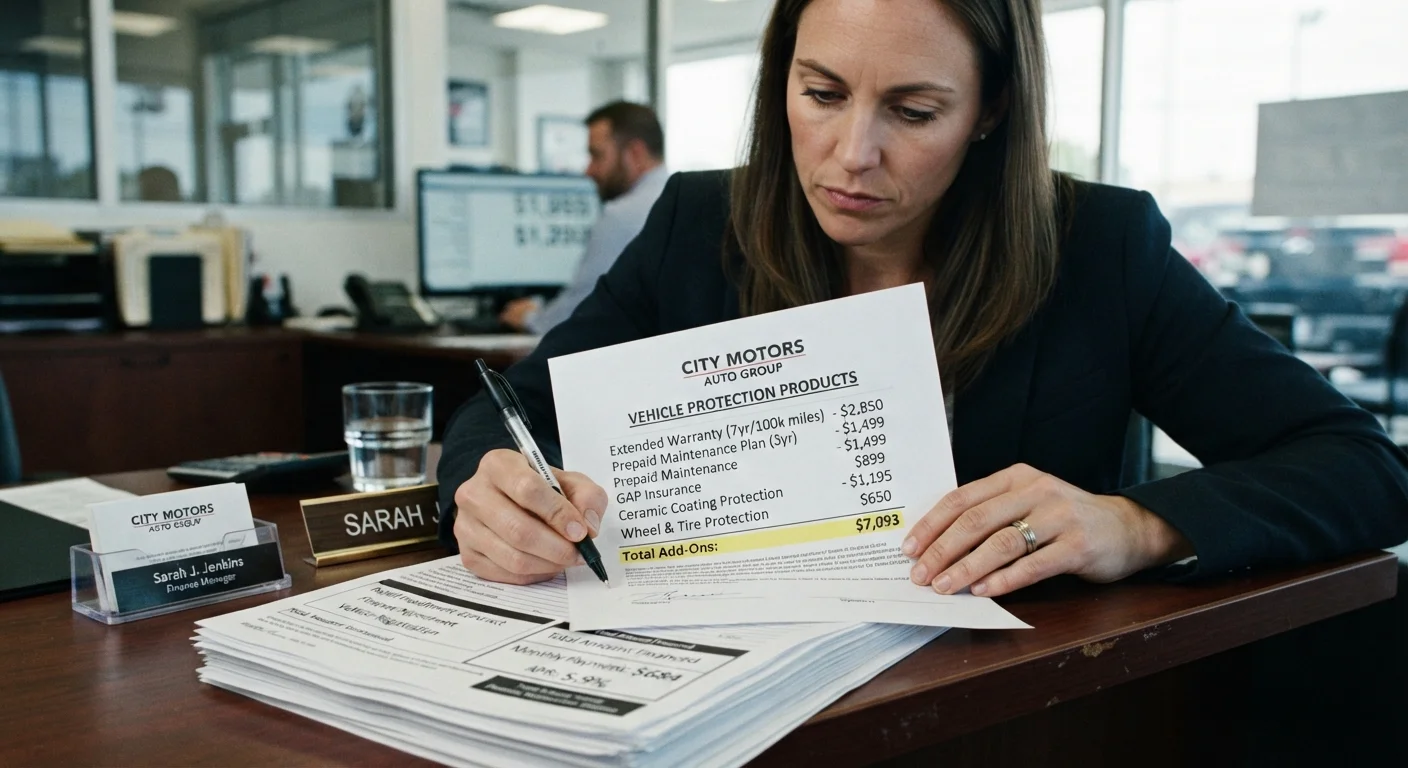
Avoid letting add-on packages inflate your purchase price without considering how they affect resale. A dealer-installed option that costs $2,000 upfront may return little to nothing at trade-in. Our article on add-ons that inflate the final price explains how to evaluate each item before agreeing. Similarly, common assumptions that lead to the wrong vehicle explores how overconfidence in a purchase decision often bypasses cost analysis entirely.
A vehicle's purchase price is a one-time event. Its depreciation curve plays out every month you own it. Treating the latter as seriously as the former is one of the most financially sound habits a car shopper can develop.
This article is for general informational and educational purposes only. It does not constitute financial or investment advice. Consult a qualified financial professional for guidance tailored to your personal situation.