Why the Sticker Price Is Only the Starting Point
When most people budget for a vehicle, they focus on the monthly payment or negotiate hard on the out-the-door price. Those numbers matter - but they represent only a fraction of what the vehicle will actually cost. As our guide on why the lowest price isn't always the cheapest option explains, the purchase figure and the true cost of ownership are often quite different things.
A vehicle with a modest sticker price but poor fuel economy, expensive insurance, and a steep depreciation curve can end up costing considerably more than a pricier alternative with better long-term economics. Buyers who understand this dynamic are better positioned to make decisions that hold up financially over time - not just on the day of purchase.
~$10,728
Average annual cost to own and operate a vehicle
According to AAA's annual Your Driving Costs study, the average American motorist spends over $10,000 per year when all ownership expenses are tallied.
15-25%
Typical new-car value lost in year one
Automotive industry research consistently shows new vehicles experience their steepest depreciation within the first 12 months of ownership.
~$2,000+
Average annual car insurance premium
National average auto insurance costs have risen in recent years; premiums vary widely by state, coverage level, driving record, and vehicle type.
The Six Core Costs That Drive Your Annual Outlay
Every vehicle generates costs across a predictable set of categories. Knowing what each entails allows you to estimate them before committing to a purchase.
- Depreciation: The decline in resale value over time. New vehicles typically lose the most value in years one through three. Choosing a model with a strong resale history can meaningfully reduce this cost.
- Financing interest: If you carry a loan, the interest paid over the loan term is a real cost on top of the vehicle's price. Understanding your loan structure - rate, term, and total interest - before signing is essential. Even small rate differences compound significantly over a 60- or 72-month loan.
- Insurance premiums: These vary based on your driving history, location, vehicle type, and coverage level. Sports vehicles, luxury models, and some SUVs carry higher premiums. Getting insurance quotes before purchase - not after - avoids budget surprises.
- Fuel costs: Annual fuel spend depends on your mileage, local prices, and the vehicle's fuel economy rating. Higher-displacement engines and older models with lower efficiency ratings can add hundreds of dollars per year versus more efficient alternatives.
- Maintenance and repairs: Manufacturer-recommended service intervals, tire replacements, brake work, and unscheduled repairs accumulate over an ownership period. Vehicles with more complex systems or premium parts tend to cost more to maintain.
- Registration, taxes, and fees: State registration costs, annual property taxes on vehicles (in applicable states), and inspection fees are recurring obligations that vary significantly by location.
How Financing Decisions Amplify the True Cost
The structure of your auto loan can make a vehicle significantly more expensive than it appears at the point of sale. A longer loan term lowers the monthly payment but extends the period over which interest accrues - and can leave you "underwater" on the loan (owing more than the vehicle is worth) as depreciation outpaces payoff.
Dealers sometimes frame negotiation around the monthly payment rather than the total financed amount, a dynamic that common negotiation mistakes like this one can cost buyers thousands. Understanding the annual percentage rate (APR) and total interest paid over the life of the loan gives you a clearer picture of what you're actually committing to.
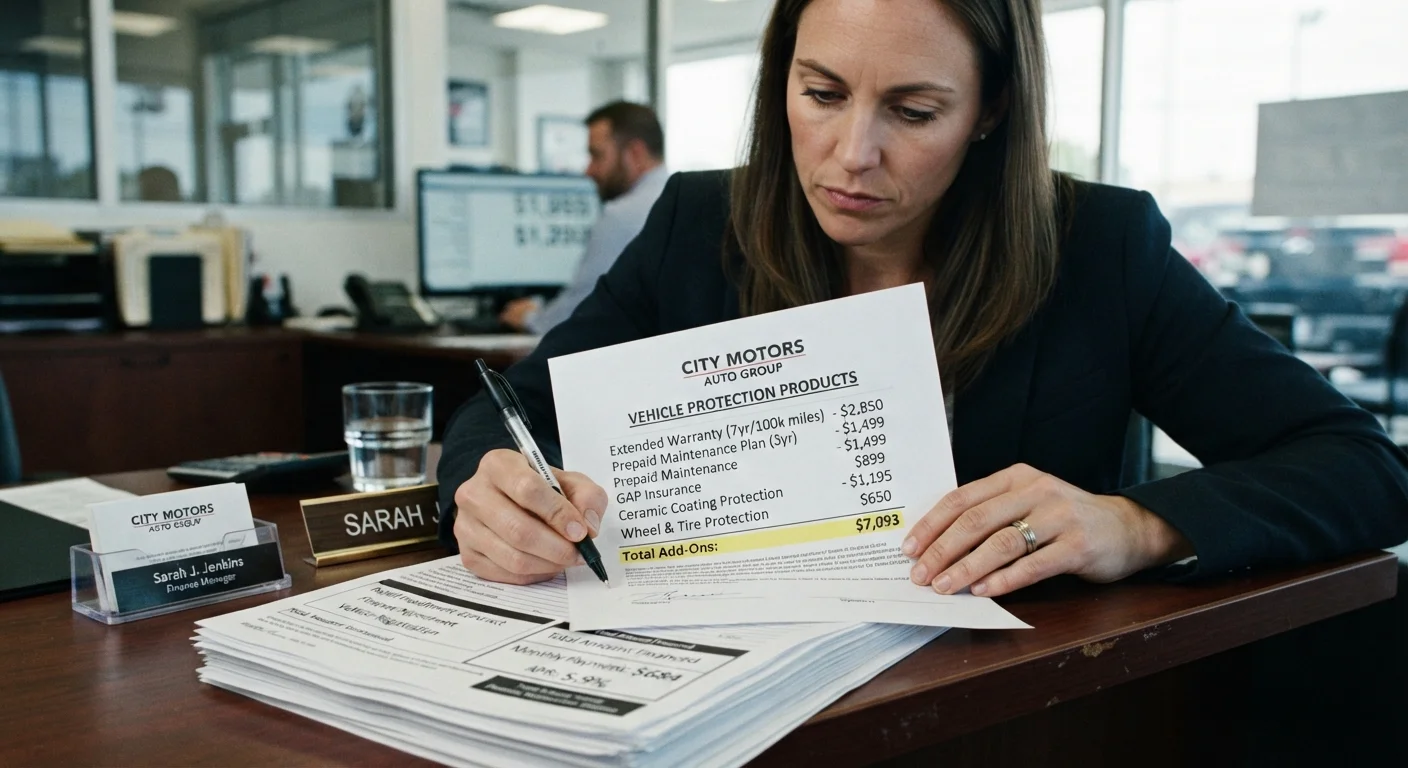
Add-on products offered at the point of sale - such as extended warranties, gap insurance, and protection packages - can further inflate the financed amount. Our coverage of add-ons that inflate the final price details how to evaluate each one on its actual merits before agreeing to include it.
Matching Your Lifestyle to a Realistic Ownership Budget
A useful exercise is to calculate an estimated annual cost of ownership for any vehicle you're seriously considering - not just the monthly loan payment. Factor in insurance quotes for that specific vehicle, its EPA fuel economy rating applied to your typical annual mileage, and manufacturer maintenance schedules. This produces a more honest monthly number to compare against your budget.
Consider how long you plan to own the vehicle. If you tend to trade in every three years, depreciation will hit harder and financing costs will reset with each purchase cycle. Drivers who hold vehicles for seven or more years often reduce per-year costs substantially, assuming the vehicle is well-maintained and repair costs remain manageable.
“The most financially dangerous moment in car buying is when you stop thinking about the total cost and start thinking only about whether you can make the monthly payment.”
— Consumer Financial Protection Bureau, U.S. federal agency providing consumer finance education and guidance
The hidden costs that erode a good deal after you buy are not unique to vehicles - but in the automotive context they are particularly significant given the scale of the investment. Approaching the purchase with a full-cost mindset, rather than a sticker-price mindset, is one of the most financially protective steps a buyer can take.
This article is for general informational and educational purposes only and does not constitute financial or legal advice. Consult a qualified financial professional regarding decisions specific to your circumstances.