
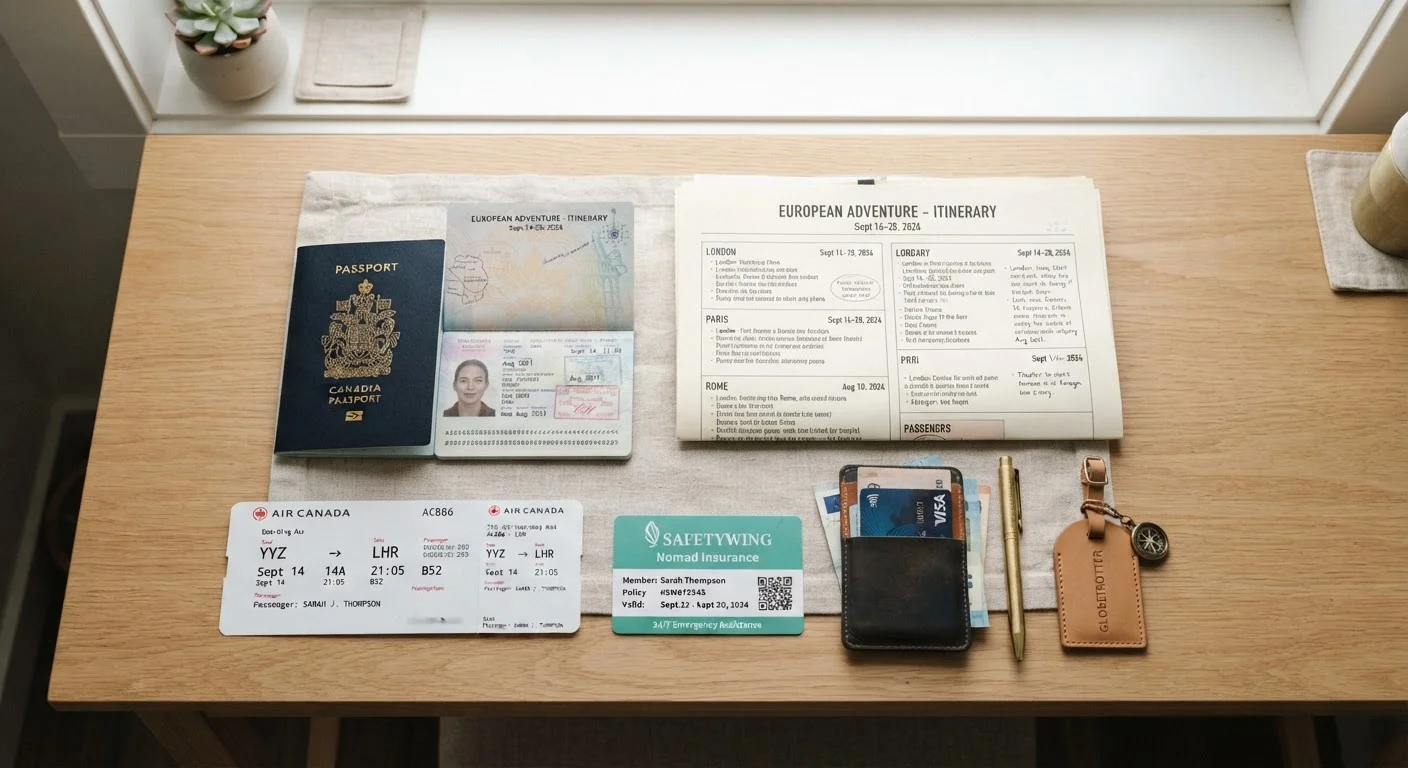
Why Your Document Checklist Matters More Than You Think
Missing a single document at the border can result in denied entry, a missed flight, or an expensive scramble to sort things out from a foreign country. The stakes are higher than most travelers anticipate - and the fix is straightforward if you plan ahead.
This checklist covers what to carry, what to photocopy, and what to verify before you ever reach the airport. It's designed to work alongside your broader pre-departure planning. If you haven't yet confirmed your travel budget is solid, our Pre-Trip Budget Audit covers that ground. And if this is your first international trip, it's worth reading about common first-time international travel mistakes before you finalize any plans.
Use the checklist below to audit your documents at least four to six weeks before departure - not the night before.
Check Entry Requirements From Official Sources Only
Visa policies, health documentation requirements, and entry rules change without much public notice. Relying on travel blogs or forum posts for this information is risky. Always verify current requirements through the official embassy or consulate website of your destination country and through your own government's travel advisory pages (travel.state.gov for U.S. travelers) no earlier than 30 days before departure.
Tools and Resources You'll Need
Before working through the checklist, gather or set up the following resources. Having them in place makes the audit faster and more thorough.
U.S. Passport (valid)
Primary identity and entry document required for all international travel; confirm validity dates and available pages before any booking.
Official visa or entry permit
Required for entry to many countries; obtain through the destination country's official embassy or consulate channels.
Travel insurance policy
Documents your coverage for medical emergencies, trip interruption, and evacuation; required or strongly recommended for most international destinations.
Secure document organizer or travel wallet
Keeps passports, cards, and printed copies organized and accessible during transit without exposing them unnecessarily.
Cloud storage account
Stores encrypted digital backups of all critical documents accessible from any internet-connected device if originals are lost or stolen.
International Driving Permit (IDP)
Required for driving in certain countries; issued by AAA and AATA in the U.S. alongside your valid driver's license.
Vaccination record or health certificate
Documents required immunizations for entry to specific destinations; requirements vary by country and current health conditions.
The Document Checklist
Work through each group systematically. Items marked must are non-negotiable for legal entry and return. Items marked should are strongly recommended to avoid complications. Nice-to-have items reduce friction and speed up problem resolution if something goes wrong.
Primary Identity and Entry Documents
Travel Insurance and Health Documentation
Financial and Payment Documents
Backup and Emergency Documents
Transportation and Logistics Documents
For guidance on managing money once you're abroad, our overview of carrying cash vs. cards abroad covers the trade-offs in practical detail.
Organizing and Storing Your Documents
Carrying the right documents is only half the job - how you store and access them matters nearly as much.
- Keep originals on your person during transit, not in checked luggage. A document wallet worn under clothing adds a layer of security.
- Make two sets of photocopies: leave one set with a trusted contact at home and keep a second set in a separate bag from your originals.
- Create a secure digital backup of every critical document. A cloud storage folder you can access from any device is a practical failsafe.
- Note emergency contacts for your country's embassy or consulate at each destination. The U.S. State Department's STEP (Smart Traveler Enrollment Program) is a free resource that registers your trip and provides emergency notifications.
For a broader look at how documents fit into your overall trip logistics - from flights and lodging to contingency planning - see our complete trip planning framework.
Don't Store All Documents in One Place
Keeping your passport, cash, cards, and copies all in the same bag creates a single point of failure. If that bag is lost or stolen, you lose everything at once. Distribute originals, copies, and payment methods across your carry-on, a money belt, and a secure digital backup - so that losing any one item doesn't strand you without recourse.
This article provides general travel information for educational purposes. Entry requirements, visa rules, and health documentation standards change frequently and vary by destination and passport. Always verify current requirements with official government sources - including your own government's travel advisory pages and the embassy or consulate of your destination country - before traveling. This is not legal or immigration advice.