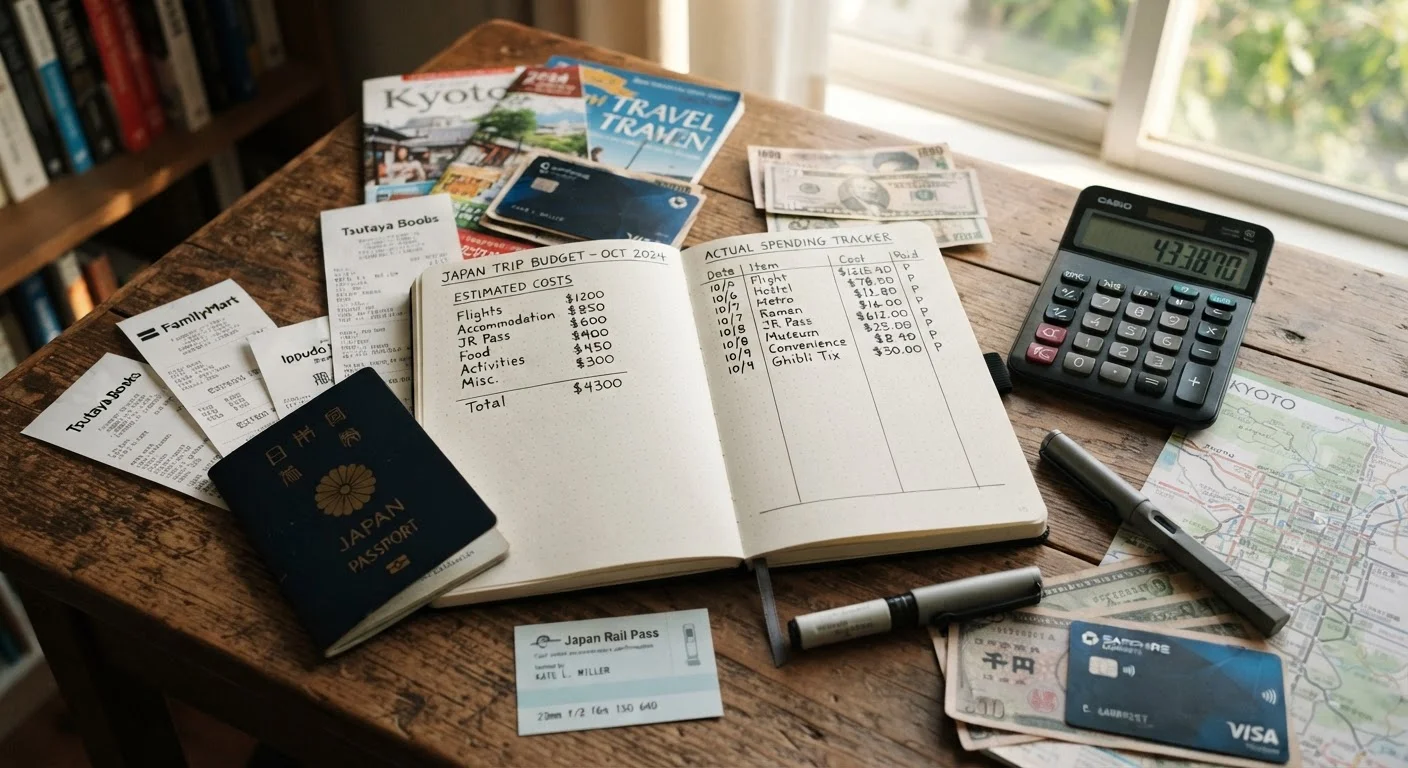
Use this checklist to confirm your travel budget is complete, realistic, and ready—covering costs, currency, contingencies, and payment logistics.
Key Takeaways
Confirm all booked costs match your original estimates before departure - prices and fees can change.
Verify payment methods work at your destination, including ATM access and card foreign transaction fees.
Build a contingency reserve of at least 10-15% of your total trip budget for unexpected costs.
Check currency exchange rates and have a plan for acquiring local cash if needed.
Review what travel insurance covers and confirm policy limits before you leave home.
Why a Budget Audit Matters Before You Leave
Most travel budgets are built weeks or months before departure - which means by the time you're packing, some numbers are stale, some bookings have added fees, and a few cost categories may have been forgotten entirely. A pre-trip budget audit closes those gaps while you still have time to adjust.
This isn't about rebuilding your budget from scratch. If you've already worked through a structured planning framework, this checklist is the final verification pass. Think of it as a quality check: confirming that what you planned is still what you're walking into.
Run this audit 5-7 days before departure - close enough that prices are final, but far enough out to fix anything that's off.
Required
Spreadsheet or budgeting app
Used to compare your original budget estimates side-by-side with confirmed booking totals during the audit.
Required
Booking confirmation emails
Required to verify actual charges, included fees, and booking status for flights, hotels, and pre-paid activities.
Required
Bank and credit card apps
Used to check card expiration dates, confirm travel notifications are set, and verify available balances.
Required
Currency converter tool
Used to check current exchange rates and update any budget estimates built on older rate assumptions.
Required
Travel insurance policy document
Needed to review coverage limits and locate the emergency claims contact number before departure.
The Pre-Trip Budget Audit Checklist
Work through each group systematically. Mark items as confirmed once you've verified the actual number against your planned budget. Flag any gap larger than 10% for review before you close out.
Booked Costs Verification
Pull up every booking confirmation and verify the total charge matches what you originally budgeted, including taxes and fees.Must
Check for resort fees, destination charges, or parking fees not included in the original booking rate.Must
Confirm any prepaid tours, experiences, or transfers still show as confirmed and haven't been quietly cancelled.Must
Verify that all flight ancillary fees - checked bags, seat selection - are already paid and accounted for in your total.Must
Payment Methods & Access
Check that every credit and debit card you plan to use is active and won't expire during your trip.Must
Confirm your primary card's foreign transaction fee structure and identify which card minimizes fees at your destination.Must
Notify your bank and card issuers of your travel dates and destinations to prevent fraud blocks.Must
Identify at least one ATM network available at your destination and verify your daily withdrawal limit covers expected cash needs.Should
Carry at least two different payment methods (e.g., two cards from different networks) in case one is declined or lost.Should
Currency & Cash Planning
Check the current exchange rate for your destination currency and update any budget line items that were estimated at an older rate.Must
Decide how much local cash you need for day one before you can access an ATM, and arrange to have it before departure.Should
Avoid exchanging significant amounts at airport kiosks, which typically carry unfavorable rates - plan your primary exchange method in advance.Should
Contingency & Emergency Fund
Confirm you have a contingency reserve of at least 10-15% of your total trip budget set aside and accessible.Must
Identify how you would access emergency funds if your primary payment method failed - a backup card, a small cash reserve, or a trusted contact at home.Must
Write down the international customer service numbers for your credit cards and store them separately from your wallet.Should
Insurance & Coverage Review
Review your travel insurance policy's coverage limits for trip cancellation, medical expenses, and lost baggage - confirm these align with your actual exposure.Must
Check whether your health insurance provides any out-of-network or international coverage, and understand the claims process before you need it.Should
Confirm your travel insurance policy document and emergency contact number are saved somewhere you can access without cell service.Should
Variable & Discretionary Spending
Set a clear daily spending cap for unplanned expenses - meals, transit, and impulse activities - and write the number down so it stays top of mind.Must
Review dining and activity estimates against current prices at your destination to check for seasonal or inflation-driven increases.Should
Identify any upcoming expenses at home (bills, subscriptions, rent) that will hit while you're traveling and confirm your accounts can cover them without dipping into trip funds.Must
Resort Fees and Hidden Charges Add Up Fast
Many hotels charge mandatory resort or destination fees that are not included in the nightly rate shown at booking. These can range from $20 to $50 or more per night and are typically collected at check-in. Always check your hotel's confirmation for any fees disclosed in the fine print, and call the property directly if you're unsure what you'll owe on arrival.
After the Audit: What to Do If Numbers Don't Add Up
If your audit surfaces a shortfall - a hotel rate that went up, a resort fee that wasn't in the original quote, or a category you simply forgot - you have three realistic options: adjust spending in a flexible category, add to your contingency fund before leaving, or trim an activity. What you shouldn't do is ignore the gap and assume it will work out on the road.
Overspending rarely happens in one dramatic moment. It accumulates across small mismatches - which is exactly what budget breakdowns look like in practice. Catching those mismatches now is far easier than course-correcting mid-trip.
This article is for general informational purposes only. Prices, fees, exchange rates, and financial product terms vary and change frequently - always verify directly with providers before travel.
Travel Planning Editorial Team is the collective byline for our editorial team and contributor network. Articles published under this byline or an editorial pen name are researched, written, and reviewed according to our editorial standards for clarity, consistency, and independence before publication.
The content provided on our blog site traverses numerous categories, offering readers valuable and practical information. Readers can use the editorial team’s research and data to gain more insights into their topics of interest. However, they are requested not to treat the articles as conclusive. The website team cannot be held responsible for differences in data or inaccuracies found across other platforms. Please also note that the site might also miss out on various schemes and offers available that the readers may find more beneficial than the ones we cover.