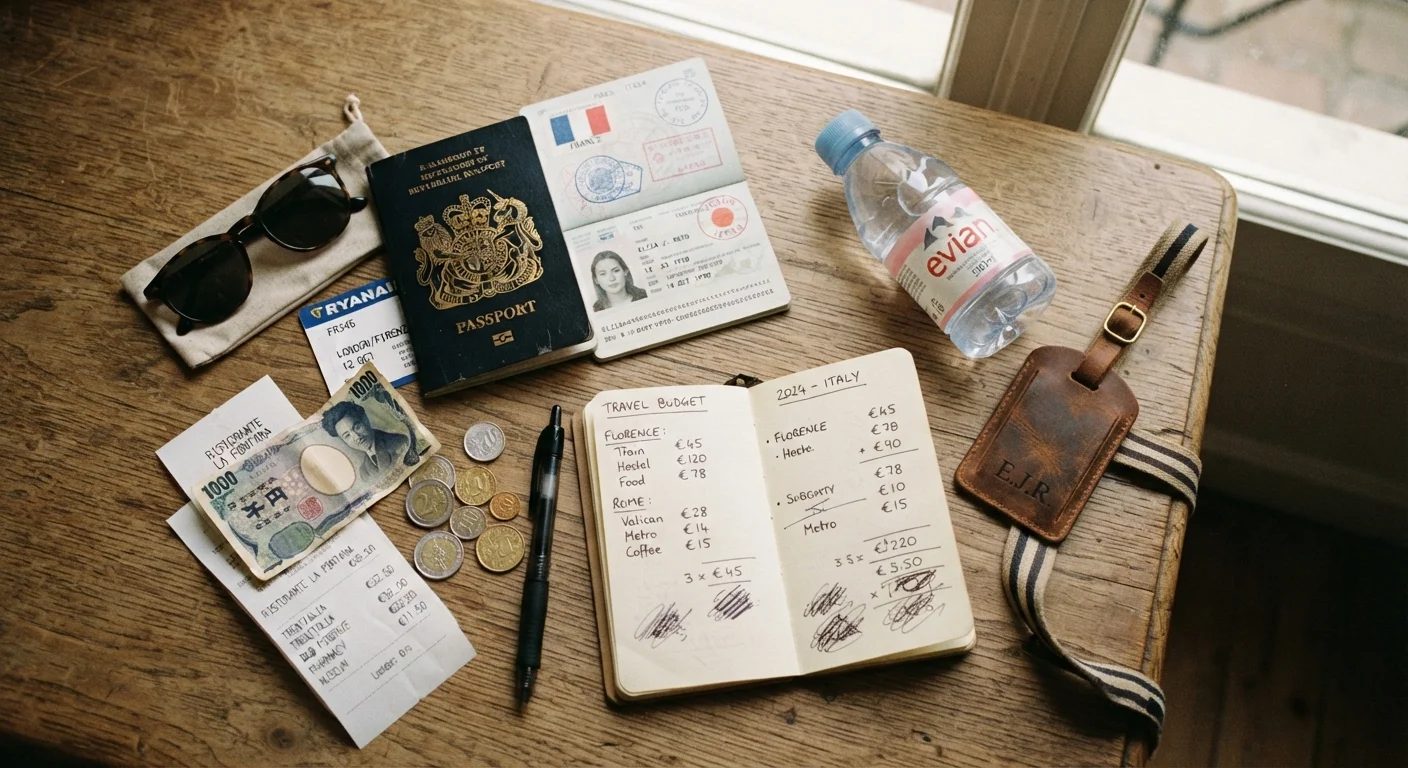
Why This Decision Has Real Dollar Consequences
The way you carry money abroad isn't just a matter of habit - it directly affects how much you spend. A 3% foreign transaction fee on a two-week trip with $3,000 in card spending quietly costs you $90. An ATM that charges a flat $5 fee per withdrawal, compounded across multiple stops, adds up the same way. These aren't catastrophic numbers individually, but travel budgets are built in the margins. Small costs accumulate faster than most travelers expect, and payment method choices are a consistent contributor.
The right answer depends on your destination, trip length, spending patterns, and risk tolerance. This breakdown lays out the concrete trade-offs so you can make an informed call before you leave home.
The Case for Carrying Cards Abroad
Competitive exchange rates via card networks
Major card networks apply rates close to the interbank rate, which is typically more favorable than retail currency exchange. This advantage compounds on longer trips with higher spending.
Strong fraud liability protection
US credit card holders have significant protections against unauthorized charges under federal law. Disputed transactions are handled by the issuer, limiting your out-of-pocket exposure.
No physical loss risk for the funds
A card that is lost or stolen can be canceled and reissued; the money attached to it is not gone. Cash lost to theft or misplacement is simply gone with no recourse.
Convenient for large or frequent purchases
Hotels, car rentals, and larger restaurants almost universally accept cards. Carrying enough cash to cover these transactions would require impractical amounts.
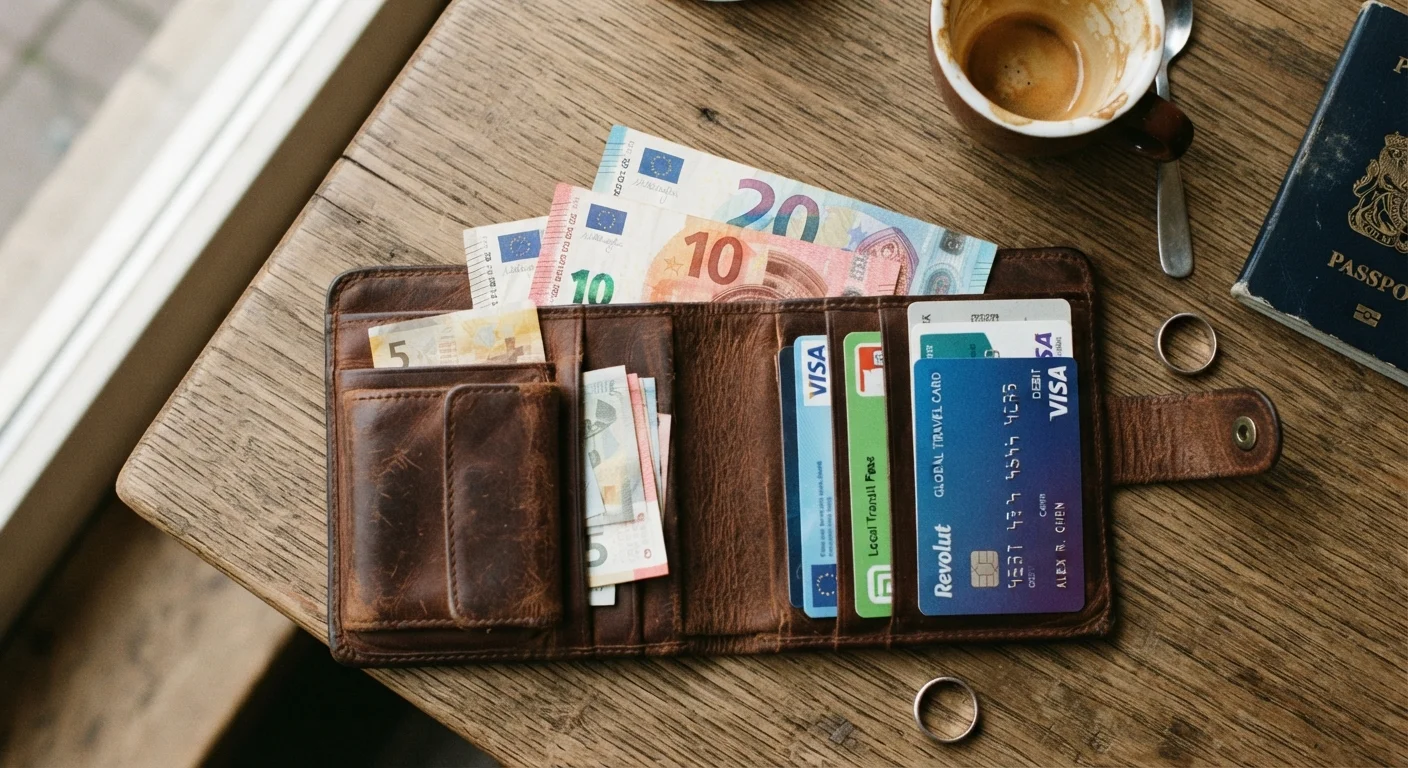
Cards - particularly credit cards without foreign transaction fees - offer a strong combination of convenience and protection for most international destinations. The exchange rates applied to card transactions are typically based on wholesale interbank rates, which are more favorable than what currency exchange booths offer. Fraud liability protections on credit cards are robust under US federal law: if your card is compromised, your exposure is capped and disputes are handled by the issuer.
One critical rule: when a foreign terminal or ATM asks whether you want to pay in the local currency or US dollars, always choose the local currency. Choosing dollars triggers dynamic currency conversion (DCC) - a process where the merchant's bank sets the exchange rate, almost always at a significant markup. Declining DCC and letting your card network handle the conversion will generally produce a better rate.
Be aware that understanding how credit products work - including how foreign fees appear on statements - helps you pick the right card before departure rather than discovering charges afterward.
The Case for Carrying Cash Abroad
Foreign transaction fees erode value on many cards
Cards without specific fee waivers typically charge 1%-3% on every foreign transaction. On a $3,000 trip, that's up to $90 in pure overhead that could be eliminated with the right card.
Useless at cash-only vendors and rural locations
Markets, small guesthouses, street food stalls, and many rural businesses worldwide do not accept cards. A traveler relying solely on cards in these contexts will simply be unable to pay.
Dynamic currency conversion traps catch off-guard travelers
Merchants or ATMs may offer to bill you in US dollars - a seemingly helpful option that actually applies an unfavorable markup. The traveler must actively decline each time.
ATM fees stack up with frequent small withdrawals
Both your home bank and the foreign ATM operator may each charge a fee per withdrawal. Making multiple small withdrawals instead of fewer larger ones multiplies these fixed costs.
Physical cash is unrecoverable if lost or stolen
Unlike a compromised card, stolen or misplaced cash has no recovery mechanism. A single pickpocketing incident can wipe out a traveler's entire cash reserve with no recourse.
Cash has a stubborn utility that cards cannot fully replace. Many destinations - rural areas, local markets, small guesthouses, street food vendors - operate entirely on cash. In regions with unreliable payment infrastructure or frequent power outages, a card is simply unusable. Having local currency on hand is not optional in these contexts; it's a baseline requirement.
Cash also enforces a natural spending discipline: when you can see and feel what you have left, overspending is harder. For travelers prone to losing track of card expenditures, a cash envelope system offers a tangible budget check.
1%-3%
Typical foreign transaction fee per card purchase
This fee range is commonly disclosed in card agreements for standard consumer credit and debit cards used internationally.
$3-$5
Common US bank international ATM withdrawal fee
Many US banks charge a flat fee per international ATM withdrawal, separate from any fee the local ATM operator may impose.
The chief risks are physical: cash lost to theft, pickpocketing, or simple misplacement is unrecoverable. There is no fraud department to call. Carrying large amounts magnifies this exposure considerably. If you're thinking through how cash concentration creates its own financial risks in other contexts, the trade-offs of holding too much cash apply in travel settings too - concentration equals vulnerability.
ATM Fees and Exchange Rate Math
Check Your Bank's ATM Network Before You Go
Some US checking accounts - particularly those offered by online-focused banks - reimburse international ATM fees either partially or in full. Knowing this before you travel can change how you structure your cash access strategy significantly. Check your account terms or call your bank directly before departure to confirm what applies to your specific account.
When you do use an ATM abroad, the fee structure is typically layered: your US bank may charge a flat international withdrawal fee (often $3-$5), the foreign ATM operator may impose its own surcharge (variable, sometimes $3-$10), and if you use a debit card with a foreign transaction fee, a percentage is applied on top. Withdrawing larger, less frequent amounts reduces the flat-fee impact per dollar obtained.
Currency exchange booths at airports and tourist areas consistently offer the worst rates. The spread - the gap between the buy and sell rate - is how they profit, and high-traffic tourist zones widen that spread. If cash is necessary, withdrawing from a reputable bank-affiliated ATM at your destination, in the local currency, will typically produce a better effective rate than exchanging bills before departure or on arrival at a booth.
For a broader view of the financial habits that reduce friction across trips, see money habits that make travel more affordable over time.
Building a Practical Hybrid Strategy
Most experienced international travelers don't choose one or the other - they structure a hybrid approach calibrated to the destination. A reasonable starting framework:
- Primary spending: A credit card with no foreign transaction fee and solid fraud protection.
- Cash reserve: Enough local currency to cover 2-3 days of small purchases, tips, and cash-only vendors - typically $50-$150 equivalent depending on destination costs.
- ATM access: Know your bank's international ATM network partnerships before you leave; some accounts reimburse foreign ATM fees entirely.
- Backup card: Keep a second card in a separate location in case your primary is lost, stolen, or demagnetized.
Before you travel, confirm with your bank that your cards are enabled for international use and that you won't trigger fraud blocks. Also make sure your travel documents are organized - carrying the right documents matters as much as carrying the right payment methods when something goes wrong abroad.
This article is for general informational purposes only and does not constitute financial or legal advice. Consult a qualified financial professional for guidance specific to your situation.