
The Gap Between 'Cheap' and 'Affordable'
When most people say they want to travel cheap, what they usually mean is that they want to travel affordably - without blowing their budget or going into debt. Those aren't the same thing, and conflating them leads to poor planning decisions.
A $79 airfare can easily become a $300+ roundtrip once checked bags, seat selection fees, and a connecting airport's transit costs are added in. Meanwhile, a $200 direct flight might cost less overall and save five hours of travel time. The sticker price is just the starting point. As we detail in The Real Cost of a Trip, most travelers systematically undercount the non-obvious line items that drive actual spend.
Affordable travel is about controlling total trip cost - not hunting a single low number. That shift in framing changes which decisions actually matter.
Myth
Booking flights at the last minute saves money because airlines slash prices to fill seats.
Fact
Last-minute fares are typically higher, not lower, especially on popular routes and during peak periods.
While distressed inventory sales occasionally appear on specific low-demand routes, last-minute booking is a high-variance strategy that usually backfires. Airlines use dynamic pricing algorithms that raise fares as departure approaches and remaining seats decrease. For most US travelers on mainstream routes, booking 3-8 weeks in advance tends to offer a better price-to-availability balance than waiting. Flight Search Myths That Lead Travelers Astray addresses this and other persistent booking misconceptions with more detail.
Myth
Budget airlines always save you money compared to full-service carriers.
Fact
Ultra-low-cost carriers often charge separately for carry-on bags, seat selection, and other basics, which can make the total fare comparable to or more expensive than a traditional airline.
The base fare comparison is misleading because budget carriers unbundle nearly everything. A fare that appears $60 cheaper may require $45 for a carry-on, $25 for a seat assignment, and additional fees for printing a boarding pass at the airport. Before booking any flight, read the fare rules carefully. Reading the Fine Print on Airline Tickets explains what to look for in fare class terms before confirming a purchase.
Myth
Hostels and budget accommodations are always the most cost-effective lodging option.
Fact
Accommodation value depends heavily on group size, location, and included amenities - a shared vacation rental or strategically located mid-range hotel can cost less per person than a hostel.
For solo travelers, hostels are often genuinely cost-effective. But for two or more people, splitting a private room or apartment rental frequently comes out cheaper per person than paying individual hostel dorm rates - while also offering more space and kitchen access that reduces meal costs. The lowest-priced accommodation is also not always the best value if it requires expensive transportation to reach central areas. Location relative to your planned activities is a real cost factor, not just a convenience issue. See Why the Lowest Price Isn't Always the Cheapest Option for the broader principle at work here.
Myth
Traveling off-season guarantees significant savings on everything.
Fact
Off-season travel reduces some costs but introduces trade-offs - closures, weather risks, and limited availability - that may offset the savings.
Shoulder season (just outside peak periods) often provides the best balance of lower prices and functional access. True off-season travel can mean some attractions close, regional transportation runs on reduced schedules, and weather conditions require contingency planning (travel protection, flexible bookings). The savings can be real, but they're not automatic - and the definition of 'off-season' varies significantly by destination. Research what actually shuts down or degrades in quality before choosing a travel window purely on price.
Where Real Savings Actually Come From
The popular focus on airfare hacks and incognito-mode booking is largely misplaced. Airfare is a meaningful cost, but destination selection and trip length typically drive total spend far more than any booking trick. A week in a high-cost city will outspend a week in a mid-cost destination even if the flights are cheaper - because accommodation, meals, and local transportation compound daily.
~40%
Of travelers who exceed their trip budget
US Travel Association research consistently finds that a large share of leisure travelers spend more than planned, primarily due to underestimating on-the-ground daily costs.
$50-$100+
Typical daily hotel resort fee range
Resort and destination fees charged separately from the room rate have become common at US hotels and resorts, often appearing only after the initial price is displayed.
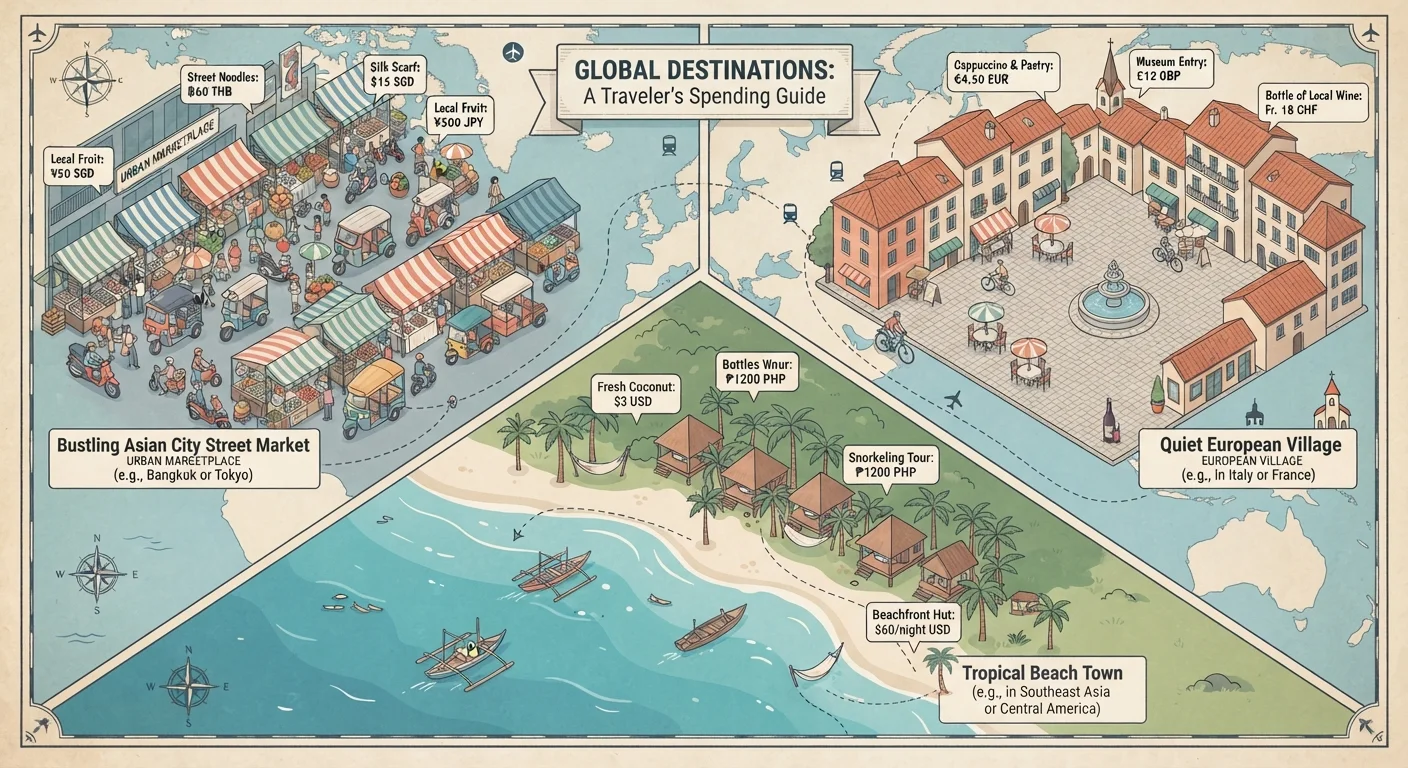
Understanding how a destination's cost profile works before you book is foundational. How Travel Costs Vary by Destination walks through the factors - purchasing power parity, tourism density, local infrastructure - that determine what your dollar actually buys on the ground.
Similarly, small daily costs accumulate faster than most travelers anticipate. Bottled water, resort fees, parking, and tourist-area surcharges are documented in detail in Little Expenses, Big Impact. Anticipating these before departure - and budgeting for them explicitly - is more reliable than hoping to avoid them.
Longer-term, sustainable budget travel isn't about scoring one great deal. It's about building consistent money habits that make travel a regular, funded part of life rather than a stressful one-off splurge. Honest Money Habits That Make Travel More Affordable covers that framework in depth.
Fees That Appear After You Search
Many travel booking platforms display base prices that exclude taxes, resort fees, cleaning fees, and service charges until checkout. The displayed price and the charged price can differ by 20-50% depending on the property and platform. Always click through to the final price before comparing options or making a decision. This is especially relevant for short-term rental platforms and some hotel booking aggregators.