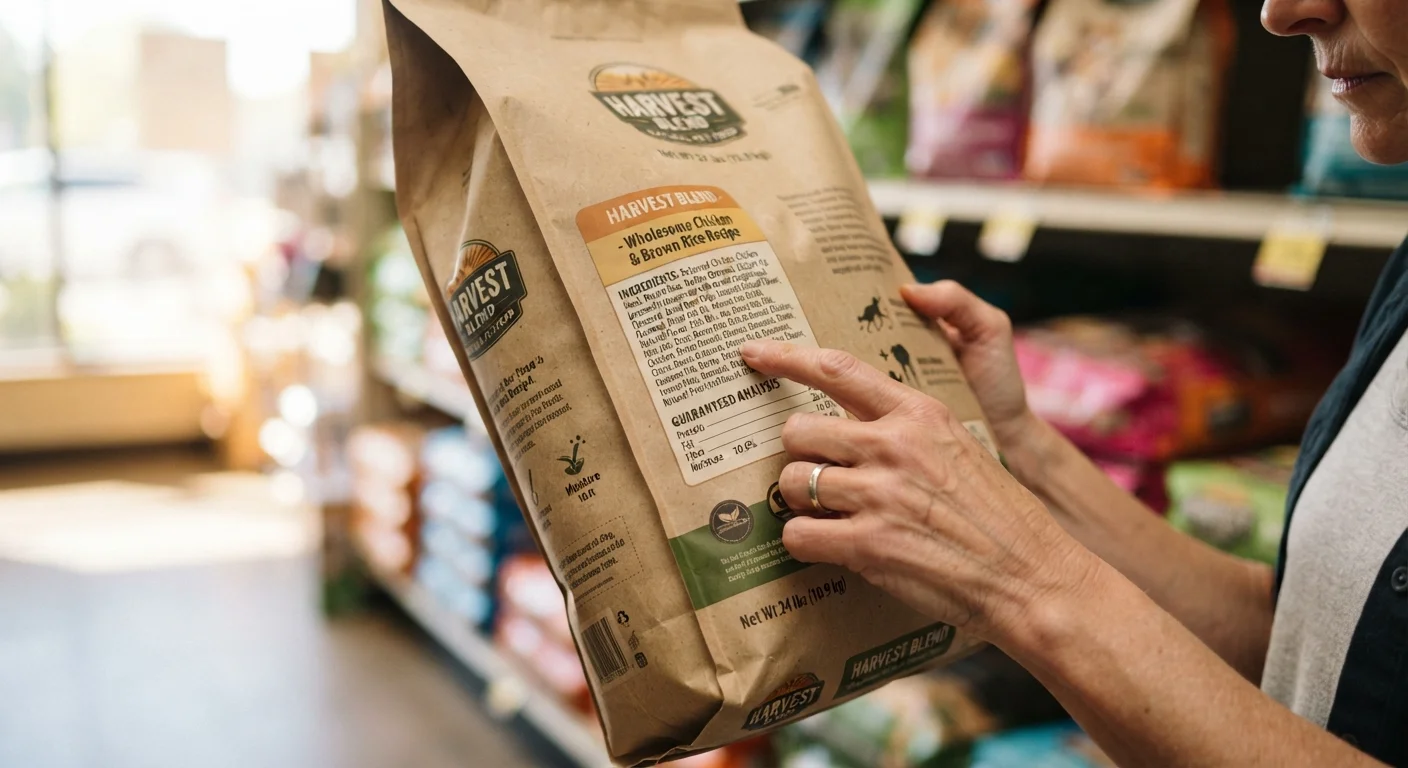

How Ingredient Order Actually Works
Every ingredient on a pet food label is listed in descending order by weight before processing. That qualification matters enormously. Fresh chicken, for instance, is roughly 70% water. Once cooked, its weight drops dramatically, which means a whole meat listed first may contribute far less protein to the final product than it appears to at first glance.
This doesn't make whole meats bad - they bring valuable amino acids, fats, and flavor - but it does mean you shouldn't stop reading after the first ingredient. Scan the first five to eight ingredients collectively. Together, they typically represent the bulk of the formula.
For a deeper look at how these labeling conventions interact with marketing language, see our guide to pet food label claims.
Read the Full Back Panel, Not Just the Front
Front-of-bag claims like 'real chicken,' 'grain-free,' or 'natural' are marketing language and are not regulated the same way as the ingredients list or guaranteed analysis. Always flip the bag and read the full back panel before drawing conclusions about a food's nutritional value.
Protein Sources: Named vs. Vague
Not all protein listings carry equal informational value. A label that reads "chicken" or "deboned salmon" identifies a specific, traceable source. Compare that to "meat by-products" or "animal digest" - terms that can encompass a wide and variable range of materials depending on the production batch.
Meals, such as chicken meal or salmon meal, are concentrated dried proteins from which most moisture has been removed. Because of this, a named meal listed third or fourth on a label may actually deliver more protein than the fresh meat listed first. The critical word is named: "poultry meal" is less specific than "chicken meal," which tells you less about the actual source.
If your pet has known protein sensitivities, specificity matters even more. Our article on animal vs. plant protein sources can help you understand how different proteins compare nutritionally.
By-Products Aren't Always Inferior
The term 'by-products' often triggers concern, but in pet food, named by-products (such as 'chicken by-products') can include organ meats that are nutritionally dense and appropriate for pets. The key is specificity: named by-products from an identified species are more transparent and generally more consistent than generic 'animal by-products.' Your veterinarian can help you weigh whether the specific ingredients in a formula suit your pet.
Ingredient Splitting and the Guaranteed Analysis
One labeling practice worth understanding is ingredient splitting: listing multiple forms of the same base ingredient separately so each appears lower on the list. A formula might include "ground corn," "corn gluten meal," and "corn bran" as three distinct entries. Individually, each ranks below the named protein - but combined, they may outweigh it. This isn't illegal, but recognizing it helps you evaluate the formula more accurately.
Below the ingredients list, you'll find the guaranteed analysis, which reports nutrient levels as minimums (for protein and fat) and maximums (for moisture and fiber). These are regulatory thresholds, not precise measurements. To compare two foods that differ in moisture content - say, a wet food versus a dry kibble - you'd need to convert both to a dry-matter basis, a calculation your veterinarian or a board-certified veterinary nutritionist can help you perform.
For practical guidance on auditing your pet's overall diet, our diet completeness checklist walks through what to look for beyond the label.
~70%
Water content in fresh meat before processing
AAFCO ingredient guidelines note that fresh or frozen meats are weighed with their natural moisture, significantly affecting their ranking on the ingredients list.
2
Methods AAFCO accepts to substantiate nutritional adequacy
Pet foods may qualify for an AAFCO adequacy statement either by formulation against established nutrient profiles or by passing an AAFCO feeding trial protocol.
4
AAFCO-recognized life stage categories for pet food
AAFCO recognizes growth, adult maintenance, all life stages, and gestation/lactation as the life stages for which pet food nutritional profiles are defined.
The AAFCO Statement: What Completeness Actually Means
Arguably the single most important line on any pet food package is the AAFCO nutritional adequacy statement. This statement, when present, confirms that the food meets established nutrient profiles for a specific life stage - such as growth (puppies or kittens), adult maintenance, or all life stages.
Foods that carry this statement were either formulated to meet AAFCO nutrient profiles or tested through feeding trials. Foods labeled "for supplemental or intermittent feeding only" do not meet these standards and should not be a pet's primary diet without veterinary guidance.
Labels don't tell the whole story on their own. Factors like your pet's age, health status, activity level, and breed can all influence what dietary profile is appropriate. If you're unsure whether a food fits your pet's needs, a conversation with your veterinarian is the most reliable next step. You might also find our article on grain-free diet research useful if you're navigating popular marketing claims.
This article is for general informational and educational purposes only and does not constitute veterinary or medical advice. Always consult a licensed veterinarian for guidance specific to your pet's health and nutritional needs.