What Makes a Protein 'Complete'?
Proteins are built from amino acids, nine of which are classified as essential - meaning the body cannot synthesize them and must obtain them through food. A protein source is called complete when it supplies all nine essential amino acids in proportions the body can readily use.
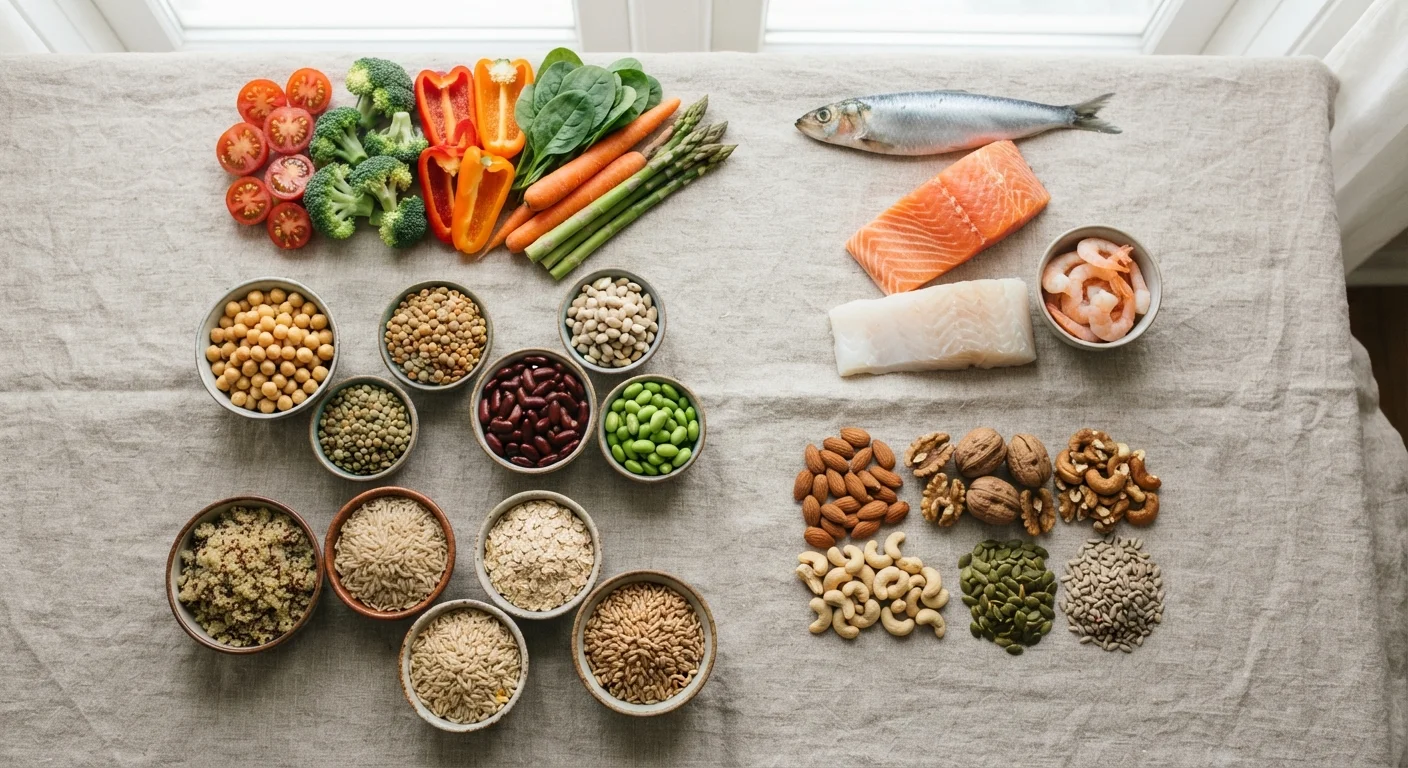
Animal proteins - including meat, poultry, fish, eggs, and dairy - are universally complete. Plant proteins tell a more varied story. Most individual plant foods are incomplete, meaning they are low or limited in one or more essential amino acids. Soy and quinoa are notable exceptions; both are considered nutritionally complete plant proteins.
Importantly, the body does not require a single food to supply every amino acid simultaneously. Eating a varied mix of plant foods - such as grains paired with legumes - across the day provides a full essential amino acid profile. This understanding has replaced the older and overly rigid concept of "protein combining" at every single meal.
| Criterion | Animal Protein | Plant Protein |
|---|---|---|
| Amino acid completeness | All 9 essential amino acids | Often incomplete; soy/quinoa are exceptions |
| Typical digestibility | 90-99% (DIAAS score) | 70-90% (varies by food and preparation) |
| Dietary fiber | None | Significant (legumes, grains, seeds) |
| Vitamin B12 | Naturally present | Absent; supplementation often needed |
| Iron type | Heme iron (higher absorption) | Non-heme iron (lower absorption) |
| Phytonutrients | Minimal | Rich (polyphenols, antioxidants) |
| Saturated fat (typical) | Higher in red and processed meats | Generally low (except coconut, palm) |
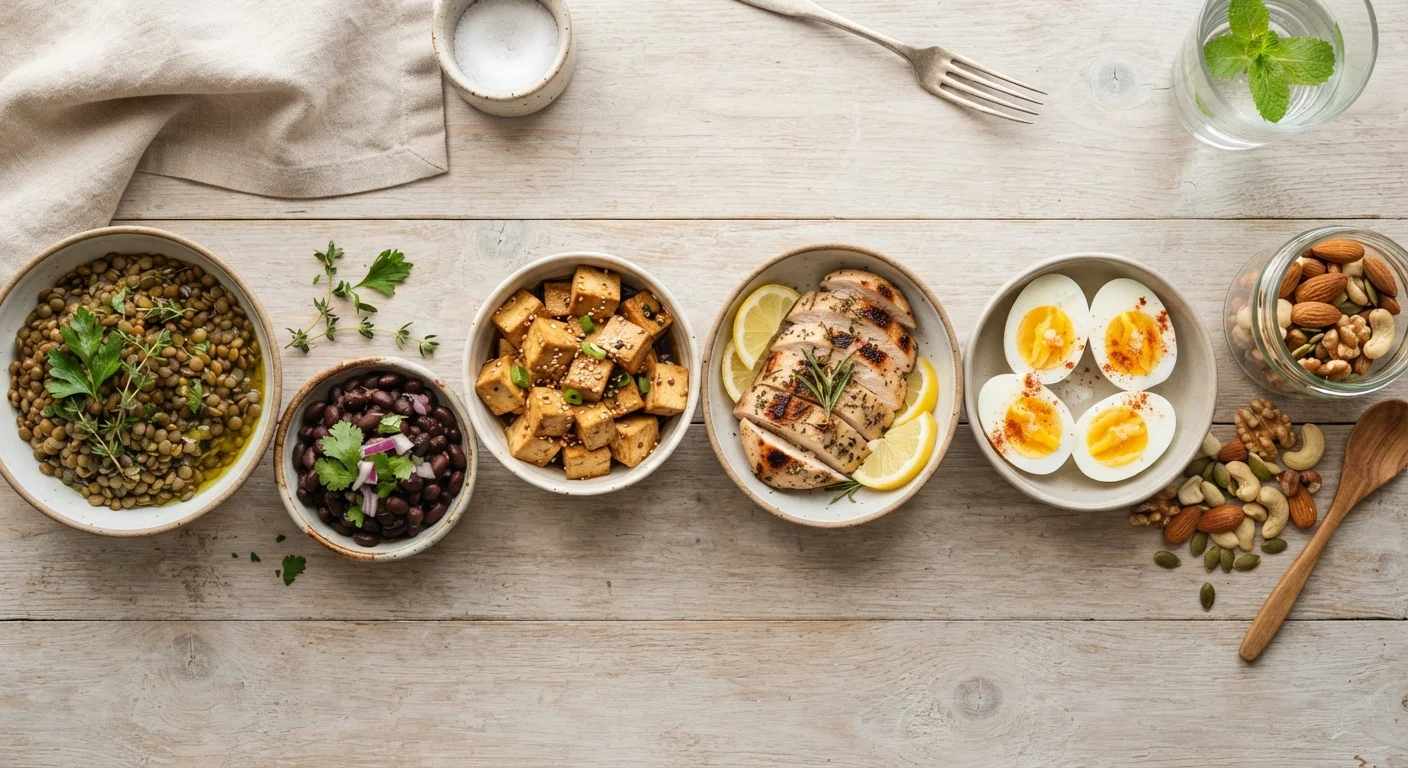
| Common examples | Eggs, chicken, fish, dairy, beef | Lentils, tofu, tempeh, beans, edamame |
Digestibility and Bioavailability: How Much Protein Do You Actually Absorb?
Protein quality is measured not only by amino acid content but by how efficiently the body digests and uses it. Nutritional scientists use a scoring system called the PDCAAS and a newer metric, DIAAS, to assess this.
~1.0
PDCAAS score for egg white protein
The Protein Digestibility Corrected Amino Acid Score (PDCAAS) ceiling is 1.0; egg white, whey, and casein regularly achieve this maximum rating.
70-90%
Typical plant protein digestibility range
Digestibility of whole plant proteins varies considerably; cooking and fermentation can meaningfully improve absorption rates for foods like legumes and soy.
~7g
Protein per half-cup of cooked lentils
Lentils are among the most protein-dense legumes and also deliver around 8 grams of dietary fiber per half-cup serving, according to USDA nutrient data.
Animal proteins - eggs, whey, and casein in particular - consistently score near the maximum on both scales. Most plant proteins score lower due to antinutritional factors such as phytates, tannins, and enzyme inhibitors that partially block protein absorption. However, cooking, sprouting, and fermentation significantly reduce these factors, improving plant protein bioavailability in whole-food contexts.
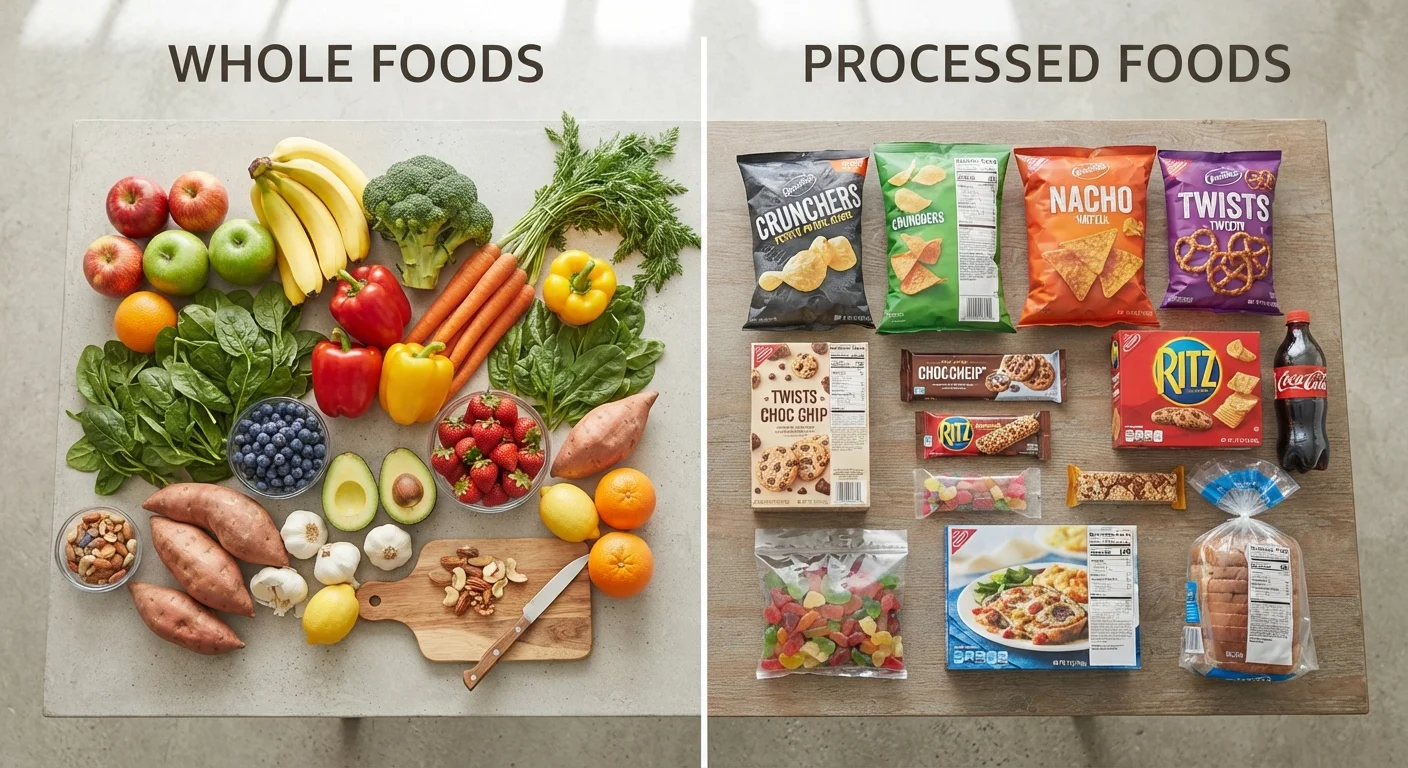
For practical purposes, someone meeting general daily protein targets through varied whole foods - whether animal, plant, or both - is unlikely to experience meaningful absorption shortfalls. See our overview of whole vs. ultra-processed foods for context on how food form affects nutritional value more broadly.
The Nutritional Landscape Beyond Protein
Neither category is purely about protein. Animal sources frequently deliver nutrients that are difficult to obtain from plants: vitamin B12, heme iron (which is more readily absorbed than non-heme iron from plants), zinc, and long-chain omega-3 fatty acids (EPA and DHA). Fatty fish, dairy, and eggs are particularly nutrient-dense packages.
Plant protein sources bring their own distinct advantages. Legumes, seeds, and whole grains contribute substantial dietary fiber - a nutrient most Americans fall short of - along with polyphenols, antioxidants, and other phytonutrients. These compounds have been associated in observational research with reduced risk of certain chronic conditions, though the science continues to evolve and individual context matters greatly.
Understanding how different protein sources fit within broader eating patterns can help frame these choices. Comparing established dietary patterns illustrates how cultures and research traditions have long integrated both protein categories into health-supporting diets. When evaluating packaged protein foods at the grocery store, our nutrition label audit guide offers a practical framework for reading ingredient lists and claims accurately.
This article is for general informational and educational purposes only and does not constitute medical or dietary advice. Protein needs vary by individual. Please consult a qualified healthcare professional or registered dietitian for guidance specific to your health situation.
Special Populations Need Tailored Guidance
Protein requirements differ significantly for pregnant individuals, older adults, growing children, athletes, and those managing chronic illness. General population guidance is a starting point, not a personal prescription. If you fall into any of these groups, work with a registered dietitian or your healthcare provider to determine needs appropriate to your specific situation.