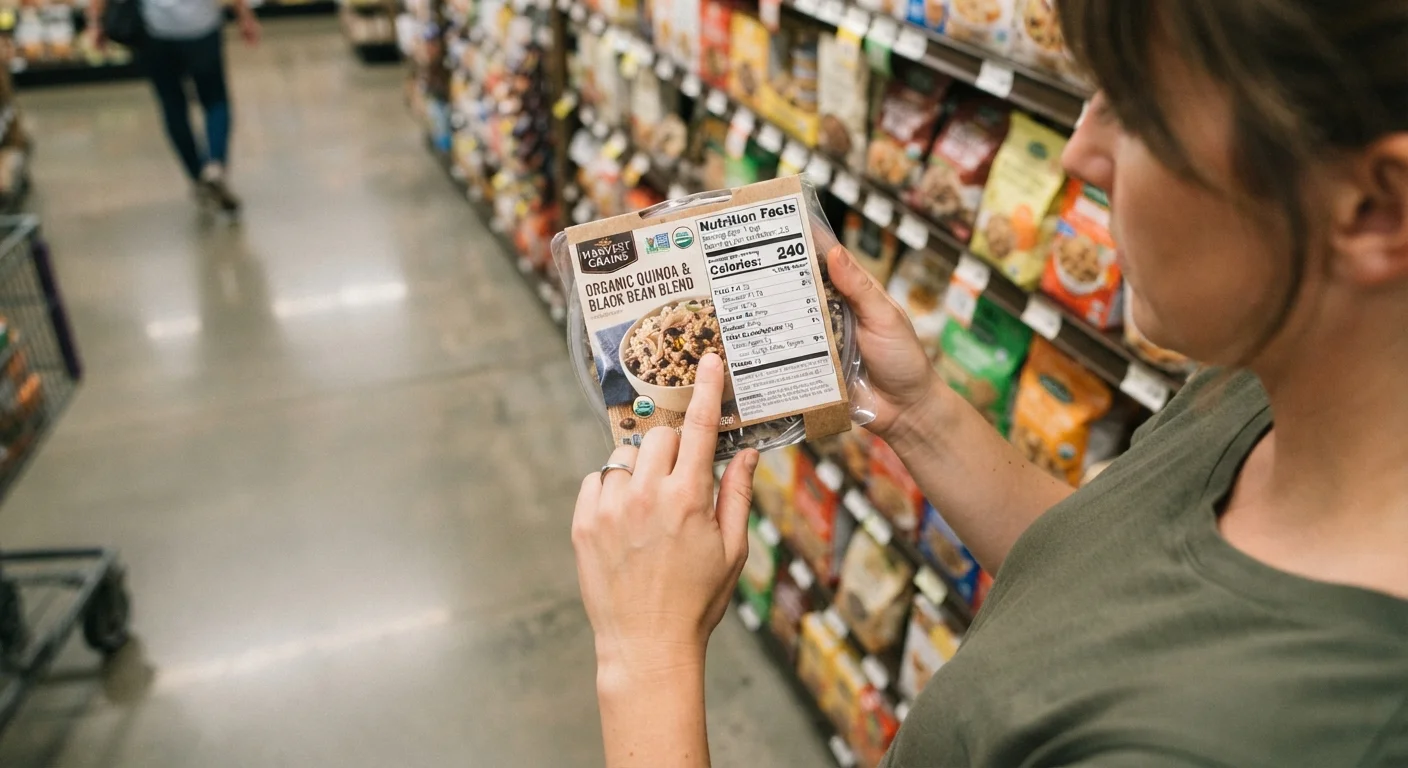
Use this checklist to evaluate packaged foods at the store—ingredients, label claims, portion sizes, and nutrient density at a glance.
Key Takeaways
Serving size is the foundation of every number on a nutrition label - always check it first.
Front-of-package claims are marketing; the ingredients list and nutrition facts panel tell the real story.
Ingredients are listed by weight - the first few items make up the bulk of the product.
Added sugars, sodium, and saturated fat are worth tracking across your whole cart, not just one item.
A longer ingredients list is not automatically worse, but unfamiliar additives are worth researching.
Nutrient density - how much nutrition a food provides per calorie - is a more useful measure than any single claim.
Why a Grocery Audit Matters
Packaged food labels are dense, sometimes deliberately so. Front-of-package claims like "natural," "light," or "multigrain" are largely unregulated marketing terms, while the genuinely useful information sits in smaller print on the back or side of the package. Learning to navigate that information quickly can shift grocery shopping from a guessing game to a more informed decision-making process.
This checklist is not a diet plan or a prescription for what to eat. It is a practical framework grounded in evidence-based nutrition fundamentals - the kind of questions a registered dietitian might ask when scanning a label - adapted for everyday use in the store aisle. For personal dietary guidance tailored to your health needs, consult a qualified healthcare professional or registered dietitian.
If you apply similar critical thinking when evaluating any purchase, our pre-purchase research checklist covers the broader decision-making process worth reading alongside this guide.
Serving Size & Label Foundation
Locate the serving size at the top of the Nutrition Facts panel and note how many servings are in the entire package.Must
Compare the listed serving size to how much you would realistically eat in one sitting.Must
Multiply all nutrient values by the number of servings you'll actually consume to get accurate totals.Must
Ingredients List Review
Read the first three to five ingredients - these make up the majority of the product by weight.Must
Check whether whole food ingredients (whole grains, vegetables, legumes, proteins) appear near the top of the list.Should
Identify added sugars by scanning for multiple sugar aliases: cane syrup, dextrose, maltose, fruit juice concentrate, and similar terms.Should
Note any allergens relevant to your household - the label is legally required to declare the major eight allergens.Must
Flag any additives or unfamiliar ingredients for later research if the list is unusually long or complex.Nice to have
Macronutrient Check
Check total fat and the breakdown between saturated, unsaturated, and trans fats - trans fats should ideally be zero.Must
Review the total carbohydrate figure and distinguish between dietary fiber and added sugars within that total.Should
Evaluate the protein content relative to the calories - higher protein per calorie often signals greater satiety value.Should
Sodium & Micronutrient Awareness
Check sodium as a percentage of the Daily Value (%DV) - 20% DV or more per serving is considered high by FDA standards.Must
Look for meaningful amounts of beneficial nutrients such as fiber, potassium, calcium, iron, and vitamin D.Should
Consider how the sodium in this product adds to the rest of your day's intake, especially if buying multiple processed items.Should
Front-of-Package Claims
Treat claims like "natural," "artisan," "wholesome," or "clean" as unregulated marketing terms and verify them against the actual label.Must
Verify that "reduced fat" or "low sodium" versions still deliver overall nutritional value - reformulation sometimes increases sugar or other ingredients.Should
Confirm that "high fiber" or "good source of protein" claims align with the actual %DV figures on the nutrition panel.Should
Nutrient Density & Whole-Cart Perspective
Ask whether this product delivers meaningful nutrition (fiber, protein, vitamins, minerals) relative to its calorie count.Should
Consider whether a less-processed whole food alternative is available and practical for your needs and budget.Nice to have
Step back and review your cart as a whole - aim for a balance of minimally processed foods alongside convenient packaged options.Should
Note any products that are high in sodium, added sugars, or saturated fat simultaneously - those warrant closer scrutiny.Must
How to Use This Checklist in the Aisle
You don't need to answer every question for every item in your cart. Instead, treat these questions as a mental filter: the more boxes a product checks, the more confidently you can evaluate its place in your overall diet. Run through the Serving Size & Label Foundation group for every packaged item - it takes under a minute once you're practiced - and then dip into the other groups based on your personal priorities.
"Healthy" Claims Are Not Standardized
The FDA has proposed updated criteria for the voluntary use of the word "healthy" on packaging, but many existing products use the term under older or loosely interpreted rules. Do not assume a front-of-package "healthy" claim reflects a comprehensive nutritional assessment. Always cross-check with the Nutrition Facts panel and ingredients list before drawing conclusions.
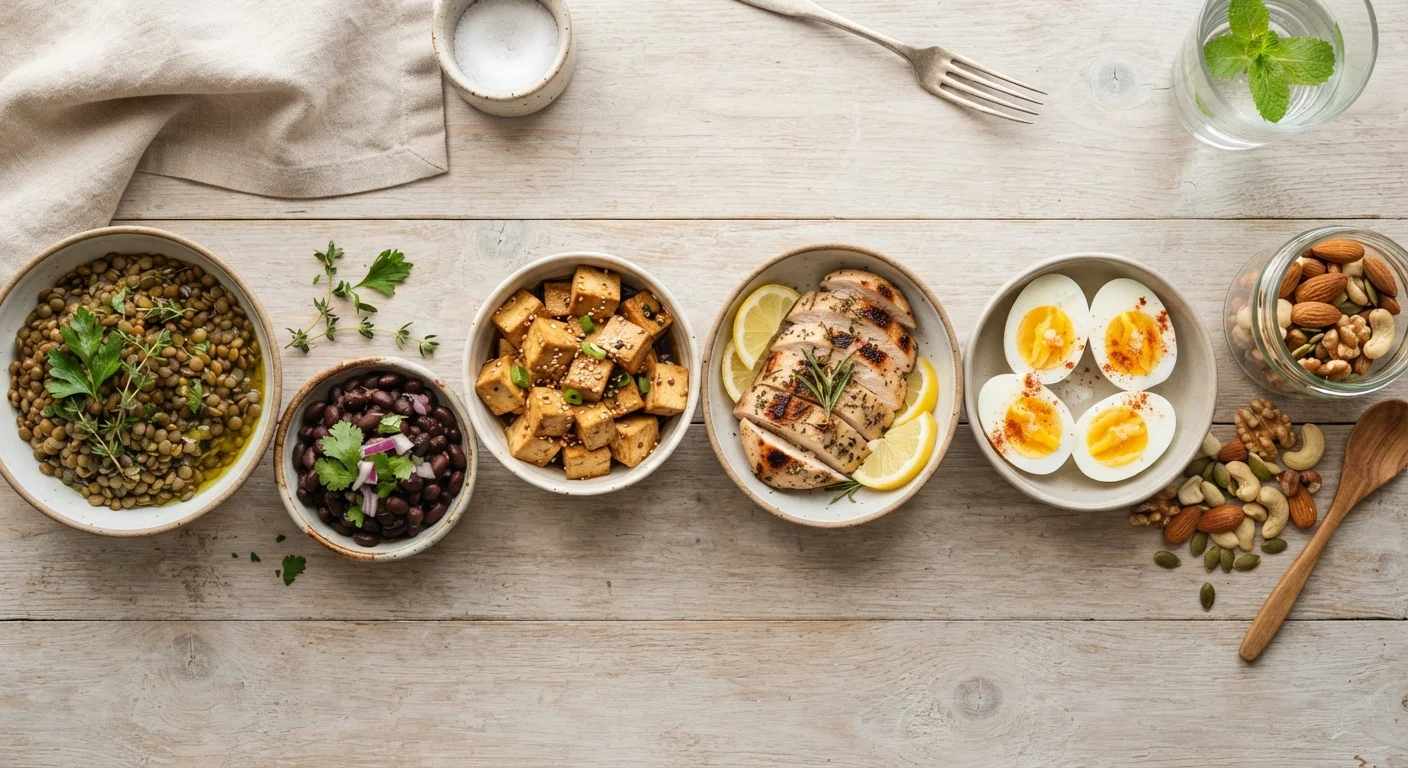
Understanding protein sources is one area where label literacy really pays off. Our comparison of animal and plant protein sources can help you interpret what the label's protein claims actually mean in nutritional context.
Keep in mind that no single food makes or breaks a diet. The goal of this audit is pattern recognition across your whole cart - not perfection on any one item.
Required
Nutrition Facts Panel
The federally mandated label on packaged foods - your primary source of accurate per-serving nutrient data.
Optional
USDA FoodData Central
A free government database for looking up detailed nutrient profiles of both branded and generic foods.
Required
FDA %Daily Value Reference Guide
Clarifies what low (5% DV or less) and high (20% DV or more) mean for each nutrient on the label.
Optional
Grocery list or note-taking app
Helps you track patterns across your cart and flag items to research more carefully at home.
Health & Wellness Editorial Team is the collective byline for our editorial team and contributor network. Articles published under this byline or an editorial pen name are researched, written, and reviewed according to our editorial standards for clarity, consistency, and independence before publication.
The content provided on our blog site traverses numerous categories, offering readers valuable and practical information. Readers can use the editorial team’s research and data to gain more insights into their topics of interest. However, they are requested not to treat the articles as conclusive. The website team cannot be held responsible for differences in data or inaccuracies found across other platforms. Please also note that the site might also miss out on various schemes and offers available that the readers may find more beneficial than the ones we cover.