Defining the Terms: What Do These Categories Actually Mean?
The phrase "processed food" is often used loosely, but nutrition researchers use more precise language. The NOVA classification system, developed by researchers at the University of São Paulo, groups foods into four categories based on the extent and purpose of industrial processing - not simply whether a food has been altered from its raw state.
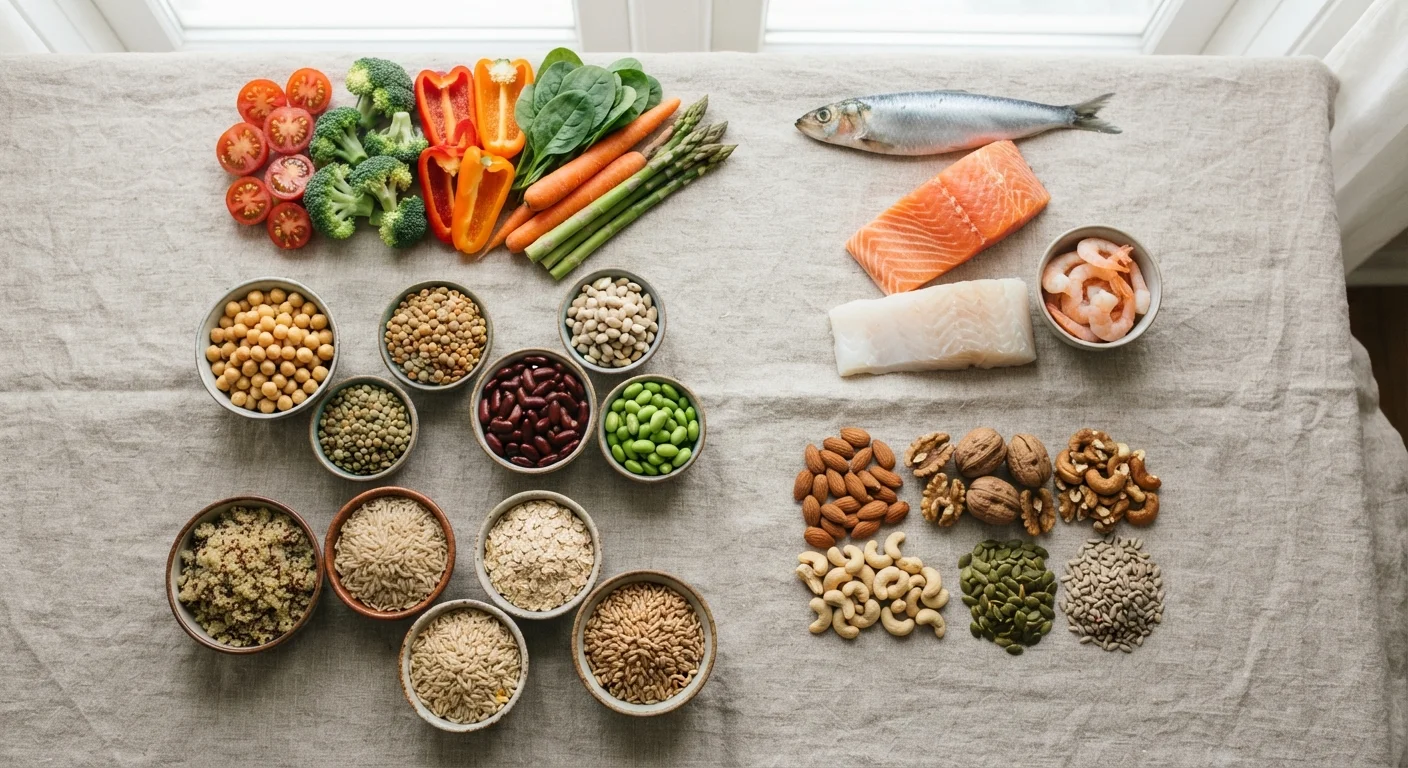
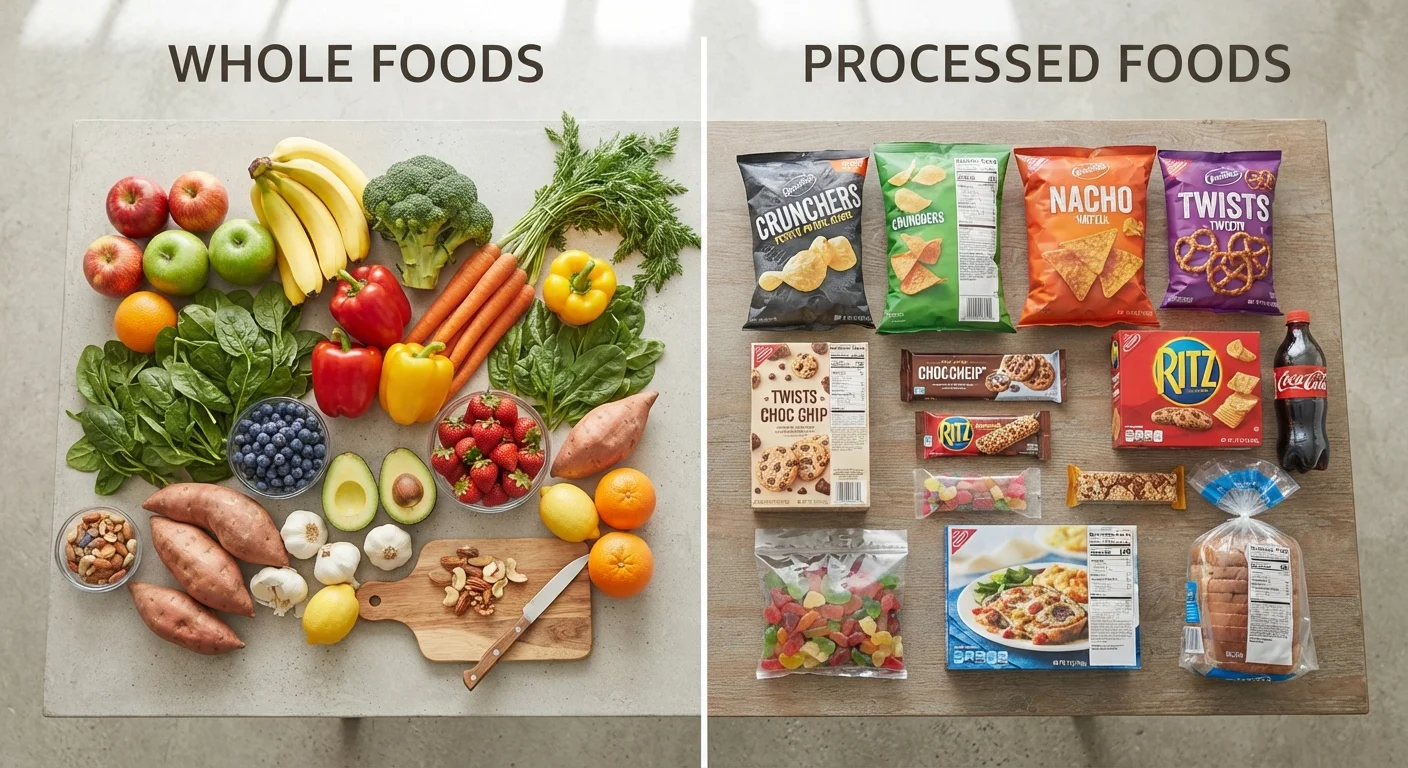
Whole foods are foods consumed in their natural or near-natural form: fresh fruits, vegetables, legumes, whole grains, eggs, and plain meats. Minimally processed foods - frozen vegetables, plain yogurt, rolled oats - have been cleaned, dried, or refrigerated but retain their core nutritional structure.
Ultra-processed foods (UPFs) occupy the far end of the spectrum. They are industrially formulated products containing ingredients rarely found in a home kitchen: emulsifiers, artificial colorants, flavoring agents, hydrogenated oils, and high-fructose corn syrup. Think of packaged snack cakes, reconstituted meat products, flavored chips, and many fast-food items. The distinction matters because processing level - not just ingredient quality - shapes nutritional outcomes in ways that researchers are still working to fully understand.
For a deeper look at how these principles play into different eating patterns, see Popular Diet Patterns Compared.
Nutritional Differences: What the Science Shows
Whole foods tend to deliver nutrients in their naturally occurring matrix - fiber alongside carbohydrates, antioxidants alongside fats, and a full spectrum of micronutrients. This matrix may matter: research suggests that the structural integrity of food affects digestion rates, satiety hormones, and how nutrients are absorbed.
| Criterion | Whole Foods | Ultra-Processed Foods |
|---|---|---|
| Fiber content | Naturally high in dietary fiber | Often significantly reduced or absent |
| Added sugars | None naturally added | Frequently high in added sugars |
| Sodium levels | Low to moderate, naturally occurring | Often very high, added for palatability |
| Micronutrient density | High; vitamins and minerals intact | Lower; often partially fortified only |
| Ingredient complexity | One or very few recognizable ingredients | Long lists including industrial additives |
| Satiety per calorie | Generally higher due to fiber and protein | Often lower; engineered for overconsumption |
| Research association | Linked to favorable long-term health markers | Associated with elevated disease risk in observational studies |
Ultra-processed foods, by contrast, are often energy-dense but nutrient-poor. They frequently contain higher amounts of added sugars, sodium, and saturated fats, while providing fewer vitamins, minerals, and dietary fiber per calorie. Several large-scale observational studies - including research published in The BMJ and JAMA Internal Medicine - have found associations between higher UPF consumption and elevated risks of cardiovascular disease, type 2 diabetes, obesity, and certain cancers. These are associations, not proven causal links, and researchers continue to investigate whether the food formulation itself or the overall dietary pattern drives these findings.
It is also worth noting that sodium, sugar, and saturated fat - three nutrients disproportionately concentrated in ultra-processed products - have their own bodies of evidence linking them to health outcomes.
57%
Share of US calories from ultra-processed foods
Research published in BMJ Open estimated that ultra-processed foods account for more than half of daily caloric intake among US adults.
10%
Increased cardiovascular disease risk per serving increment
A large prospective study in The BMJ found each 10% increase in ultra-processed food consumption was associated with a 12% higher risk of cardiovascular disease.
500 kcal/day
Additional calories consumed on ultra-processed diet
A controlled NIH clinical trial found participants consuming an ultra-processed diet ate approximately 500 more calories per day than those on an unprocessed diet.
Practical Perspectives: Context, Nuance, and What This Means for You
Processing is not binary. Pasteurized milk, canned tomatoes, and frozen salmon are all technically processed - yet they retain strong nutritional profiles and are widely considered part of a healthy diet. The concern is specifically with the ultra-processed tier: products where industrial reformulation substantially changes the food's nutritional character.
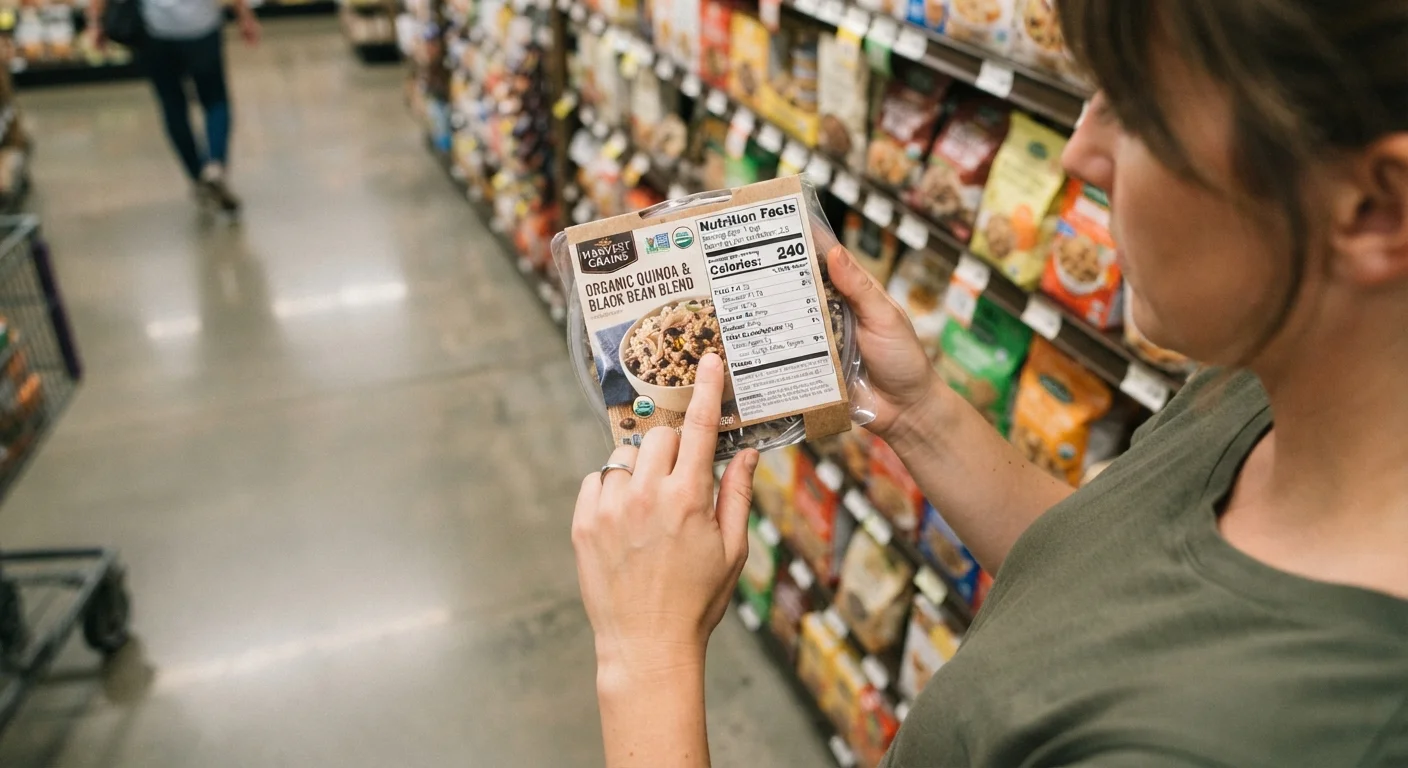
Access, affordability, and cultural food practices also shape what realistic dietary choices look like. Whole-food eating does not require expensive specialty stores or rigid elimination of every packaged product. Practical approaches - building meals around vegetables, legumes, and intact grains; checking ingredient lists for additive density; choosing less-refined versions of staple foods - reflect the evidence without demanding perfection. For guidance on evaluating what you actually encounter in the store, a practical label-reading checklist can help translate these principles into everyday decisions.
The Evidence Is Observational - With Important Caveats
Most research linking ultra-processed foods to health outcomes relies on observational study designs, which identify associations but cannot definitively establish cause and effect. Factors such as overall socioeconomic status, lifestyle habits, and total dietary pattern may also contribute to these outcomes. A small but notable randomized controlled trial conducted by the NIH did show causal evidence of increased caloric intake on ultra-processed diets, though longer-term causal trials remain limited. Researchers continue to investigate the specific mechanisms - whether additives, food structure, or nutritional displacement drives the associations observed.
If you are looking to untangle some of the confusing messaging around food quality, common nutrition myths addresses several misconceptions that may shape how people perceive processed versus whole foods.
This article is for general informational and educational purposes only and does not constitute medical or dietary advice. Consult a registered dietitian or qualified healthcare provider for guidance tailored to your individual health needs and circumstances.