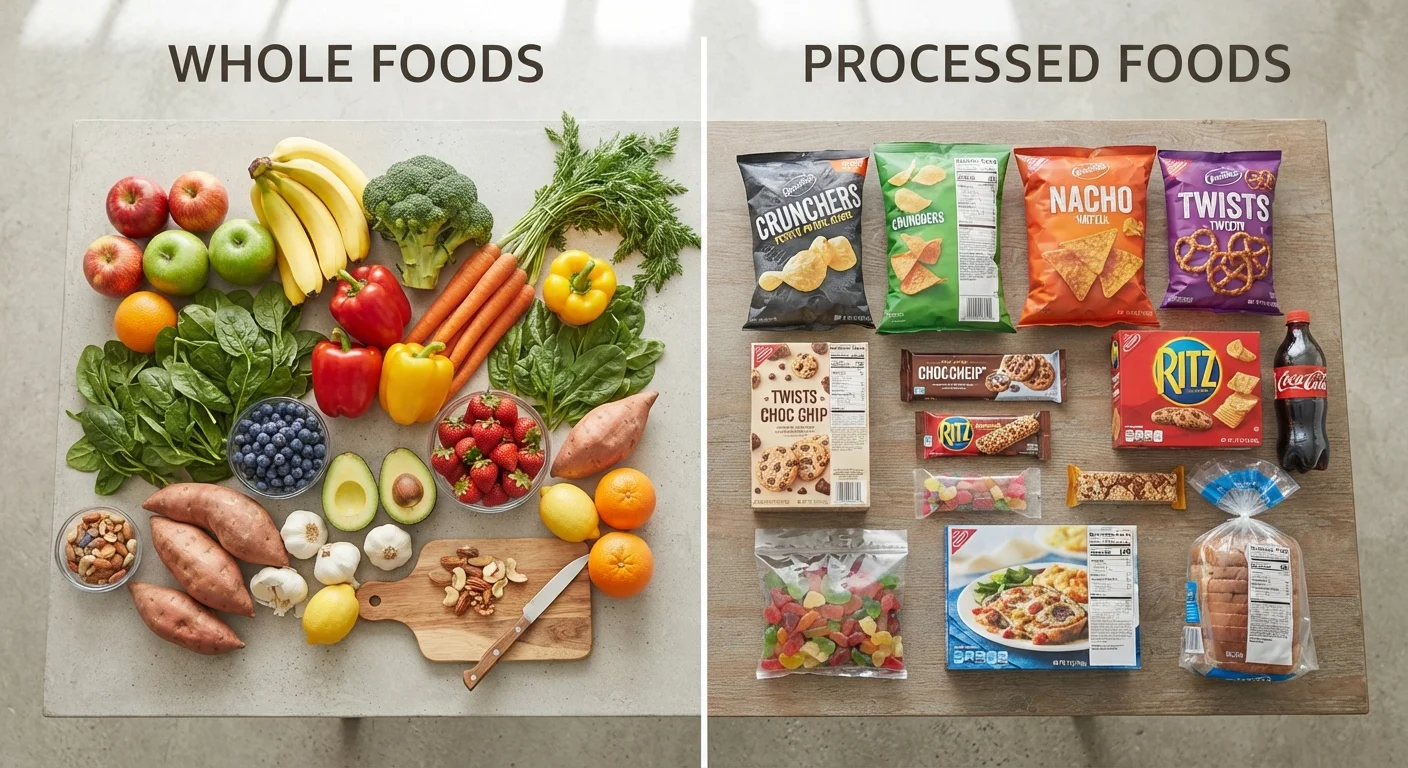

Why Nutrition Myths Spread So Easily
Nutrition is one of the most researched - and most misunderstood - areas of health. Advice circulates rapidly through social media, wellness culture, and word of mouth, often outpacing the science. Many beliefs that feel like settled wisdom are actually rooted in outdated studies, marketing language, or oversimplification. Understanding where myths come from is the first step to seeing past them.
The myth-fact pairs below reflect some of the most persistent misconceptions that research continues to contradict. For a broader foundation, this overview of healthy eating fundamentals is a useful companion.
Myth
Fat-free and low-fat foods are always the healthier choice.
Fact
Removing fat from food often requires adding sugar, starch, or other additives to maintain palatability - which may not improve the overall nutritional profile.
The low-fat movement of the late 20th century was built on the premise that dietary fat drives weight gain. Decades of follow-up research have substantially complicated that picture. Unsaturated fats found in foods like nuts, avocados, and olive oil are associated with favorable cardiovascular outcomes. Meanwhile, many commercial fat-free products compensate for lost texture and flavor by increasing added sugars. The label "fat-free" does not signal that a food is nutrient-dense. Why added sugar draws as much scrutiny as saturated fat is explained in more detail elsewhere.
Myth
Carbohydrates cause weight gain and should be minimized.
Fact
Carbohydrates are the body's primary energy source. The type and overall dietary context matter far more than carbohydrate quantity alone.
Refined carbohydrates - white bread, sugary beverages, pastries - digest rapidly and offer limited nutritional value beyond calories. But whole-food carbohydrate sources like legumes, whole grains, fruits, and vegetables deliver fiber, vitamins, and minerals that support a range of bodily functions. Populations that eat high-carbohydrate diets based on minimally processed plant foods do not consistently show worse health outcomes than lower-carbohydrate populations. Dietary fiber, found abundantly in carbohydrate-rich whole foods, is one of the most underconsumed nutrients among US adults.
Myth
Detox diets and cleanses eliminate harmful toxins from the body.
Fact
The liver, kidneys, and other organs continuously filter waste and metabolic byproducts. No commercial cleanse has been shown to enhance or accelerate this process.
"Detox" is a compelling marketing term, but it rarely corresponds to a precise biological claim. When pressed, proponents seldom specify which toxins are being removed or provide clinical evidence that the cleanse achieves measurable clearance. The human body has a sophisticated, well-regulated detoxification system. Supporting it means avoiding heavy alcohol use, staying adequately hydrated - water's role in metabolism and nutrient transport is often underappreciated - and eating a varied, fiber-rich diet. No juice protocol replaces these fundamentals.
Myth
Eating after a certain time at night causes weight gain.
Fact
Total energy intake relative to expenditure determines weight change over time, not the specific hour at which food is consumed.
The idea that food eaten late at night is automatically stored as fat oversimplifies how metabolism works. Research on meal timing and body weight shows mixed results, and any observed associations are often confounded by the types of foods people tend to eat late - typically calorie-dense snacks - rather than the timing itself. Some evidence suggests that irregular eating patterns and sleep disruption may influence appetite hormones, but this is distinct from a blanket rule about evening eating. Context, food choices, and overall daily patterns remain the more meaningful variables.
Myth
Taking a daily multivitamin compensates for a poor diet.
Fact
Supplements can address specific documented deficiencies, but they cannot replicate the full matrix of nutrients, fiber, and beneficial compounds found in whole foods.
Whole foods contain thousands of phytochemicals, antioxidants, and fiber types that interact in ways a supplement capsule cannot reproduce. Studies designed to test whether isolated nutrients in pill form deliver the same benefits as food sources have largely found that the effects are not equivalent. This does not mean supplements are without value - particular populations may have genuine needs for specific nutrients - but a multivitamin is not a nutritional safety net that allows dietary quality to be disregarded. Building a nutritionally balanced plate through food-first choices remains the evidence-supported approach.
Myth
All calories are equal, regardless of the food they come from.
Fact
While calories measure energy, different foods affect satiety, hormones, and metabolism in meaningfully different ways.
A calorie is a unit of energy, and thermodynamic principles do govern weight at a basic level. But the "a calorie is a calorie" framing ignores how food composition influences hunger signaling, gut microbiome health, and the thermic effect of feeding - the energy cost of digesting food itself. Protein, for instance, is more satiating per calorie than refined carbohydrate. Fiber slows gastric emptying and moderates blood glucose response. Food quality shapes not just energy balance but how the body responds to that energy. Comparing evidence-based dietary patterns illustrates how food composition - not just calories - drives differences in health outcomes across eating approaches.
What the Evidence Actually Supports
Once common myths are set aside, a clearer picture of evidence-based eating tends to emerge - one that emphasizes variety, minimally processed foods, and sustainable patterns over rigid rules or single-ingredient fixes.
Less than 10%
US adults meeting fiber intake recommendations
Dietary fiber intake data from the USDA and nutrition surveillance research consistently show that the vast majority of American adults fall short of recommended daily fiber targets.
57%
of US calories from ultra-processed foods
Analysis of nationally representative dietary data, published in population nutrition research, estimates that ultra-processed foods account for more than half of total energy intake among US adults.
~$50 billion
Annual US dietary supplement market
Industry estimates place the US dietary supplement market at tens of billions of dollars annually, reflecting widespread use despite limited evidence of benefit for generally healthy adults eating varied diets.
Research consistently shows that eating patterns - the combination of foods consumed over time - predict health outcomes more reliably than the presence or absence of any one nutrient. The differences between whole and ultra-processed foods offer one instructive example of how food quality shapes long-term nutritional value. Likewise, understanding what carbs, protein, and fat actually do in the body helps contextualize why eliminating entire food groups is rarely supported by evidence.
Nutrition Needs Change Across the Lifespan
What serves a person nutritionally in their 30s is not identical to what they need in their 60s. Protein requirements, calcium absorption, and micronutrient needs all shift with age. How nutritional priorities evolve across decades is worth understanding, particularly for adults navigating midlife and beyond. A registered dietitian can help tailor general principles to your individual circumstances.
If you are considering significant dietary changes - especially if you have an existing health condition - consulting a registered dietitian or qualified healthcare professional is the most reliable path to individualized guidance. General nutrition information, including the content here, is not a substitute for personal medical advice.
This article is for informational and educational purposes only and does not constitute medical or dietary advice. Always consult a qualified healthcare professional before making changes to your diet or health routine.