
Why Nutrition Basics Matter for Adults
Most adults have absorbed a lifetime of nutrition messages - from food packaging, social media, and well-meaning friends - yet many feel less certain about what to eat, not more. That's a reasonable response to a noisy information environment. This guide cuts through that noise by returning to fundamentals: what food actually does in the body, how evidence-based eating patterns are structured, and how to start thinking clearly about your own choices.
Nutrition is general health information, not a medical prescription. This article provides an educational foundation. For guidance tailored to your individual health status, a registered dietitian or your healthcare provider is always the right call.
This Article Is General Education
The information here reflects broadly accepted nutrition science and is intended as an educational starting point for adults. It is not a substitute for personalized advice from a healthcare provider or registered dietitian, especially if you have a chronic health condition, are pregnant, or have specific dietary needs.
The Core Nutrients Your Body Relies On
Food delivers two broad categories of nutrients your body cannot function without.
Macronutrients supply energy and the raw materials for growth and repair:
- Carbohydrates are the body's preferred fuel source, particularly for the brain and muscles during activity. Whole-food sources - vegetables, legumes, whole grains - also deliver fiber, which supports digestive health and is associated with reduced risk of several chronic conditions.
- Protein provides amino acids essential for building and maintaining muscle tissue, enzymes, and hormones. Both animal and plant sources can meet protein needs when consumed as part of a varied diet.
- Fat is essential for absorbing fat-soluble vitamins (A, D, E, and K), supporting cell membranes, and producing hormones. Unsaturated fats - found in foods like nuts, seeds, and oily fish - feature prominently in well-studied dietary patterns.
Micronutrients - vitamins and minerals - are required in much smaller amounts but perform hundreds of critical functions, from immune signaling to bone mineralization. Variety in food choice is the most reliable way to cover a broad micronutrient spectrum.
Macronutrients
The three main nutrients - carbohydrates, protein, and fat - that provide energy and the building blocks your body needs in relatively large amounts every day.
Micronutrients
Vitamins and minerals needed in small quantities that support processes like immune function, bone health, and energy metabolism.
Dietary fiber
A type of carbohydrate found in plant foods that the body cannot fully digest; it supports digestive health and is linked to reduced risk of several chronic diseases.
Dietary pattern
The overall combination of foods and beverages someone regularly consumes, which research evaluates as a whole rather than focusing on single foods or nutrients in isolation.
Registered Dietitian (RD)
A credentialed nutrition professional trained to assess individual nutritional needs and provide evidence-based, personalized dietary guidance.
Whole foods
Foods that are minimally processed and close to their natural state - such as vegetables, fruits, legumes, whole grains, and unprocessed proteins - retaining most of their original nutrients.
Food Groups and Eating Patterns
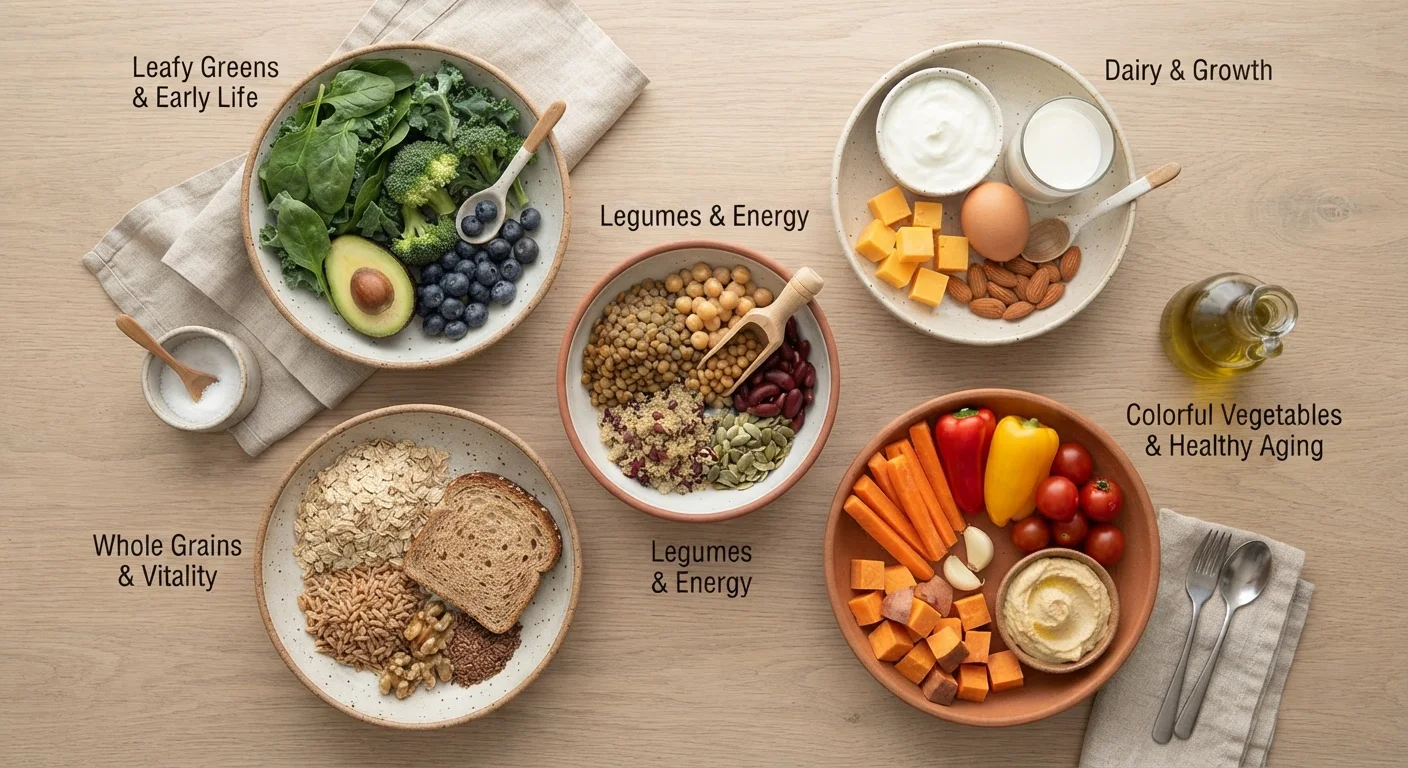
Rather than prescribing specific foods, nutrition research often evaluates whole dietary patterns - the combination and proportion of food groups consumed over time. Patterns consistently associated with favorable health outcomes tend to share common features:
- Abundant vegetables and fruits of varied colors
- Whole grains over refined grains
- Legumes - beans, lentils, chickpeas - as regular protein and fiber sources
- Moderate amounts of nuts and seeds
- Lean or plant-based protein sources featured prominently
- Minimal intake of heavily processed foods, added sugars, and excess sodium
No single food makes or breaks a diet. What matters is the overall pattern across days and weeks. For a practical look at composing individual meals along these lines, see building a nutritionally balanced plate.
Hydration is also a genuine nutritional variable - water plays a direct role in digestion, nutrient transport, and metabolism. The role water plays in how your body uses food is covered in depth in a companion article.
Practical Ways to Build Better Habits
Understanding nutrition conceptually is a starting point; translating it into daily life is where most people need practical anchors.
Read food labels with confidence. The US Nutrition Facts panel contains genuinely useful information once you know how to interpret it. Our guide to reading a Nutrition Facts label without getting lost walks through each section clearly.
Question popular claims. Many nutrition beliefs circulating among adults are not well supported by current evidence. Common nutrition myths most adults still believe covers some of the most persistent misconceptions.
Pair nutrition with movement. Diet and physical activity are complementary pillars of wellbeing. Understanding the evidence behind US physical activity guidelines helps put recommended movement targets in context.
Account for life stage. Nutritional needs are not static throughout adulthood. Energy, protein, calcium, and other priorities shift over time - something worth considering as a framework rather than a fixed rule.
Start With Small, Sustainable Changes
Overhauling your entire diet at once is rarely necessary or sustainable. Nutrition research suggests that incremental shifts - adding one more vegetable serving, switching to a whole-grain option - tend to stick better than dramatic overhauls. Focus on what you can add rather than what you must eliminate.
This article is for informational and educational purposes only and does not constitute medical or nutritional advice. Please consult a qualified healthcare professional or registered dietitian for guidance specific to your health needs.