Why Grain-Free Became a Marketing Phenomenon
Over the past two decades, grain-free pet food evolved from a niche veterinary option into one of the fastest-growing segments of the pet food industry. The pitch was simple and emotionally resonant: wolves and wild cats don't eat grains, so why should your pet? Combine that with a parallel rise in human gluten-free diets, and the demand wrote itself.
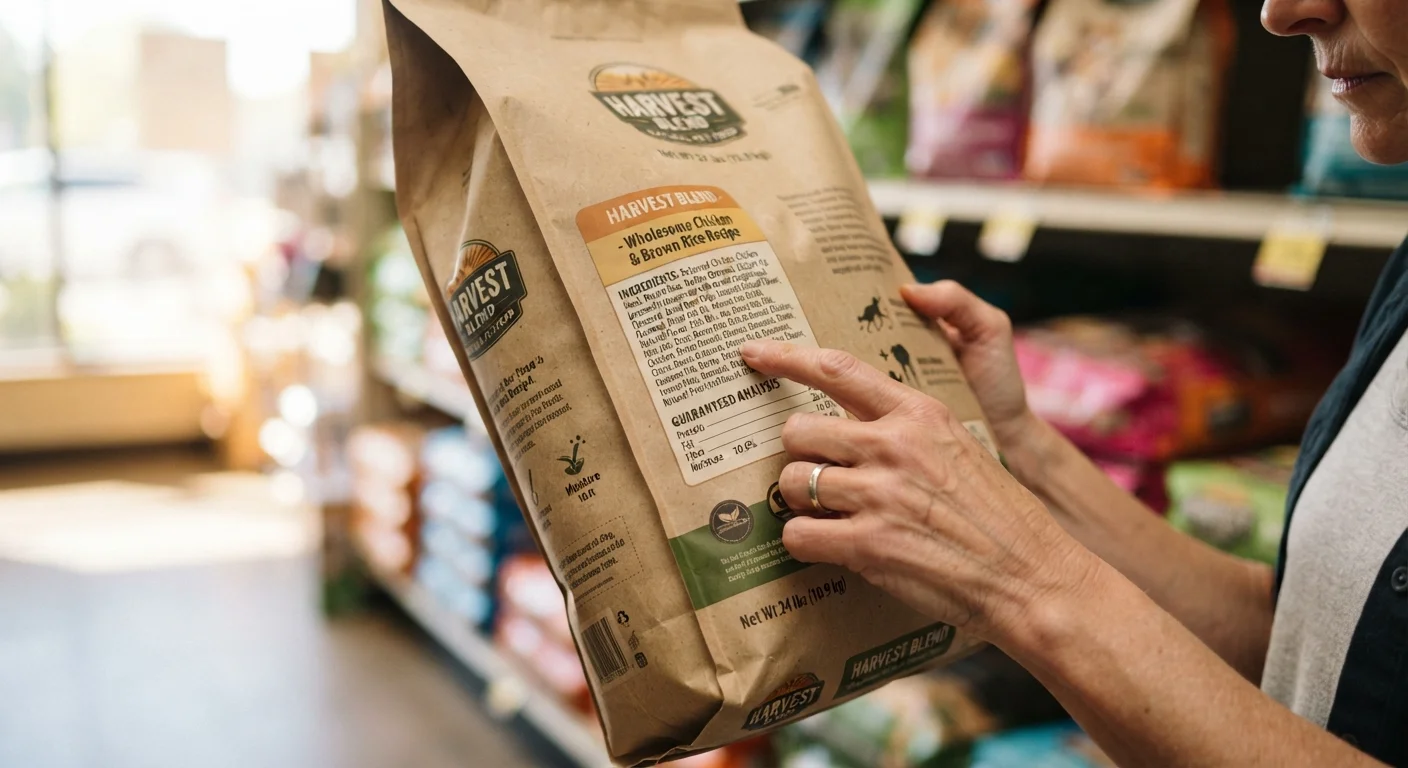
But marketing momentum and nutritional science rarely move together. The surge in grain-free options was driven largely by consumer preference rather than peer-reviewed evidence that grains were harmful. Understanding what the actual science says - and what remains genuinely uncertain - is essential before making feeding decisions. As with any diet trend, the details matter enormously. Learning to read a label carefully is the first step; our guide to decoding pet food ingredient lists can help you interpret what's really inside the bag.
Common Myths - and What the Evidence Actually Shows
The grain-free space is dense with misconceptions that have been repeated often enough to feel like facts. Working through them one by one reveals a more nuanced picture.
Myth
Grains are just cheap filler with no nutritional value for pets.
Fact
Grains contribute digestible carbohydrates, dietary fiber, protein, and essential nutrients such as B vitamins and minerals.
Whole grains like brown rice, oats, and barley provide more than calories. They supply fiber that supports gut health, B vitamins important for energy metabolism, and in some cases meaningful protein. The word "filler" is a marketing term, not a nutritional classification. Digestibility studies show that many common pet food grains are well-utilized by both dogs and cats when properly cooked and processed.
Myth
Most dogs and cats are allergic or intolerant to grains.
Fact
True grain allergies are uncommon; the most frequent food allergens in dogs are animal proteins like beef, dairy, and chicken.
A frequently cited veterinary dermatology review found that among dogs with confirmed food allergies, the most common culprits were proteins - particularly beef, dairy, wheat, and chicken - not grains as a category. Wheat sensitivity does exist, but it is far less prevalent than popular belief suggests. Cats show a similarly protein-skewed allergy profile. Self-diagnosing a grain allergy without a proper elimination diet trial can lead owners to switch foods unnecessarily, potentially introducing new problems.
Myth
A pet's wild ancestors ate no grains, so domestic pets shouldn't either.
Fact
Domestic dogs have evolved over thousands of years alongside humans and show genetic adaptations for starch digestion that wolves lack.
Research published in Nature identified that domestic dogs carry significantly more copies of the amylase gene (AMY2B) compared to wolves - a genetic change associated with increased ability to digest starch. Dogs are not wolves, physiologically or ecologically. Cats are obligate carnivores and do have a lower carbohydrate tolerance, but even for cats the "ancestral diet" argument oversimplifies a complex nutritional picture and does not mean all grains are harmful.
Myth
Grain-free automatically means higher protein or a more natural diet.
Fact
Grain-free formulas often substitute legumes, potatoes, or tapioca for grains - these are still carbohydrate sources, not protein sources.
Removing grains does not reduce carbohydrates; it changes their source. Many grain-free products use peas, lentils, chickpeas, or sweet potatoes as the primary carbohydrate base. These ingredients are not inherently superior to grains and, as the FDA's DCM investigation highlighted, may raise their own questions when present in large quantities. Checking the guaranteed analysis panel - not just the front-of-bag claims - is the only reliable way to assess a food's actual macronutrient profile. Our guide to interpreting guaranteed analysis explains what those numbers mean.
Myth
If a pet's coat or digestion improves on grain-free food, it proves grains were the problem.
Fact
Improvement after a diet change may reflect many variables - a different protein source, fat level, fiber profile, or overall formula quality.
Diet switches are rarely single-variable experiments. When a pet improves after moving to a grain-free food, it's tempting to credit the absence of grains - but the new food may also have a different primary protein, higher omega-3 content, or fewer additives. Without a controlled elimination trial supervised by a veterinarian, attributing improvement to grain removal alone is speculative. Correlation is not causation, and anecdotal improvements are a poor basis for long-term feeding decisions.
~1-2%
Estimated prevalence of true food allergies in dogs
Veterinary dermatology literature suggests food allergies affect a small minority of dogs, with animal proteins as the most common triggers, not grains.
7x
More amylase gene copies in dogs vs. wolves
A landmark study in Nature (2013) found domestic dogs carry significantly more AMY2B gene copies than wolves, indicating adaptation to starch digestion.
500+
DCM cases reported to FDA involving grain-free diets
Between January 2014 and April 2019, the FDA received over 500 reports of DCM in dogs, many eating grain-free diets high in legumes or potatoes.
The DCM Investigation: What We Know and What Remains Open
In 2018, the U.S. Food and Drug Administration (FDA) began investigating a potential association between grain-free diets - particularly those high in legumes, lentils, and potatoes - and a serious heart condition called dilated cardiomyopathy (DCM) in dogs. DCM weakens the heart muscle and can be fatal.
The FDA issued updates through 2019, noting that the cases involved breeds not typically predisposed to DCM and that many affected dogs were eating grain-free diets listing legumes or potatoes among the first ingredients. Importantly, the investigation has not established a definitive causal mechanism. Possible explanations include taurine bioavailability issues, overall diet formulation problems, or other compounding factors - not grains (or the lack of them) per se.
FDA Investigation Into Grain-Free Diets and Heart Disease
The FDA's ongoing investigation found a disproportionate number of DCM cases in dogs eating grain-free diets - particularly those listing peas, lentils, or potatoes among the first five ingredients. The causal relationship has not been confirmed, but the signal is serious enough that veterinary cardiologists recommend discussing this risk with your vet before choosing a grain-free formula, especially for Golden Retrievers, Labrador Retrievers, and other larger breeds.
As of the FDA's most recent public communications, the investigation remains open and inconclusive. This underscores why sweeping dietary changes based on trends rather than veterinary guidance carry real risk. If your dog is on a grain-free diet, a conversation with your veterinarian - and potentially a cardiac screening - is worthwhile, especially for larger or predisposed breeds.
When Grain-Free Diets May Be Appropriate
None of this means grain-free diets are universally harmful. There are legitimate scenarios where a grain-free formulation may be appropriate:
- Confirmed grain allergy or intolerance: A small subset of pets do have documented food sensitivities involving specific grains, typically identified through a veterinarian-supervised elimination trial.
- Veterinarian-recommended therapeutic diets: Some pets with specific GI conditions may benefit from diets with altered carbohydrate profiles, as determined by a vet or veterinary nutritionist.
- Ingredient-specific intolerances: A pet may react to a particular grain (such as wheat) without being sensitive to all grains, making targeted avoidance more appropriate than blanket grain-free labeling.
What matters is whether the diet meets AAFCO (Association of American Feed Control Officials) nutritional adequacy standards for your pet's life stage - grain-free or not. You can verify this on the product label. Our practical diet audit checklist walks through exactly what to look for.
This article is for general informational and educational purposes only. It is not veterinary medical advice. Always consult a licensed veterinarian before making significant changes to your pet's diet, particularly if your pet has an existing health condition.