
What a Credit Report Actually Is
A credit report is a detailed record of how you have managed borrowed money over time. Three major consumer reporting bureaus - Equifax, Experian, and TransUnion - each maintain their own version of your report, compiled from data submitted by lenders, credit card issuers, and other creditors. The reports are not always identical, because not every creditor reports to all three bureaus.
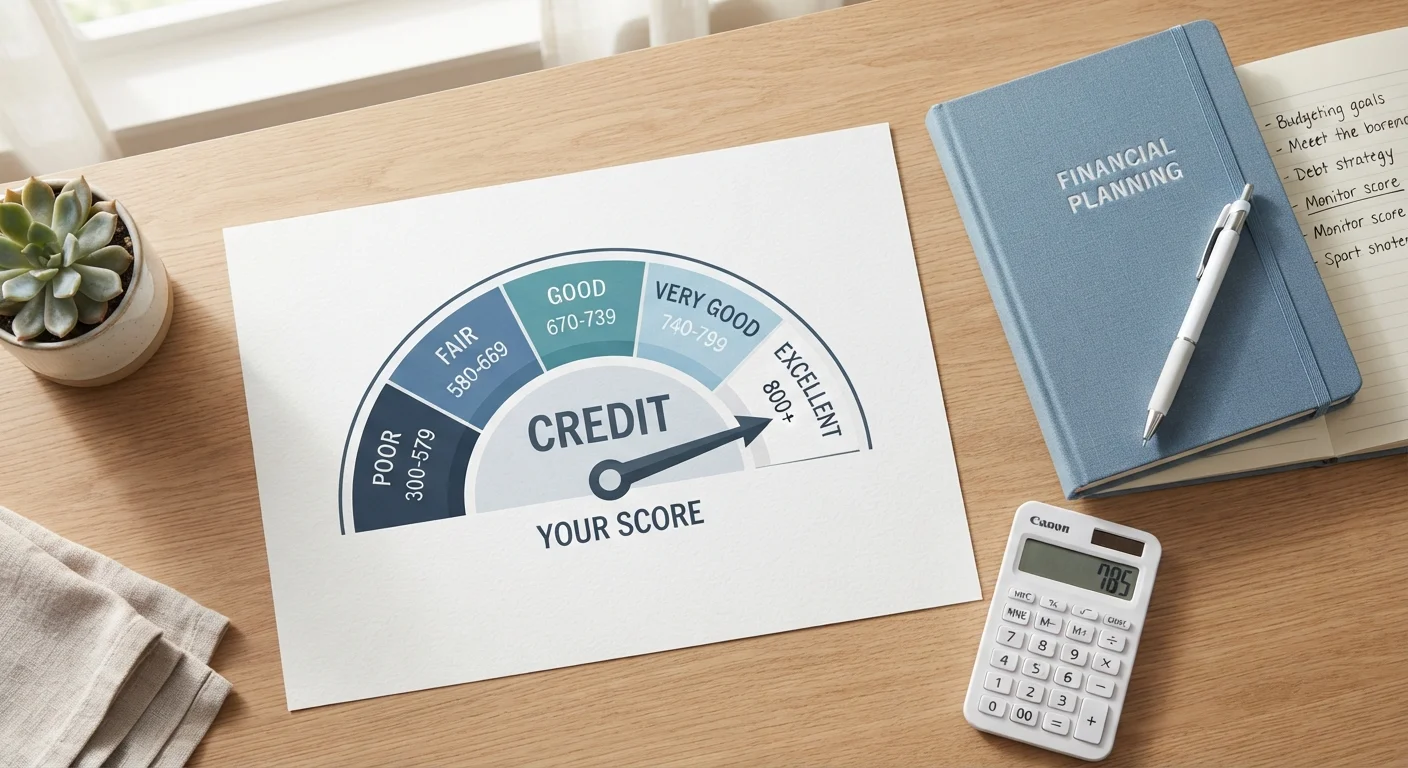
Your credit report is distinct from your credit score. The report is the raw data; the score is a number calculated from that data using a specific formula. Understanding the report is essential because it reveals exactly what is influencing your score - and whether any of that information is wrong. For a clear explanation of how the underlying factors are weighted, see our breakdown of the five credit score factors.
Under federal law (the Fair Credit Reporting Act), you are entitled to a free copy of your report from each bureau every 12 months. The official, government-mandated source is AnnualCreditReport.com.
What you will need
A Section-by-Section Walkthrough
Once you have your report in hand, here is what each part means and what to look for.
Review Your Personal Information
The first section lists identifying details: your full name, current and previous addresses, date of birth, Social Security number (usually partially masked), and employers on record. This section does not affect your credit score, but accuracy matters. An unfamiliar address or name variation can indicate a data entry error - or, in more serious cases, a sign that someone else's file has been merged with yours.
Examine Your Account History (Trade Lines)
This is the largest and most scoring-relevant section. Each credit account - credit cards, mortgages, auto loans, student loans - is listed as a "trade line" showing: the creditor's name, account type, date opened, credit limit or original loan amount, current balance, monthly payment history, and account status (open, closed, paid, etc.).
Payment history is represented as a month-by-month grid, often using codes. "OK" or a checkmark means on-time; codes like "30," "60," or "90" indicate how many days late a payment was. Even a single 30-day late payment can remain on your report for up to seven years and affect your score, so verify that every late mark shown is genuinely yours.
Check the Collections Section
If a debt was not paid and was sold to a collection agency, it appears here separately from the original account. Each entry shows the collection agency's name, the original creditor, the amount owed, and the date the debt was first reported as delinquent - called the original delinquency date. This date determines when the entry must be removed (generally seven years from that date under the Fair Credit Reporting Act).
Verify that you recognize the underlying debt and that the delinquency date is accurate. An incorrect date can keep a collection on your report longer than it legally should be.
Look at Public Records
Historically, this section included bankruptcies, civil judgments, and tax liens. As of recent bureau policy changes, most civil judgments and tax liens have been removed from consumer credit reports, leaving bankruptcies as the most common entry here. A Chapter 7 bankruptcy stays on your report for ten years from the filing date; Chapter 13 stays for seven years.
If a bankruptcy appears that you did not file, that is a serious error requiring an immediate dispute with the bureau.
Understand the Inquiries Section
Inquiries are requests to view your credit file and come in two types. Hard inquiries occur when you apply for new credit - a card, a loan, a mortgage. They may lower your score by a small amount and remain visible for two years, though their scoring impact typically fades after about 12 months. Multiple hard inquiries for the same type of loan (such as mortgage rate shopping) within a short window are often treated as a single inquiry by scoring models.
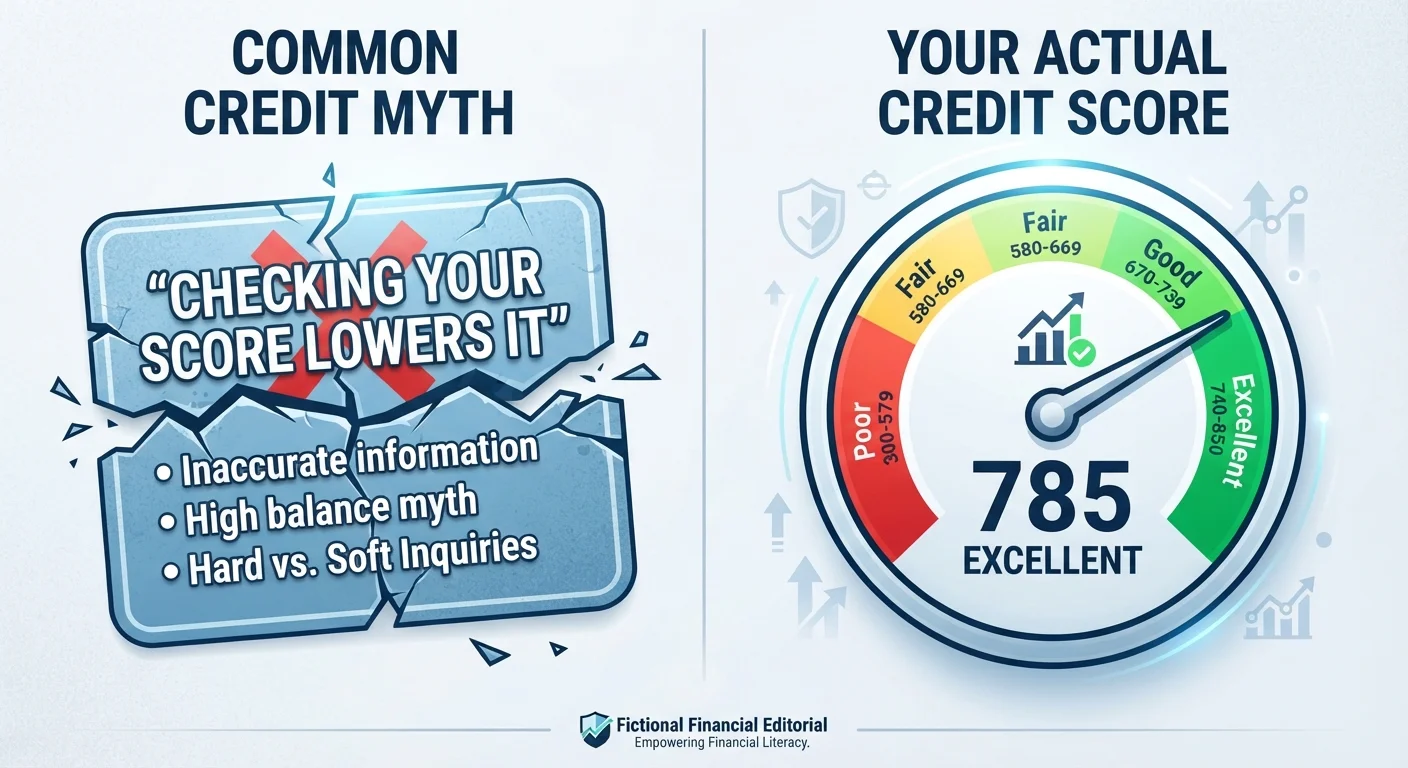
Soft inquiries include your own report pulls, pre-approval checks by lenders, and employer background checks. These are visible to you on your report but are never shared with lenders and have no effect on your score.
If you find inaccurate information, you have the right to dispute it directly with the bureau that issued the report. The bureau is generally required to investigate within 30 days. For situations where errors have resulted in unauthorized charges, a similar dispute process applies - our guide to disputing a bank charge walks through how that works.
Disputing Errors Has a Process - Follow It
To dispute an error, submit your claim in writing to the specific bureau showing the incorrect information. Include supporting documentation such as statements, payment confirmations, or correspondence. The bureau must generally investigate within 30 days and notify you of the outcome. Keep copies of everything you send.
Common Misunderstandings to Avoid
Credit reports come with a fair amount of mythology attached. One persistent belief is that checking your own report hurts your score - it does not. Pulling your own report is treated as a soft inquiry and has no scoring impact whatsoever. Our article on common credit myths addresses this and several other widely held misconceptions in detail.
Another source of confusion is the difference between a credit report and a credit score - and between reports from different bureaus. If one bureau's report shows a lower score than another, it may simply reflect different data, not an error. Always compare reports across bureaus when checking for completeness.
This article is part of a broader resource: Understanding Credit and Debt: An End-to-End Resource for American Consumers. If you are just starting out with no credit history yet, Building Credit From Scratch offers a practical starting point.
This article is for general informational and educational purposes only and does not constitute personalized financial or legal advice. Consult a qualified financial professional for guidance specific to your situation.