
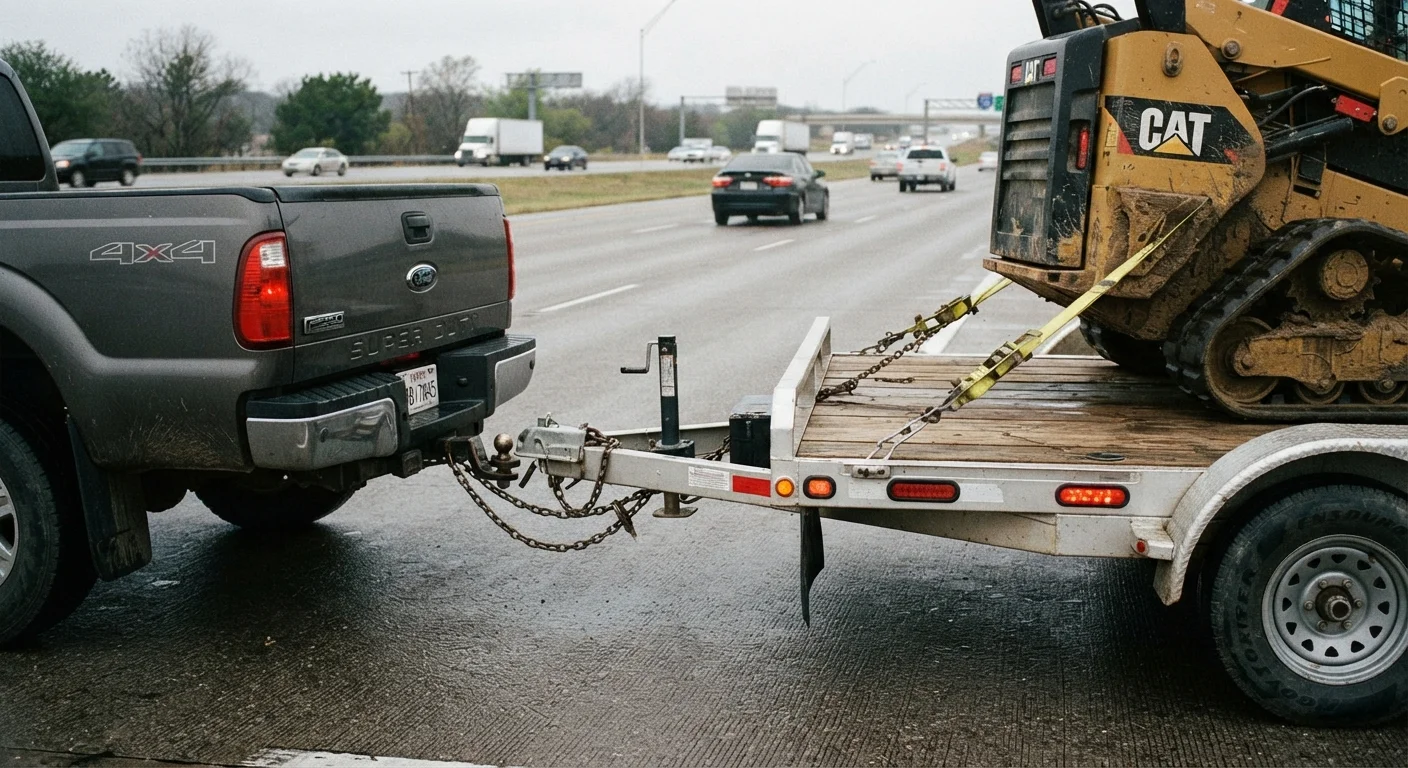
Why the Spec Sheet Number Isn't the Whole Story
When a truck is marketed with a headline towing figure - say, 13,000 pounds - that number applies to one very specific configuration: typically the heaviest engine, shortest cab, longest bed, and highest axle ratio available. Change any of those variables, and the rating changes too. A crew cab version of the same truck with a shorter bed and a mid-range engine might be rated thousands of pounds lower.
This isn't misleading by design - it reflects engineering reality. Longer wheelbases, heavier cabs, and different axle ratios all shift what the vehicle's frame, brakes, and cooling system can safely manage. The problem arises when buyers anchor to the headline number without verifying what their specific vehicle is actually rated for.
Before comparing capabilities across vehicles, it's worth asking the foundational questions about how you'll actually use the truck. Our article on choosing the right vehicle class walks through exactly that process. And if you've already seen how common assumptions lead buyers astray, recognizing those missteps early can save you from an expensive mismatch.
10-15%
Recommended tongue weight as share of trailer weight
Industry-standard guidance from trailer safety organizations; falling outside this range increases the risk of trailer sway.
GVWR
The regulatory anchor for payload calculation
Gross Vehicle Weight Rating is federally regulated and must be displayed on every new vehicle's door-jamb certification label per NHTSA requirements.
~30%
Potential payload margin lost to passengers and gear
A typical family of four with luggage and fuel can consume close to a third of a half-ton truck's rated payload before any cargo or tongue weight is added.
Understanding Payload: The Number Most Buyers Overlook
Payload capacity is often the more consequential figure - and the one least discussed in showroom conversations. It covers everything the vehicle carries on its own structure: driver, passengers, cargo in the bed or cabin, and crucially, the tongue weight pressing down through the hitch ball.
A half-ton truck might have a payload rating of 1,500 pounds. Put two adults in the front seat (roughly 400 lbs), add 200 lbs of gear in the back seat, and you've consumed 600 lbs before a single item goes in the bed. Hook up a 7,000-pound trailer with a 700-pound tongue weight, and you've now used all of your remaining payload and possibly exceeded it.
The door-jamb sticker - not the window sticker, not the manufacturer's website - shows your vehicle's actual payload limit. That sticker is specific to the vehicle as-built, accounting for its options and configuration. Reading spec sheets carefully is a skill that applies across all major purchases; the principles in our guide to spec sheet literacy translate directly to automotive research.
Check the Door Jamb, Not the Window Sticker
Your vehicle's specific payload limit is printed on a certification label inside the driver's door jamb. This number reflects the truck as it was built - including options that add curb weight. The window sticker figure may reference a different configuration entirely. Make the door-jamb label your starting point for any load calculation.
The Safety Engineering Behind the Numbers
Towing and payload ratings are not arbitrary guidelines - they are the output of brake performance testing, frame stress analysis, transmission thermal load testing, and tire load-index calculations. Engineers establish a Gross Vehicle Weight Rating (GVWR) that defines the maximum total weight the vehicle is designed to support when fully loaded. Payload is simply GVWR minus the vehicle's curb weight.
Gross Combined Weight Rating (GCWR) extends this logic to include a trailer - it is the maximum allowable weight of the tow vehicle plus the loaded trailer combined. When you see a towing capacity figure, it is derived from the difference between GCWR and the truck's loaded curb weight.
Exceeding these values places real, measurable stress on systems that were tested and certified to specific limits. Brake fade at highway speeds while pulling an overloaded trailer isn't theoretical - it is a predictable consequence of thermal overload. Trailer sway, too, becomes significantly harder to manage when a trailer's weight approaches or exceeds the tow vehicle's weight.
Matching the Right Vehicle to Real-World Needs
Sizing a vehicle correctly requires working through the numbers in order: determine the loaded weight of whatever you plan to tow, calculate tongue weight at roughly 10-15% of that figure, add up all anticipated passenger and cargo weight, and then find vehicles whose payload and towing ratings have a genuine margin above those totals - not just a theoretical match at the limit.
Towing packages matter. Factory-equipped tow packages typically include a heavy-duty hitch receiver, integrated brake controller wiring, a transmission cooler, and sometimes upgraded cooling for the engine. These aren't luxury add-ons - they are the hardware that allows the manufacturer to certify a higher towing rating for that configuration. A truck without the tow package may have a materially lower rating, even if it looks identical.
Understanding towing capability is part of a broader decision about which vehicle class fits your life. Just as safety ratings require careful interpretation rather than a simple number comparison, so do capability ratings - context, configuration, and intended use all matter. Work from your actual numbers, not the headline figures, and build in a comfortable margin. That buffer isn't timid - it's what the engineers intended.
“The ratings on a vehicle aren't conservative estimates - they represent the engineering boundary. Treating them as a starting point rather than a ceiling is where the danger begins.”
— Automotive Safety Research Community, Industry consensus position on vehicle load rating compliance