Why the Label Matters More Than You Think
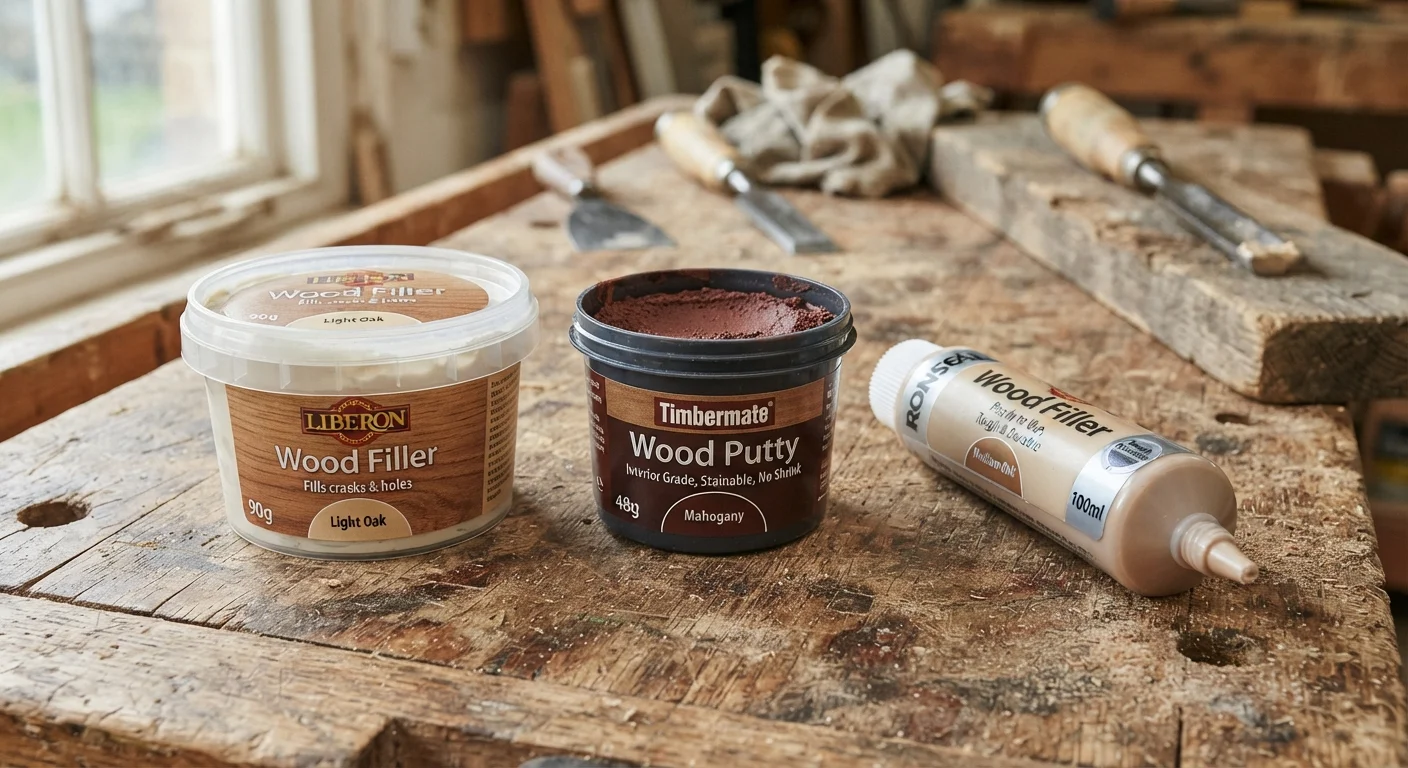
At the hardware store, wood filler, wood putty, and epoxy filler often sit on the same shelf, look nearly identical, and carry similar price tags. Many homeowners grab whichever one is closest - and end up with a repair that cracks, discolors, or fails entirely within a season.
The differences between these three products go beyond marketing language. Each one uses a distinct chemistry, cures differently, adheres to different surfaces, and tolerates different environmental conditions. Understanding those distinctions before you open a container is what separates a durable repair from a frustrating do-over.
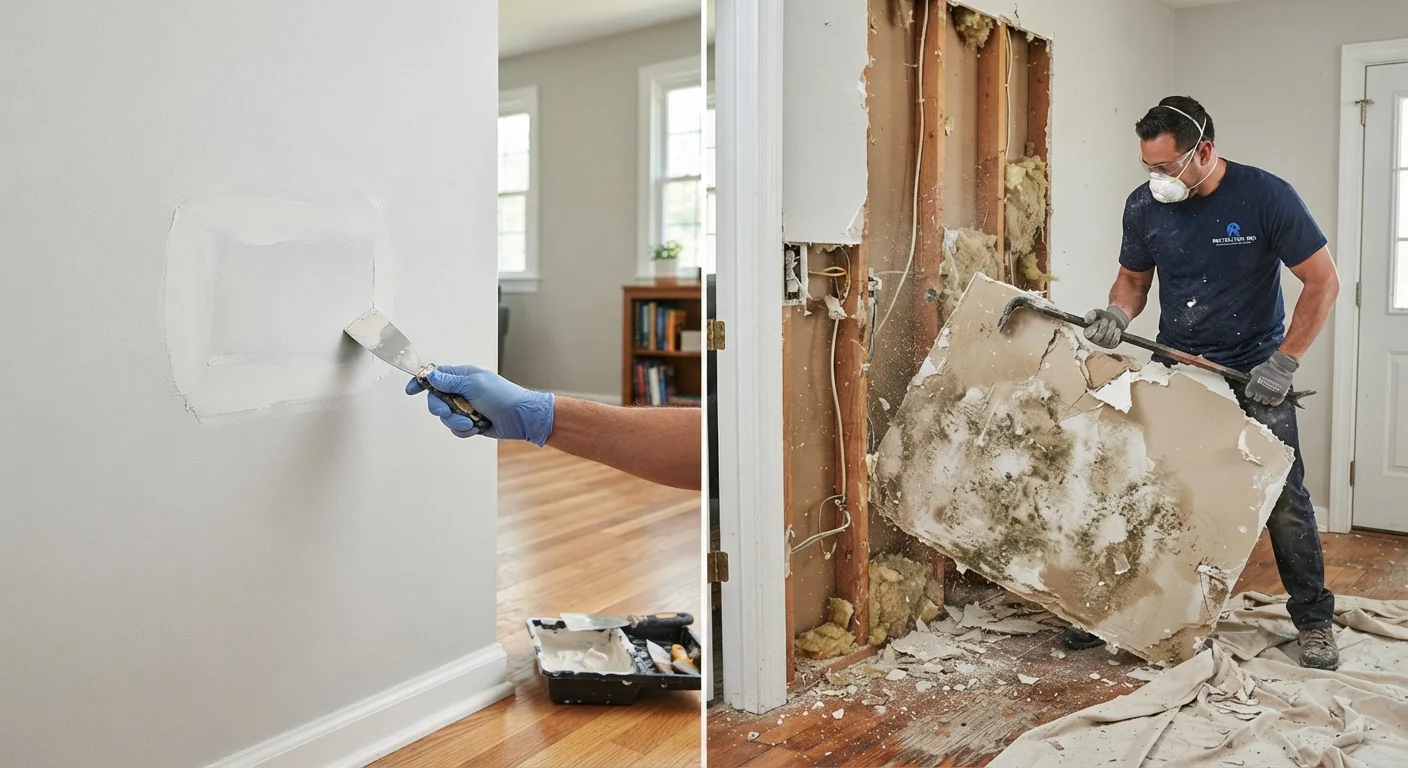
If you have tackled wall repairs before, some of this thinking will feel familiar. The same logic that guides patching drywall - matching the repair material to the substrate and finish - applies equally here. See our drywall repair guide for a comparable framework on wall surfaces.
Wood Filler: Best for Bare, Unfinished Wood
Wood filler is typically a water-based or solvent-based compound formulated to harden completely after application. It bonds by penetrating the wood fibers of a raw, unfinished surface - which is precisely why it performs poorly on wood that has already been sealed, painted, or stained.
Common applications include filling nail holes, small cracks, and surface gouges on bare lumber before a finish is applied. Once cured, wood filler can be sanded flush, accepts stain reasonably well (though it rarely matches grain perfectly), and takes paint without issue.
Test Before You Commit
If you are unsure whether your wood surface is sealed, apply a drop of water to an inconspicuous area. If it beads, the surface has a finish coat and wood putty is the appropriate choice. If it absorbs immediately, the wood is bare and filler or epoxy will bond correctly. This simple test takes seconds and can save you from a mismatched repair.
Important limitation: Wood filler is rigid when dry. On wood that expands and contracts with humidity - such as exterior trim or solid hardwood floors - a rigid filler will eventually crack or pop out. Reserve it for interior projects on stable, unfinished surfaces.
Wood Putty: Flexible Touch-Ups on Finished Surfaces
Wood putty - sometimes sold as painter's putty - is an oil- or latex-based product that remains slightly pliable after it sets. That flexibility is its defining trait: it can move with the wood without cracking, which makes it appropriate for finished surfaces that will continue to expand and contract.
Use wood putty after the final finish coat has been applied. It is the right product for filling small nail holes in painted trim or touching up minor dings in a piece of furniture that already has a topcoat. However, because putty does not harden fully, it cannot be sanded aggressively, and it does not accept stain the way bare wood does - it will appear as a visible patch under a clear or semi-transparent finish.
| Wood Filler | Wood Putty | Epoxy Filler | |
|---|---|---|---|
| Finish stage | Before finishing (raw wood) | After finishing (sealed/painted) | Before or after (versatile) |
| Flexibility when cured | Rigid | Slightly flexible | Rigid and hard |
| Sandable | Yes | Limited | Yes |
| Accepts stain | Partially (may not match grain) | No | No (paint only) |
| Water/moisture resistance | Low | Low to moderate | High (waterproof) |
| Best repair size | Small holes and cracks | Minor cosmetic dings | Large voids and rot damage |
| Relative cost | Low | Low | Higher |
Epoxy Filler: Structural Repairs and Rot Restoration
Epoxy filler is a two-part system - a resin and a hardener mixed together just before application. Once cured, it creates an extremely hard, waterproof fill that bonds tenaciously to wood, forms no shrinkage cracks, and will not absorb moisture. It can be drilled, screwed into, sanded, and painted.
Epoxy is the appropriate choice for larger voids, missing sections of trim, and - critically - wood affected by rot. It consolidates soft, degraded fibers and rebuilds the missing material to near-original strength. It is also the standard solution for exterior wood repairs where moisture exposure is ongoing.
The trade-offs: epoxy fillers cost significantly more than the other two options, require careful mixing ratios, and have shorter working times. Larger repairs may also require building up in layers rather than applying in a single pass. That said, when a repair needs to last, epoxy is typically the most durable option available to a DIYer.
Not sure whether a repair warrants epoxy or whether the wood piece should simply be replaced? Our article on when a repair is enough vs. when to replace walks through that decision.
How to Choose: A Quick Decision Framework
Use these three questions to guide your product selection:
- Is the wood already finished? If yes, use wood putty for small cosmetic repairs, or strip back to bare wood if a filler or epoxy repair is needed.
- How large is the damaged area? Nail holes and hairline cracks suit filler or putty; anything larger than a thumbnail, or any area showing soft or spongy wood, calls for epoxy.
- Will the repaired surface be exposed to moisture or temperature fluctuation? If yes - especially outdoors - epoxy is the most reliable choice.
When in doubt, it is better to over-engineer a repair than to under-engineer it. A failed patch means re-doing the work, and on painted trim or finished cabinetry, that often means re-finishing the entire surface.